
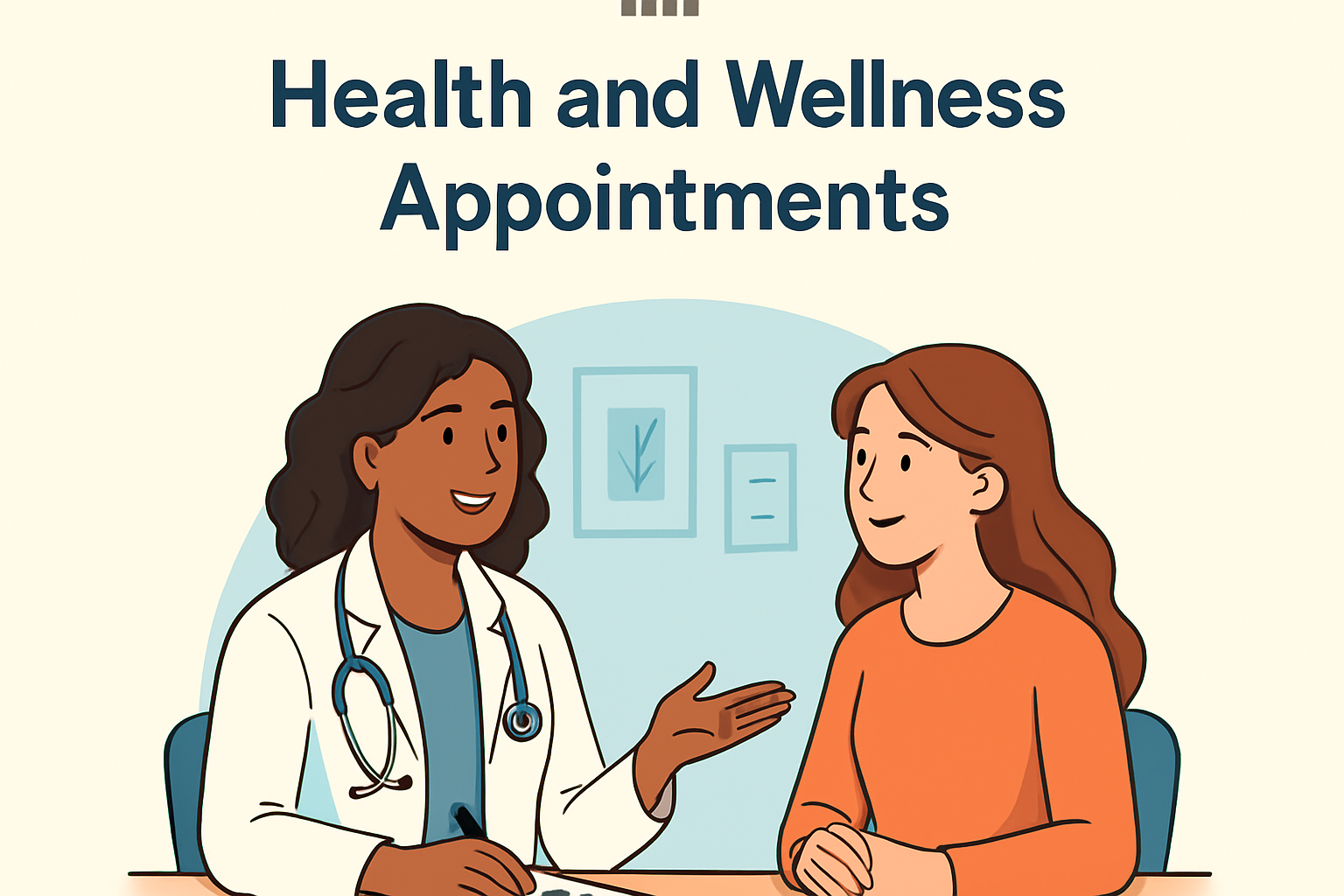
Introduction: The Importance of Effective Communication in Health and Wellness Appointments
In today’s globalized world, effective communication in English has become essential, especially when it comes to health and wellness appointments. Whether you’re visiting a doctor, consulting with a nutritionist, or engaging in a therapy session, the ability to clearly convey your thoughts and understand instructions is crucial. Miscommunication in medical and wellness settings can have serious consequences, such as misdiagnosis or mistreatment.
Health and wellness appointments often involve discussions that require precise language and understanding. Key terms like “symptoms,” “treatment,” “diagnosis,” and “medication” are fundamental to these discussions. Understanding and effectively using these terms can make a significant difference in getting the right care and advice. This article will explore the importance of communicating effectively in English during these appointments and provide practical strategies to ensure clear communication.
Understanding Key Terms in Health and Wellness Appointments
One of the most important aspects of effective communication during health and wellness appointments is understanding and using key terms correctly. Knowing the specific meanings of terms like “symptoms,” “diagnosis,” and “treatment” can significantly impact the clarity of the conversation.
For example, when discussing “symptoms,” it is crucial to accurately describe what you’re experiencing. This clarity helps healthcare providers make informed decisions about your care. Misunderstanding terms can lead to confusion or ineffective treatment plans. Take the case of a patient who misunderstands “treatment” as only medication. They might neglect non-medical directives like rest or dietary changes, impacting their recovery.
Mastering Basic English Phrases for Health Appointments
Basic English phrases can facilitate smoother interactions during health appointments. Phrases such as “I am experiencing pain,” “I have noticed changes in my body,” or “Can you explain that further?” are instrumental. These phrases can either explicitly communicate your condition or seek clarification from the healthcare provider.
Consider a scenario where a patient needs clarity on a diagnosis. Using the phrase “Can you explain that further?” invites the healthcare provider to offer a more detailed explanation, which can lead to a better understanding of the condition and the necessary steps to address it.
Real-Life Examples: Navigating Language Barriers in Health Settings
Language barriers can significantly hinder effective communication in health and wellness settings. However, many resources and strategies are available to overcome these challenges. For instance, hospitals and clinics often provide access to interpreters or translation services to assist non-English speaking patients.
Let’s consider a real-world example: A non-English speaking patient visits a healthcare facility and struggles to communicate their symptoms. By requesting an interpreter, the patient can effectively convey their concerns, ensuring they receive the appropriate care. This practical use of resources demonstrates the importance of language support in healthcare.
Tools and Resources for Improving English Proficiency in Health Contexts
Improving English proficiency specifically tailored to health contexts can be highly beneficial for patients and healthcare providers. Various tools and resources are available to develop this proficiency, such as language learning apps, online courses, and practice worksheets focusing on medical terminology.
For example, language learning apps often include specialized courses that teach medical vocabulary and phrases. These resources enable individuals to practice and familiarize themselves with health-related language, making future appointments more manageable and productive.
Effective Use of Non-Verbal Communication in Health Appointments
Moreover, non-verbal communication plays a significant role in conveying messages during health appointments. Body language, facial expressions, and gestures can supplement verbal communication, providing additional context and meaning.
Consider the scenario of a patient who feels anxious about receiving treatment. Their body language might reveal discomfort or worry, prompting the healthcare provider to offer reassurance. Understanding these cues and responding appropriately can foster a supportive environment, enhancing the overall experience.
Visual Aids in Health Communication
Visual aids, such as charts and diagrams, can enhance understanding during health appointments. These tools help simplify complex information, making it more accessible and easier to grasp. Let’s look at a table summarizing the common symptoms and respective treatments for a specific condition:
| Symptom | Treatment |
|---|---|
| Headache | Painkiller medication |
| Fever | Antipyretics and rest |
| Nausea | Antiemetic and hydration |
This table simplifies the information, making it easier for patients to understand the relationship between their symptoms and the recommended treatment. It serves as a quick reference guide, supporting clearer communication between patients and healthcare providers.
The Role of Patient Advocacy in Ensuring Clear Communication
Patient advocacy involves empowering patients to actively participate in their healthcare journey, including stating their thoughts, preferences, and concerns. Advocacy plays a vital role in ensuring transparent communication in health appointments.
A practical example of patient advocacy might involve a patient who disagrees with a proposed treatment plan. By confidently expressing their concerns and presenting alternative options, the patient engages in a productive dialogue with the healthcare provider. This collaboration ultimately leads to a more tailored and effective treatment plan, demonstrating the importance of patient advocacy in health appointments.
Developing Confidence in Health and Wellness Conversations
Confidence plays a key role in ensuring effective communication during health and wellness appointments. Developing confidence allows individuals to express their needs, ask questions, and seek clarification without hesitation. The ability to convey thoughts clearly results in more productive consultations and improved healthcare outcomes.
Consider a patient hesitant to ask questions about a medication’s side effects due to language barriers or uncertainty. By building confidence in their communication abilities, they can overcome these obstacles, ensuring they fully understand the treatment plan and its implications.
Challenges and Solutions for Health Professionals in Multilingual Contexts
Healthcare providers also face challenges when communicating with patients from diverse language backgrounds. Developing strategies to address these challenges is crucial for ensuring effective and inclusive care.
Healthcare professionals can benefit from cultural competence training and communication workshops, equipping them with the necessary skills to navigate multilingual contexts. These resources enhance their ability to convey information accurately and sensitively, ultimately improving patient satisfaction and outcomes.
Communication Strategies for Telehealth and Virtual Appointments
With the rise of telehealth and virtual appointments, new communication strategies are required to ensure effective interactions. Clear and concise language is essential in these settings to avoid misunderstandings that can arise from technology limitations.
Consider the example of a virtual consultation where a patient struggles to articulate their symptoms due to connectivity issues. By employing simple language and focusing on key points, healthcare providers can ensure critical information is communicated effectively, even in a virtual setting.
Summary: Strengthening Communication for Better Health Outcomes
In conclusion, effective communication in English is crucial for navigating health and wellness appointments successfully. Understanding key terms, mastering basic phrases, and utilizing available resources contribute to improved communication and better healthcare outcomes. By advocating for oneself, using visual aids, and employing non-verbal communication, individuals can enhance clarity during appointments.
As patients and healthcare providers face language barriers, leveraging interpreters and engaging in cultural competence training ensures inclusive care. Virtual appointments also demand concise language and efficient communication strategies. As we continue to embrace these strategies, we can foster a more inclusive and effective healthcare environment. Take action today by assessing your current communication skills and exploring resources to improve your proficiency in health-related English communication.
Frequently Asked Questions
1. Why is effective communication important during health and wellness appointments?
Effective communication during health and wellness appointments is incredibly important because it ensures that you receive the right diagnosis and treatment. When you can clearly express your symptoms, concerns, and medical history, healthcare providers can better understand your situation and offer appropriate care. Moreover, understanding instructions for treatment, medication, or lifestyle changes is crucial for your health outcomes. Miscommunication can lead to incorrect diagnoses, inappropriate treatments, or even dangerous health outcomes. This is particularly vital in a diverse world where language barriers can impede understanding. Good communication helps build trust between you and your provider, encourages you to ask questions, and share more information, all of which contribute to better healthcare experiences.
2. What can I do to improve my communication skills for health and wellness appointments?
Improving communication skills for health and wellness appointments involves several proactive steps. Firstly, enhancing your English language proficiency will be beneficial if English is not your first language. Try to familiarize yourself with common medical terminology and phrases used in health contexts. This can involve engaging in language classes, using language learning apps, or practicing with a friend. Additionally, preparing for your appointment by writing down your symptoms, questions, and any medications you’re taking can maximize your time with the healthcare provider. Don’t hesitate to ask for clarification if you don’t understand something — it’s important to be clear about your health. Requesting written instructions or using translation services if available can also help bridge communication gaps.
3. How can I make sure I understand the instructions given by my healthcare provider?
Understanding your healthcare provider’s instructions is crucial, and there are several strategies you can use. During the appointment, actively listen and take notes if necessary. If the provider is speaking too quickly, don’t hesitate to ask them to slow down. Paraphrase what they’ve said back to them to confirm you’ve understood it correctly — healthcare professionals typically appreciate this ‘teach-back’ method as it ensures accurate communication. If something is unclear, ask for further clarification. Request written summaries of the appointments or printed instructions for treatments and medications. If English is not your first language, you may consider bringing someone who is fluent in English to help interpret during your visits.
4. What should I do if I don’t understand medical terminology or jargon during my appointment?
If you encounter unfamiliar medical terminology or jargon during your appointment, it’s essential to seek clarification. Don’t hesitate to ask your healthcare provider to explain any terms or procedures in simpler, everyday language. It’s a common issue and healthcare providers are usually accustomed to breaking down complex information for better understanding. You might say, “I’m not familiar with that term, can you explain what it means?” or “Can you tell me how this will affect my health?” Not only will this enhance your comprehension, but it also empowers you to make more informed decisions about your health and wellness. Remember, clear communication is a two-way street, and asking questions is a vital part of ensuring that you’re getting the most out of your healthcare experience.
5. What role do cultural differences play in communicating during health and wellness appointments?
Cultural differences can significantly impact communication in health and wellness appointments. Not only can language barriers pose a challenge, but different cultural backgrounds may include varying beliefs about health, wellness, and medicine. For instance, some cultures might emphasize holistic or traditional healing practices while others rely more on conventional Western medicine. These differences can influence your communication preferences and interpretation of medical advice. Being aware of these cultural nuances is important both for you and your healthcare provider as they can affect your treatment plan and outcomes. To address potential cultural barriers, try to openly discuss your cultural perspectives with your provider. Many healthcare providers receive cultural competency training and can work with you to create a personalized treatment approach that respects your cultural beliefs while ensuring effective care. Additionally, utilizing interpreters and cultural liaison officers when available, can assist in bridging these differences for a more productive and comfortable healthcare interaction.





