
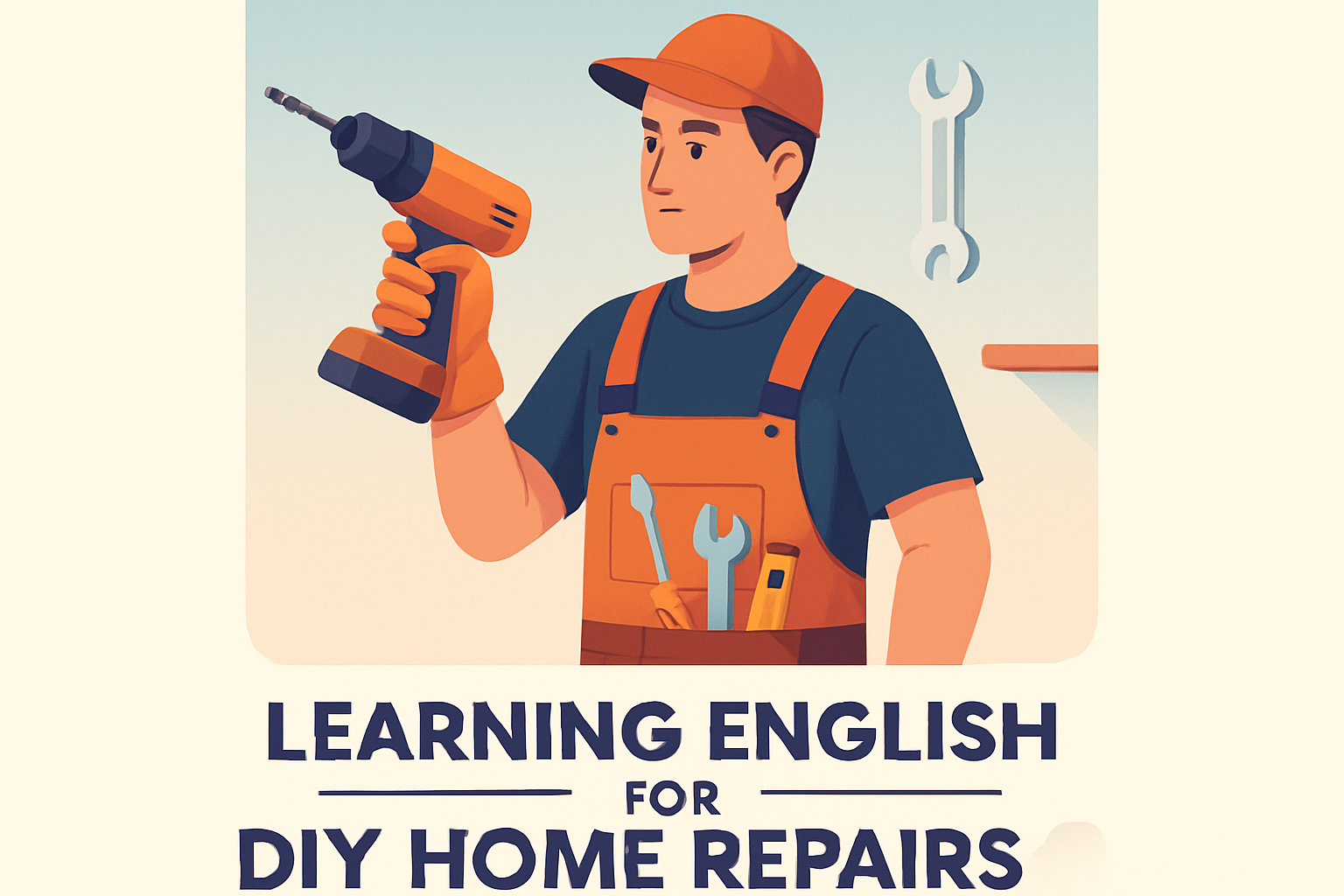
In today’s globalized world, English has become an indispensable tool for communication, especially when it comes to specialized tasks such as do-it-yourself (DIY) home repairs and maintenance. But why does knowing English matter so much in this context? First, understanding English opens a wealth of resources, from instructional videos and online forums to product manuals and customer support. English is often the default language for these resources, and being proficient can significantly streamline the repair process. Moreover, it connects you to a global community of DIY enthusiasts and experts, allowing you to share experiences and gather advice from like-minded individuals, which is particularly beneficial if you’re working on a tricky project.
Key terms like “plumbing”, “wiring”, and “insulation” aren’t just jargon; they are essential components of home upkeep that require specific vocabulary for effective understanding and communication. Having a firm grasp of these terms can dramatically improve your ability to communicate with professionals if needed, follow detailed instructions, and even help friends or neighbors with their own DIY projects.
Another reason to focus on learning English for DIY activities is safety. Misunderstanding a single term in a complex project could result in injury or damage to your home. Therefore, understanding English can also play a critical role in ensuring not just efficiency, but also safety. The more you know, the more confidently you can proceed with your projects.
Understanding Basic Terminology
Grasping basic DIY terms in English is the first step toward successfully undertaking home repairs. For instance, the term “leak” refers to the unwanted escape of liquid, commonly associated with plumbing issues. Knowing what “leakage” means and recognizing related terms like “sealant” and “thread tape” can be the difference between an uncomplicated fix and a multi-day ordeal.
Consider Sarah, a homeowner who discovered a leak under her kitchen sink. Because she understood English DIY terminology, she could quickly search online for a tutorial on “fixing a kitchen sink leak.” She found step-by-step instructions involving terms like “pipe wrench,” “PVC pipe,” and “gasket,” which empowered her to resolve the issue without hiring a plumber.
Accessing Online Resources
Once you’re comfortable with basic terminology, the next logical step is tapping into online resources. The internet offers a plethora of information in English, including articles, blogs, how-tos, and video tutorials on almost any home maintenance task you can imagine. Websites like YouTube have numerous channels dedicated to DIY home repairs, showcasing practical demonstrations that make complex tasks easier to understand.
Take, for example, John, a DIY enthusiast who wanted to repaint his living room. Through English-language videos, he learned about various paint types, brushes, and techniques. He even discovered a forum where he could ask specific questions and receive expert advice. By leveraging these resources, John completed a task he had never tackled before, using skills and methods gleaned from English-language content.
Engaging with the Global DIY Community
Once familiar with basic terms and resources, many find that a world of knowledge and assistance opens up through engagement with the global DIY community. Online forums, social media groups, and even local community workshop events can serve as invaluable channels for learning and sharing ideas. For many of these communities, English serves as the common language.
Consider Maria, who initially felt overwhelmed by the prospect of retiling her bathroom floor. While browsing an English-speaking online forum, she encountered other DIYers who had faced similar challenges. Through their shared stories and advice, Maria developed the confidence to execute the project. She even contributed her own experience afterward, in English, to help the next person in her position.
| Category | Task | Essential Term |
|---|---|---|
| Plumbing | Fix a Leak | Sealant |
| Electrical | Install a Light Fixture | Circuit |
| Painting | Paint a Room | Primer |
Learning Through Practice
Once you’ve absorbed terminology and resources, the best way to learn is by doing. Learning English for DIY purposes provides an opportunity to put your skills to practical use. As you encounter new challenges, you’ll naturally expand your vocabulary and understanding more effectively than by any other method.
Take the case of Tom, a homeowner who used English resources to guide him through the process of installing a new lighting fixture. Understanding terms like “fixture”, “wattage”, and “wire nut” were crucial components of his learning process, enabling him to safely and effectively complete the job.
Safety and Efficiency
Understanding English extends beyond mere task completion; it’s also essential for maintaining safety. Recognizing safety terminology, such as “voltage”, “breaker”, or “flammable”, can help prevent accidents. Moreover, a solid grasp of efficiency-related terms like “energy-efficient” or “insulation” can significantly contribute to the sustainability of your home.
Laura, a homeowner looking to reduce her electricity bills, studied English articles on energy-efficient home modifications. She learned about “LED lights” and “high-efficiency appliances,” and implemented several of these changes. Her improved understanding of English terms not only helped her make smarter choices but also contributed to a significantly lower utility bill.
Summarizing the Benefits
To sum up, learning English for DIY home repairs and maintenance offers numerous advantages. It equips you with the terminology essential for understanding and executing a variety of tasks, ensuring that you’re able to perform repairs efficiently and safely. It provides access to a vast array of online resources—more readily available in English—that can guide you through even the most daunting projects. It also connects you to a broader community of fellow DIYers, sharing experiences and insights that can further your knowledge and skills.
The practical advantages are clear: you save money by doing tasks yourself, enhance your home’s value, and feel a sense of personal achievement in completing projects independently. Moreover, you can increase your home’s safety and efficiency, which benefits both you and your family.
As a call to action, start integrating learning English into your DIY routine today. Begin by learning the key terms relevant to your project, then dive into the wealth of English-language resources available online. Don’t hesitate to interact with global communities—the knowledge shared there is invaluable. By taking these steps, you’re not just making improvements to your home; you’re also investing in a lifelong skill that will serve you well.
Frequently Asked Questions
1. Why is learning English important for DIY home repairs and maintenance?
English is important for DIY home repairs and maintenance for several reasons. Firstly, English is the predominant language of the internet, which means that a vast majority of the instructional resources available online, including how-to articles, instructional videos, and tutorials are in English. Having a good grasp of the language allows you to access this treasure trove of information and follow step-by-step guides more easily, which can be immensely helpful, especially if you’re tackling a task for the first time.
Additionally, most product manuals and safety guides for tools and materials used in home repairs are written in English. Understanding these instructions can ensure that you’re using the tools correctly and safely. Moreover, English proficiency can help when reaching out for customer support or when participating in online forums where fellow DIY enthusiasts share tips and solutions. With a solid understanding of English, you can communicate effectively, ask pertinent questions, and even contribute your insights, enriching the overall DIY community.
2. What English resources are available to help with DIY projects?
There are numerous English resources available to assist with DIY projects. For starters, websites like YouTube host thousands of tutorial videos covering everything from basic carpentry to advanced electrical work. Channels such as “This Old House” and “DIY Creators” provide visually demonstrative content that walks you through various home repair and maintenance processes step by step, making it easier to understand complex tasks even if English isn’t your first language.
Additionally, there are online platforms and forums like Reddit’s DIY community, where you can engage in discussions, seek advice, and get feedback on your projects. Websites like WikiHow also offer pictorial how-to guides that can simplify the learning process for English learners. Furthermore, many home improvement stores such as Home Depot and Lowe’s offer workshops and resource centers online, where instructions and support are provided in English. Utilizing these resources can significantly enhance your DIY skills and confidence.
3. How can English proficiency improve my problem-solving skills in home repair?
Proficiency in English doesn’t just help you understand the instructions; it also enables you to grasp the underlying principles behind the tasks you’re performing. This understanding can be crucial when you encounter problems or obstacles in your DIY projects. When you can comprehend the technical language and terminologies commonly used in manuals and guides, you’re better equipped to diagnose issues and think critically about solutions.
Moreover, knowing English allows you to access a broader range of troubleshooting resources. When something doesn’t go as planned, you can use English search terms to find solution-oriented articles, forums, and videos. Often, solutions are not just handed to you; they require a fair amount of critical thinking and adaptation to your unique situation. English proficiency, therefore, provides you with both the understanding and the resources to become more self-sufficient and confident in problem-solving during home repair and maintenance tasks.
4. Can English learning be combined with learning about home repair, and how?
Absolutely! Learning English in conjunction with home repair can be a practical and engaging way to improve language skills while simultaneously acquiring valuable DIY knowledge. One effective method is to use English-language resources tailored to home improvement. By watching videos or reading articles related to home repair, you expose yourself to both the language and the necessary technical skills.
Consider setting language goals alongside your DIY objectives. For instance, each time you take on a new project, focus on learning the English vocabulary related to that specific task. Label tools and parts with their English names, or create flashcards for commonly used terms and phrases. Many online courses or apps aimed at ESL learners also offer specialized vocabulary lists in areas like construction or household maintenance, which can be really helpful.
Furthermore, try to engage in English-speaking DIY communities or forums. By doing so, you can practice your language skills while exchanging tips and advice on similar projects. This blend of language learning and practical application keeps the process both relevant and interesting, reinforcing what you learn through real-world application.
5. How does English learning empower global DIY communities?
English functions as a lingua franca, a bridge language enabling communication across diverse linguistic backgrounds. For global DIY communities, this is particularly empowering as it unifies enthusiasts from all over the world. By knowing English, you gain access to a collective pool of knowledge and experiences beyond your local region or community. This cross-cultural exchange enriches personal knowledge and widens perspectives regarding DIY practices and methodologies.
When language barriers are minimized, more experienced individuals, regardless of their geographical location, can share insights and innovative solutions that can be adapted worldwide. Furthermore, English proficiency can enhance collaborative projects, where individuals from different countries partner on virtual DIY initiatives or competitions.
In this way, English learning becomes a powerful tool that not only facilitates the successful execution of personal projects but also fosters a sense of global connectedness. This connectedness helps spread information faster, promotes safety through shared knowledge of best practices, and encourages environmentally responsible techniques that have been tested and endorsed by a global audience. Through English, the DIY community continues to grow stronger and more innovative.





