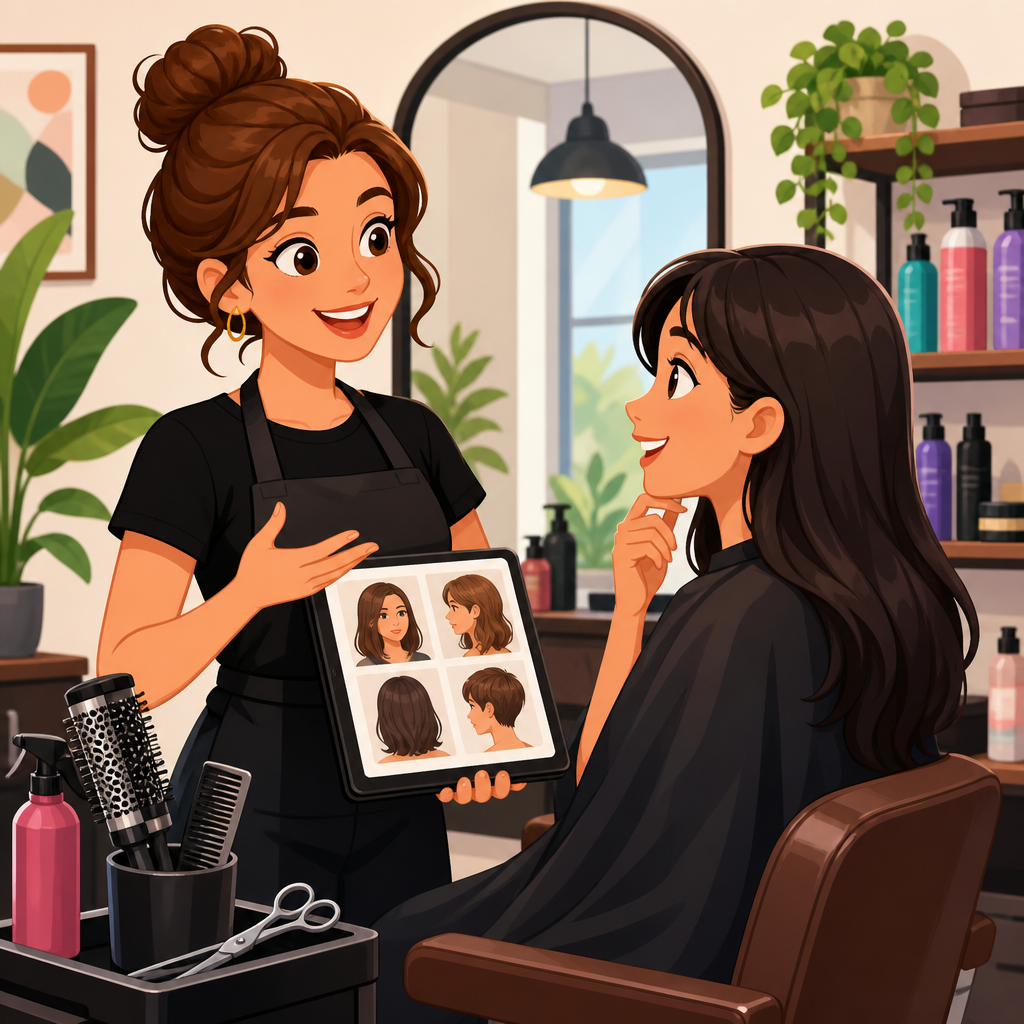
English for getting a haircut or salon service helps learners handle one of the most common real-life conversations: explaining what they want, understanding questions from staff, and avoiding expensive misunderstandings. A salon visit may seem simple, but it includes several stages with specialized vocabulary, polite requests, and decisions made quickly. In practical terms, this means knowing how to book, describe length, ask about styling, confirm price, and respond if the stylist suggests a change. I have coached adults through these situations, and the same issue appears again and again: students know general English, but they freeze when asked, “How much do you want off?” or “Do you want layers or just a trim?” Learning this focused language matters because salon services are personal, visible, and often costly. A small language mistake can lead to a haircut that feels too short, a color that looks different from expectations, or added services that increase the final bill.
Key terms are worth defining clearly. A haircut is the cutting and shaping of hair. A trim means cutting a small amount, usually to maintain the current style. Layers are sections cut at different lengths to create movement or reduce weight. Bangs, called a fringe in British English, are the front section cut over the forehead. Highlights add lighter strands, while full color changes the overall shade. A blow-dry is drying and styling hair with a hair dryer, and a wash and cut means shampoo plus haircut. In many salons, the stylist is the person cutting or coloring your hair, while the receptionist manages booking and payment. Understanding these words gives you control over the appointment and helps you ask direct questions instead of guessing.
This topic also matters because salon conversations are fast, routine, and detail-heavy. Staff often speak while washing, cutting, or styling, and background noise can make listening harder. You may need to answer questions about timing, maintenance, products, heat styling, or whether you want your hair thinned, textured, straightened, or curled. Unlike casual small talk, these questions have practical consequences. The good news is that salon English follows predictable patterns. Once you learn the most common phrases and how native speakers soften requests politely, you can move through the visit with confidence and get results closer to what you want.
Booking the appointment and checking in
The first stage is booking. On the phone or in person, salons usually ask what service you need, what day works for you, and whether you have a preferred stylist. The most useful opening line is simple: “Hi, I’d like to book a haircut, please.” If you need more than a cut, say so directly: “I’d like to book a wash, cut, and blow-dry,” or “I’d like to book a haircut and color.” If you do not know the exact service name, describe the goal: “I want to cut my hair shorter and maybe add layers.” Staff can usually translate that into the correct appointment type.
Common booking questions include “When would you like to come in?” “Do you have a stylist in mind?” and “Have you been here before?” If you are flexible, say, “Any time after 5 p.m. works for me,” or “I’m free on Saturday morning.” If you are not sure how long a service takes, ask, “How long does the appointment usually take?” Price questions are also normal and wise. Say, “How much is a women’s haircut?” or “What is the starting price for highlights?” Many salons use the phrase starting at because final cost depends on hair length, stylist level, and product use.
At check-in, the receptionist may confirm your name, service, and stylist. You might hear, “Can I get your name?” “You’re here for a cut and blow-dry, right?” or “Your stylist will be with you in a few minutes.” If you are a new client, you may need to fill out a form, especially for color services. For learners who want more practice with service bookings by phone, this guide on English for booking a doctor’s appointment by phone is useful because it teaches the same core skills: stating the service, confirming times, and asking clarifying questions clearly.
Explaining the haircut or salon service you want
The consultation is the most important part of the visit. This is when the stylist asks what you want and checks expectations before starting. The clearest strategy is to describe three things: length, shape, and maintenance. For example: “I want to keep the length, but I’d like a trim and some soft layers around my face.” That sentence is effective because it tells the stylist what to preserve, what to cut, and where to focus. If you want a bigger change, say, “I’d like to take about two inches off and make it sit above my shoulders.” Concrete measurements are far safer than vague words like short or a little.
Clients often struggle with degree words. In salon English, “just a trim” can mean very different amounts to different people. I advise learners to use fingers or centimeters while speaking: “Only about this much, please,” while showing the amount. You can also say, “Please don’t cut it shorter than my chin,” or “I want the back shorter, but I want to keep the front longer.” For men’s cuts, common phrases include “short on the sides and back,” “leave some length on top,” and “blend the sides.” If clippers are used, guard numbers matter in some countries; for example, “a number 2 on the sides” refers to a specific clipper length.
| What you want to say | Natural salon English | What it means |
|---|---|---|
| Cut only a small amount | Just a trim, please | Maintain the current style with minimal cutting |
| Hair should not look heavy | Can you thin it out a little? | Remove bulk without making it much shorter |
| Front pieces around the face | I’d like face-framing layers | Add shorter layers near the front |
| Hair over the forehead | I’m thinking about getting bangs | Add a fringe or front section |
Photos help, but they do not replace language. A good sentence is, “I like the shape in this picture, but not the color,” or “I want something similar, but easier to maintain.” That second part matters. Stylists routinely assess whether a look suits your hair texture, face shape, and daily routine. If a style needs frequent blow-drying or regular salon visits, they may say so. Ask, “Will this work with my hair type?” or “How much styling would this need every day?” These are practical questions, and good professionals answer them honestly.
Understanding the stylist’s questions during the service
Once the consultation begins, the stylist usually asks short, specific questions. “How do you normally wear it?” helps them judge parting, volume, and daily styling habits. “Do you use heat on it?” matters because frequent heat styling affects condition and influences product recommendations. “Do you want it layered?” “Do you want it textured?” and “How often do you usually get it cut?” all guide technique. If you do not understand a term, ask immediately: “Sorry, what do you mean by textured?” That is better than saying yes to something unclear.
During the cut, stylists often check progress with phrases like “Is this length okay?” “Do you want more off?” or “How does that feel?” This is your chance to speak up politely and precisely. Useful responses include “A little shorter, please,” “That length is good,” and “Could you make this side a bit softer?” If you feel nervous correcting a professional, remember that clear feedback is normal in a salon. It is easier to adjust before the cut is finished than afterward. In my experience, learners benefit from direct but polite language instead of hesitant hints.
Color services involve additional vocabulary. You may hear bleach, toner, roots, balayage, highlights, lowlights, and touch-up. Bleach lightens hair strongly; toner adjusts the shade after lightening; roots are the natural hair growth near the scalp; balayage is a hand-painted highlighting technique; a touch-up usually means refreshing new growth. Color also raises safety and maintenance issues. A responsible stylist may ask whether you have used box dye, had a keratin treatment, or have any allergies. Answer truthfully. Chemical history affects results and can prevent damage.
Handling price, small talk, and problems professionally
Before the service starts, confirm cost if it has not been made clear. Say, “Could you tell me the total price before we start?” or, for variable services, “What price range should I expect?” This is especially important for color correction, extensions, or treatments, where cost can rise quickly. In many salons, add-ons such as deep conditioning, toner, or extra styling are offered during the appointment. If you want time to decide, say, “Not today, thanks,” or “How much extra would that be?” Clear money language prevents awkward surprises at the register.
Small talk is common, but it is optional to keep it simple. Stylists often ask about work, weekend plans, or local life because it makes the appointment comfortable. Short answers are perfectly acceptable: “It’s been a busy week,” “I’m just relaxing this weekend,” or “I’ve lived here for about two years.” If you prefer less conversation, many professionals notice and adjust. You do not need a special phrase, though “I’m a bit tired today” is a polite signal. The main goal is still clear service communication, not perfect social performance.
If something goes wrong, address it calmly before leaving. Say, “I think it’s a bit shorter than I expected,” “Could you soften these layers?” or “The color looks warmer than I wanted.” Focus on the specific issue and the possible fix. Most reputable salons prefer immediate feedback because they can often correct a minor problem on the spot. If the issue appears after washing at home, call promptly and explain clearly. Keep your language factual, not emotional. Good salons usually have adjustment policies, especially when the requested outcome was documented during consultation.
English for getting a haircut or salon service becomes manageable when you treat the visit as a sequence of predictable conversations: booking, consultation, service questions, and payment. The most important skill is specificity. Say how much to cut, where you want shape, what you want to keep, and how much maintenance you can handle. Ask about timing and price before the service begins, and clarify unfamiliar terms immediately. Photos are helpful, but exact words prevent mistakes. With a small set of practical phrases, you can communicate confidently even if your overall English is still developing.
The real benefit is control. You are more likely to leave with a result you like when you can describe length, layers, color, and styling in plain, direct English. You also reduce stress because you know how to respond when the stylist asks quick questions or suggests alternatives. Review the key phrases in this article before your next appointment, practice two or three sample answers aloud, and use them in a real salon conversation. That small preparation can make a visible difference.
Frequently Asked Questions
1. What English phrases should I know before booking a haircut or salon appointment?
Before booking a haircut or salon service, it helps to know a few clear and polite phrases that cover the most common situations. If you are calling or speaking at the front desk, you can say, “I’d like to book an appointment for a haircut,” or “Do you have any availability this afternoon?” If you want a specific service, be direct and simple: “I’d like a trim,” “I’d like a haircut and blow-dry,” or “I’d like to book a color appointment.” If you do not know the exact name of the service, you can ask, “What do you recommend for dry hair?” or “Which service is best if I want to straighten my hair?”
It is also important to understand the questions the salon staff may ask you. They might ask, “What service are you looking for?” “Do you have a preferred stylist?” “How long is your hair?” or “Have you had color done before?” For scheduling, you may hear, “Would morning or afternoon work better for you?” “Are you available on Friday?” or “Can you come in at 3 p.m.?” Learning these patterns helps you respond quickly and confidently.
If you need to discuss practical details, useful questions include, “How much is a haircut?” “How long will the appointment take?” “Does the price include washing and styling?” and “Is there an extra charge for long hair?” These questions are especially helpful because salon prices can vary depending on the service, stylist, and hair length. Confirming details in advance can prevent confusion and expensive surprises later. In everyday English, simple and polite language is usually best, so phrases like “I’d like…,” “Could I…,” and “Can you tell me…” will sound natural and respectful.
2. How can I describe exactly what haircut or style I want in English?
Describing your haircut clearly is one of the most useful salon communication skills in English. Start with the basic action you want: “I’d like a trim,” “I’d like to cut it shorter,” “I want to keep the length,” or “I’d like a new style.” Then add details about length. For example, you can say, “Please take off about an inch,” “Just a little off the ends,” “I want it shoulder-length,” or “I’d like it very short on the sides.” If you are unsure about measurements, using body references such as “above the shoulders,” “to the chin,” or “just below the ears” can be very effective.
You should also learn common style vocabulary. Words like “layers,” “bangs,” “fringe,” “blunt cut,” “side part,” “volume,” “texture,” and “fade” often come up in salon conversations. For example, you might say, “I’d like soft layers,” “I want bangs, but not too short,” or “Can you make it neater around the sides?” If you want to avoid certain results, say that clearly too: “I don’t want it too short,” “Please don’t thin it too much,” or “I want it natural, not too styled.” This kind of language helps the stylist understand not only what you want, but also what you do not want.
If speaking in detail feels difficult, combining simple English with visual support is a smart strategy. You can say, “I have a photo of the style I want,” or “I’d like something similar to this.” Then point to the parts you like most: “I like the length here,” “I want this shape,” or “I like how the front looks.” In real salon situations, photos are extremely common and helpful, even for native speakers. The most effective approach is to use short, clear sentences, repeat the important details, and ask the stylist to confirm: “So just to check, we’re keeping most of the length and adding light layers, right?”
3. What questions might a stylist ask me during the appointment, and how should I respond?
During a haircut or salon service, stylists often ask quick questions while they work, so being familiar with common salon English can make the whole experience much easier. At the beginning, they may ask, “What are we doing today?” “How much would you like taken off?” “Do you want layers?” or “How do you normally style your hair?” These questions are designed to understand your routine and expectations. Strong responses include, “Just a trim, please,” “About two inches,” “Yes, but only light layers,” or “I usually blow-dry it and wear it down.”
As the appointment continues, the stylist may make suggestions or ask for decisions. You might hear, “Do you want me to square the back or round it?” “Would you like more volume?” “Should I thin it out a bit?” or “Do you want a center part or a side part?” If you do not understand, it is completely acceptable to ask for clarification. You can say, “Could you explain what that means?” “Can you show me?” or “Which option would look more natural?” Asking these questions is better than guessing, especially when the decision affects the final result.
Stylists may also check your comfort level or confirm details before making a bigger change. For example, they may ask, “Is this length okay?” “Do you want to go shorter?” or “Are you happy with how this is looking?” Use these moments to speak honestly. You can say, “A little shorter, please,” “I think I’d like to keep it longer,” or “Could we soften the front a bit?” This is one of the most important parts of salon English: responding in real time. A short, polite correction can save you from leaving with a haircut you did not want. Clear communication is not rude in a salon setting; it is expected and helpful.
4. How do I ask about price, extra charges, and recommended services without sounding rude?
Asking about price is both practical and completely normal at a salon. In fact, it is one of the smartest things you can do, especially if you are using English in a real-life situation and want to avoid misunderstandings. Polite, natural questions include, “How much does a haircut cost?” “Does that include washing and styling?” “Are there any extra charges for long hair?” and “How much would it be altogether?” These phrases sound respectful and professional. You are not being difficult by asking; you are simply making sure you understand the service clearly before agreeing to it.
This becomes even more important if the stylist suggests an additional service during your appointment. They might recommend a treatment, toner, blow-dry, scalp treatment, or conditioning mask. If that happens, you can respond with, “What does that involve?” “How much extra is that?” “Do I really need it today?” or “What would you recommend if I want a lower-cost option?” This type of language helps you stay in control of the appointment while still sounding open and cooperative. It also gives you time to decide whether the suggestion is necessary, useful, or outside your budget.
If you want to be especially careful, ask for confirmation before the service begins or before the stylist adds anything new. You can say, “Just to confirm, what will the total price be?” or “Before we do that, could you tell me how much it costs?” These phrases are very useful because salon visits often involve fast decisions, and once a service has started, it may be harder to change your mind. Good salon English is not only about style vocabulary; it is also about managing the conversation confidently so you understand what you are paying for and why.
5. What should I say if I do not understand something or if I am unhappy with the result?
If you do not understand something at the salon, the best approach is to speak up early and politely. You can say, “Sorry, could you repeat that?” “I’m not sure I understand,” “Could you say that more slowly?” or “Can you show me what you mean?” These are essential phrases because salon conversations often move quickly, and stylists may use terms that are unfamiliar to English learners. It is much easier to ask a simple question before the haircut continues than to deal with a disappointing result later. Asking for clarification shows that you are paying attention and want to communicate well.
If you are unsure during the service, try using check-in phrases. For example, “Could we stop for a second so I can look?” “Can we check the length before you cut more?” or “I’d like to keep a bit more here, please.” These requests are polite and appropriate. In a salon, the process is collaborative, and most stylists expect clients to respond and give feedback. If the stylist suggests a change and you do not want it, say so clearly: “I’d prefer not to do that today,” “I’d like to keep it simple,” or “Let’s stay with the original plan.” Clear boundaries are helpful, especially when decisions are being made quickly.
If you are unhappy with the final result, stay calm and specific. Instead of saying only “I don’t like it,” try saying, “It’s shorter than I expected,” “I was hoping for softer