
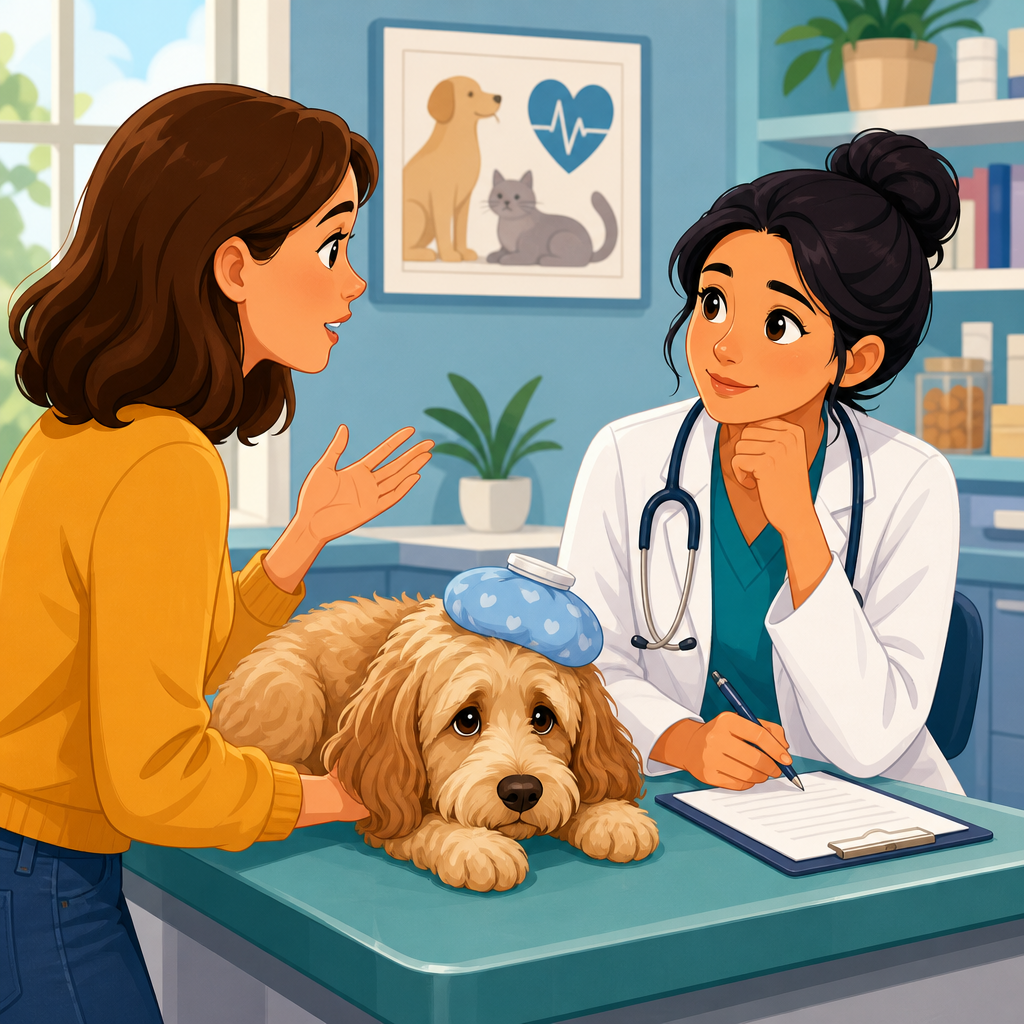
When your pet is sick, what you say at the vet can directly affect how quickly the team understands the problem, prioritizes urgent risks, and chooses the right tests. Clear communication matters because veterinary medicine depends heavily on history taking: animals cannot describe pain, nausea, dizziness, or appetite changes, so the owner becomes the primary source of clinical information. In practice, the most helpful owners are not the ones who use medical terms, but the ones who describe changes accurately, in order, and without leaving out details they think are unimportant.
A useful way to think about a vet visit is that you are giving a short, structured report. The key terms are simple. “Chief complaint” means the main reason you came in, such as vomiting, limping, coughing, or not eating. “History” means when the problem started, how often it happens, whether it is getting worse, and what else changed around the same time. “Severity” means how serious the signs are, including pain level, breathing effort, weakness, or inability to keep water down. If you can explain those points clearly, you help the veterinarian narrow the possibilities faster and reduce delays caused by missing facts.
This matters even more because many pet illnesses look similar at first. A dog that is “tired” could be mildly dehydrated, in pain, anemic, poisoned, or developing heart disease. A cat that is “not using the litter box normally” could have stress, constipation, arthritis, or a life-threatening urinary blockage. I have seen appointments change course within minutes because an owner added one precise detail, such as “he retched but nothing came up,” “her gums looked pale this morning,” or “the cough only happens after exercise and at night.” Those details guide triage, testing, and treatment. Knowing what to say at the vet if your pet is sick is not about sounding expert. It is about being organized, specific, and calm enough to give the information that protects your pet.
Start with the main problem and the timeline
The first thing to say is the main problem in one plain sentence. For example: “My dog has been vomiting since last night,” “My cat has not eaten for two days,” or “My rabbit is breathing faster than normal and seems weak.” Then add the timeline immediately. Vets want to know when you first noticed the issue, whether it started suddenly or gradually, and whether it is improving, stable, or worsening. A concise opening works best: “He started limping after the park yesterday afternoon, and this morning he refuses to put weight on the leg.”
After that, describe frequency and pattern. Instead of “a lot,” say “she vomited four times between 2 a.m. and 8 a.m.” Instead of “he has diarrhea,” say “three loose stools today, no blood, but he is straining.” If there are symptom-free periods, mention them. If the problem happens at certain times, mention that too. I have found that pattern often matters more than owners expect. Coughing after drinking can point in a different direction than coughing only during sleep. Vomiting undigested food right after eating is different from bile vomit early in the morning.
Include what has changed recently. Say if your pet got into trash, started a new medication, switched food, visited a kennel, had contact with another sick animal, missed a vaccine, or could have eaten a toxin. Bring up travel, grooming visits, hikes, tick exposure, and access to string, bones, socks, chocolate, grapes, xylitol, lilies, or rodent poison when relevant. If you need practice forming simple health descriptions in English, the communication framework in this guide to booking a doctor’s appointment by phone is useful because the same structure applies: state the problem, the duration, and the urgency clearly.
Describe symptoms like a witness, not a diagnostician
The most useful language is observational. Say what you saw, heard, or measured. “She is breathing with her mouth open,” “his belly looks swollen,” “she cried when I touched her back,” and “he drank two full bowls of water today, which is unusual” are strong clinical statements. Saying “I think he has a stomach bug” is less helpful because it frames the discussion too early. The veterinarian will decide whether the signs fit gastroenteritis, pancreatitis, obstruction, kidney disease, or another cause.
Be specific about appetite, drinking, urination, stool, energy, mobility, and behavior. For appetite, compare with normal: “He usually finishes meals in five minutes, but today he sniffed the food and walked away.” For water, estimate whether intake is lower or higher than usual. For urination, mention accidents, straining, blood, dribbling, or no urine output. For stool, note color, consistency, mucus, blood, or black tarry appearance. For behavior, explain whether your pet is hiding, restless, disoriented, clingy, or unusually aggressive, because behavior changes are often pain clues in cats and prey species.
If possible, use photos or videos. A brief video of coughing, collapse, abnormal gait, seizure activity, or labored breathing can be more informative than a description alone. Some signs disappear in the clinic because stress or adrenaline masks them. I have seen videos confirm reverse sneezing, vestibular episodes, focal seizures, and exercise intolerance when the physical exam looked almost normal. If the issue involves something that was vomited, passed in stool, or chewed, take a photo or bring a sample in a sealed bag if the clinic advises it.
Share the details that change urgency
Certain statements should be said right away because they can move your pet into urgent or emergency care. If your pet is struggling to breathe, collapsing, having a seizure, unable to urinate, actively bleeding, repeatedly retching without producing vomit, or suddenly unable to stand, say that immediately at check-in or on the phone. Do not wait until the full history begins. Triage in veterinary clinics depends on quick recognition of red-flag signs, and wording matters. “He is breathing with effort and his gums look blue” signals a different level of concern than “he seems off.”
The table below shows examples of strong, useful phrasing and why it helps the veterinary team act efficiently.
| What to say | Why it matters |
|---|---|
| “My cat has been in the litter box six times in two hours and only a few drops came out.” | Suggests urinary obstruction risk, especially in male cats, which can be life-threatening. |
| “My dog is trying to vomit but nothing comes up, and his abdomen looks bigger.” | Raises concern for gastric dilatation-volvulus and prompts immediate triage. |
| “She ate raisins about 30 minutes ago; I do not know how many.” | Toxin exposure has a time-sensitive treatment window, so exact timing is critical. |
| “He has had two seizures today, each lasting about one minute, and he is not back to normal between them.” | Shows cluster seizure activity and possible ongoing neurologic emergency. |
| “Her breathing rate while asleep was 48 per minute.” | An objective resting respiratory rate can support concern for heart or lung disease. |
Give a complete medication, diet, and exposure history
One of the most common reasons vets miss context on the first pass is incomplete information about medicines, supplements, and exposures. Say every medication your pet receives, including heartworm preventives, flea and tick products, insulin, pain medication, eye drops, probiotics, and over-the-counter items. Include dose if you know it, when the last dose was given, and whether anything was skipped. Human medications matter too, especially ibuprofen, acetaminophen, ADHD medications, antidepressants, and sleep aids, because accidental ingestion is common and often serious.
Diet history is equally important. Say the brand, flavor, form, and recent changes in food. Mention treats, table scraps, raw diets, chews, bones, and scavenging habits. If your pet has chronic vomiting or diarrhea, details about diet trials, hydrolyzed protein foods, and previous response to metronidazole, probiotics, or deworming can save time. For diabetic pets, tell the vet exactly when your pet last ate and when insulin was given. For birds, reptiles, and rabbits, husbandry details are part of the medical history: temperature gradient, UVB lighting, enclosure size, substrate, hay intake, and droppings all matter.
Exposure history often changes the diagnostic plan. Mention recent boarding, new pets in the home, outdoor access, standing water, tick bites, raw meat, travel across state lines, and contact with lilies, sago palms, mushrooms, grapes, onions, antifreeze, or cannabis products. If your pet may have swallowed a foreign object, say what the object was, when it happened, and whether any pieces are missing. Even if you feel embarrassed, say it plainly. Honest details help far more than a polished story.
Ask focused questions and confirm the plan
Good communication is not only about what you report. It also includes the questions you ask before leaving. Start with the diagnosis list and the immediate risk: “What are the most likely causes?” and “What are you most concerned about today?” Then ask what tests are recommended now versus what can wait. In a well-run appointment, you should understand whether the vet is ruling out dehydration, infection, pain, pancreatitis, obstruction, heart disease, kidney disease, toxin exposure, or another category of illness.
Next, confirm treatment details in practical language. Ask: “When should this medication start working?” “What side effects mean I should stop it and call?” “What should my pet eat and drink tonight?” “How do I monitor pain, breathing, or hydration at home?” and “What exact changes mean this becomes an emergency?” Those questions produce actionable instructions. If cost is a concern, say so directly and early. Most veterinarians can explain a staged plan, prioritizing high-yield diagnostics such as radiographs, bloodwork, urinalysis, fecal testing, or ultrasound based on urgency and budget.
Before you leave, repeat the plan back in your own words. For example: “So today we are doing bloodwork and x-rays, starting anti-nausea medication, feeding a bland diet, and returning immediately if he cannot keep water down or starts retching.” This simple recap reduces misunderstandings. Ask for written discharge notes, medication timing, and follow-up dates. When owners do this, home care is more consistent, complications are recognized sooner, and pets generally get safer, faster treatment.
If your pet is sick, the best thing to say at the vet is clear, factual, and organized: what happened, when it started, how often it happens, how severe it is, and what changed recently. Lead with the main problem, describe symptoms like a witness, mention any urgent red flags immediately, and do not forget medications, diet, and possible toxins or foreign objects. Small details can change everything, especially with breathing trouble, urinary problems, seizures, repeated vomiting, or sudden collapse.
You do not need medical vocabulary to help your veterinarian. You need accurate observation, honest history, and a few focused questions about diagnosis, tests, treatment, and warning signs. That combination gives the clinic the information needed to triage correctly and create a plan that fits your pet’s condition. The next time you prepare for a visit, write down the timeline, take photos or video if relevant, and bring a medication list. A two-minute summary can make the entire appointment more effective.
Frequently Asked Questions
What information should I tell the vet first when my pet is sick?
The most useful way to begin is with a clear, simple summary of what changed, when it started, and how severe it seems. Start with the main problem in plain language, such as “My dog started vomiting last night and has not eaten today,” or “My cat is hiding, breathing faster than normal, and has not used the litter box since yesterday.” That kind of opening gives the veterinary team immediate direction. After that, be ready to explain the timeline: exactly when you first noticed the issue, whether it came on suddenly or gradually, and whether it is getting worse, improving, or staying the same.
It also helps to describe specific behaviors rather than interpretations. Instead of saying “He seems sick,” say “He refused breakfast, drank very little water, and yelped when I picked him up.” Instead of “She is acting weird,” say “She keeps circling, staring at the wall, and seems unsteady when she walks.” Vets rely heavily on these observations because pets cannot explain what they are feeling. The clearer your description, the easier it is for the team to identify possible causes and decide how urgent the problem may be.
Finally, mention anything that could change the level of concern right away, including trouble breathing, collapse, repeated vomiting, seizures, inability to urinate, severe lethargy, pale gums, known toxin exposure, recent surgery, or trauma. These details can move your pet more quickly into urgent evaluation. You do not need medical terminology to be helpful. The best thing you can do is be accurate, specific, and honest about what you have seen.
How should I describe my pet’s symptoms so the vet understands them clearly?
The best approach is to describe exactly what you observed with your own eyes and ears. Focus on concrete details: how often your pet is vomiting, what the vomit looks like, whether there is diarrhea, whether they are eating or drinking less, how their energy level has changed, whether they are limping, coughing, straining, shaking, pacing, hiding, or vocalizing. If possible, include frequency, duration, and intensity. For example, “He vomited three times in six hours, mostly yellow foam,” is more useful than “He threw up a lot.” “She is limping only after resting and avoids putting weight on her back left leg,” is more helpful than “Her leg seems off.”
Be careful not to filter your observations too much. Owners often try to summarize, but the small details are often what matter most. The vet may want to know whether your pet is still interested in food but unable to eat, whether the cough happens after activity or at rest, whether the diarrhea is watery or soft, whether the breathing change occurs during sleep, or whether the pain seems worse when touched. Even things that seem minor to you can help narrow down the problem. If you have photos or videos of coughing, limping, abnormal breathing, collapse, or strange episodes, bring them or have them ready on your phone. Video can be especially valuable when the symptom is intermittent and does not happen in the exam room.
It is also important to avoid guessing when you are not sure. If you do not know whether your pet urinated overnight or whether another family member gave medication, say so. Good veterinary communication is not about sounding knowledgeable. It is about giving the team the most reliable information possible. A clear symptom description often leads to faster triage, more targeted testing, and better treatment decisions.
Should I tell the vet about food changes, medications, or anything my pet might have gotten into?
Yes, absolutely. This information can be critical, and it should be shared even if you are not sure it matters. Sudden illness in pets is often linked to something they ate, a new medication, a supplement, a missed dose, garbage access, a household toxin, a chew toy, a bone, a plant, or human food that seemed harmless at the time. Tell the vet about any recent diet change, table scraps, treats, raw foods, stolen food, access to compost, chewing on foreign objects, or exposure to medications such as ibuprofen, acetaminophen, antidepressants, ADHD medications, sleep aids, or topical products. Also mention flea and tick preventives, dewormers, supplements, and anything prescribed by another clinic.
When possible, be specific. Bring the package, label, or a photo of the ingredient list. If your pet may have eaten something, estimate what it was, how much was missing, and when the exposure likely happened. If you changed food recently, mention the old brand, the new brand, and how quickly the switch happened. If your pet is on long-term medication, say whether the doses have been given consistently and whether any were missed, doubled, or vomited back up. These facts can dramatically affect how the vet interprets symptoms and what tests are recommended.
Some owners hold back because they feel embarrassed or worry they will be judged. In reality, the veterinary team needs the truth, not a perfect story. Saying “I think he got into the trash while I was gone,” or “I gave one of my other dog’s pills by mistake,” is far more helpful than leaving out a key detail. Honest information can speed diagnosis, prevent dangerous drug interactions, and in some cases save your pet’s life.
What questions should I be prepared to answer during the appointment?
Most vets will ask a structured set of history questions, so it helps to be ready for them. Expect to answer when the problem started, what the first sign was, how the symptoms have changed over time, whether your pet is eating and drinking normally, whether there has been vomiting or diarrhea, and whether your pet is urinating and defecating normally. You may also be asked about coughing, sneezing, limping, breathing changes, energy level, pain, behavior changes, recent travel, contact with other animals, vaccine status, previous medical problems, and any medications or supplements your pet receives.
Questions about normal habits are just as important as questions about the illness itself. The vet may ask what your pet normally eats, how much they usually drink, what their stool is usually like, how active they normally are, and what has changed compared with baseline. This is especially important for older pets and for chronic conditions, because subtle decline can be easy to miss until someone compares current behavior to your pet’s usual routine. If you can, write down the answers before the visit or keep notes on your phone. A short timeline of symptoms, meal intake, medication doses, bathroom habits, and unusual events can be extremely helpful.
You should also be prepared to answer practical questions about possible exposures and access. Does your dog go to daycare, the dog park, or boarding? Does your cat go outdoors? Has your pet had access to lilies, xylitol, grapes, raisins, rodent bait, chocolate, or marijuana? Did anyone in the home recently start using a new cleaning product, essential oil diffuser, or pesticide? These details may feel unrelated, but they often influence the vet’s next steps. The more complete and organized your answers are, the more efficiently the team can move toward a diagnosis and treatment plan.
What if I am worried I will forget something important or say the wrong thing?
The simplest solution is to prepare a short symptom summary before you go. Write down the main problem, when it started, how often it happens, whether it is getting worse, and any major changes in eating, drinking, urination, stool, mobility, breathing, or behavior. Include medications, recent food changes, possible exposures, and any previous medical conditions. This does not need to be complicated. Even a few notes can help you stay calm and make sure important facts are not lost in the stress of the appointment.
It is also completely appropriate to tell the vet that you are anxious and do not want to leave anything out. Veterinary teams are used to guiding worried owners through the conversation. If you are unsure whether a detail matters, mention it anyway. If another family member noticed symptoms you did not see yourself, say that too. If you have a photo, video, medication bottle, stool sample, or discharge instructions from a recent visit, bring them. These supporting details often answer questions more accurately than memory alone.
Most importantly, do not worry about using the “right” medical words. You are not expected to diagnose your pet. Your job is to report what changed, what you observed, and what might have happened. Saying “He has been quieter than normal, skipped two meals, and seems uncomfortable when lying down,” is exactly the kind of information a vet needs. Good communication at the appointment is not about sounding technical. It is about giving a truthful, detailed picture so the veterinary team can act quickly, recognize urgent risks, and choose the most appropriate care for your pet.





