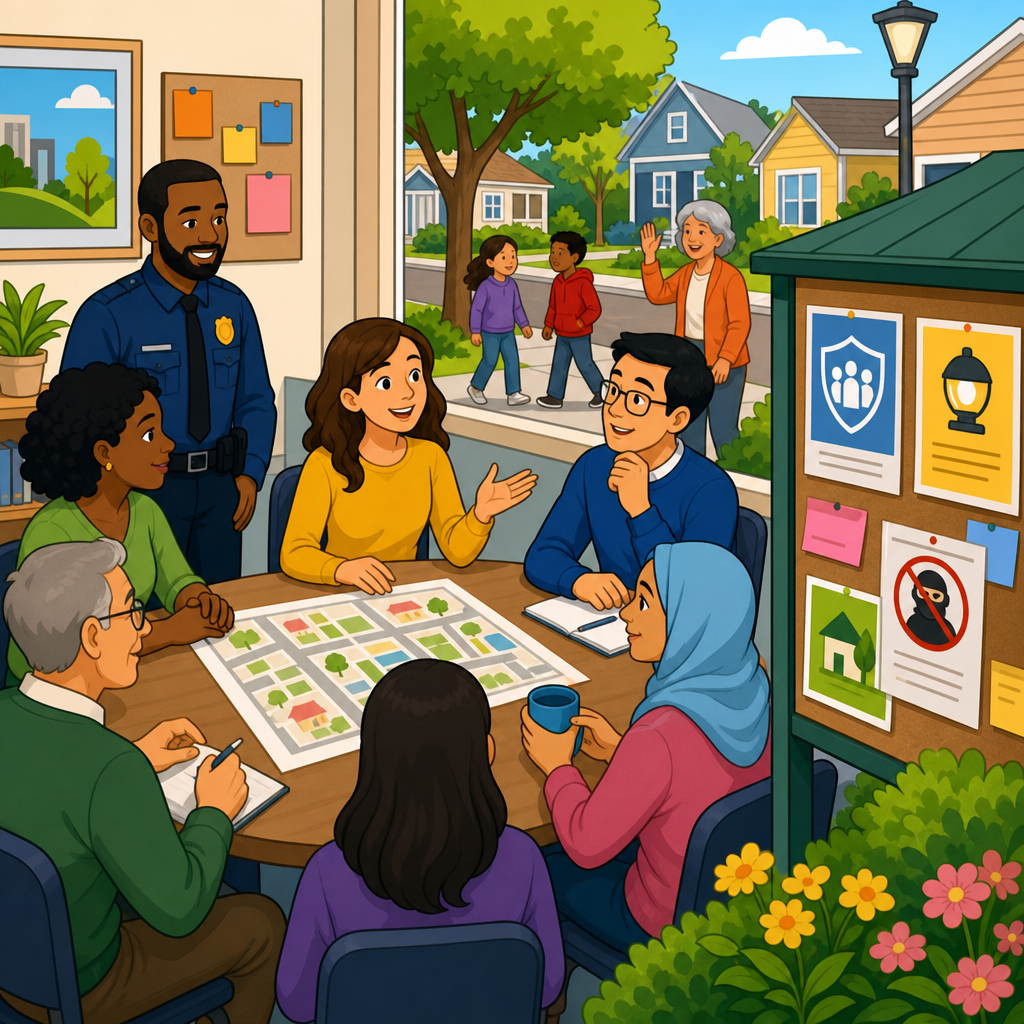
English for neighborhood safety meetings and local notices is practical language used to report concerns, share updates, ask for action, and keep residents informed without confusion. In community settings, the right words matter because messages often involve risk, urgency, and coordination between neighbors, building managers, schools, and local authorities. A neighborhood safety meeting is usually a structured discussion about crime prevention, traffic hazards, emergency planning, lighting, suspicious activity, or rules for shared spaces. Local notices are the written messages that support those discussions, including flyers, email alerts, bulletin board announcements, text updates, and door-to-door handouts. I have helped adult English learners prepare for tenant meetings and resident association discussions, and the same problem appears again and again: people know the issue, but they do not know the exact English needed to explain it clearly, politely, and persuasively. That gap can lead to misunderstandings, delayed responses, or residents feeling excluded from decisions that affect their safety.
This topic matters because neighborhood communication works best when it is precise, calm, and easy to act on. Safety language is different from casual conversation. It requires specific vocabulary such as “incident,” “witness,” “street lighting,” “emergency contact,” “non-emergency line,” and “evacuation route.” It also depends on useful grammar patterns, especially for requests, reports, warnings, and recommendations. For example, “There has been repeated vandalism near the west entrance” is stronger and more useful than “Something bad happened outside.” Good English for local notices also follows clear information design: what happened, where, when, who should respond, and what action to take next. When residents can understand these messages quickly, communities respond faster, document concerns better, and build trust between neighbors. Strong language skills do not replace police, fire services, or formal emergency systems, but they help residents communicate with those systems effectively and support each other before small problems become larger ones.
Core English used in neighborhood safety meetings
The most useful English for neighborhood safety meetings falls into four functions: describing a problem, giving evidence, making a request, and proposing a solution. In real meetings, residents often need sentence frames that keep emotion under control while making the concern unmistakable. A strong opening sounds like this: “I’d like to raise a concern about poor lighting near the rear parking area.” That sentence is direct, polite, and specific. To add evidence, use details that can be verified: “Over the last three weeks, three residents reported seeing people hiding between the dumpsters and the fence after 10 p.m.” This is better than vague phrases such as “It feels unsafe there,” although feelings can still be included: “Several parents have said they do not feel comfortable walking home from the bus stop after dark.”
Requests should be action-based. Say, “Could the association install a brighter motion-sensor light?” or “Can we ask the city to repaint the crosswalk and add a speed hump?” Recommendations become stronger when tied to a reason: “Because drivers often ignore the stop sign at Oak and Third, a visible traffic-calming measure would reduce the risk to children walking to school.” Useful meeting verbs include “report,” “monitor,” “install,” “repair,” “investigate,” “circulate,” “patrol,” and “coordinate.” Important nouns include “blind corner,” “vacant lot,” “building access,” “noise disturbance,” “package theft,” and “maintenance backlog.” When learners practice these words in complete sentences, they sound more credible and are easier for a chairperson or secretary to record accurately in the minutes.
Meetings also require turn-taking language. Residents need phrases for entering the conversation, agreeing, disagreeing, and clarifying. Common examples are “May I add something?”, “I agree with that point,” “I see it differently,” and “Just to clarify, are we discussing the alley behind Building B or the main parking lot?” These phrases reduce conflict and keep attention on the issue. In many communities, the most productive speakers are not the loudest; they are the ones who can summarize clearly. A concise summary might be: “The main concern is repeated speeding between 7:30 and 8:15 a.m., especially when children are crossing.” That kind of sentence gives officials a concrete basis for follow-up. If you also want to build confidence in the informal conversation before a meeting starts, this related guide on small talk in English before a meeting or class is a useful companion because trust often begins before the formal agenda begins.
How to write local notices that people understand quickly
A good local notice answers five questions immediately: what happened, where did it happen, when did it happen, who is affected, and what should readers do next. In posted notices, email alerts, and resident group messages, clarity matters more than style. Start with a plain headline such as “Safety Notice: Broken Gate Lock at South Entrance” or “Community Alert: Phone Scam Targeting Older Residents.” Then give the key facts in the first sentence. For example: “On Tuesday, 14 May, the lock on the south entrance gate was found damaged, and the gate may not close securely.” This structure helps readers scan the message and understand the risk in seconds.
The body of the notice should explain actions, not just information. Effective instructions include “Please avoid using this entrance after dark,” “Report suspicious activity to building management and use the non-emergency police line if appropriate,” or “Parents should remind children not to share apartment numbers with strangers.” In my experience, the biggest writing mistake is overloading a notice with background details while hiding the action step. Residents do not need a dramatic narrative; they need usable guidance. Keep sentences short, identify contact points, and state deadlines if there is a meeting or response window. If the message concerns a public hazard, include temporary alternatives: “Until repairs are complete, use the east stairwell.”
Local notices should also match the seriousness of the issue. Not every problem is an emergency, and inaccurate urgency can make people ignore future warnings. Use “urgent” only when immediate action is necessary. For less critical issues, choose labels such as “update,” “reminder,” or “advisory.” Plain language is especially important in multilingual neighborhoods, where some readers may rely on translation tools. Avoid idioms like “keep your eyes peeled” and choose direct wording like “stay alert and report anything unusual.” Dates should be written unambiguously, times should include a.m. or p.m., and locations should use landmarks people actually recognize. A notice that says “near the loading area beside the daycare entrance” is far more useful than one that says “in the back.”
Useful phrases for reports, warnings, and requests
Residents benefit from ready-made phrases they can adapt during meetings and in written notices. The table below shows common situations and practical English that works well in community settings.
| Situation | Clear English to use | Why it works |
|---|---|---|
| Reporting repeated problems | “There have been several incidents of bike theft in the basement storage area this month.” | Uses a measurable timeframe and names the exact location. |
| Describing risk | “The sidewalk outside Building C is uneven and could cause a fall, especially for older residents.” | Explains both the hazard and who may be most affected. |
| Making a polite request | “Could management arrange a safety inspection of the rear stairwell?” | Direct, respectful, and action-focused. |
| Giving a warning | “Please do not open the main door for unknown visitors claiming to be delivery staff.” | Specific behavior is named clearly. |
| Asking for clarification | “Do we know whether this was reported to the non-emergency line?” | Keeps discussion factual and organized. |
| Proposing a solution | “Installing better lighting and trimming the hedges would improve visibility.” | Pairs two realistic actions with a clear benefit. |
These phrases work because they are concrete, neutral, and easy to document. Minutes from resident meetings often become the record used in follow-up emails, maintenance requests, or reports to local councils. If the spoken English is vague, the written record becomes weak as well. Another useful pattern is cause and effect: “Because the side gate does not latch properly, non-residents can enter the courtyard.” This structure helps decision-makers understand why a repair matters. Conditionals are also important: “If the cameras are not working, the area should be checked manually until repairs are completed.” They allow residents to discuss solutions responsibly without sounding accusatory.
Questions are equally important. Strong questions move a meeting forward: “Who is responsible for contacting the traffic department?”, “When can residents expect an update?”, and “Is there a temporary measure we can use while waiting for repairs?” Weak questions, by contrast, create frustration because they are too broad, such as “Why is nothing ever done?” The goal is not only to speak English correctly but to get a safer result. In neighborhood settings, effective language is practical language.
Balancing politeness, urgency, and accuracy
One of the hardest skills in safety communication is balancing courtesy with seriousness. If language is too soft, people may not act. If language is too aggressive, others may become defensive or dismissive. The most effective approach is calm precision. Instead of saying “This area is a disaster,” say “The alley lighting has failed twice this week, and residents are using phone flashlights to reach the entrance.” That sentence shows the issue and the consequence. It sounds responsible, not emotional. The same principle applies in notices. “Residents are advised to secure bicycles with a U-lock and avoid leaving them overnight in the open rack” is more useful than “Be careful with your bikes.”
Accuracy is essential because safety messages can influence behavior. If you report suspicious activity, separate observation from assumption. Say “A man was trying multiple car door handles at approximately 11:20 p.m.” rather than “A criminal was attacking vehicles.” The first statement is observable and reportable. The second may exaggerate what is known. This distinction matters when communicating with management, local officials, or police. It also protects trust within the community. Over time, neighbors pay attention to people who describe events carefully, note times and locations, and avoid rumors. That credibility makes future warnings more effective.
Finally, remember that local safety English is not about sounding formal for its own sake. It is about helping people act quickly, understand risk, and cooperate across different language levels. Learn the core vocabulary, use specific sentence patterns, and keep notices focused on facts and next steps. In meetings, speak in short, well-structured points. In writing, front-load the important details. Communities become safer when more residents can participate clearly, not just native speakers or confident public speakers. If you attend resident meetings, manage a building, volunteer with a neighborhood association, or simply want to communicate concerns better, practice these phrases and adapt them to your own area. Better English for neighborhood safety meetings and local notices leads to faster understanding, stronger records, and more effective action.
Frequently Asked Questions
What kind of English is most useful in neighborhood safety meetings and local notices?
The most useful English for neighborhood safety meetings and local notices is clear, direct, and specific. In these situations, people are not trying to sound formal for the sake of formality. They are trying to make sure everyone understands what the problem is, where it is happening, who is affected, and what action should be taken next. Useful language often includes practical phrases for reporting concerns, giving updates, requesting support, and clarifying urgency. For example, residents may need expressions such as “There has been repeated speeding near the school entrance,” “The streetlight on the corner is not working,” or “Please report suspicious activity to the building manager and local police.”
Good safety communication also avoids vague wording. Instead of saying “Something dangerous happened recently,” it is better to say “Two bicycle thefts were reported in the parking area this week.” Instead of “Be careful around the neighborhood,” a stronger notice would be “Please use the north sidewalk after dark because the south pathway has limited lighting.” This kind of wording helps neighbors act on the information rather than guess what it means.
Another important feature is polite but firm language. Safety communication often involves requests, complaints, and reminders, so the tone should encourage cooperation without creating panic or conflict. Phrases such as “We would like to request additional patrols,” “Could the maintenance team inspect the gate lock?” and “Please keep the entrance clear for emergency vehicles” are effective because they are respectful and action-oriented. In short, the best English for these settings is language that reduces confusion, supports quick understanding, and helps a community respond together.
How can I report a safety concern clearly during a neighborhood meeting?
To report a safety concern clearly during a neighborhood meeting, organize your message in a simple structure: describe the issue, give the location, mention when it happens, explain who is affected, and suggest what kind of response is needed. This keeps your report easy to follow and helps other residents, building managers, or local officials respond more efficiently. A clear example would be: “I would like to report a traffic safety issue on Oak Street near the playground. Cars have been speeding there in the late afternoon, especially between 3:00 and 5:00 p.m. This is a concern for families and children walking home from school. We would like to ask whether speed signs or a crossing monitor could be added.”
It also helps to use factual, neutral wording. Focus on what you observed instead of exaggerating or making assumptions. For instance, “The side gate has been left open three times this week” is more useful than “Nobody ever locks the gate.” “Several residents heard loud arguments in the parking lot on Friday night” is better than “The area is becoming completely unsafe.” Specific observations create a stronger basis for action because they are easier to document, discuss, and follow up on.
If English is not your first language, simple sentences are often the best choice. You do not need advanced vocabulary to be effective. Statements like “The hallway light on the third floor is broken,” “There is broken glass near the bus stop,” or “The emergency exit sign is hard to see” are strong because they are easy to understand. If possible, bring notes with dates, times, or photos. This supports your message and makes it easier for meeting leaders to record the concern accurately in minutes or notices.
What should a local safety notice include to make sure residents understand it?
A strong local safety notice should include five basic elements: the issue, the location, the timing, the recommended action, and the contact point for questions or reporting. If any of these pieces are missing, residents may misunderstand the message or fail to act. For example, a weak notice might say, “Please be aware of safety concerns in the area.” A much better version would say, “Due to several recent package thefts in Building B, residents are asked to collect deliveries promptly, avoid leaving parcels unattended in the lobby, and report suspicious activity to the front desk at extension 204.”
Plain language is especially important. Notices should avoid technical terms, long sentences, and unclear abbreviations unless everyone in the community already knows them. The goal is fast understanding. Headings such as “Traffic Alert,” “Security Reminder,” “Meeting Update,” or “Emergency Procedure Change” help people identify the purpose immediately. If the message involves urgency, say so directly but calmly. For example, “Please avoid the underground garage tonight due to a lighting failure” is better than a general warning that does not tell people what to do.
It is also good practice to make local notices action-focused. Residents should finish reading with a clear understanding of the next step. That might be “Use the rear entrance until repairs are complete,” “Attend the safety meeting on Tuesday at 7:00 p.m. in the school hall,” or “Call the non-emergency line if you notice repeated vandalism.” In multilingual communities, translated versions or simple wording can make a major difference. An effective safety notice does not just share information; it guides behavior and supports coordination across the neighborhood.
How do I ask for action from building managers, schools, or local authorities without sounding aggressive?
The key is to combine respect, clarity, and evidence. In neighborhood safety communication, people often need to request repairs, enforcement, inspections, or policy changes. The most effective approach is to describe the problem objectively, explain why it matters, and state the action you are requesting. For example, instead of saying “You need to fix this immediately because this is unacceptable,” you could say, “Several residents are concerned that the entrance camera has not been working for two weeks. Because this affects building security, we would like to request an update on repair timing.” This keeps the conversation professional while still showing urgency.
Useful phrases include “We would like to request,” “Could your office review,” “We are asking for support with,” “This issue has been reported multiple times,” and “For safety reasons, we believe this needs prompt attention.” These expressions are firm but cooperative. They work well in meetings, emails, petitions, and posted notices. If you are speaking with a school representative or city official, it is also helpful to connect the request to a specific safety outcome. For example: “Could the school consider additional crossing supervision during dismissal hours?” or “Would the city be able to inspect the damaged sidewalk to reduce fall risk for older residents?”
When possible, include practical details and a realistic request. Authorities respond better when the issue is documented and the requested action is concrete. Rather than saying “Do something about the traffic,” say “We would like the transportation department to review speeding near the intersection and consider signage, lane markings, or a speed study.” This kind of language shows that the concern is serious, community-based, and solution-focused. It encourages action without creating unnecessary conflict.
Why is clear English especially important in safety-related community communication?
Clear English is especially important in safety-related community communication because misunderstandings can lead to delays, fear, or preventable risk. In everyday conversation, vague wording may only cause minor confusion. In a safety context, however, unclear language can affect real decisions: whether someone avoids a hazardous area, attends an emergency planning meeting, reports suspicious activity, or follows building procedures during an incident. When messages involve crime prevention, lighting failures, traffic hazards, school routes, or emergency access, people need to understand the information quickly and accurately.
Clarity also supports trust. Residents are more likely to pay attention to notices and meetings when communication is consistent, calm, and specific. If messages sound dramatic, confusing, or incomplete, people may ignore them or spread incorrect information. For example, “There may be a problem near the park” can create anxiety without being useful. A better message would be “Residents are advised to use the east entrance to the park this evening because the west path lighting is under repair.” This tells people exactly what the issue is and what they should do next.
Finally, clear English helps different groups work together. Neighborhood safety often depends on coordination between residents, property managers, school staff, local police, and city departments. Everyone needs shared language for reporting concerns, confirming updates, and assigning next steps. Clear wording improves meeting notes, public notices, email updates, and spoken discussion. It reduces confusion, supports accountability, and makes it more likely that the community will respond in an organized and effective way. In short, clear English is not just about language ability; it is a practical safety tool.