
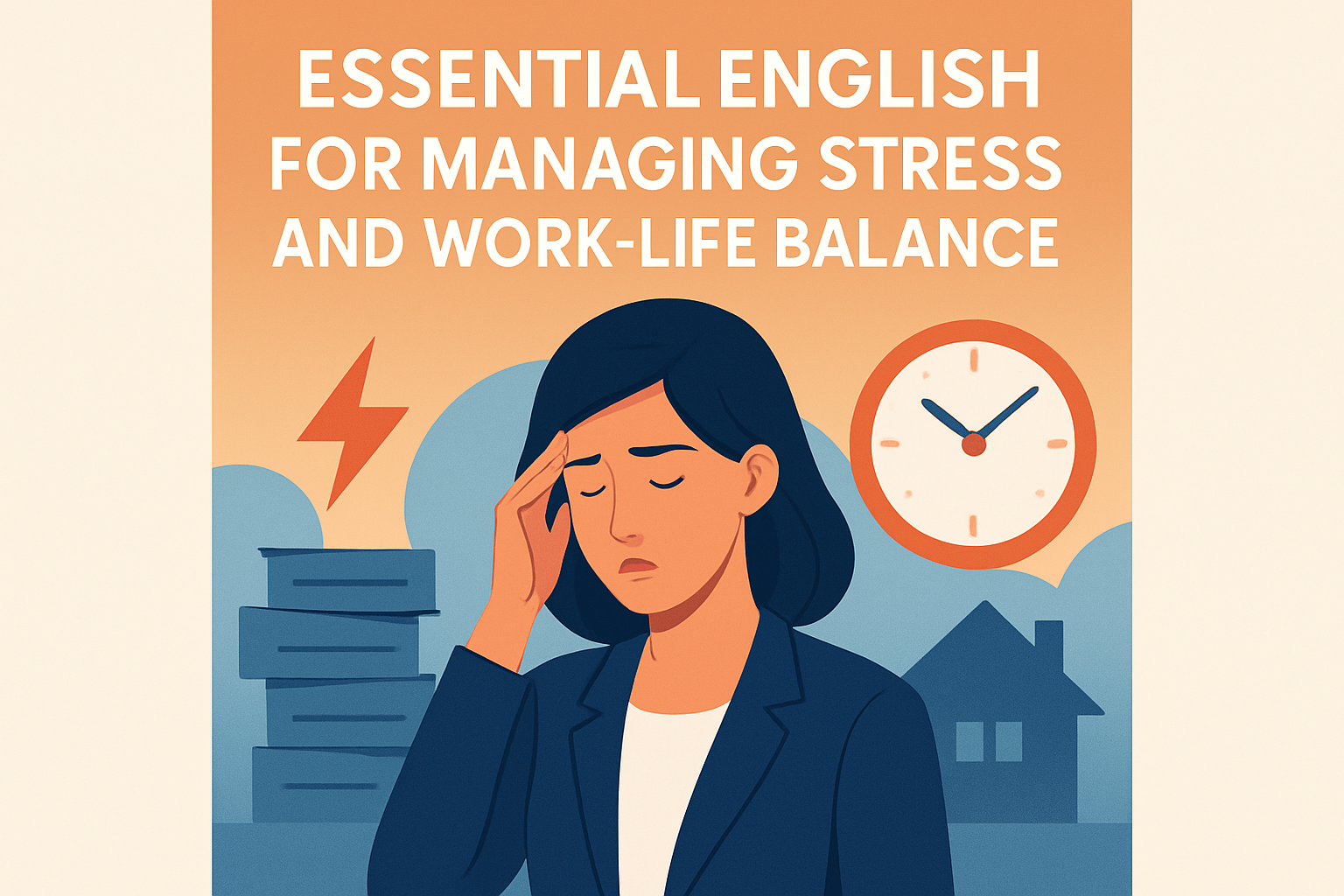
In today’s fast-paced world, the ability to communicate effectively in English can significantly influence your professional and personal life. English is not just a language but a tool that can empower you to tackle stress and maintain a healthy work-life balance. Stress and work-life balance are critical considerations for anyone striving to succeed in a competitive environment. This article aims to explore how mastering essential English skills can help in managing stress and achieving an ideal work-life blend. By understanding and applying these skills, you can enjoy a fulfilling career without sacrificing your personal well-being.
Understanding Stress and Its Impact
Stress is an inevitable part of life, often emerging as we juggle the demands of our professional and personal lives. It is crucial to recognize the symptoms of stress, which can include irritability, fatigue, and difficulty concentrating. For instance, consider Sarah, a marketing executive at a multinational company, who often finds herself overwhelmed with deadlines and meetings. When stress creeps in, it negatively impacts her productivity and overall well-being.
Clear communication in English can significantly mitigate stress levels. By articulating thoughts, concerns, and needs effectively, you reduce misunderstandings and conflicts, ensuring a smoother workflow. For example, Sarah could use assertive communication techniques to express her current workload to her manager or negotiate deadlines, ultimately reducing her stress. Skilled communicators often find it easier to manage stress as they can convey their needs and concerns effectively, leading to supportive work environments.
Work-Life Balance Essentials
A balanced work-life situation entails allocating adequate time and energy to both professional responsibilities and personal activities. Achieving this balance can prevent burnout and promote mental and physical health. Let’s look at John, a software developer, who struggled with work-life balance as he stretched himself thin between project deadlines and personal commitments.
John began setting clear boundaries between work and personal time, a practice facilitated by strong communication skills. For instance, he would assertively inform his colleagues of his unavailability outside of working hours. Establishing such boundaries helps manage expectations and ensures dedicated personal time, which is necessary for relaxation and rejuvenation.
The Role of Time Management in Stress Reduction
Efficient time management is a cornerstone of reducing stress and maintaining work-life balance. It allows individuals to accomplish more in less time, leaving room for leisure and relaxation. Jane, an HR manager, used to feel overwhelmed by daily tasks. She adopted the Eisenhower Box method, a time management tool, to prioritize tasks based on urgency and importance.
Mastering English can enhance your ability to organize and delegate tasks effectively. You can communicate your objectives clearly, ensuring tasks are completed efficiently. Additionally, by setting realistic deadlines and negotiating priorities, you can prevent last-minute rushes, thereby reducing stress.
Enhancing Professional Relationships Through Communication
Strong relationships at work can serve as a buffer against stress. Effective communication in English is pivotal in building and maintaining these relationships. Consider Emma, a team leader, who promotes an open communication culture within her team. By facilitating regular check-ins and encouraging feedback, she fosters a supportive work environment.
Emma’s proficiency in English allows her to conduct team meetings efficiently, resolve conflicts, and build rapport with her colleagues. By practicing active listening and responding empathetically, she creates a positive workspace that reduces stress and enhances team collaboration.
The Importance of Self-Care Language
Self-care is an essential component of managing stress and maintaining work-life balance. Using the right language is vital in encouraging self-care practices. Anna, a financial analyst, learned to use affirming and positive language to advocate for her needs and prioritize her well-being.
By reframing her internal dialogue in English, Anna could diminish self-critical thoughts and focus on self-compassionate messages. This approach helps in setting healthy personal boundaries, saying no when necessary, and seeking support when needed.
- Communicate your stressors: Describe what is causing stress clearly to seek help or solutions.
- Develop a self-care routine: Incorporate language that encourages breaks and relaxation.
- Express gratitude: Use positive language to acknowledge and appreciate good moments, reducing stress overall.
Managing Stress Through Mindfulness and Language
Mindfulness involves being present in the moment, which can significantly reduce stress. Using language-based mindfulness practices can enhance self-awareness and calmness. For instance, Daniel, a teacher, incorporated mindful meditation scripts during his daily routine.
By focusing on breathing and using simple affirmations or phrases in English, Daniel could manage his stress levels effectively. Language plays a crucial role in guiding mindfulness sessions. Whether it’s through guiding meditations or journaling, English can help articulate emotions, reducing the mental clutter that often contributes to stress.
Communication Tools for Effective Stress Management
| Tool | Description | Example |
|---|---|---|
| Assertive Communication | Expressing needs and concerns confidently and respectfully | Saying “I need more time to complete this task effectively.” |
| Active Listening | Fully concentrating on the speaker, understanding their message | Paraphrasing what a colleague has said to ensure understanding |
| Feedback Exchange | Giving and receiving constructive feedback to improve work processes | “I appreciate your effort but let’s try this alternative approach.” |
| Time Management Techniques | Setting priorities and efficiently organizing tasks | Using to-do lists and schedule planners |
Practical Application: Implementing Balanced Language
Incorporating balanced language into daily interactions can significantly contribute to stress reduction and better work-life management. Let’s revisit Sarah, who now uses language consciously to create a positive work environment. She avoids negative expressions that could escalate conflict and instead uses neutral or positive language to address issues.
By practicing gratitude, offering constructive feedback, and encouraging open communication, Sarah has effectively reshaped her professional environment to be less stressful and more cooperative. Using language proactively allows her to address challenges calmly, without adding unnecessary stress.
Conclusion: Embracing English for a Balanced Life
In summary, mastering essential English skills is indispensable for effectively managing stress and achieving a healthy work-life balance. This involves understanding and utilizing various communication strategies, from expressing needs assertively to engaging in mindful language practices. The ability to communicate clearly and empathetically can create a supportive work environment, reduce misunderstandings, and prevent conflict, resulting in less stress and a more harmonious life.
The benefits of applying these skills extend beyond the workplace, positively influencing personal relationships and self-perception. By integrating effective English communication into your daily routine, you pave the way for a balanced, fulfilling life. Start today by identifying areas where language can improve your management of stress and work-life balance, and commit to practicing these essential skills consistently for lasting benefits.
Embrace the power of language, make it a pivotal part of your strategy to manage stress effectively, and maintain a fulfilling work-life balance.
Frequently Asked Questions
1. How can mastering English help in managing stress at work?
Mastering English, particularly in a professional setting, can significantly alleviate stress levels. When you have a firm grasp of the language, you can communicate your ideas more clearly and assertively. Imagine being in a meeting where everyone is sharing their thoughts and you’re struggling to articulate your own due to language barriers. This can be immensely stressful. By being proficient in English, you can confidently contribute to conversations, ask questions when you need clarification, and express concerns effectively.
Furthermore, English is a common language in business, and understanding it well can help with understanding instructions, engaging with colleagues, and handling customer interactions, which can, in turn, reduce misunderstandings that often lead to stress. You’ll also feel more empowered because you’ll know you can navigate these interactions smoothly. Reducing miscommunications and the frustration that accompanies them is a sure way to decrease workplace stress.
2. In what ways does effective English communication contribute to better work-life balance?
Effective English communication plays a pivotal role in achieving a work-life balance, especially if your work setting or community predominantly uses the language. For starters, when communication is clear, tasks can be completed more efficiently. This efficiency means you spend less time redoing work due to miscommunicated instructions, giving you more time to focus on personal activities outside of work hours.
Moreover, being able to negotiate deadlines, workloads, and responsibilities with your employer or clients effectively requires good English skills. If you can express your needs and limits clearly, it becomes easier to avoid taking on excessive work that might intrude into personal time. This way, you can maintain a clear boundary between your professional responsibilities and personal life, which is the cornerstone of a healthy work-life balance.
3. Can learning English really mitigate workplace stress, and if so, how?
Absolutely. Learning English, especially specific to your industry, can mitigate workplace stress in multiple ways. First, it improves your confidence. When you know you can understand and make yourself understood, it reduces anxiety about not following conversations or making errors. This confidence is crucial in high-pressure environments where a misunderstanding can lead to mistakes.
Additionally, English competence can open up access to a wider range of resources and support networks. For instance, most professional development resources, forums, and support groups available globally are in English. By understanding English well, you can access these resources to improve your skills further or find support from people experiencing similar workplace stressors. This network can provide insights and tips on handling stress that you might not find elsewhere.
4. How does improving my English language skills impact my overall mental health and well-being?
Improving your English skills can have a profound impact on your mental health and well-being. Language proficiency can lead to better job performance and career advancement opportunities, both of which contribute to increased job satisfaction. Job satisfaction tends to reduce stress and anxiety, promoting better mental health.
Moreover, proficiency in English enables you to express yourself more clearly and appropriately in social settings. This means that misunderstandings are less likely to occur, making social interactions more enjoyable and less stressful. This alone can lead to a happier and more fulfilled personal life, as you are able to form stronger relationships both in and out of the workplace. The ability to articulate thoughts and emotions accurately can also play a role in mental health, as it allows for clearer communication with mental health professionals and better self-expression.
5. What strategies can I implement to improve my English skills for better stress management and work-life balance?
Improving your English skills for better stress management and work-life balance can be achieved through several strategies. Firstly, consider enrolling in professional English language courses tailored to your field. These courses can help you grasp industry-specific jargon and enhance your overall communication abilities. Practice is key, so engage in regular conversations with native speakers if possible, or participate in English-speaking groups or forums.
Incorporate English learning into your daily routine. This could include reading English newspapers, listening to podcasts, or even watching movies and shows in English with subtitles. This exposure helps in picking up nuances and improves comprehension skills subconsciously, preparing you for real-life scenarios at work.
Additionally, use language learning apps that focus on vocabulary building and comprehension tailored to professional settings. Apps like Duolingo or Rosetta Stone can offer interactive ways to learn and reinforce your skills. Finally, seek feedback from colleagues or friends who are proficient in English. Constructive criticism and guidance can help identify areas for improvement, making you a more effective communicator and, consequently, supporting better stress management and a balanced life.





