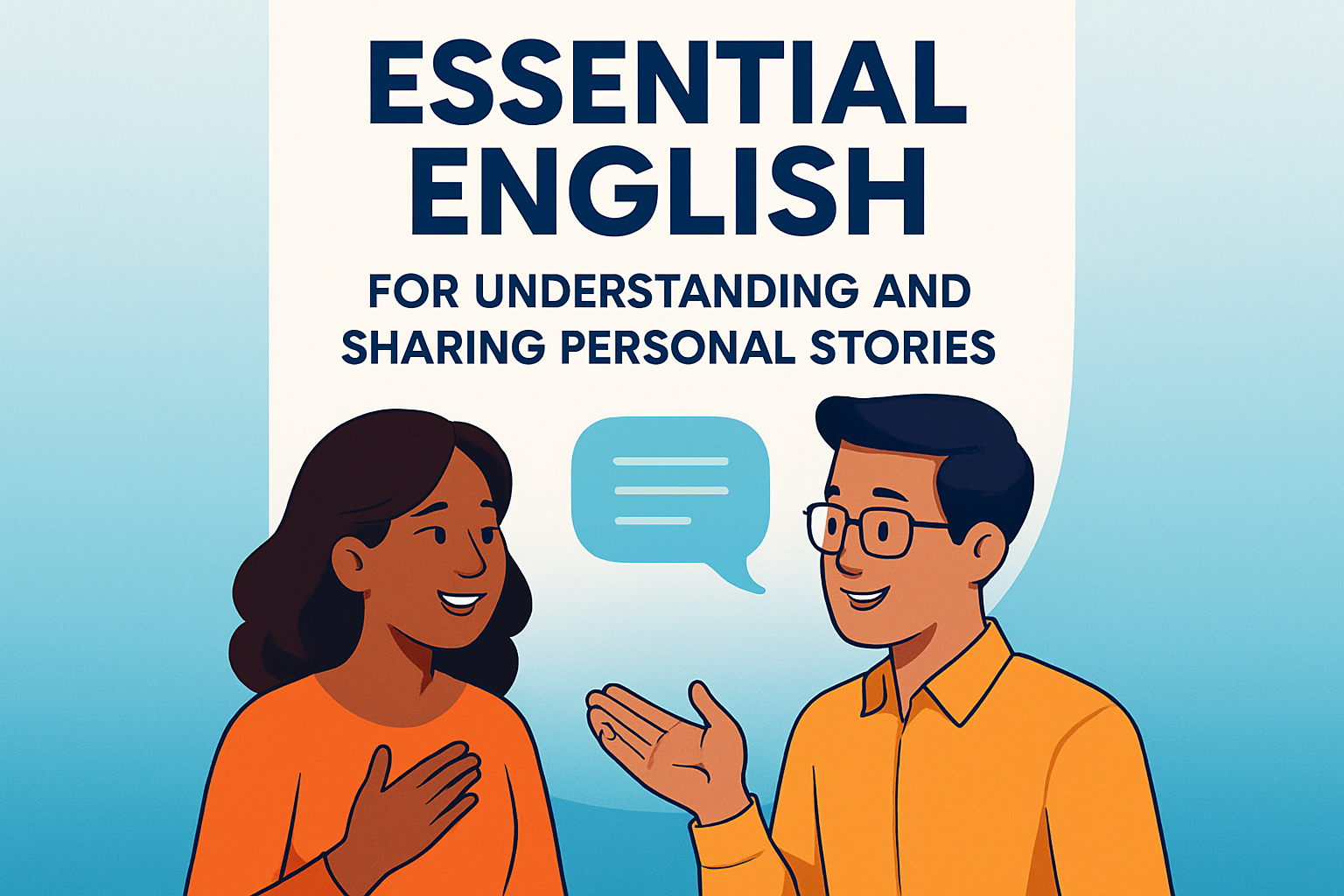
The ability to communicate personal stories effectively is a skill that’s often taken for granted. Yet, storytelling is a fundamental human activity, deeply rooted in our need to connect, reflect, and make sense of the world around us. Personal stories act as bridges—allowing us to share experiences, convey emotions, and express our identities to others. In order to do this effectively, particularly in English, one must possess not only a grasp of the language but also an understanding of how to structure and convey these narratives clearly.
Understanding and sharing personal stories in English involves specific linguistic elements, narrative techniques, and cultural nuances. Key terms include narrative structures such as beginning, middle, and end, as well as literary devices like foreshadowing, metaphor, and dialogue. Mastering these elements is not merely an academic exercise; it empowers individuals to share pivotal personal experiences, fostering empathy and understanding. Whether you are an ESL student, a global traveler, or someone trying to share your life story, the ability to articulate personal narratives competently in English can significantly impact your interpersonal and professional endeavors.
The Basics of Narrative Structure
At the heart of sharing personal stories is the narrative structure. People are naturally inclined to understand events and ideas through stories that have a clear beginning, middle, and end; this is the backbone of any engaging narrative. The beginning introduces context and characters, the middle presents the main events or challenges, and the end ties everything together, often with a reflective conclusion or resolution.
Consider a real-world example of an individual recounting a significant life event, such as moving to a new country. The beginning might describe the circumstances leading to the decision to move, the middle could detail the challenges faced in adapting to a new culture and language, and the end would address the current state or reflections on the experience.
Language and Expression: Vocabulary and Grammar
Proper vocabulary and grammar are crucial in storytelling, as they can dramatically influence clarity and engagement. Simple adjustments, like choosing active over passive voice, can enhance a story’s vividness and immediacy, making it more engaging to the audience.
For example, suppose someone wants to share a story about learning to ride a bike. Instead of saying, “The bike was ridden by me for the first time,” a more vibrant expression would be, “I rode the bike for the first time!” This active construction conveys a sense of accomplishment and energy.
Additionally, using descriptive language can enhance the audience’s visualization of the story. Instead of stating, “The day was sunny,” one might say, “The sun bathed everything in a golden glow, promising a perfect day for riding.”
The Role of Tense and Perspective
The choice of tense and perspective can impact how personal stories are received. Tenses such as past, present, and future provide clarity on the timeline of events, while perspective determines how much of the narrator’s internal world the audience can access.
Telling a story about a past event, such as conquering a fear, might best utilize past tense: “I felt a surge of adrenaline as I stepped onto the stage,” allowing the audience to experience the emotions as if reliving the past alongside the storyteller. However, using present tense can create immediacy: “I stand at the edge, and my heart races with anticipation.”
Perspective, such as first-person or third-person, dictates the intimacy of the story. A first-person perspective creates a personal connection: “I never imagined I could be this brave.” In contrast, third-person might offer an observational standpoint: “She couldn’t believe her own bravery.”
Dialogue and Character Voice
Incorporating dialogue into personal stories helps bring characters to life, making situations more relatable and immersive. Characters, whether described or directly quoted, should possess distinct voices that match their personalities and circumstances.
For instance, a story about a childhood friendship could feature dialogue: “Remember when we thought we could fly?” asked Jamie, laughter bubbling in his voice. This dialogue not only reveals Jamie’s character and nostalgia but also invites the audience into the shared history between the characters.
Creating authentic character voices requires attention to detail in word choice, tone, and speech patterns. This makes characters believable and enriches the narrative, allowing the audience to connect more deeply with the story.
Cultural Contexts and Nuances
Cultural understanding is crucial when sharing stories in English, as cultural nuances can significantly affect interpretation. What is considered humorous, tragic, or even respectful can vary extensively across cultures, impacting how a story is received.
For example, humor in an English-speaking context might rely heavily on wordplay or sarcasm, which could be misinterpreted by someone from a culture where directness is valued. A story about a funny parenting mistake, such as accidentally dressing a child in mismatched socks for picture day, may evoke laughter in western cultures where such mishaps are warmly regarded. In contrast, a different culture might see this as a failure of attention to detail.
Understanding and respecting cultural differences allows storytellers to navigate these nuances, ensuring their stories are accessible and engaging to diverse audiences.
Tools for Structuring and Editing Stories
Narrative tools and editing techniques help refine personal stories into compelling narratives. Tools like outlines and story maps assist in organizing thoughts, while editing focuses on clarity, coherence, and emotional impact.
Consider utilizing an outline for a story about overcoming a personal challenge. Start with a broad plan:
- Introduction – Describe the challenge or situation.
- Developing Events – Outline the steps taken to address the challenge.
- Climax – Highlight the most intense moment of the experience.
- Resolution – Conclude with the lessons learned or changes experienced.
Through editing, refine word choice, ensure logical flow, and trim unnecessary details, focusing on elements that reinforce the main message or theme. Editing is not merely about removing grammar mistakes but enhancing the story’s overall impact.
Real-World Application: Sharing Personal Stories
How does all this apply in real-world scenarios? Sharing personal stories effectively is vital in multiple contexts. Whether it’s preparing personal statements for university applications, giving work presentations, or sharing testimonies in social settings, mastering the art of storytelling can set individuals apart.
Imagine an entrepreneur sharing their journey at a networking event. Utilizing a strong narrative structure, clear language, appropriate cultural context, and engaging dialogue can help them transform a simple pitch into an inspiring story that resonates with potential investors and partners.
| Elements | Importance | Application |
|---|---|---|
| Narrative Structure | Provides clarity and engagement | Outlining personal experiences |
| Vocabulary & Grammar | Enhances expression and clarity | Choosing the right words for impact |
| Tense & Perspective | Influences immediacy and intimacy | Creating connection with audience |
| Dialogue & Character Voice | Brings stories to life | Creating relatable narratives |
| Cultural Contexts | Affects interpretation | Tailoring stories for diverse audiences |
Summary and Call-to-Action
In summary, the essential elements of English storytelling—narrative structure, language and expression, tense and perspective, dialogue, and cultural nuances—serve as the foundation for effectively sharing personal stories. Mastery of these elements allows individuals to articulate experiences with clarity and impact, fostering connections across diverse audiences.
This capability is not only an asset in personal interactions but also a critical tool in professional and academic spheres. By harnessing the power of storytelling, you can illuminate your unique experiences, connecting with others on both an emotional and intellectual level.
As a next step, consider the stories in your life that have shaped who you are. Reflect on how these can be shared effectively with others. Practice structuring your narratives, and seek feedback from diverse audiences to refine your storytelling skills. As you continue to explore and enhance your ability to share personal stories, you’ll find that these skills open doors to new opportunities and deepen your connections with others.
Frequently Asked Questions
1. Why is storytelling such a vital part of human interaction, and how does it impact our relationships?
Storytelling is a cornerstone of human interaction because it allows us to connect on a deeper level beyond everyday conversation. Through personal stories, we aren’t just exchanging information; we’re sharing a part of ourselves: our emotions, experiences, and identities. This fosters empathy and understanding, crucial elements for building and maintaining strong relationships. When we tell stories, we often find common ground with others, which helps in forming bonds and nurturing trust. This shared narrative experience also makes it easier for others to open up and share their experiences, leading to mutually enriching interactions.
Additionally, storytelling helps us make sense of the world and our place in it. As we articulate our experiences and hear those of others, we reflect on them, allowing for personal growth and a broader perspective. This shared act of meaning-making is integral to both personal development and community building. Therefore, storytelling isn’t just about entertainment; it’s a profound, shared journey that enriches our relationships and our understanding of each other and the world.
2. What are the key components of a compelling personal story when communicating in English?
A compelling personal story in English comprises several essential components that work together to engage the audience fully. Firstly, clarity and structure are critical. A clear narrative arc, with a beginning, middle, and end, helps the listener follow the story seamlessly. Within this structure, it’s also important to incorporate a hook at the beginning—a surprising fact, a question, or an emotional statement—to capture attention immediately.
Secondly, vivid detail and descriptive language are crucial. By painting a word picture through descriptive details, you allow the audience to visualize the scenes and connect emotionally. Colors, sounds, and sensations make your story come alive, creating a vivid experience for your audience. Engaging multiple senses can draw listeners in and keep them captivated.
Another key component is the emotional connection. Personal stories resonate most when you share your genuine emotions, whether it’s joy, fear, frustration, or hope. Authentic emotional expression invites empathy and engagement. Finally, a well-crafted conclusion that offers a meaningful takeaway or lesson learned ties the story together and leaves a lasting impression. Whether it’s an insight about life, a resolution of conflict, or a growth moment, it adds value to your narrative, completing the storytelling experience.
3. How can I improve my English language skills specifically for storytelling?
Improving English language skills for storytelling involves a combination of language practice, listening to fluent speakers, and active storytelling itself. Start by immersing yourself in English through a variety of mediums like books, films, and podcasts. Paying close attention to how stories are structured and delivered in these formats can provide valuable insights into effective storytelling techniques.
Practicing writing and speaking in English is essential. Begin by writing short personal anecdotes and then reading them aloud. This practice helps in refining language and pacing. Engaging in conversations with native speakers or joining storytelling clubs can offer real-time feedback and enhance your language usage. Don’t underestimate the power of reading and analyzing well-crafted stories from great authors. They offer a treasure trove of narrative techniques and vocabulary that can enrich your storytelling.
Additionally, building a robust vocabulary filled with descriptive language can transform your storytelling. Use language-learning apps specifically focused on storytelling vocabulary, or maintain a journal of new words and expressions you encounter. Regular practice, active listening, and seeking feedback are all instrumental in honing English language skills for engaging storytelling.
4. What role does culture play in shaping how personal stories are told and understood?
Culture profoundly influences the way personal stories are told and perceived. It’s a cultural framework that dictates the norms, values, and communication styles inherent in storytelling. In some cultures, storytelling might be direct and succinct, with a primary focus on conveying clear and straightforward meanings, while in others, it might be more elaborate and rich with metaphors and symbolisms.
Understanding the cultural context of storytelling includes recognizing varying narrative styles, themes, and emotional expressions. For instance, gestures, tone of voice, and the amount of personal detail shared can differ widely across cultures. In cultures that value communal relationships, stories might focus more on collective experiences, while in more individualistic societies, personal achievements or individual challenges might be emphasized.
This cultural context extends to the audience’s interpretive frameworks as well. A story told in line with the listener’s cultural expectations may resonate more deeply. Being culturally aware and sensitive enriches storytelling, allowing for a more inclusive and meaningful exchange between individuals from diverse backgrounds. Thus, when crafting and sharing personal stories, understanding and respecting cultural nuances ensures the message is effectively communicated and appreciated.
5. How can I overcome challenges and anxieties associated with sharing personal stories in English?
Overcoming anxieties related to storytelling in English begins with building confidence through preparation and practice. Start by practicing alone or in front of a mirror, focusing on your story’s key points, ensuring clarity and emotional resonance. As you become more comfortable with your narrative, gradually introduce yourself to a small, supportive audience like friends or family who can provide constructive feedback.
Engaging in breathing exercises or mindfulness practices before storytelling can help calm nerves and improve concentration. Also, remember that perfection is not the goal; authentic storytelling often entails minor mistakes and spontaneous expressions, which are perfectly natural and relatable.
Fostering a mindset of connection rather than performance shifts the focus from the pressure of delivering a flawless story to the experience of sharing and connecting with others. By emphasizing the moments of shared emotion or lessons learned in your narrative, you can alleviate some of the anxiety associated with focusing solely on language skills.
Joining a community group or a class focused on storytelling can also provide a structured, supportive environment where practice becomes a communal experience rather than a solitary challenge. This collaborative setting encourages gradual skill development and confidence building over time, transforming anxiety into anticipation and excitement in sharing your personal stories in English.