
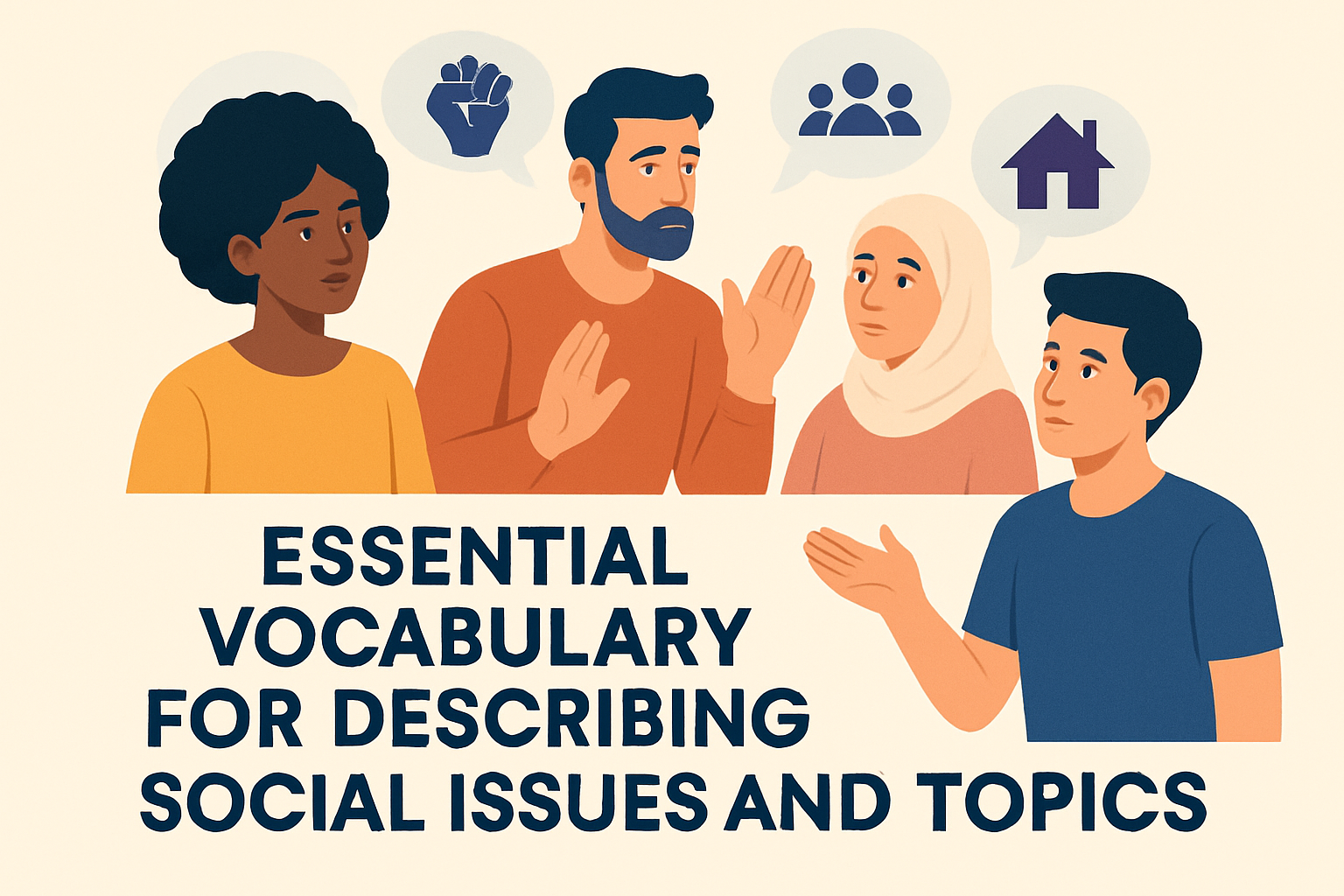
Understanding the right vocabulary is crucial when discussing social issues and community topics. Words have the power to shape how conversations are framed, influence opinions, and drive actions. Having a robust vocabulary allows for more precise communication, bridging gaps in understanding across different cultures and groups. Social issues, such as inequality, discrimination, and public health concerns, affect millions globally. Communities face challenges like poverty, educational deficits, and housing shortages, which require effective dialogue and problem-solving. By equipping oneself with essential terms related to these topics, an individual becomes a more effective communicator, capable of engaging in meaningful dialogue that can lead to real change. Mastering this vocabulary empowers people to articulate the complexities of social dynamics and community challenges, fostering empathy, awareness, and collaborative solutions.
Inequality and Discrimination
Inequality and discrimination are pivotal social issues that affect communities worldwide. Inequality refers to an uneven distribution of resources and opportunities among different groups, while discrimination involves unfair treatment based on characteristics such as race, gender, or sexual orientation. An understanding of these terms is essential for advocating for equal rights and justice.
For instance, gender inequality in the workplace is a significant issue where women may receive lower pay than their male counterparts for the same job. Describing this issue using terms like “gender pay gap,” “glass ceiling,” and “systemic bias” can help pinpoint specific problems. Policymakers and advocates can leverage this language to address and rectify such disparities effectively.
Community Development and Empowerment
Community development refers to efforts aimed at improving the well-being of individuals within a community, often involving local initiatives to boost economic growth, education, and health services. Empowerment means giving people the tools, confidence, and freedom to shape and control their own lives, both personally and within their communities.
A real-world example can be seen in urban neighborhoods focusing on grassroots projects that unite residents to tackle issues like crime and unemployment. Terms like “community engagement,” “collaborative planning,” and “capacity building” are commonly used in this context. Understanding these terms can enhance the ways in which people participate in and advocate for cohesive community strategies, leading to sustainable development.
Public Health and Welfare
Public health involves the protection and improvement of the health of people and their communities through education, policy-making, and research for disease and injury prevention. Welfare, on the other hand, involves social services provided by the government or other institutions to ensure individuals can maintain a basic standard of living.
The COVID-19 pandemic disclosed the importance of robust public health systems. Terms such as “herd immunity,” “social distancing,” and “contact tracing” became everyday language. In addition to medical professionals, the general public had to familiarize themselves with this terminology to follow guidelines effectively. This knowledge enables better compliance with health measures and improves community resilience against health crises.
Sustainability and Environmental Justice
Sustainability focuses on meeting the needs of the present without compromising the ability of future generations to meet their own needs, while environmental justice seeks to address the unfair exposure of poor and marginalized communities to environmental hazards.
For example, the fight against climate change has brought terms like “carbon footprint,” “renewable energy,” and “greenwashing” into common usage. These terms identify environmental practices and issues that require attention in policy discussions. By using precise vocabulary, advocates can highlight environmental injustices and push for policies that promote clean energy and environmental responsibility.
Education and Access
Education is a cornerstone of societal progress, and discussions around it often focus on access, quality, and equity. Accessing quality education is a challenge in certain regions, affected by factors such as funding, policy, and socio-economic disparities.
Terms such as “digital divide,” “curriculum standardization,” and “educational inequity” are vital for discussions surrounding educational policy and reform. Programs aimed at improving access, like remote learning initiatives during pandemics, can benefit from a shared vocabulary that identifies gaps and solutions effectively.
| Term | Definition |
|---|---|
| Digital Divide | The gap between those who have access to technology and the internet and those who do not. |
| Gender Pay Gap | The average difference in pay between men and women. |
| Herd Immunity | Protection from an infectious disease that occurs when a large percentage of a population becomes immune. |
| Carbon Footprint | The total emissions of carbon dioxide (CO2) and other carbon compounds, which result from human activity. |
Social Mobility
Social mobility refers to the movement of individuals or groups within a social hierarchy, which is influenced by factors like education, income, and occupation. Understanding the language around this topic is vital to addressing barriers to upward mobility.
A powerful example is the impact of educational policies on social mobility. By discussing concepts such as “meritocracy,” “upward mobility,” and “income inequality,” community leaders can craft strategies to equalize opportunities and ensure that socio-economic background is not a limiting factor in personal advancement.
Crime and Social Justice
Addressing crime and ensuring social justice are foundational to community well-being. Crime consists of actions that are deemed illegal, while social justice concerns the fair administration of laws and the pursuit of equitable treatment for all individuals.
The terms “restorative justice,” “systemic racism,” and “community policing” are essential when talking about criminal justice reform. Take, for example, community policing initiatives that aim to build trust between law enforcement and the neighborhoods they serve. Understanding and using these terms allows advocates and policymakers to create transparent, fair, and effective criminal justice systems.
Having covered these essential topics and vocabulary, it becomes clear that language drives both dialogue and action. Each term supports more nuanced discussions, encouraging informed perspectives. By effectively using this vocabulary, individuals can contribute to positive, meaningful change within their communities.
Conclusion: The Power of Vocabulary in Social Issues and Community Topics
In conclusion, mastering the essential vocabulary related to social issues and community topics is invaluable for anyone engaged in these discussions, from activists and educators to community members and policymakers. The precise language not only clarifies complex issues but also fosters empathy, drive action, and inspire collaboration towards common goals. Through the examples and terms discussed, individuals are now better equipped to engage constructively and advocate for change. The call to action is simple: actively seek to understand and use this vocabulary in discussions to promote awareness and effective solutions. It’s a step toward a more informed and inclusive society that can address and overcome social challenges head-on.
Engage with these terms, use them to shape your conversations, and encourage positive dialogue in your communities. Your voice is an integral part of cultivating change and proving that informed discussion can lead to real-world solutions.
The journey to understanding and addressing social issues starts with language, and by expanding your vocabulary, you’re contributing to the betterment of individuals and communities alike.
Frequently Asked Questions
1. Why is it important to use precise vocabulary when discussing social issues and community topics?
Using precise vocabulary when discussing social issues and community topics is essential because words shape our understanding and perception of these issues. When discussing matters like inequality, discrimination, or public health concerns, clarity is crucial to avoid misunderstandings. Precise language helps bridge communication gaps, often providing a clearer picture of the nuances involved in these complex issues.
For instance, the word “inequality” can refer to various types of disparities, such as economic, gender, or racial. By using specific terms like “gender inequality” or “racial discrimination,” we can more effectively address and understand the particular challenges within a community. Correct terminology also drives effective policymaking and advocacy by highlighting specific areas that need attention.
In addition, precise language helps prevent the reinforcement of stereotypes or the spread of misinformation, which can hinder societal progress and harmony. It empowers individuals to articulate their experiences accurately and fosters a more inclusive dialogue that respects different perspectives and experiences.
2. Can you provide examples of essential vocabulary for addressing inequality?
When addressing inequality, it is vital to familiarize yourself with vocabulary terms that encapsulate the specific dimensions of this issue. Here are some key terms:
Socioeconomic Status: Refers to a person’s economic and social position in relation to others, based on income, education, and occupation. Understanding this term helps in analyzing access to resources and opportunities.
Marginalization: Describes the social disadvantage and relegation to the fringe of society that certain groups face. Recognizing marginalization is crucial in identifying who is excluded from various aspects of social, economic, and political life.
Systemic Racism: A form of racism expressed in the practice of social and political institutions, affecting access to opportunities and outcomes for minority groups. This term is essential for understanding how deep-rooted biases perpetuate inequality.
Disparity: A noticeable and unfair difference or inequality between groups. This term is often used when talking about gaps in wealth, education, healthcare, and more.
Equity vs. Equality: While equality means providing the same level of opportunity and assistance to all segments of society, equity involves the provision of varying levels of support based on need to achieve greater fairness. Recognizing the difference between these terms is vital to creating policies that work towards actual fairness.
3. How can understanding vocabulary related to discrimination improve community dialogue?
Understanding and using the correct vocabulary related to discrimination is key to improving community dialogue as it aids in clearly identifying and addressing the root causes of social issues. This improved communication helps bring about a shared understanding, creating an environment where comprehensive solutions can be developed.
For instance, terms like “microaggressions” and “implicit bias” help articulate subtle, often unintentional discrimination that marginalized groups face on a daily basis. Recognizing these terms allows individuals within a community to address everyday instances of unequal treatment and foster empathy and understanding.
Additionally, vocabulary such as “intersectionality” highlights how different forms of discrimination (e.g., race, gender, class) interconnect and exacerbate disparities. By acknowledging intersectionality, responses to discrimination can be more holistic and inclusive, taking into account the multiple layers of identity that individuals hold.
Ultimately, such vocabulary facilitates essential conversations about discrimination, enabling communities to move towards a more fair and just society. By naming and understanding the impact of these forces, individuals and groups can better advocate for change and support one another in their efforts toward equity.
4. Why is it critical to understand the vocabulary of public health when engaging with community topics?
Understanding public health vocabulary is critical when engaging with community topics because it helps individuals navigate discussions about topics that directly affect the health and well-being of communities. Accurate use of health-related terminology ensures that community members are informed and can make sound decisions concerning their health and the health of those around them.
For example, terms like “epidemic” and “pandemic” describe the spread of disease at different levels, and knowing these distinctions is essential when communicating about public health responses. Similarly, understanding terms such as “herd immunity” and “vaccination” enables community members to engage in informed discussions about prevention strategies.
Moreover, public health vocabulary often encompasses social determinants of health, such as “health equity” and “accessible healthcare,” which emphasize the need for equal access to healthcare services. By using these terms, communities can advocate for changes that ensure all members have the opportunity for optimal health.
An informed community can better tackle public health challenges by promoting education, informed debates, and collective actions aimed at improving health outcomes for everyone. This also fosters a proactive approach to preventing and managing health issues before they escalate.
5. How does having a robust vocabulary enhance participation in discussions on community development?
Having a robust vocabulary enhances participation in discussions on community development by enabling individuals to contribute more effectively to dialogues concerning growth and improvement. A sophisticated understanding of relevant terms adds depth and precision to conversations, facilitating the generation of innovative solutions to community challenges.
Terms such as “sustainable development” and “urban planning” are foundational in shaping discussions about community growth and environmental considerations. By utilizing these terms, participants can better understand how to balance economic, social, and environmental needs.
Furthermore, vocabulary like “community engagement” and “stakeholder collaboration” illustrates processes that are fundamental to successful community development. These terms highlight the importance of including diverse voices in decision-making, ensuring that development strategies reflect the aspirations and needs of all community members.
Additionally, understanding concepts such as “resilience” and “capacity building” equips individuals with the language needed to discuss strategies that strengthen communities against unforeseen challenges while enhancing their ability to innovate and thrive.
The ability to articulate ideas clearly fosters a more inclusive environment where everyone’s insights can be heard and valued, ultimately leading to more equitable and effective outcomes in community development efforts.





