
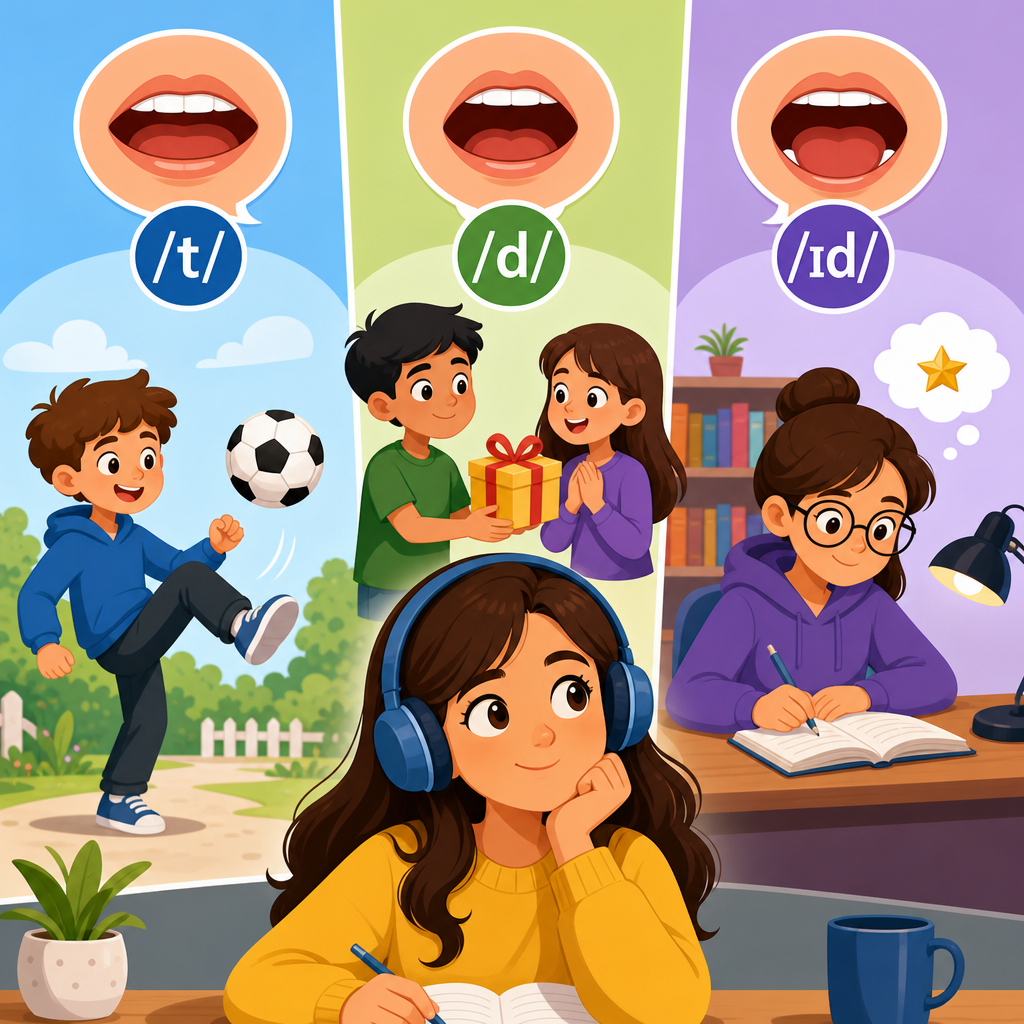
Final -ed pronunciation is one of the most useful pronunciation patterns in English because it affects thousands of common verbs, changes how natural your speech sounds, and often causes confusion even for advanced learners. In teaching and coaching speaking, I have seen the same problem repeatedly: learners know the grammar of the past tense, but they do not know how to say cleaned, watched, or wanted correctly in connected speech. The good news is that final -ed pronunciation follows clear sound rules. When you understand those rules, you can predict whether -ed sounds like /t/, /d/, or /ɪd/ without memorizing every word separately. This matters for both speaking and listening. If you pronounce the ending clearly, people understand you faster. If you hear the three patterns accurately, you can catch past-tense meaning in movies, meetings, podcasts, and everyday conversation.
In this hub article, Miscellaneous covers the essential pieces learners usually need in one place: the basic rule, how voicing works, common verb groups, spelling traps, listening practice methods, and links you should build into your wider speaking study. Final -ed pronunciation refers to the sound of the past-tense ending in regular verbs. It is not determined by spelling alone; it is determined by the final sound of the base verb. For example, walk ends in the sound /k/, so walked ends in /t/. Play ends in the sound /eɪ/, so played ends in /d/. Want ends in /t/, so wanted adds an extra syllable, /ɪd/. Once learners shift from looking at letters to hearing final sounds, progress becomes much faster.
This topic is important because mispronouncing -ed can create two problems at once. First, it can make speech harder to follow. Saying wash-ed as /wɒʃɪd/ instead of washed /wɒʃt/ adds an unnecessary syllable. Second, it can hurt listening comprehension because native and fluent speakers often reduce unstressed sounds, and the only clue to past time may be a light /t/ or /d/ at the end of a word. In exam speaking, workplace English, and daily conversation, this small ending carries real grammatical information. Mastering it improves intelligibility, fluency, rhythm, and confidence across the whole Speaking category.
The core rule: when -ed is /t/, /d/, or /ɪd/
The rule is straightforward: final -ed pronunciation depends on the last sound of the verb in its base form. Use /ɪd/ after verbs ending in /t/ or /d/, because English needs an extra syllable to pronounce the past ending clearly. That gives you wanted /ˈwɒntɪd/, needed /ˈniːdɪd/, and decided /dɪˈsaɪdɪd/. Use /t/ after voiceless sounds, such as /p/, /k/, /f/, /s/, /ʃ/, /tʃ/, and /θ/. That gives you helped, looked, laughed, missed, washed, watched, and bathed when bath is pronounced with /θ/. Use /d/ after voiced sounds, including vowels and voiced consonants such as /b/, /g/, /v/, /z/, /ʒ/, /dʒ/, /ð/, /m/, /n/, /ŋ/, /l/, and /r/. That gives you robbed, begged, loved, buzzed, changed, breathed, seemed, cleaned, called, and answered.
The easiest way to remember this is to think about your vocal cords. If the verb ends in a voiced sound, the -ed ending is usually voiced too: /d/. If it ends in a voiceless sound, the ending is voiceless: /t/. If the verb already ends in /t/ or /d/, English inserts a short vowel and creates a separate syllable: /ɪd/. This pattern reflects how English speech tends to favor efficient sound transitions. It is not arbitrary. It is a phonological process based on ease of articulation, and that is why it stays consistent across large groups of verbs.
Quick reference table with common examples
When learners need a fast answer, a clear comparison works better than a long rule explanation. The table below groups high-frequency regular verbs by final -ed sound. Read the base verb aloud first, identify the final sound, then check the past form and model pronunciation. This kind of contrastive practice is especially effective because your ear starts noticing the difference between a light final consonant and an extra syllable.
| Final -ed sound | Use after | Examples |
|---|---|---|
| /t/ | Voiceless sounds except /t/ | looked, helped, laughed, watched, washed, kissed, finished |
| /d/ | Voiced sounds except /d/ | played, cleaned, called, opened, changed, loved, answered |
| /ɪd/ | /t/ and /d/ | wanted, needed, started, decided, painted, included, visited |
Notice that spelling can mislead you. For example, laughed ends with the letters gh, but the final sound in laugh is /f/, so the ending is /t/: laughed /læft/. Called ends with the letter l, a voiced consonant, so the ending is /d/: called /kɔːld/. Watched ends with the sound /tʃ/, which is voiceless, so the ending is /t/: watched /wɒtʃt/. These examples show why pronunciation training should focus on phonemes, not just letters.
How to hear the difference in real speech
Listening is where many learners struggle most because final -ed sounds are often short and unstressed. In natural conversation, /t/ and /d/ may be released very lightly, and sometimes the stop is not strongly audible in fast speech. I regularly advise learners to stop expecting a dramatic ending. In many accents, especially in connected speech, the clue is subtle. For example, I called him may sound like the l moves directly into the next word, but the past meaning is still there in the voiced closure before him. Likewise, we watched it may compress so that watched and it flow together.
The most effective listening practice uses minimal contrasts and short phrases. Compare play/played, wash/washed, and want/wanted. Then move to sentence pairs such as They clean the office versus They cleaned the office yesterday. Your goal is not only to hear the ending in isolation but to recognize how it behaves in context. Good sources include YouGlish for authentic clips, learner dictionaries such as Cambridge and Longman for audio models, and subtitle-supported video where you can replay one short line repeatedly. Shadowing also helps: listen, pause, repeat with the same rhythm, and record yourself. If your version adds an extra syllable where none exists, you will hear it quickly on playback.
A practical routine is to train in three passes. First, listen for syllable count: is wanted two syllables while watched is one? Second, listen for voicing: does played continue voicing smoothly into /d/? Third, listen in phrases, not single words: She washed clothes, We needed help, They changed plans. This progression mirrors how fluent listeners process speech, from broad rhythm to fine detail.
Common mistakes and how to fix them
The most common mistake is pronouncing every -ed ending as /ɪd/. Learners say worked as work-id or cleaned as clean-id because the spelling suggests a full extra syllable. This is understandable, but it makes speech sound slower and less natural. The fix is targeted category practice. Put ten /t/ verbs together, ten /d/ verbs together, and ten /ɪd/ verbs together. Drill each group aloud until the mouth movement becomes automatic. Then mix them randomly. Accuracy improves when you train the contrast, not just the rule.
Another common mistake is choosing the ending from the final letter instead of the final sound. For example, use ends in the letter e, but the final sound is /z/, so used as a regular verb is /juːzd/. Watch ends in letters that may look complex, but the final sound is /tʃ/, so watched is /wɒtʃt/. I have found that learners improve fastest when they transcribe just the final sound of the base verb before adding -ed. Write watch → /tʃ/ → /t/. That one step builds the correct habit.
A third issue is articulation. Some learners know the right category but do not produce it clearly. For /t/, make a crisp voiceless ending without adding a vowel after it. For /d/, keep the sound voiced and brief. For /ɪd/, make sure you truly pronounce two syllables. Record pairs like passed and padded, called and coded, washed and waited. If they sound too similar, slow down and exaggerate before returning to natural speed.
Word groups, spelling traps, and hub connections across Speaking
Several verb groups deserve extra attention because they appear constantly in daily English. Verbs ending in vowels almost always take /d/: played, agreed, followed. Verbs ending in nasal or liquid consonants also commonly take /d/: cleaned, called, answered, learned. High-frequency classroom and workplace verbs show all three patterns: asked /t/, explained /d/, and submitted /ɪd/. A useful study set includes common collocations such as asked a question, called a client, started a meeting, changed plans, missed the train, and needed time. Practicing chunks improves both pronunciation and fluency because you train words the way you actually use them.
There are also lexical traps. Some words ending in -ed are adjectives, and their pronunciation may differ by context. For instance, blessed can be /blest/ in many ordinary uses, but blessèd may be pronounced as two syllables in religious or literary contexts. Learned is often /lɜːrnd/ as the past tense of learn, but learned as an adjective can be /ˈlɜːnɪd/ in formal usage. This is why dictionary checking matters. Reliable references include Cambridge Dictionary, Merriam-Webster, Oxford Learner’s Dictionaries, and the IPA transcriptions in Longman.
As a hub page under Speaking, this topic connects naturally to connected speech, word stress, consonant clusters, and listening discrimination. If a learner struggles with watched, the problem may not be only final -ed pronunciation; it may also involve consonant cluster production. If needed sounds unclear, the issue may involve weak vowels and unstressed syllables. In practice, I treat final -ed as a gateway skill: once learners master it, they become more accurate with past-tense narration, storytelling, presentations, and interview answers.
Final -ed pronunciation becomes manageable as soon as you stop treating it like a spelling rule and start treating it like a sound rule. The summary is simple and reliable: use /t/ after voiceless sounds, /d/ after voiced sounds, and /ɪd/ after /t/ or /d/. This one pattern covers a huge number of regular past-tense verbs and gives immediate benefits in speaking clarity and listening accuracy. It also helps you sound more fluent because your rhythm becomes closer to natural English, with fewer unnecessary syllables and cleaner consonant endings.
The best results come from combining explanation with listening and production practice. Learn the rule, check the final sound of the base verb, listen to trusted dictionary audio, then shadow short phrases until the pattern feels automatic. Focus especially on common verbs you use every day: worked, played, needed, watched, called, started, cleaned, asked. Build them into sentences, record yourself, and compare your speech to a model. Over time, the choice between /t/, /d/, and /ɪd/ stops being a grammar exercise and becomes an instinctive part of spoken English.
If you want faster progress in Speaking, use this Miscellaneous hub as your starting point and review related areas such as consonant clusters, connected speech, and listening practice. Master final -ed pronunciation first, then apply it in real conversation, presentations, and story retelling. A small ending can make a big difference. Start with ten verbs today, say them aloud, and train your ear to hear the past tense clearly.
Frequently Asked Questions
What are the three possible pronunciations of final -ed in English?
Final -ed has three pronunciations in English: /t/, /d/, and /ɪd/. This is one of the most important pronunciation patterns for past tense verbs and past participles because the spelling stays the same, but the sound changes depending on the final sound of the base verb. For example, watched ends with a /t/ sound, cleaned ends with a /d/ sound, and wanted ends with an extra syllable, /ɪd/. Understanding this pattern helps you sound much more natural because native speakers do not pronounce every written -ed the same way. Instead, they follow a consistent sound rule based on voicing and the final consonant sound of the verb. Once you learn the rule, it becomes much easier to pronounce thousands of common words correctly in everyday conversation.
How do I know when final -ed is pronounced /t/, /d/, or /ɪd/?
The rule depends on the final sound of the verb, not the final letter. Use /ɪd/ after verbs that end in the sounds /t/ or /d/. That is why wanted, needed, started, and decided all have an extra syllable. Use /t/ after voiceless sounds such as /p/, /k/, /f/, /s/, /ʃ/, /tʃ/, and /θ/. For example, helped, looked, laughed, missed, washed, watched, and finished end with /t/. Use /d/ after voiced sounds such as vowels and voiced consonants like /b/, /g/, /v/, /z/, /ʒ/, /dʒ/, /m/, /n/, /ŋ/, /l/, and /r/. That is why words such as played, cleaned, lived, used, changed, seemed, and called end with /d/. A very practical shortcut is this: if the verb ends in /t/ or /d/, say /ɪd/; if the final sound is voiceless, say /t/; if it is voiced, say /d/.
Why do so many learners pronounce final -ed incorrectly even when they know the grammar?
This happens because grammar and pronunciation are different skills. Many learners learn that -ed marks the past tense, but they are taught it first as a spelling pattern rather than as a sound pattern. As a result, they may read every -ed as /ɪd/ or avoid the ending completely in fast speech. Another reason is that learners often focus on letters instead of sounds. English pronunciation rules are based on phonemes, so the question is not “What letter is at the end?” but “What sound do I hear at the end?” There is also a listening issue: if your ear is not trained to hear the difference between washed /t/, cleaned /d/, and wanted /ɪd/, it is hard to produce those forms accurately in conversation. Connected speech makes this even harder because final consonants are often quick and subtle. In real speaking, the difference between worked and word, or played and play, can be very small. The solution is targeted practice that combines rule learning, listening discrimination, and repeated speaking. Once learners begin noticing the pattern in real speech, their pronunciation usually improves much faster.
What is the best way to practice final -ed pronunciation and improve my listening?
The most effective practice combines three steps: learn the rule, train your ear, and repeat aloud. First, sort common verbs into three groups: /t/, /d/, and /ɪd/. This builds automatic recognition. Second, do listening practice with minimal contrasts and short verb lists. For example, listen for the difference between watched, cleaned, and wanted, or between liked, lived, and needed. Pause and identify which ending you hear before checking the answer. Third, say the words aloud in short phrases, not only as isolated vocabulary. Practice sentences like I watched it yesterday, She cleaned the kitchen, and We wanted to leave early. This is important because final -ed changes in fluency depending on the next sound. You should also record yourself and compare your pronunciation to a native or high-quality model. If possible, shadow short clips by listening and repeating immediately with the same rhythm and stress. Consistent daily practice with real verbs is better than memorizing long theory explanations. Even five to ten minutes of focused listening and repetition can produce noticeable improvement over time.
Do native speakers always pronounce final -ed clearly in connected speech?
Not always. Native speakers follow the same /t/, /d/, and /ɪd/ rules, but in connected speech the ending may sound less clear than learners expect. Final consonants can be shortened, linked to the next word, or partially reduced depending on speed, accent, and sentence rhythm. For example, in a phrase like He cleaned the room, the /d/ in cleaned may connect smoothly to the next sound, and in fast speech it can be easy to miss if you are not listening carefully. Likewise, watched TV may sound very compact, and the /t/ ending may not be strongly released. This does not mean the pronunciation rule disappears; it means you need to train yourself to hear these endings in natural speech, not only in slow classroom pronunciation. That is why listening practice is essential. If you only practice isolated words, you may still struggle when people speak at normal speed. The goal is not robotic overpronunciation, but accurate, natural production. When your final -ed endings are correct and appropriately connected to the rest of the sentence, your speech sounds smoother, clearer, and much more fluent.





