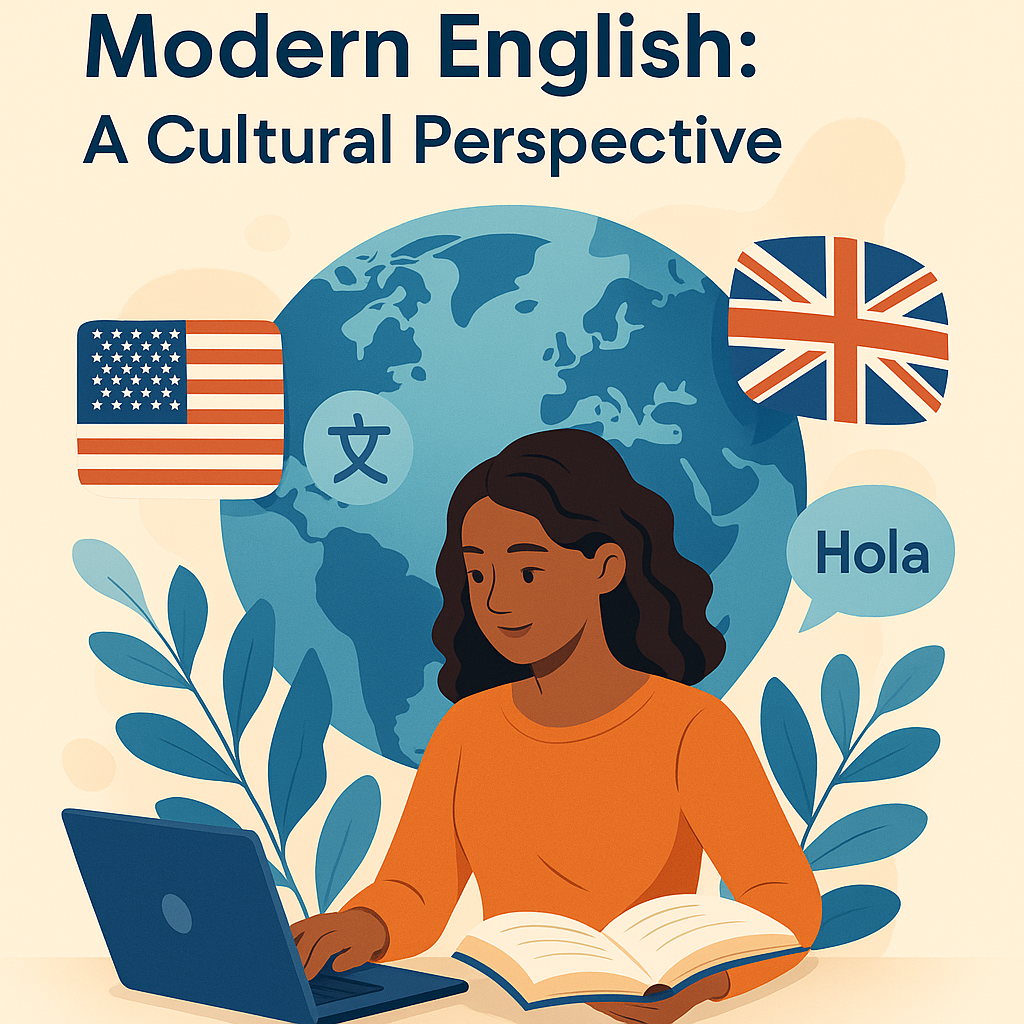
The English language, in its modern form, represents much more than a simple means of communication. It’s a living, evolving entity deeply embedded within our global culture and derived from numerous influences over centuries. At its core, English has integrated an array of linguistic elements from different parts of the world, creating a tapestry of expressions, idioms, and vocabulary that reflect diverse cultural heritage. But why does it matter? Understanding the global influences on modern English provides insights into the cultural interactions that underpin our communication, enrich our language, and enhance our engagement with the world.
In contemporary society, English plays a pivotal role not only as a lingua franca but also as a vehicle of cultural exchange. By exploring its global influences, we gain a broader perspective on how languages interact and evolve. This, in turn, emphasizes the importance of fostering intercultural understanding and preserving linguistic diversity in an increasingly interconnected world.
Historical Influences on Modern English
The development of modern English has a rich historical backdrop, marked by conquests, colonization, and trade. These historical events facilitated the interchange of languages and cultures, influencing English profoundly. Consider, for instance, the Norman Conquest in 1066, which introduced a wave of French influence. This was a pivotal moment, as English at the time absorbed a wealth of vocabulary from Norman French, thereby expanding its lexicon and creating what is now known as Middle English.
Take the English legal system as an example. Many legal terms in English such as “judge,” “jury,” and “court” derive from French, highlighting the lasting influence of the Norman Conquest. This impact extends beyond legal contexts to influence everyday language, brewing a transformation that enriched English as it amalgamated various linguistic elements across different domains.
Additionally, the British Empire’s expansion across continents brought English into contact with numerous other languages. In India, for example, English incorporated words like “bungalow,” “curry,” and “yoga.” This cross-cultural exchange mirrors historical ties that have left a lasting imprint on vocabulary, pronunciation, and even grammar.
Regional Variations and Dialects
Modern English can’t be fully appreciated without considering its regional variations and dialects. English manifests uniquely in places like the United Kingdom, the United States, Australia, and South Africa, each version colored by regional dialects and accents influenced by local languages and cultures.
The Australian English, often characterized by its distinct accent and slang, showcases the influence of Aboriginal languages through words like “kangaroo” and “boomerang.” Similarly, African American Vernacular English (AAVE) in the United States shows the influence of West African languages, particularly in its unique verb forms and vocabulary.
- British English: “Brilliant”
- American English: “Awesome”
- Australian English: “No worries”
- South African English: “Howzit?”
Explore such variations, and you’ll notice how regional dialects add richness to the English language, contributing to its status as a global medium of communication. They illustrate how cultural and linguistic diversity can merge into a unified yet multifaceted language.
Influence of Technology and Media
In the contemporary era, technology and media have emerged as significant influencers on modern English. The advent of the internet and global media has catalyzed the rapid dissemination of new vocabulary, slangs, and even emojis across English-speaking regions, leading to a dynamic and continually evolving linguistic landscape.
Consider social media platforms like Twitter, Instagram, and TikTok, which are fertile grounds for linguistic innovation. The term “selfie,” for instance, originated from Australian English and quickly gained popularity worldwide, illustrating how digital communication fosters an immediate and global spread of language. Furthermore, the prevalence of American media globally has given rise to the Anglicization of many local languages, blending unique cultural elements into everyday English.
Global Economic and Political Influences
Global economics and politics also contribute to shaping modern English. As companies expand internationally, English often serves as the primary language of business and diplomacy. This role emphasizes English’s adaptability and openness to absorption, which facilitates the exchange of ideas and technologies.
In the business world, terms such as “outsourcing,” “start-up,” and “gig economy” illustrate how economic activities necessitate new vocabulary. Countries dominant in the global economy, like the United States, significantly affect this evolution, introducing terms that frequently become universal.
| Country | Influence on English |
|---|---|
| United States | Tech and business jargon |
| India | Loanwords and cuisine terms |
| China | Modern slang and phrases |
The interplay of global economics reinforces the idea that English is not static. Rather, it is a flexible medium driven by global interactions, capitalizing on integration over isolation.
Educational Systems and English as a Global Language
The institutionalization of English as a global language in educational systems worldwide has further solidified its role. Countries such as Japan, Germany, and South Korea incorporate English vigorously into their educational curricula, contributing to a generation proficient in a language that facilitates global dialogue.
English’s presence in academia underscores its importance in fostering international collaboration and research. Consider global conferences and scientific publications predominantly authored in English, illustrating the language’s role in pioneering future global solutions.
This educational strategy ensures the continuance of the English language’s global influence—not by force, but through strategic integration, making it a bridge across cultures within educational contexts.
Cultural Exchange and the Arts
Art, literature, music, and entertainment have long served as conduits for cultural exchange, impacting modern English profoundly. The global appeal of English-language films and literature promotes cultural interchange, making English a vessel for cultural dissemination.
The British invasion of music in the 1960s, led by bands like The Beatles, illustrates how arts influence language, embedding new expressions and idioms within global English. Similarly, the success of English-language literature in international markets often drives multilingual translations, broadening English influence while inviting other cultures into the dialogue.
Such cultural exchanges suggest that language—and by extension, English—acts as an art form: one that captures and relays human experiences across cultural landscapes.
Conclusion and Call-to-Action
In summary, the global influences on modern English reflect a tapestry woven from historical events, regional dialects, technological advances, economic exchanges, educational policies, and cultural interactions. Each strand in this tapestry plays a role in shaping English as a vibrant and diverse language, adaptable to the growing demands of global communication. This adaptability showcases English’s ability to serve as both a tool and symbol of international interaction and cultural linkage.
Recognizing these influences encourages us to appreciate linguistic diversity and strive for intercultural understanding. With this understanding, it becomes imperative for individuals and institutions alike to support language learning as a means of fostering connections across cultural borders. Engage with languages through travel, education, and digital platforms to expand vantage points and deepen comprehension of the world’s complex cultural tapestry.
As you navigate the multifaceted world of modern English, ask yourself how you can further contribute to this global conversation. Whether by embracing new linguistic trends or delving into cross-cultural dialogues, enrich your language journeys to reflect a truly global perspective.
Frequently Asked Questions
1. How has globalization impacted the evolution of the English language?
Globalization has had a profound impact on the evolution of the English language. One of the primary ways it has influenced English is through the blending of vocabulary. As English-speaking countries interact with different cultures and societies, they adopt new words and expressions that become part of the English vernacular. For example, words like “sushi” from Japanese, “café” from French, and “jungle” from Hindi have seamlessly integrated into English usage. Technology and the internet have accelerated this process by providing immediate access to diverse cultures and languages, facilitating the exchange of words and ideas. This blending enriches the language, reflecting the shared experiences and interactions of a connected world.
2. What are some examples of cultural influences on the English language?
Cultural influences on English are abundant and varied, drawing from countless civilizations throughout history. Take the word “pajamas,” which originated from the Hindi and Urdu word “pājāma,” translated to “leg garment.” The ubiquitous musical genre “jazz” brings in African influences, and the word “robot” comes to us via Czech literature. The infamy and elegance of “tsar” or “czar” are Russian in origin, representing power and authority. Every cultural touchstone contributes nuances, imbuing the language with depth and history. Food, in particular, demonstrates cultural influence, with terms like “burrito,” “gelato,” and “croissant” symbolizing intricate cultural exchanges told through diverse flavors and eating experiences.
3. Why is it important to understand the global influences on modern English?
Understanding the global influences on modern English is crucial because it helps us appreciate the interconnectedness of our world. Knowledge of the etymology and evolution of English words can enhance communication, providing context and deeper meaning to our conversations. It highlights the inclusive nature of languages and poses an opportunity to embrace diversity, reducing linguistic barriers. By recognizing the global contributions to English, we learn to value and respect the rich tapestry of cultures and histories that shape our daily lives. Furthermore, this understanding fosters empathy and awareness, promoting a more harmonious global society where differences are celebrated rather than overlooked.
4. Are there specific regions or languages that have a more significant influence on English?
Throughout its history, English has been influenced by numerous regions and languages. Early influences came from the Germanic tribes—Angles, Saxons, and Jutes—whose languages laid the foundation for Old English. The Norman Conquest in 1066 brought substantial French influence, particularly in law, art, and fashion. Latin, the language of the Roman Empire and the church, contributed many words related to science and religion. In more recent centuries, the British Empire’s expansion incorporated elements from the languages of its colonies, including words from Hindi, Arabic, and indigenous languages. America’s global cultural presence has also played a pivotal role. Each region’s influence represents both historical conflict and cooperation, storing tales of conquests, voyages, and exchanges in every borrowed term.
5. How do historical events play a role in shaping English as a global language?
Historical events have been instrumental in shaping English into a global language. Major occurrences, such as the Norman Conquest, the Renaissance, and the Industrial Revolution, each left indelible marks on the language. The establishment of English as the language of science, literature, and commerce during the British Empire’s height made it a world language. The political and economic rise of the United States in the 20th century, alongside technological advancements and globalization, furthered English’s spread worldwide. Wars, trade, and migration all contribute to making English a dynamic, evolving language. These events have turned English into a lingua franca—a common tongue that facilitates global communication and commerce, necessitated by shared economic and cultural bonds.