
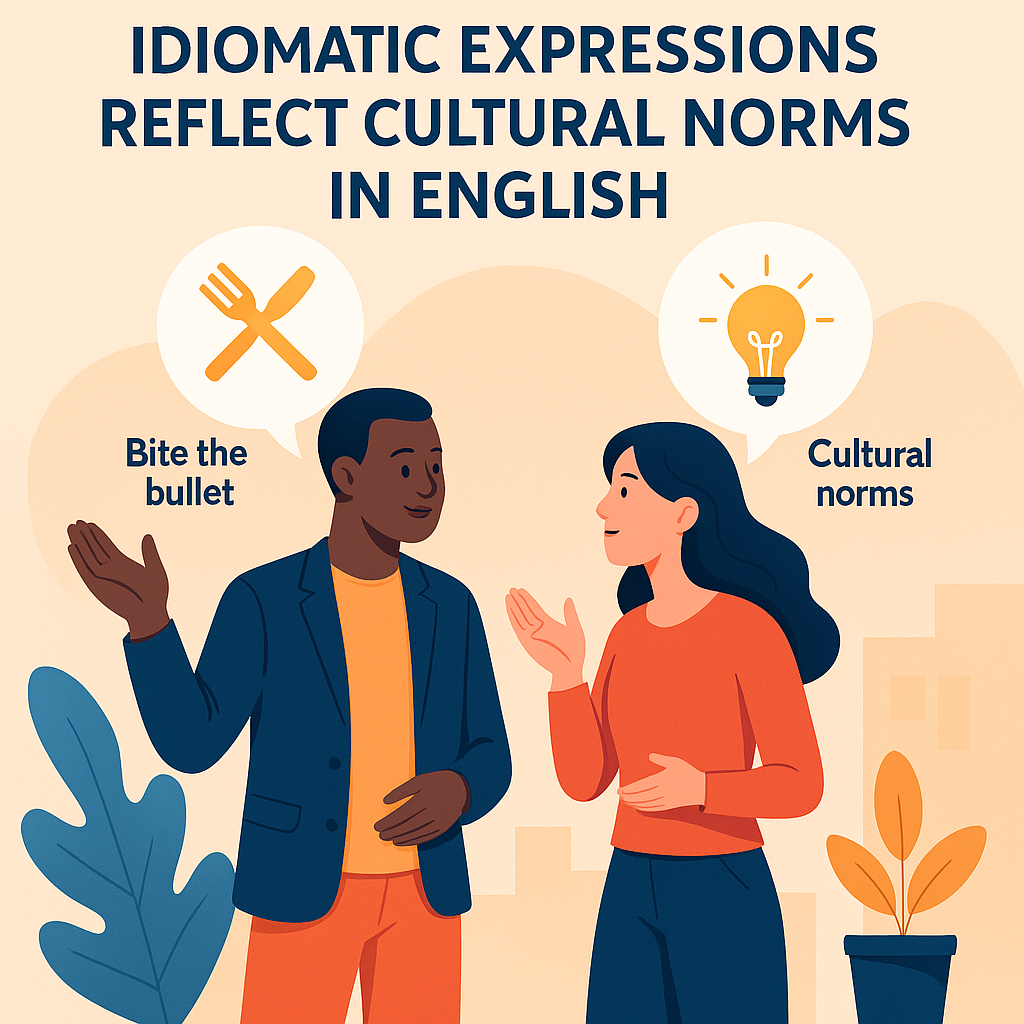
Language is a powerful tool that shapes how we perceive the world and communicate with one another. At the heart of every language are idiomatic expressions, phrases that convey meanings not deducible from the individual words. These expressions offer a window into the cultural norms and values of the speakers. Idioms, particularly in English, vividly reflect cultural histories, societal values, and shared experiences. By understanding these expressions, we can gain insights into the mindset of a culture and appreciate the nuances of language that often get lost in translation. But why does this matter? In our interconnected world, cultural literacy is as essential as technological know-how. Recognizing idiomatic phrases enriches our understanding of others and equips us with the tools to engage better in cross-cultural conversations. By deciphering idioms, we not only expand our linguistic repertoire but deepen our cultural appreciation in a way that captures the essence of a society’s beliefs and customs.
Idioms and Cultural Significance
Idiomatic expressions convey more than just literal meanings; they encode cultural values and norms. These expressions often arise from historical events, cultural practices, or the core values of a community. Take, for example, the idiom “spill the beans.” To spill the beans means to reveal a secret, and this expression is thought to have originated from an ancient Greek practice in voting, using beans as a way to cast votes secretly. When someone accidentally spilled the container, the voting results were prematurely revealed. This expression not only encapsulates a historical act but also highlights the cultural emphasis on confidentiality and discretion.
Common Idioms and Their Cultural Roots
Many idioms have deep cultural roots that offer insight into historical contexts or popular narratives. Consider “the ball is in your court.” This idiom, derived from the game of tennis, emphasizes the notion of responsibility and decision-making power transferring to the listener, highlighting the importance of personal agency within Western cultures. Similarly, “break the ice” finds its origins in the expeditions of ice-breaking ships, signifying the importance of initiating action to ease social tensions or awkwardness. Such idioms reflect not only historical practices but the values around personal responsibility and social fluidity.
- “Bite the bullet”: With origins in wartime anesthesia practices where soldiers literally bit bullets during surgeries, it signifies facing an unpleasant situation bravely.
- “Barking up the wrong tree”: This expression traces back to hunting dogs chasing prey up the incorrect tree, illustrating misguided efforts—revealing the cultural dedication to accuracy and effort.
- “Cost an arm and a leg”: Emerging from the 19th-century art industry, where portraits with more limbs were more expensive, echoing the culture’s emphasis on art as a status symbol.
Idiomatic Expressions in Everyday Communication
Idioms permeate everyday conversation and are often used to convey complex ideas succinctly. “Hit the nail on the head,” for example, not only refers to accurately identifying a problem or situation but underscores a broader cultural appreciation for precision and insight. In a business setting, saying that someone “raises the bar” reflects the cultural value placed on improvement and excellence, with roots in athletic endeavors where the bar represents the standard to be surpassed. Through these expressions, speakers share common ground, relying on mutual cultural references to convey deeper meanings efficiently.
Understanding Idiomatic Expressions in Cross-Cultural Contexts
Grasping idioms in a foreign language setting can be challenging due to their cultural specificity. The idiom “kick the bucket”, meaning to die, has no direct translation in many languages, leaving non-native speakers puzzled without cultural context. Likewise, “the lion’s share”, which comes from a fable by Aesop, signifies something disproportionate to its connotation and might need cultural context for full appreciation. Such expressions require a cultural lens for accurate interpretation, and becoming adept with idioms helps individuals bridge the gap between language learning and cultural competency, leading to improved cross-cultural interactions.
| Idiom | Literal Meaning | Cultural Insight |
|---|---|---|
| Hold your horses | Wait a moment | Demonstrates patience in decision making |
| Let the cat out of the bag | Reveal a secret | Stresses the importance of secrecy |
| Under the weather | Feeling ill | Conveys empathy for physical discomfort |
Idiomatic Expressions Reflecting Social Change
As societies evolve, so do the idiomatic expressions that reflect social dynamics and change. The phrase “digital native” is a contemporary idiom referring to someone born or brought up during the age of digital technology, familiar with it from an early age. This expression highlights how technological advancements have reshaped cultural norms concerning communication and lifestyle. Similarly, in business, phrases like “pivot” have gained idiomatic significance, capturing the adaptive strategies companies employ to survive in shifting markets. Such idioms encapsulate not just language evolution but societal adjustments to new realities and innovations.
Using Idiomatic Expressions to Foster Understanding
Recognizing and employing idiomatic expressions can foster better mutual understanding in a multicultural world. When language learners master idioms, they gain more than linguistic fluency—they deepen their cultural immersion and connect more authentically with native speakers. For instance, knowing that “pulling someone’s leg” is a jocular expression for teasing allows learners to participate in humorous exchanges and understand the friendly, informal nuances of English-speaking cultures. In business, idioms play a vital role in shaping impressions; using phrases like “think outside the box” indicates not just creativity but an understanding of cultural values around innovation.
Challenges in Idiomatic Interpretation
Despite their usefulness, idiomatic expressions can pose interpretative challenges, particularly in translation. The idiom “burning the midnight oil” translates awkwardly across languages, focusing on the cultural value of hard work rather than the literal practice of staying up late. Similarly, “sour grapes”, drawn from Aesop’s fables, may lack cultural resonance without an understanding of the original story. These challenges underscore the need for cultural context in language learning and highlight how idioms, though powerful communicative tools, require cultural literacy for full comprehension.
Conclusion
In summation, idiomatic expressions are significant linguistic elements that convey deeper cultural meanings, revealing the norms and values of a society. These expressions reflect historical contexts, social changes, and individual attitudes, offering a nuanced perspective on communication. For language learners and cultural explorers alike, mastering idioms is essential for true linguistic and cultural fluency. Recognizing their importance can enrich interpersonal interactions and bridge cultural divisions. As the next step, immerse yourself in authentic language environments, engage with native speakers, and immerse in cultural texts to embrace the richness that idiomatic expressions bring to our understanding of any language.
Frequently Asked Questions
1. What are idiomatic expressions, and how do they reflect cultural norms in English?
Idiomatic expressions are phrases whose meanings cannot be deduced directly from the individual words they comprise. For instance, “kick the bucket” means to die, although no actual kicking is involved. These expressions are an integral part of every language and serve as linguistic shortcuts that convey complex ideas efficiently.
In English, idioms reflect cultural norms by encapsulating values, beliefs, and historical influences in a way that uniquely captures the experiences and mindset of its speakers. For example, the idiom “the ball is in your court,” derived from sports, highlights the importance of responsibility and decision-making in Western culture. Similarly, “barking up the wrong tree” reflects the idea of misdirected efforts, likely echoing a historic association with hunting practices. Such idioms offer insights into the shared cultural experiences that have shaped and continue to shape the English-speaking world.
2. How do idiomatic expressions enhance communication among English speakers?
Idiomatic expressions facilitate efficient and effective communication by allowing speakers to convey nuanced ideas and emotions succinctly. They provide a rich layer of meaning that can capture complex situations with a simple phrase. For instance, saying someone is “feeling under the weather” quickly communicates they are unwell without delving into symptoms or specifics.
Moreover, idioms often evoke vivid imagery or cultural references that can resonate more deeply than literal language. This shared understanding of idiomatic expressions fosters a sense of community and belonging among speakers, as they navigate subtle social cues and cultural nuances. It also showcases linguistic creativity, as speakers play with language to express thoughts in novel and engaging ways.
3. Can idiomatic expressions create barriers for non-native English speakers?
Yes, idiomatic expressions can pose challenges for non-native English speakers because their meanings are not directly derived from the words themselves. Without familiarity with these phrases, learners may find it difficult to decode conversations that heavily rely on idioms. This can lead to misunderstandings or confusion, especially in informal settings where idioms are used liberally.
However, learning idioms can be an enriching aspect of language acquisition. Understanding and using idioms help non-native speakers communicate more naturally and align closer with cultural norms. Engaging with idioms offers insights into cultural context, humor, and values that straight translations might miss. As learners gain proficiency with idiomatic expressions, they become better equipped to navigate social nuances and connect more authentically with native speakers.
4. Are there any idiomatic expressions in English that originate from historical or cultural events?
Absolutely, many idiomatic expressions are rooted in historical or cultural events. These idioms often serve as a bridge to the past, providing modern speakers with linguistic echoes of historical moments. For example, the phrase “throw in the towel” originates from boxing, where it signified surrender. Although few people box today, this idiom remains pervasive in expressing the idea of giving up or conceding defeat.
Similarly, “bite the bullet” dates back to a time when soldiers would bite on bullets to endure surgery without anesthesia. This phrase captures the idea of facing difficult situations with resilience. Additionally, “crossing the Rubicon” refers to Julius Caesar’s decisive crossing of the Rubicon River, marking a point of no return and now signifies a committed action. These idioms encapsulate historical narratives, carried forward by language into everyday conversations, thus preserving cultural heritage.
5. How do idioms in English reflect the values and beliefs of its speakers?
Idioms frequently mirror the values, beliefs, and societal norms of English speakers. For example, expressions like “the early bird catches the worm” underscore the value of proactivity and diligence, suggesting that success comes to those who act promptly. This aligns with cultural narratives that promote hard work and initiative.
Conversely, idioms like “don’t cry over spilled milk” encourage resilience and the acceptance of minor mishaps or setbacks. This viewpoint reflects a pragmatic approach to life, emphasizing the importance of moving forward rather than dwelling on past mistakes. Additionally, idioms such as “keeping up with the Joneses” critique societal pressures to conform or compete with peers, highlighting consumerism and social comparison as pervasive elements in English-speaking cultures.
Through these idiomatic lenses, speakers express, reinforce, and sometimes question the societal rules and expectations that shape everyday interactions, illustrating how deeply interwoven idioms are with the cultural fabric they arise from.





