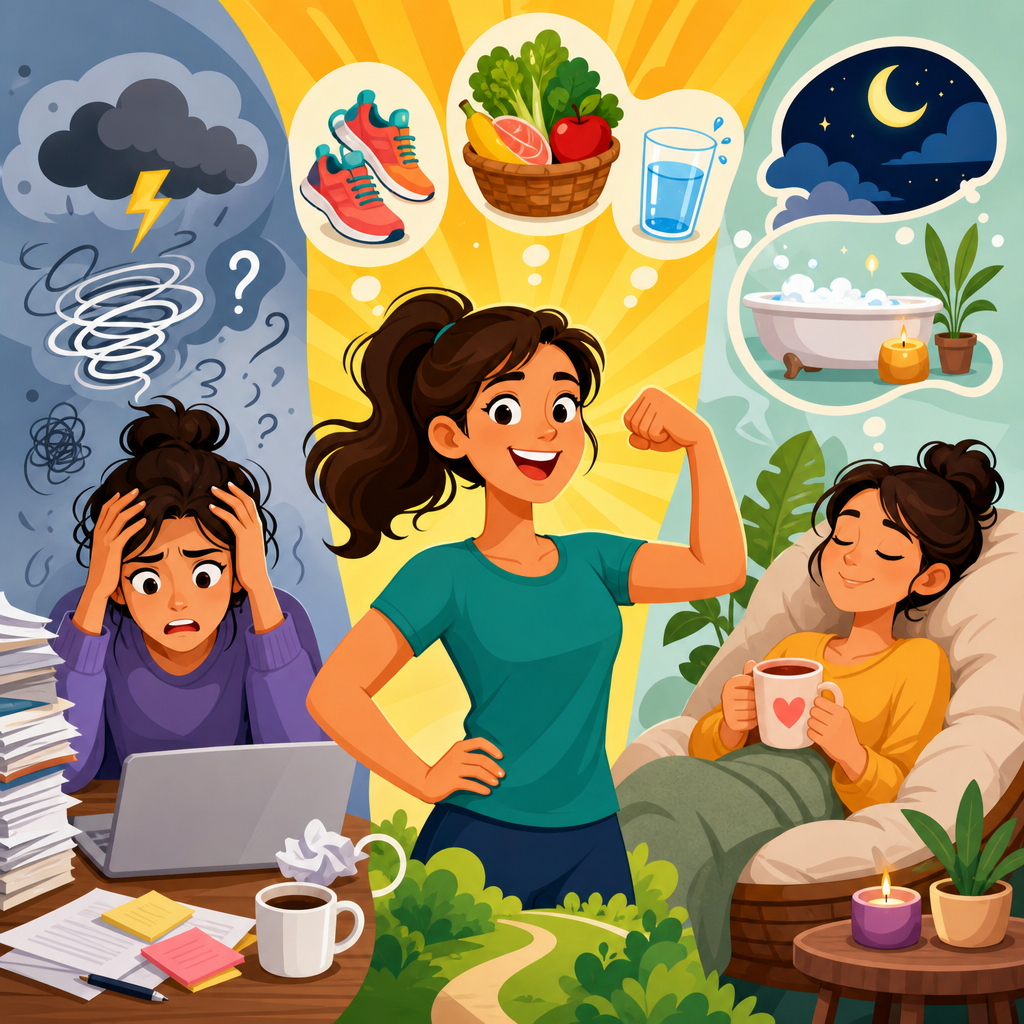
Health idioms for stress, energy, and recovery appear constantly in everyday English, and understanding them helps learners sound natural in conversations about work, exercise, sleep, and mental wellbeing. A health idiom is a fixed expression that uses body, medical, or wellness language to describe a situation that is often not literally about health. When someone says they are “running on empty,” they usually do not mean a fuel tank; they mean they have no energy left. When a colleague says a project “gave everyone a headache,” the issue is difficulty, not pain. I have taught these expressions in workplace English classes and in pronunciation clinics, and they matter because students often recognize the individual words but miss the intended meaning. That gap causes confusion in meetings, podcasts, films, and casual chats. This article focuses tightly on idioms connected to stress, energy, and recovery, showing what they mean, when native speakers use them, and where learners need caution. Used well, these phrases make your English more precise, more emotional, and more fluent.
Why health idioms matter in real conversation
Health idioms matter because English speakers reach for them when talking about pressure, motivation, fatigue, and healing. In offices, people say they are “burned out,” “under the weather,” or “back on their feet” far more often than they choose formal alternatives like exhausted, slightly ill, or recovered. In my experience, learners who know the literal vocabulary of health still struggle when a manager says, “The team needs to recharge after the launch,” or a friend says, “I’m trying not to let the criticism get under my skin.” These are not advanced literary expressions; they are common spoken English. They also appear in headlines, self-help content, sports interviews, and social media captions, which means they support reading and listening comprehension as much as speaking. Another reason they matter is tone. Saying “I’m drained” sounds more natural and personal than saying “I have low energy.” Saying “She bounced back quickly” is warmer and more idiomatic than saying “She recovered rapidly.” The best learners treat idioms as meaning units, not as separate words to decode one by one.
Idioms for stress: pressure, overload, and emotional strain
Stress idioms describe both external pressure and internal reaction. “Under the weather” usually means mildly sick, but in casual speech it can overlap with feeling low or off. “At breaking point” means someone is near emotional or mental collapse from pressure. “Get under someone’s skin” means to annoy or disturb them deeply. “A weight on your shoulders” suggests responsibility or worry that feels physically heavy. “Headache” often means a difficult person or problem, as in “The visa paperwork has been a real headache.” One of the most common modern expressions is “burned out,” which refers to exhaustion caused by prolonged stress, especially from work. The World Health Organization recognizes burnout as an occupational phenomenon, so this idiom reflects a real concept, not just slang. Another useful phrase is “keep your head above water,” meaning manage to survive a difficult period without failing. If bills, deadlines, and family duties pile up, a speaker may say, “I’m just keeping my head above water this month.” These idioms are vivid because they turn stress into images of pressure, pain, drowning, and physical limits.
Context determines whether a stress idiom sounds serious, humorous, or dramatic. “This inbox is giving me a headache” is casual and common. “I’m at breaking point” is much stronger and suggests genuine distress, so it should not be used lightly. “Don’t let it get under your skin” is advice, often given when someone is dwelling on criticism or rude behavior. Learners should also note register. “Burned out” is standard in professional conversations now, while “stressed out” is slightly more informal. I usually tell students to pair each idiom with a realistic situation. For example, after three twelve-hour shifts, a nurse might say she feels burned out. After reading hundreds of angry comments, a creator might say the negativity got under his skin. After months of legal delays, a business owner might call the process a headache. Learning through situations prevents the common mistake of using a strong idiom for a minor inconvenience.
Idioms for energy: motivation, stamina, and momentum
Energy idioms are useful because they describe more than physical strength. They cover mental drive, emotional spark, and the ability to continue. “Full of beans” means lively and energetic, often used for children but also for adults in friendly speech. “Running on empty” means continuing with almost no energy left. “Have a second wind” means to feel renewed energy after being tired, especially later in the day or during exercise. “Recharge your batteries” means rest in order to regain energy. “Fire on all cylinders,” borrowed from engines, means performing at full capacity. “Pick up steam” means gain momentum after a slow start. In sports interviews, athletes often say they found a second wind in the final minutes. In office English, people say they need to recharge after a product launch or conference week. “Running on fumes” is close to “running on empty,” but it sounds more informal and slightly more dramatic. These expressions work well because they link the body to machines, fuel, and motion, images English speakers understand instantly.
| Idiom | Meaning | Natural example |
|---|---|---|
| running on empty | continuing with almost no energy | By Friday, the whole team was running on empty. |
| second wind | new energy after fatigue | I was tired after lunch, then got a second wind at four. |
| recharge your batteries | rest and recover energy | I’m taking the weekend off to recharge my batteries. |
| full of beans | very lively and energetic | The kids were full of beans after the party. |
When teaching energy idioms, I emphasize collocation and audience. “Second wind” often appears with get, find, or catch. “Recharge your batteries” often appears with need to, time to, or chance to. “Fire on all cylinders” fits performance contexts such as business, sport, or study, but it sounds odd for a sad or reflective moment. Learners also benefit from connecting this topic with other body-based expressions; for example, the broader family of hand idioms shows how English uses the body to frame action and support, and a good companion resource is this main guide to hand idioms in English. The key point is that energy idioms rarely describe measurable calories or heart rate. They describe felt capacity. That is why “I’m drained,” “I’m recharged,” and “We’re picking up steam” are so common in human conversations.
Idioms for recovery: healing, resilience, and returning to normal
Recovery idioms help speakers talk about illness, setbacks, and emotional repair without sounding clinical. “Back on your feet” means recovered enough to resume normal life after sickness, injury, or a difficult period. “Bounce back” means recover quickly from problems or disappointment. “On the mend” means improving after illness or damage. “Sleep on it” is not exactly recovery, but it reflects a common belief that rest improves judgment and emotional regulation. “A shot in the arm” means something that gives new energy or encouragement to a person, team, or project. “Take time to heal” can be literal or emotional. In business reporting, a tax cut may be described as a shot in the arm for small firms. After surgery, a relative may say, “She’s on the mend.” After losing a major client, a company might still bounce back through better strategy and cash control. These idioms are practical because they fit health, work, relationships, and study.
There are limits, and learners should respect them. Some recovery idioms sound too casual for serious trauma. “Bounce back” works for many setbacks, but it can sound insensitive if someone is discussing grief, major depression, or chronic illness. In those cases, plain language is safer. I advise students to match the strength of the idiom to the seriousness of the situation. “Back on my feet after the flu” is natural. “Back on my feet after a difficult quarter” is also common in business. “On the mend” is warm and supportive, especially in messages. Recovery idioms often carry optimism, which is why they are popular in coaching, healthcare communication, and team leadership. They suggest progress rather than perfection. That nuance matters because real recovery is usually gradual. English captures that process well through expressions that imply movement, healing, and renewed function rather than an instant fix.
How to use these idioms accurately and naturally
The fastest way to master health idioms is to learn them in clusters by situation: stress at work, low energy after travel, recovery after illness, and emotional strain after conflict. Build short example sentences from your own life, then check them in a corpus tool such as YouGlish or the Corpus of Contemporary American English to hear authentic usage patterns. Pay attention to grammar. We say “I’m burned out,” “The comments got under my skin,” and “She’s back on her feet,” not random variations built word by word. Also notice region and tone. Most idioms in this article work in both American and British English, but frequency varies. Finally, do not force idioms into every sentence. Native speakers use them naturally when the image helps. Start by recognizing them, then use a few repeatedly until they feel automatic. If you want more fluent, emotionally precise English, learn the idioms people actually use when life feels heavy, energy dips, and recovery begins. Pick five from this article, write your own examples, and practice them aloud this week.
Frequently Asked Questions
1. What is a health idiom, and why is it useful in everyday English?
A health idiom is a fixed expression that uses the language of the body, medicine, energy, stress, sleep, or recovery to describe a situation that is often not literal. In other words, the words may sound medical or physical, but the meaning is usually figurative. For example, when someone says they are “running on empty,” they are not talking about gasoline. They mean they feel exhausted and have very little energy left. When someone says they “need to recharge,” they usually mean they need rest, quiet time, or a break from pressure.
These idioms are extremely useful because they appear constantly in natural conversation. Native speakers use them when talking about work deadlines, family responsibilities, exercise routines, emotional pressure, and recovering from busy periods. If English learners understand these expressions, they can follow conversations more easily and respond in a more natural, confident way. Health idioms also help speakers express feelings quickly and vividly. Saying “I’m under the weather” often sounds more natural and conversational than simply saying “I don’t feel well.”
Another reason they matter is that they often appear outside obvious health topics. A manager might say a team is “burned out,” a friend might say a vacation was “just what I needed to recharge my batteries,” and a student might say exam week “took a lot out of me.” None of these examples are strictly medical, but all of them use health-related imagery to describe stress, energy, and recovery. Learning these idioms helps you understand both the language and the emotional tone behind what people say.
2. Which health idioms are most common when talking about stress and pressure?
Some of the most common health idioms for stress include “under pressure,” “burned out,” “at breaking point,” “wearing yourself out,” and “on edge.” These expressions are widely used in workplaces, schools, and personal conversations because they describe different levels and types of stress. For instance, “under pressure” usually suggests that someone has a lot of demands or expectations. “Burned out” is stronger and often means a person has been under stress for so long that they feel mentally and physically drained. “On edge” suggests nervousness, irritability, or tension.
It is helpful to notice the differences in intensity. If you say, “I’ve been under a lot of pressure this week,” that sounds serious but manageable. If you say, “I’m completely burned out,” that suggests a deeper level of exhaustion and emotional depletion. “At breaking point” is even more intense and implies that someone may not be able to handle any more stress. Choosing the right idiom matters because it changes how strong your message sounds.
These idioms also work best in the right context. In a casual conversation with friends, saying “Work is driving me up the wall” or “I’m feeling burned out” sounds natural. In a more formal workplace setting, “I’ve been under significant pressure lately” may be more appropriate. Understanding tone is important because idioms can sound emotional, vivid, and personal. Used well, they make your English sound fluent and expressive, especially when discussing modern life, deadlines, mental strain, and the need for balance.
3. How do English speakers use idioms to talk about low energy and fatigue?
English has many health idioms for low energy, and they are especially common in conversations about work, parenting, exercise, and lack of sleep. Expressions such as “running on empty,” “wiped out,” “drained,” “dead on my feet,” and “out of steam” all describe fatigue, but each one has a slightly different feeling. “Running on empty” suggests that someone has pushed themselves too far and has almost no energy left. “Wiped out” often means extreme tiredness after effort, stress, or activity. “Out of steam” suggests losing momentum and no longer being able to continue at the same level.
These idioms are useful because they communicate more than just “I’m tired.” They add intensity and personality. Compare the sentence “I’m tired after work” with “By the end of the day, I was running on empty.” The second version sounds more vivid and natural in spoken English. Similarly, saying “After the gym and a long meeting, I was wiped out” gives a clearer picture of complete exhaustion.
Context is important here as well. Some expressions are very conversational. “Dead on my feet,” for example, is common in informal speech, but it may sound too dramatic in some professional situations. If you are speaking with colleagues, “I’m feeling drained” may be a safer choice. For learners, the key is to understand that these idioms often reflect degrees of fatigue. Someone who is “a bit drained” may still continue, while someone who is “running on empty” probably needs immediate rest. Mastering these differences helps you describe energy levels naturally and accurately.
4. What are the most useful idioms for recovery, rest, and feeling better again?
When English speakers talk about recovery, they often use idioms such as “bounce back,” “recharge your batteries,” “get back on your feet,” “sleep it off,” and “take it easy.” These expressions are common in both literal and figurative situations. “Bounce back” means to recover quickly from illness, stress, disappointment, or a difficult period. “Recharge your batteries” means to rest and restore your energy, usually after hard work or emotional strain. “Get back on your feet” often refers to recovering from sickness, setbacks, or instability and becoming strong or independent again.
These idioms are especially helpful because they are positive and forward-looking. If someone says, “I was exhausted last week, but I’ve bounced back,” they mean they have recovered well. If a friend tells you to “take it easy,” they are advising you to rest and not push yourself too hard. “Sleep it off” is often used when someone believes rest, especially sleep, will help a person feel better after tiredness, stress, or mild discomfort.
It is also useful to understand when these expressions are literal and when they are metaphorical. “Get back on your feet” may describe recovering from the flu, but it can also describe financial or emotional recovery. “Recharge your batteries” almost always has a figurative meaning related to rest and renewed energy. For language learners, these idioms are valuable because they appear in daily conversation, self-care discussions, workplace culture, and wellness content. They help speakers sound natural when talking about rest, resilience, and returning to normal after a difficult period.
5. How can learners use health idioms naturally without sounding forced or incorrect?
The best way to use health idioms naturally is to learn them in real-life contexts rather than as isolated vocabulary items. Instead of memorizing only the phrase “running on empty,” learn a full sentence such as “I’ve been running on empty since Monday because I haven’t slept well.” This helps you understand grammar, tone, and typical usage. The same strategy works for other expressions: “She was burned out after months of overtime,” “I need to recharge my batteries this weekend,” or “He bounced back quickly after a stressful month.”
It is also important to match the idiom to the situation and level of formality. Some idioms are ideal for casual conversation, while others can sound too dramatic, too informal, or too emotional in professional settings. For example, “I’m dead on my feet” works well with friends, but “I’m feeling quite drained” may be better in a meeting or email. Learners should pay attention to how native speakers use these expressions in conversations, podcasts, workplace communication, and everyday media.
Another smart approach is to focus on a small number of high-frequency idioms and use them repeatedly until they feel natural. Start with versatile expressions such as “under pressure,” “burned out,” “running on empty,” “take it easy,” and “bounce back.” These cover the major themes of stress, energy, and recovery and can be used in many situations. Finally, remember that health idioms are powerful because they are expressive, but they should still fit the moment. If you choose the right phrase, with the right tone, in the right context, your English will sound much more fluent, natural, and culturally aware.