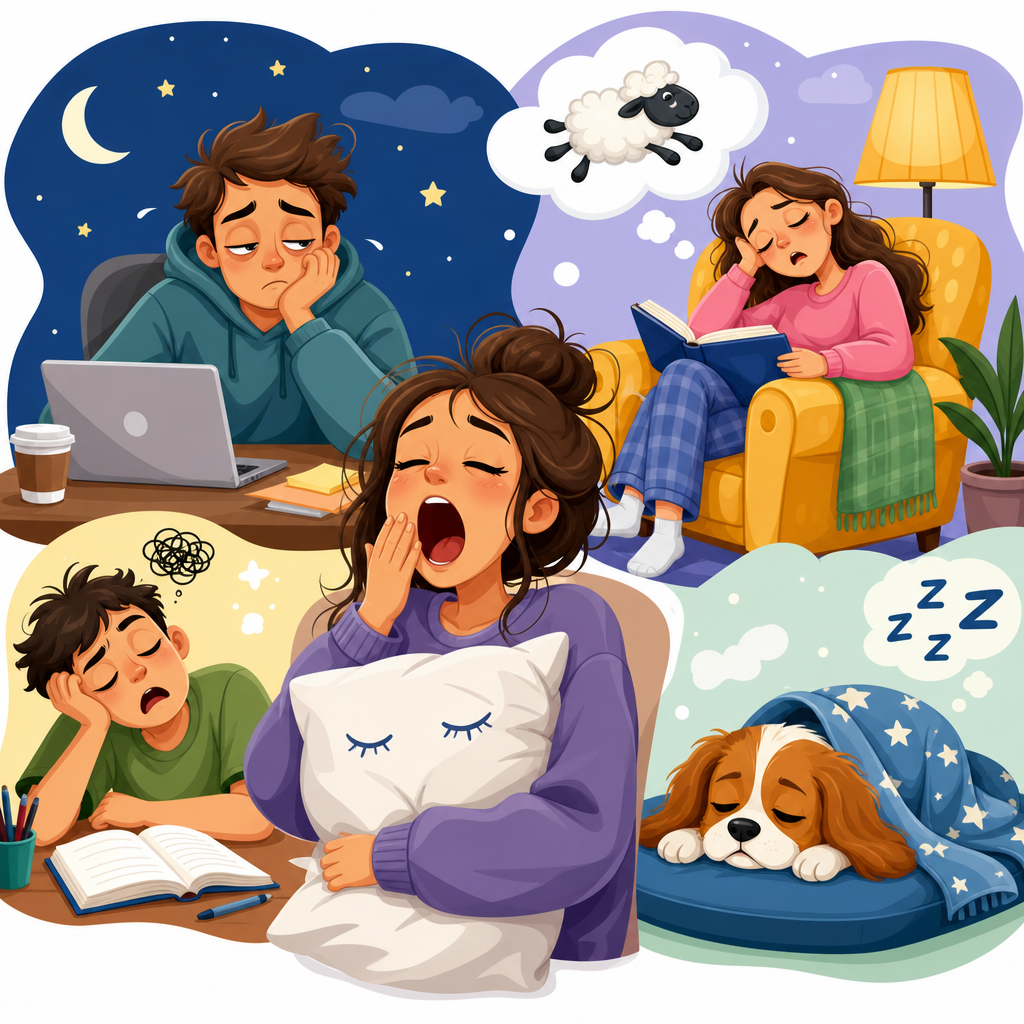
Sleep idioms and informal phrases for being tired appear everywhere in English, from casual chats at work to films, podcasts, and group texts. They describe exhaustion more vividly than the plain adjective tired, and they often reveal tone, intensity, and social context in a single expression. If a colleague says, “I’m running on fumes,” that suggests a different level of fatigue than “I could use a nap.” For learners, understanding these phrases matters because native speakers rely on them constantly, especially when talking about long shifts, poor sleep, travel, parenting, exams, and stress. In my own teaching and editing work, I have seen advanced learners understand grammar perfectly yet miss the emotional force of everyday fatigue idioms. That gap can make natural conversation harder to follow. This guide explains the most common sleep idioms and informal phrases for being tired, what they really mean, when to use them, and when not to. It also highlights register, so you know which expressions fit friends, coworkers, or informal writing, and which ones sound too dramatic, too old-fashioned, or too slangy for certain situations.
What sleep idioms and tiredness phrases actually do in conversation
Sleep idioms and informal tiredness phrases are not just vocabulary alternatives. They compress information. They can show whether someone is physically sleepy, mentally drained, overworked, jet-lagged, bored, or completely exhausted. “Dead tired,” for example, means extremely tired, usually after effort or a long day. “Sleepy” is much softer and often simply means ready for bed. “Worn out” suggests depletion after sustained activity. “Beat” is very common in North American English and means exhausted, especially after work, exercise, or travel. “Drowsy” is more clinical and often appears in health warnings, such as medication labels that say “may cause drowsiness.” That is why choosing the right phrase matters. The expression does more than describe energy level; it tells the listener how to interpret the cause and seriousness of the fatigue.
These phrases also carry social meaning. In professional settings, “I’m a little tired today” is neutral. “I’m running on fumes” is still acceptable in many workplaces, but it is more vivid and personal. “I’m shattered” is common in British English and understood widely, though it sounds more informal than “exhausted.” “I’m wiped out” works well in casual speech in both personal and work contexts, but not in formal reports. Learners who want broader command of figurative English should study idiom families, because body-related metaphors repeat across topics. A useful example appears in this broader guide to figurative language: hand idioms in English. Seeing how metaphor works across expressions makes sleep idioms easier to remember and use accurately.
Common sleep idioms and informal phrases for being tired
The most useful expressions are the ones you will hear repeatedly in daily life. “Dead tired” means extremely tired and ready to sleep immediately: “After the double shift, I was dead tired.” “Wiped out” means very exhausted, often from work, exercise, or stress: “The flight and the layover left me wiped out.” “Beat” is short, natural, and common in conversation: “I’m beat after that presentation.” “Worn out” often suggests cumulative effort: “She was worn out after taking care of the twins all week.” “Running on fumes” means functioning with almost no energy left, like a car nearly out of fuel: “By Thursday, the whole team was running on fumes.” “Couldn’t keep my eyes open” is not a fixed idiom in the narrow sense, but it is a frequent informal phrase that vividly signals strong sleepiness.
Some expressions focus on sudden or overwhelming tiredness. “About to nod off” means nearly falling asleep, especially unintentionally while sitting still: “The lecture was warm, dark, and I was nodding off.” “Out like a light” describes falling asleep very quickly: “He was out like a light five minutes after dinner.” “Need to crash” means needing to sleep soon, often after travel or a late night: “I just got in from the airport and need to crash.” “Sleep like a log” does not describe tiredness directly; it describes sleeping very deeply once sleep begins: “I was so tired I slept like a log.” In conversation, speakers often chain these phrases together for effect, such as “I was wiped out and fell asleep like a light,” though the standard form is “out like a light.”
| Phrase | Meaning | Typical context | Register |
|---|---|---|---|
| dead tired | extremely tired | after work, travel, parenting | informal, common |
| wiped out | physically or mentally exhausted | busy day, illness, stress | informal, widely accepted |
| beat | very tired | end of day, exercise, commuting | casual, especially North America |
| shattered | completely exhausted | late nights, demanding schedules | informal, especially British English |
| running on fumes | continuing with almost no energy left | deadlines, long weeks, burnout risk | informal, vivid |
| nod off | fall asleep unintentionally | meetings, buses, lectures | informal, very common |
How context changes meaning, intensity, and natural usage
One reason learners misuse sleep idioms is that dictionary definitions look similar while real usage differs sharply. “Exhausted,” “worn out,” “drained,” and “spent” all point to low energy, but they are not interchangeable in every moment. “Drained” often emphasizes emotional or mental depletion: “That customer complaint call left me drained.” “Spent” usually suggests all energy has been used up after effort: “After the hike, we were spent.” “Sleepy” points to the urge to sleep, not necessarily severe exhaustion. A child after dinner may be sleepy, but not worn out. “Groggy” means mentally foggy, often right after waking up or after poor sleep. If someone says, “I’m groggy this morning,” the focus is sluggishness, not total fatigue.
Intensity matters too. “A bit tired” is mild. “Pretty tired” is moderate. “Wiped” or “wiped out” is strong. “Delirious with tiredness” is dramatic and usually reserved for extreme sleep deprivation. In workplaces, that last phrase can sound exaggerated unless the situation truly was severe, such as overnight medical training, emergency travel disruptions, or newborn care. I usually advise learners to build a scale in their notes and attach a situation to each phrase. For example, after a normal day: “tired.” After a packed day of meetings: “drained.” After a cross-country flight and no sleep: “wiped out.” After a marathon shift: “dead tired.” This method reflects corpus-based usage patterns more accurately than memorizing isolated lists.
Regional differences and phrase choices in real English
Regional variation is important because some tiredness expressions are strongly associated with one variety of English. In British English, “shattered” is extremely common and natural: “I’m absolutely shattered.” In American English, people understand it, but “exhausted,” “wiped out,” or “beat” may sound more typical. “Knackered” is very common in the UK and Ireland and means very tired, but it is distinctly informal and can sound too regional for international business settings. Australian English also uses “knackered” and “buggered” in casual speech, though the latter can be cruder depending on context and audience. Learners working with global teams should favor widely understood phrases such as “exhausted,” “worn out,” or “running on fumes.”
Age and setting influence choice as well. Younger speakers may say, “I’m so done,” which can signal emotional fatigue, frustration, or total depletion, not just sleepiness. Online, people also say “sleep-deprived,” “low-energy,” or “zombie mode.” “Zombie” is a productive metaphor in English for moving without alertness: “I was a zombie all morning after the red-eye.” Because these expressions shift quickly across social media, learners should treat them as optional extras, not core vocabulary. Stable, high-frequency phrases are more useful first. If your goal is natural spoken English, master ten dependable expressions and their contexts before collecting dozens of niche slang items.
Typical mistakes learners make and how to avoid them
The first common mistake is mixing sleepiness with boredom. “I was falling asleep in the meeting” can mean you were physically exhausted, but it may also imply the meeting was boring. If you only want to describe low energy, say “I was struggling to stay awake because I slept badly.” The second mistake is using highly informal phrases in formal writing. “I was beat” is fine in speech or a message to a friend, but “I was extremely fatigued” fits a medical note or formal email better. The third mistake is overusing literal sleep verbs. Native speakers often prefer compact idiomatic choices: “I’m wiped out” sounds more natural than “I have much tiredness.”
Another frequent problem is wrong collocation. People say “dead tired,” not usually “dead sleepy.” They say “sound asleep,” not “strong asleep.” They say “nod off during the film,” not “nod down.” Prepositions matter. So do grammar patterns. “I need to crash” is natural; “I need crash” is not. Finally, remember that some phrases can sound humorous or theatrical. “I could sleep for a week” is common exaggeration, not a factual claim. Exaggeration is part of natural English, but it works best when the surrounding tone supports it. If you are speaking to a manager, “I’m a little wiped out after the trip, so I’ll review this first thing tomorrow” sounds measured and credible.
How to practice and use these phrases naturally
The fastest way to learn sleep idioms and informal phrases for being tired is to connect each one to a repeated real-life scenario. Make mini categories: after work, after travel, after poor sleep, after exercise, and in boring situations. Then write one sentence for each phrase. Example: after travel, “I was wiped out after the overnight flight.” After exercise, “We were spent after the hike.” In a lecture, “I nearly nodded off.” This kind of retrieval practice is more effective than rereading lists because it mirrors actual conversation. Listening also matters. Subtitles, podcasts, and workplace English clips reveal who says each phrase, with what tone, and in what setting.
Keep your active set small at first. Start with “tired,” “sleepy,” “worn out,” “wiped out,” “dead tired,” “beat,” “groggy,” and “running on fumes.” Once those feel natural, add regional or more expressive items such as “shattered” or “knackered.” The goal is not to sound flashy. It is to sound accurate. When you choose the right phrase, listeners immediately understand both your energy level and your situation. That is the real value of sleep idioms and informal phrases for being tired: they make ordinary English more precise, more human, and easier to connect with. Pick five expressions from this guide, use each in conversation this week, and you will remember them far better than by memorizing definitions alone.
Frequently Asked Questions
What are sleep idioms and informal phrases for being tired?
Sleep idioms and informal phrases for being tired are everyday English expressions that describe fatigue in a more vivid, natural, and socially meaningful way than simply saying “I’m tired.” Instead of using a plain adjective, speakers often choose phrases like “I’m exhausted,” “I’m running on fumes,” “I’m wiped out,” “I could crash,” or “I’m dead on my feet” to show how strong their tiredness is and what kind of situation they are in. These expressions are common in casual conversation, office small talk, text messages, films, podcasts, and social media, which means learners hear them constantly even if they are not always taught directly in textbooks.
What makes these phrases especially useful is that they do more than describe physical fatigue. They also communicate tone, mood, and context. For example, “I could use a nap” sounds mild and relaxed, while “I’m barely functioning” suggests serious exhaustion. “Running on fumes” usually implies that someone has very little energy left but is still trying to continue, often because they are busy or under pressure. In contrast, “ready to crash” suggests the speaker expects to sleep very soon. In real English, these differences matter because native speakers often choose expressions very precisely, even in informal settings.
Many of these phrases are not literal. If someone says “I’m dead tired,” they do not mean anything dangerous or medical; they simply mean extremely tired. If someone says “I haven’t slept a wink,” they mean they did not sleep at all, not that they were counting eye movements. Learning these idioms helps English learners understand spoken English more accurately and sound more natural when talking about energy, sleep, stress, and daily life.
Why is it important to learn idioms and slang for being tired instead of just saying “tired”?
Learning only the word “tired” is enough for basic communication, but it is not enough for fully understanding how English works in real life. Native speakers rarely rely on just one simple word when they want to express how they feel. They often choose more colorful phrases because those phrases reveal nuance. Saying “I’m tired” is general. Saying “I’m wiped” sounds casual and natural. Saying “I’m running on empty” suggests you have continued too long without rest. Saying “I’m beat” may sound more conversational and slightly more emotional. These choices help speakers express degree, attitude, and personality.
There is also a strong listening advantage. If learners do not know these expressions, everyday English can feel much harder to follow. In a workplace conversation, a colleague might say, “I’m dragging today,” and in a movie a character might say, “I was up all night, so I’m a zombie.” If you only know the word “tired,” you may miss the exact meaning or emotional force of what is being said. Understanding idioms improves comprehension in fast, natural speech and helps learners interpret context more accurately.
On top of that, using these phrases appropriately makes your English sound more fluent and socially aware. It shows that you understand not just vocabulary, but register and tone. In casual conversation, saying “I’m wiped out” may sound much more natural than repeatedly saying “I am very tired.” However, learning them also helps you know when not to use them. Some expressions are informal and fit best with friends or coworkers, while others may be too slangy for formal settings. That awareness is part of advanced communication, and it is one reason these phrases are so valuable.
What are some common English phrases for being tired, and what do they really mean?
English has many common expressions for tiredness, and each one carries its own shade of meaning. “Wiped out” means extremely tired, often after physical effort, a long day, or emotional stress. “Beat” also means very tired, but it tends to sound shorter, more conversational, and very common in everyday American English. “Exhausted” is more standard and works in both casual and semi-formal conversation. “Dead tired” means extremely tired, with emphasis, but it is still informal. “Sleepy” is different because it usually means you feel like you want to sleep right now, not necessarily that you are deeply drained.
Some phrases describe a specific kind of tiredness. “Running on fumes” means you have almost no energy left but are still continuing. It often implies overwork, lack of sleep, or too many responsibilities. “Dragging” or “dragging today” suggests low energy and slow movement, often in a temporary way. “Dead on my feet” means so tired that it is hard to keep standing or functioning. “Could use a nap” is softer and lighter; it suggests mild fatigue rather than collapse-level exhaustion. “Ready to crash” or “I could crash” means the speaker feels so tired that they want to go to sleep immediately.
There are also humorous or exaggerated expressions. “I’m a zombie” suggests someone is moving through the day without normal alertness, often after very little sleep. “I haven’t slept a wink” means no sleep at all. “Burned out” can sometimes refer to tiredness, but it usually goes beyond sleep and suggests long-term mental or emotional exhaustion, often related to work or stress. Because these phrases differ in intensity and social tone, it is helpful to learn them in groups and compare them. That makes it easier to choose the right one in the right situation.
How can English learners use tiredness idioms naturally without sounding forced or incorrect?
The best way to use these expressions naturally is to focus on context, frequency, and tone rather than memorizing long vocabulary lists without examples. Start with a small set of high-frequency phrases that fit everyday situations, such as “I’m exhausted,” “I’m wiped out,” “I’m beat,” “I could use a nap,” and “I’m running on fumes.” These are widely understood and useful in normal conversation. Then pay attention to when native speakers use them. Notice whether they appear at the end of a long workday, after travel, during exams, or in light conversation with friends. That context teaches you as much as the definition does.
It is also important to match the phrase to the level of tiredness. If you only slept one hour, “I’m running on fumes” may fit well. If you just feel a little low-energy after lunch, “I’m a zombie” might sound too dramatic unless you are joking. Overusing strong expressions can make your speech sound unnatural. In the same way, very mild phrases like “I could use a nap” may sound too weak if you are describing extreme fatigue. Good usage depends on choosing an expression that feels proportionate to the situation.
Another smart strategy is to learn these phrases inside full sentences. For example: “I stayed up finishing that report, so I’m running on fumes today.” “We got in late from the airport, and now I’m wiped out.” “I haven’t slept a wink because the baby was crying.” Practicing complete examples helps you remember grammar, common collocations, and tone. Finally, listen for regional and social differences. Some phrases are more common in American English, some in British English, and some are more common among younger speakers or in highly casual settings. If you learn them from authentic material and use them gradually, your English will sound much more natural.
Are there differences between casual, polite, and formal ways to say you are tired?
Yes, and this is one of the most important things to understand. English offers many ways to talk about tiredness, but they do not all fit the same setting. In casual conversation with friends, classmates, siblings, or close coworkers, expressions like “I’m beat,” “I’m wiped,” “I’m dead tired,” or “I could crash” sound natural and familiar. These phrases are common in speech because they are expressive and efficient. They often create a friendly, relaxed tone and help conversations feel more natural.
In polite or neutral settings, many speakers choose expressions that are less slangy but still natural. Phrases like “I’m pretty tired,” “I’m exhausted,” “I didn’t sleep well,” or “I’m feeling a bit low on energy today” work well in workplaces, classrooms, and everyday professional interactions. These versions still communicate fatigue clearly, but they sound more measured. If you are speaking to a manager, client, teacher, or someone you do not know well, this middle level is usually safer than highly informal idioms.
In more formal communication, especially in writing, very casual idioms may sound unprofessional. For example, in an email you would usually write “I’m feeling fatigued” or “I did not get much sleep last night” rather than “I’m running on fumes.” Formal English often prefers clarity and restraint over colorful slang. That said, spoken professional environments can be flexible, and mild idiomatic language may still appear, especially in team settings. The key is reading the room. If the environment is relaxed, some informal phrases may be fine. If the setting is formal or high-stakes, simpler and more neutral language is usually the better choice.