
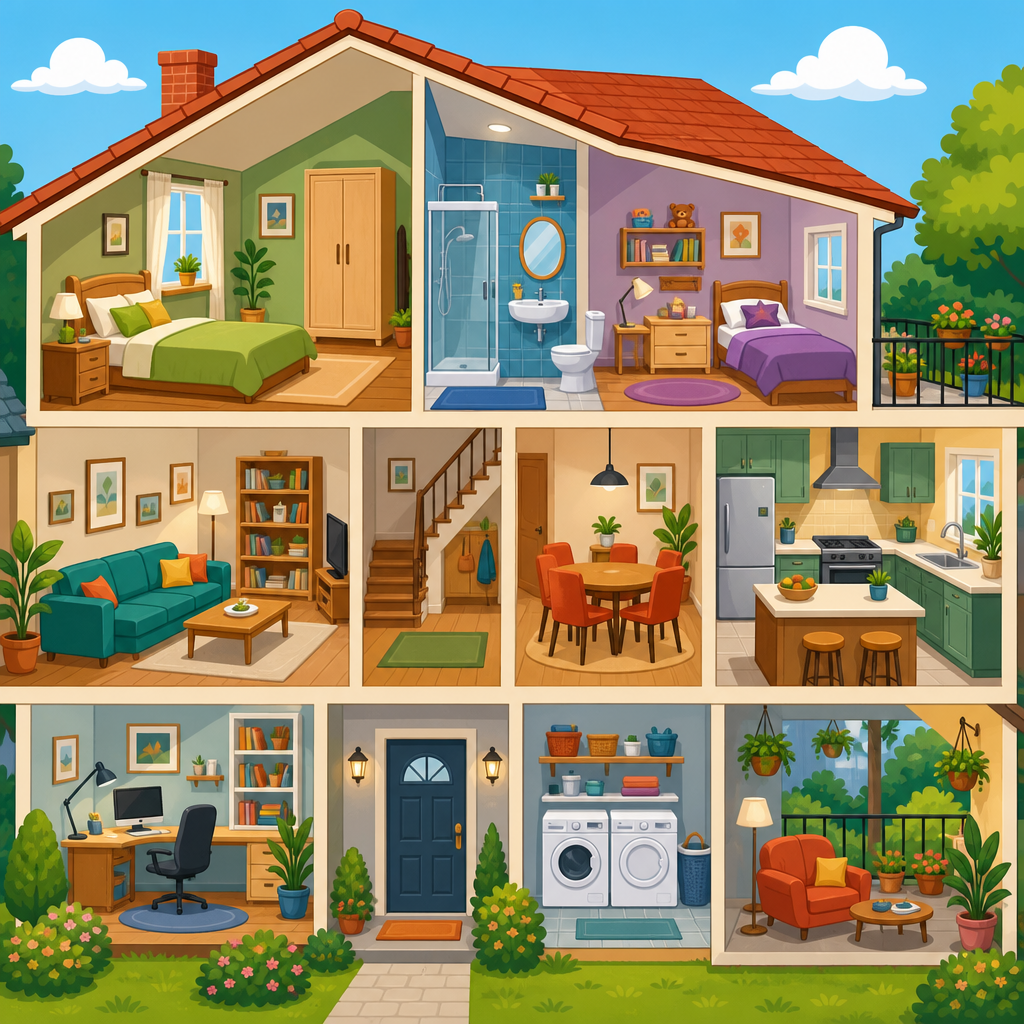
House and apartment vocabulary room by room helps English learners describe where they live, understand rental listings, and speak clearly with landlords, roommates, guests, and repair workers. In practical English, vocabulary is not just a list of words; it is the set of terms people use in real situations, such as reporting a leak under the sink, asking whether a bedroom is furnished, or explaining that the hallway closet is too small. I have seen learners understand general apartment conversations but still freeze when they need the exact word for a windowsill, a countertop, or a shower curtain. That gap matters because housing language is highly specific. A wrong word can cause confusion, especially during move-in, maintenance requests, or apartment tours.
House vocabulary and apartment vocabulary overlap, but they are not identical. A house is usually a separate building, while an apartment is one home inside a larger building. Because of that, apartment living often adds words such as lobby, elevator, buzzer, unit, and shared laundry room. Room by room learning is the fastest way to remember these terms because people naturally connect words to spaces and actions. Instead of memorizing isolated items, learners group vocabulary by function: sleeping in the bedroom, cooking in the kitchen, washing in the bathroom, and storing things in closets or cabinets. That structure also mirrors how native speakers explain a home during tours, listings, and conversations.
This focused guide teaches the most useful room-by-room home vocabulary in plain English. It stays close to daily use, so you can recognize these words in apartment ads, ask better questions, and describe problems accurately. If you are building a wider set of rental phrases, it also helps to review the main guide on English for renting an apartment words you need before you sign, but here the goal is narrower: learn the names of rooms, fixtures, surfaces, furniture, and common features inside a home.
Entryway, living room, and hall vocabulary
The entryway is the area you step into when you enter a home. In houses, people may also say foyer, especially for a larger entrance area. In apartments, common words include front door, deadbolt, peephole, buzzer, intercom, and doormat. If shoes are kept there, you may hear shoe rack or entry bench. Just inside the door, many homes have a coat closet for jackets, umbrellas, and bags. Learners often confuse closet and cabinet; a closet is a tall storage space you can usually step up to or partly into, while a cabinet is a built-in storage compartment with shelves, often in kitchens or bathrooms.
The living room is the main shared space for relaxing or hosting guests. Core living room vocabulary includes sofa or couch, armchair, coffee table, side table, lamp, rug, curtains, blinds, bookshelf, TV stand, and remote control. The wall area around a fireplace, if there is one, may include a mantel. In apartments, common building-related terms near the living area include balcony, sliding door, and air vent. I often tell learners to notice the difference between floor and story: the floor is the surface you walk on, while a story is a level of the building. Hallway is another essential word. It means the passage connecting rooms, and it often contains light switches, outlets, and sometimes a linen closet.
Kitchen vocabulary that appears in daily life and rental listings
The kitchen usually contains the highest number of specialized household words, and many appear in listings. Start with major appliances: refrigerator or fridge, freezer, stove, oven, microwave, and dishwasher. In American English, stove often means the cooking unit as a whole, while burners refer to the heated circles on top. A kitchen sink includes a faucet, handles, drain, and sometimes a garbage disposal. The flat work surface is the countertop or counter. Below it are cabinets and drawers. Above it, there may be upper cabinets, open shelves, or a range hood over the stove.
Useful small-item vocabulary includes cutting board, frying pan, pot, lid, spatula, wooden spoon, measuring cup, plate, bowl, mug, and silverware. In property descriptions, you may also see backsplash, pantry, island, breakfast bar, and eat-in kitchen. A pantry is a storage area for food, sometimes a small closet with shelves. An island is a freestanding counter in the middle of the kitchen. A breakfast bar is a narrow counter space with stools. When learners tour apartments, they often need practical adjectives too: spacious, updated, compact, stainless steel, and full-size. For example, a listing may say, “updated kitchen with stainless steel appliances and granite countertops.” Knowing those terms helps you understand both function and quality.
| Room | Core vocabulary | Typical real-world use |
|---|---|---|
| Kitchen | countertop, cabinet, burner, faucet, pantry | “The faucet leaks and the left burner does not work.” |
| Bathroom | showerhead, bathtub, mirror, sink, vanity | “The showerhead is loose and the vanity drawer is stuck.” |
| Bedroom | closet, dresser, nightstand, mattress, blinds | “The bedroom closet is deep, but the blinds need replacement.” |
| Living room | couch, rug, outlet, balcony, curtains | “The couch fits, but there is only one outlet near the balcony.” |
Bathroom vocabulary for fixtures, storage, and maintenance
Bathroom vocabulary is essential because maintenance issues are common and usually urgent. The main fixtures are toilet, sink, mirror, shower, bathtub, and showerhead. In many homes, the sink and storage unit are combined in a vanity. Other frequent words are medicine cabinet, towel rack, toilet paper holder, bath mat, drain, tile, grout, and exhaust fan. The faucet in a bathroom works like the faucet in a kitchen, but learners often need hot water, cold water, water pressure, and clogged drain when describing problems. A shower curtain hangs from a curtain rod, while a glass shower door slides or swings open.
There are also useful distinctions between full bathroom, half bathroom, and en suite bathroom. A full bathroom usually has a toilet, sink, and shower or bathtub. A half bathroom usually has only a toilet and sink. An en suite bathroom is attached directly to a bedroom, often the main bedroom. In listings, main bedroom is now more common than master bedroom. When I help learners prepare for apartment tours, I recommend practicing sentences such as, “Is there enough storage under the sink?” and “Does the bathroom have a bathtub or only a walk-in shower?” Those are natural, specific, and easy for landlords or agents to answer.
Bedroom vocabulary, storage terms, and study areas
The bedroom centers on sleep, clothing storage, and privacy. Basic words include bed, mattress, bed frame, headboard, pillow, blanket, comforter, sheets, and nightstand. For clothing, the most useful terms are closet, hanger, shelf, dresser, chest of drawers, and laundry hamper. In a furnished apartment, the landlord may provide some of these items, but in an unfurnished unit, you bring your own. Learners should also know window, windowsill, blinds, curtains, and curtain rod, because these often come up during move-in inspections and cleaning discussions.
Many bedrooms now double as work or study spaces. That adds desk, desk chair, lamp, power strip, charger, and Wi-Fi router to your active vocabulary. If the room is very small, listing language may include cozy rather than spacious. Be careful with cozy, because it can mean comfortable, but it can also imply limited space. Another useful distinction is between private room and shared room. In some rentals, the bedroom is private, while the kitchen and living room are shared. In others, even the bedroom may be shared with another tenant. Understanding that vocabulary helps avoid misunderstandings before signing a lease.
Dining areas, laundry spaces, and extra rooms
Not every home has a separate dining room, but dining vocabulary still appears often. Common words are dining table, chair, place setting, tablecloth, and sideboard. In smaller apartments, people may say dining area or breakfast nook instead of dining room. Laundry spaces add another important group of words: washer, dryer, detergent, hamper, laundry basket, drying rack, and lint trap. In apartment buildings, there may be an in-unit washer and dryer, shared laundry, coin-operated machines, or card-operated machines. In-unit means the machines are inside your apartment, which is usually more convenient and often more expensive.
Other extra spaces include home office, den, study, basement, attic, garage, and utility room. A den is a small extra room, often used for work or TV, but usually not counted as a legal bedroom because it may lack a window or closet. A utility room may hold the water heater, breaker panel, or HVAC system. HVAC stands for heating, ventilation, and air conditioning, and the vents are the openings that push air into rooms. These words matter because home tours often move quickly. If you know them, you can follow explanations without stopping every minute to ask for basic definitions.
How to learn room-by-room vocabulary and use it naturally
The best way to learn house and apartment vocabulary room by room is to connect each word to an object you can see and a sentence you can actually use. Walk through your home and name five items in each room out loud. Then build one practical sentence for each item: “The outlet is behind the sofa,” “The pantry is next to the refrigerator,” or “The shower drain is clogged.” This method works better than memorizing long word lists because it combines location, meaning, and usage. I have used it with renters preparing for viewings, and retention is consistently better when vocabulary is tied to a physical space.
Pictures, floor plans, and listing photos are also excellent study tools. Label the rooms and objects, then practice questions and maintenance reports. Focus on the words you are most likely to need first: fixtures, furniture, storage, windows, doors, and appliances. After that, add descriptive language such as narrow hallway, hardwood floor, low ceiling, natural light, and built-in shelves. House and apartment vocabulary becomes useful when you can use it immediately in conversation. Learn the words room by room, review them in real contexts, and you will speak more clearly, understand listings faster, and handle everyday housing situations with confidence.
Frequently Asked Questions
Why is it important to learn house and apartment vocabulary room by room?
Learning house and apartment vocabulary room by room helps English learners move from memorizing isolated words to using practical, everyday English with confidence. In real life, people usually talk about homes by location and function. For example, a tenant may say there is mold in the bathroom, low water pressure in the kitchen, or not enough storage in the bedroom closet. When you organize vocabulary by room, it becomes easier to understand conversations, ask specific questions, and explain problems clearly.
This approach is especially useful for reading rental listings, speaking with landlords, talking to roommates, and answering questions from guests or repair workers. Instead of only knowing general terms like “house” or “apartment,” learners can describe details such as countertops, cabinets, hallways, outlets, bathtubs, blinds, and shelves. That level of vocabulary makes communication more accurate and natural. It also reduces confusion in important situations, such as reporting maintenance issues, discussing furniture, or comparing different places to live.
What are the most useful room-by-room vocabulary words for English learners to know first?
The most useful vocabulary usually includes the rooms themselves and the common items or features inside them. Start with the basic rooms: living room, bedroom, kitchen, bathroom, dining room, hallway, laundry room, basement, attic, balcony, and entryway. Then learn the most common objects and features connected to each space. In the kitchen, useful words include sink, faucet, stove, oven, refrigerator, microwave, cabinet, counter, and dishwasher. In the bathroom, focus on toilet, sink, mirror, shower, bathtub, towel rack, and medicine cabinet.
For the bedroom and living room, important words include bed, mattress, dresser, closet, lamp, couch, sofa, coffee table, bookshelf, and curtains. For the apartment or house in general, learners should also know terms such as floor, ceiling, wall, window, door, lock, key, light switch, outlet, heater, air conditioner, and storage space. These are the words people use constantly in daily conversation. Once you know these essentials, it becomes much easier to expand into more specific vocabulary and understand how people describe homes naturally in English.
How can this vocabulary help with rental listings and apartment hunting?
Room-by-room vocabulary is extremely helpful when reading rental listings because listings often describe spaces in detail rather than using simple, general language. A listing may say that the unit has a spacious living room, a fully equipped kitchen, a walk-in closet, hardwood floors, an updated bathroom, or an unfurnished bedroom. If you understand these terms, you can quickly tell whether a place matches your needs and budget. You will also be better prepared to ask follow-up questions about storage, appliances, lighting, layout, parking, laundry, and maintenance.
This vocabulary also helps during apartment tours and conversations with landlords or agents. You may need to ask whether the bedroom gets natural light, whether the bathroom has a shower or tub, whether the kitchen includes a dishwasher, or whether the apartment has enough closet space. Clear vocabulary makes you sound more confident and helps prevent misunderstandings. It is especially important when discussing practical details like furnished versus unfurnished rooms, shared versus private bathrooms, and repairs or upgrades in specific parts of the apartment.
How can I use house and apartment vocabulary in real conversations with landlords, roommates, and repair workers?
The key is to connect each word to a realistic situation. With a landlord, you might say, “There is a leak under the kitchen sink,” “The bedroom window does not close properly,” or “The bathroom light switch is not working.” With a roommate, you may need expressions like “Please keep your things out of the hallway,” “The closet in my room is too small,” or “Can we put a shelf in the laundry area?” With a repair worker, being specific is especially important because they need exact information about the problem and its location.
Useful communication often includes both the room name and the object. For example, instead of saying “Something is broken,” say “The faucet in the bathroom is dripping,” or “The outlet in the living room is loose.” This kind of language is practical, direct, and easy to understand. English learners who practice room-by-room vocabulary are usually much better at explaining home-related issues, asking for help, and handling everyday housing situations without frustration.
What is the best way to study and remember house and apartment vocabulary effectively?
The best method is to learn vocabulary in meaningful groups and use it actively. Study one room at a time and connect each word to a real object, action, or problem. For example, when studying the kitchen, do not just memorize “sink,” “stove,” and “cabinet.” Practice full phrases and sentences such as “The dishes are in the cabinet,” “The stove is next to the refrigerator,” or “There is water under the sink.” This helps you remember how the words are actually used in conversation.
It also helps to describe your own home or apartment out loud. Walk through each room and name what you see, what you use, and what needs attention. You can also read rental listings, label pictures, make room-based vocabulary lists, and practice common situations like reporting repairs or asking about furniture. Repetition is important, but practical use is even more important. When learners connect vocabulary to daily life, they remember it faster, use it more accurately, and feel much more confident speaking English in housing-related situations.





