
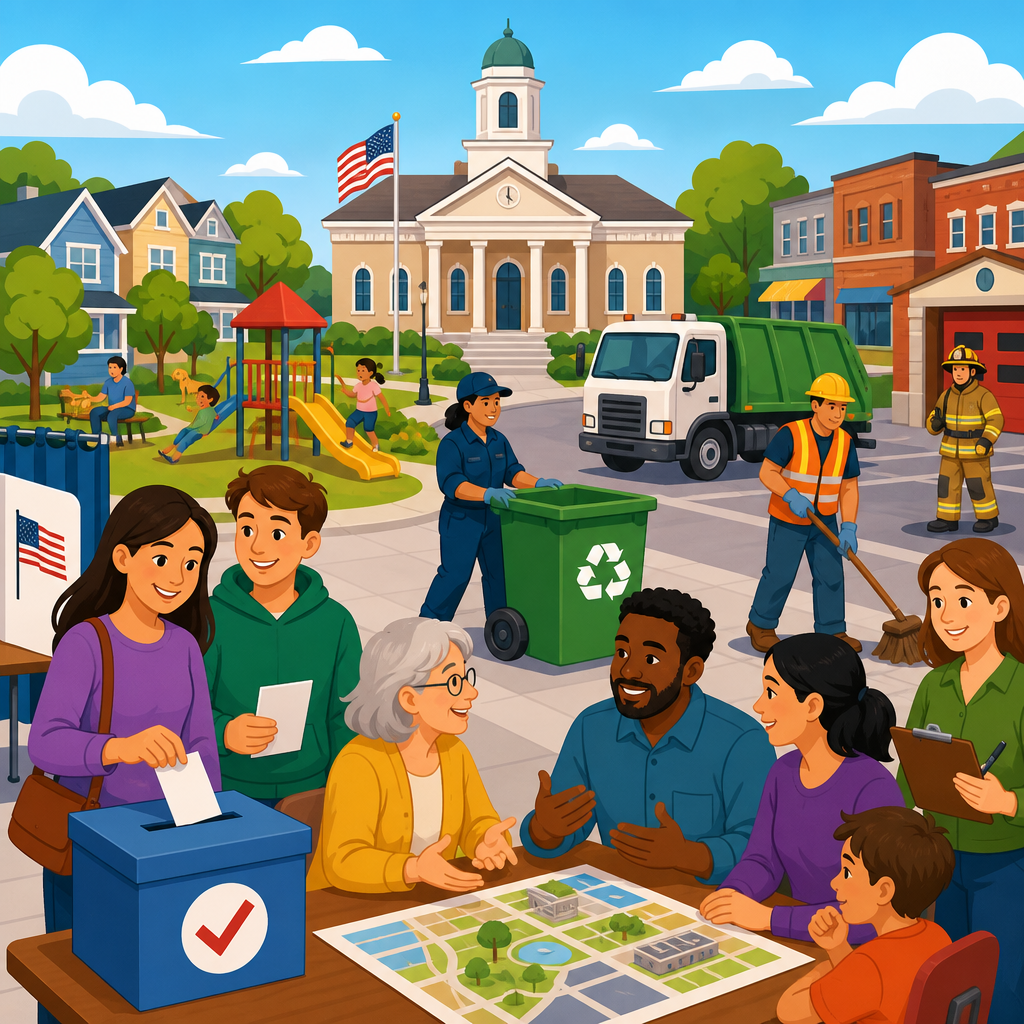
Vocabulary for civic life helps people handle everyday public tasks with confidence, from registering to vote to reporting a broken streetlight or attending a city council meeting. In practical English, civic life means the systems and institutions that connect residents to government services, elections, and community decisions. For learners, the challenge is not only grammar but also the specific words used in forms, notices, websites, and face-to-face conversations. I have seen capable English learners struggle at a polling place or municipal office because they knew general English but not terms like precinct, ballot measure, public hearing, or proof of residency. This vocabulary matters because misunderstanding one word can delay benefits, cause missed deadlines, or keep someone from participating in local decisions. Strong civic vocabulary improves access, accuracy, and confidence. It also supports independence, especially for immigrants, renters, and first-time voters who need to read official language quickly and respond correctly in high-stakes situations.
The most useful approach is to learn civic words by function. Instead of memorizing long lists, group terms into three areas: elections, public services, and local government. That mirrors how people actually encounter the language. A resident may first read an election notice, then call a utility office, then review a zoning announcement for a neighborhood project. Many of these terms are technical but stable, meaning once you learn them, you will see them repeatedly across city websites, county forms, and state notices. Some terms also vary by country or even by state, so context matters. In the United States, for example, county clerk, township, and alderman may appear in one place while borough or parish appears in another. Learning the core meanings gives you a base for understanding local differences. The sections below explain the vocabulary you are most likely to meet and how to use it accurately in real situations.
Election Vocabulary You Need to Read Notices, Register, and Vote
Election language is often formal, but the key terms are predictable. Voter registration is the process of adding your name and address to the official list of eligible voters. Eligibility refers to whether a person meets the legal requirements to vote, such as age, citizenship status, and residency rules. Residency means your primary legal home. Proof of residency may include a lease, utility bill, or bank statement showing your address. If you are learning housing vocabulary too, a useful companion resource is this guide to apartment-renting English, because lease, tenant, and utility bill often appear again in civic paperwork.
On election day, people vote at a polling place, sometimes called a polling station. A precinct is the local voting district assigned to a voter’s address. Your ballot is the paper or digital document listing candidates and questions to vote on. A candidate is a person running for office, and an incumbent is the person who already holds that office. Office means an elected position such as mayor, sheriff, or school board member. A ballot measure, referendum, or proposition is a policy question placed before voters. In many cities, I advise learners to pause on words like nonpartisan, primary, and general election. Nonpartisan means candidates are not listed by political party on the ballot. A primary election chooses party nominees. A general election decides who wins the office.
Absentee ballot and mail-in ballot are also essential terms. An absentee ballot lets an eligible voter vote without going to the polling place, traditionally because they are away or cannot attend. In many jurisdictions, mail-in voting now includes broader access. Early voting means voting in person before election day during an approved period. Provisional ballot is another important phrase. If there is a question about your registration, identity, or eligibility at the polling place, election workers may allow you to cast a provisional ballot that will be reviewed before being counted. That word provisional means temporary or pending verification. Understanding it can reduce panic in a stressful moment.
Public Service Vocabulary for Daily Life
Public services are services provided or regulated by government for residents. Common examples include sanitation, public transportation, water, sewer service, libraries, parks, road maintenance, public schools, and emergency response. A department is a branch of local government responsible for one service area, such as the Department of Public Works or Parks and Recreation. A resident is a person who lives in a city, county, or district, whether or not they own property. A household is the people living together at one address. Many forms ask for household size, income, and occupancy. Occupancy refers to who lives in a property, while owner-occupied means the owner lives there.
When residents need help, they often submit an application, request, claim, or complaint. These words are not interchangeable. An application asks for a service, permit, license, or benefit. A request asks for action, such as trash pickup after a missed collection. A claim usually seeks compensation for damage or loss, for example after a city vehicle damages private property. A complaint reports a problem or possible violation, such as excessive noise, illegal dumping, or unsafe housing conditions. Many cities now route these through 311 systems, while emergencies go through 911. In plain terms, 311 is for non-emergency city services, and 911 is for urgent threats to life, health, or property.
Another group of high-frequency terms appears in utility and infrastructure communication. A utility is an essential service such as electricity, gas, water, or trash collection. An outage means service has stopped. A shutoff is an intentional disconnection, often for maintenance or nonpayment. A notice of violation tells a resident or property owner that a rule may have been broken. A citation is a formal written penalty or summons. Code enforcement is the local office that applies property and safety rules, including rules about weeds, building conditions, trash storage, and unauthorized construction. Learners should also know permit, inspection, and compliance. A permit is official permission to do work or hold an event. An inspection is a formal review. Compliance means meeting the rules.
Local Government Terms That Shape Community Decisions
Local government vocabulary becomes important when a person attends meetings, reads agendas, or comments on a neighborhood issue. A city council or town council is the elected legislative body that passes local laws and approves budgets. A county commission plays a similar role at county level in many states. The mayor may be a strong executive with administrative power or a largely ceremonial leader, depending on the local charter. A charter is the founding legal document that defines how a city is governed. An ordinance is a local law. A resolution expresses a formal decision or policy position, but unlike an ordinance, it often does not create a permanent legal rule.
Residents often encounter budget and planning terms. A fiscal year is the government’s accounting year, which may not match the calendar year. Revenue is money coming in through taxes, fees, and grants. Expenditure is money spent. A levy is an official tax or charge. A bond is money borrowed by a government, usually for major capital projects such as schools, roads, or water systems. Zoning controls how land can be used, such as residential, commercial, industrial, or mixed-use. A variance is special permission to deviate from standard zoning rules. A public hearing is a formal meeting where residents can speak before a decision is made. An agenda lists the items to be discussed. Minutes are the official written record of what happened at a meeting.
| Term | Plain meaning | Real-world example |
|---|---|---|
| Ordinance | A local law | A city passes an ordinance limiting short-term rentals |
| Permit | Official permission | A restaurant gets a permit for outdoor seating |
| Public hearing | Meeting for public comment before a decision | Neighbors speak about a proposed apartment building |
| Ballot measure | A policy question voters decide | Voters approve funding for park improvements |
| Code enforcement | Office that applies local property and safety rules | An inspector cites illegal dumping behind a store |
How to Use Civic Vocabulary Accurately in Real Situations
Knowing definitions is not enough; learners need usable patterns. In municipal offices, successful communication is usually concise and document-based. For elections, useful sentences include: “I want to confirm my voter registration,” “What precinct am I assigned to?” and “Do I need proof of residency?” For services, common patterns are: “I’m calling to report a missed pickup,” “I’d like to submit a complaint,” and “Has my application been approved?” For local government meetings, practical phrases include: “When is the public hearing?” “Is this item on the agenda?” and “How do I make a public comment?” These chunks matter because official conversations reward precision. Staff can help faster when the resident uses the exact administrative term.
It also helps to recognize document signals. If a notice says pending, the matter is not final. If it says eligible, qualified, or verified, it refers to approval status. If it says deadline, postmarked, or effective date, time is legally important. I encourage learners to circle the action word first: register, renew, appeal, verify, submit, attend, or respond. Then identify the object: application, ballot, citation, permit, or notice. Finally, check who must act: resident, applicant, owner, tenant, or voter. This three-step reading habit reduces errors on complex forms. After using it with adult learners in community workshops, I found people completed city forms more accurately and asked better follow-up questions.
One final point is nuance. Civic terms are precise, but local usage differs. A clerk may manage records, elections, or licenses depending on jurisdiction. A hearing can be informational in one context and quasi-judicial in another. Even the same service request system may classify an issue as a complaint, report, or case. The safest strategy is to learn the core meaning, then confirm the local definition on the relevant city or county website. Vocabulary for civic life is not abstract classroom English; it is action language that helps people vote, get services, protect their rights, and participate in community decisions. Build a small working set of terms, practice them with real forms and notices, and use them the next time you interact with local government.
Frequently Asked Questions
What does “vocabulary for civic life” include, and why is it important?
Vocabulary for civic life includes the practical words and phrases people use to interact with public institutions, local services, and community decision-making. This can include election terms such as “register to vote,” “polling place,” “ballot,” and “candidate,” as well as local government vocabulary like “city council,” “public hearing,” “permit,” “ordinance,” and “department.” It also covers service-related language such as “report a problem,” “submit a request,” “application,” “eligibility,” “appointment,” and “proof of address.” These are not abstract academic words. They appear in real forms, official letters, websites, notices, and conversations with clerks, caseworkers, librarians, school staff, and election workers.
This vocabulary matters because civic life runs through everyday tasks. People need it to update an address, ask about trash collection, apply for a parking permit, understand a water bill, contact a local office, or follow instructions during an election. Even learners with strong general English can feel uncertain when faced with official language, because civic vocabulary often uses fixed expressions and formal terms that are not common in casual conversation. Knowing these words improves confidence, reduces mistakes, and helps residents participate more fully in their communities. In simple terms, civic vocabulary gives people the language they need to access services, understand their rights and responsibilities, and communicate effectively with local government.
Which election-related words should English learners know first?
A strong starting point includes the most common words used before, during, and after voting. Before an election, learners should know “voter registration,” “register to vote,” “deadline,” “eligibility,” “residential address,” and “party affiliation” if that applies in their area. They should also understand “sample ballot,” “voter information guide,” and “polling location,” because these terms often appear in mailers and official websites. During the voting process, key terms include “ballot,” “candidate,” “measure,” “proposition,” “vote by mail,” “early voting,” “poll worker,” “identification,” and “signature.” After voting, words such as “election results,” “count,” “certified results,” and “runoff” may become important.
It also helps to learn these terms as part of useful phrases rather than as isolated definitions. For example: “How do I register to vote?” “Where is my polling place?” “Can I vote early?” “Did my ballot get received?” and “What identification do I need?” This approach mirrors real-life communication and helps learners use the vocabulary immediately. Another useful strategy is to compare similar terms that can cause confusion. A “ballot” is the paper or digital form used to vote, while a “polling place” is the location where voting happens. “Register” means to sign up as an eligible voter, while “vote” means to actually choose candidates or measures. Learning these distinctions makes election language much easier to understand in official contexts.
How can someone use civic vocabulary to ask for local government services or report a community problem?
When requesting a service or reporting a problem, people usually need clear, specific language. Useful civic vocabulary includes “service request,” “report,” “issue,” “location,” “reference number,” “maintenance,” “inspection,” and “follow-up.” For common neighborhood concerns, learners may need terms such as “pothole,” “sidewalk damage,” “streetlight outage,” “graffiti,” “missed trash pickup,” “water leak,” “noise complaint,” or “illegal dumping.” These words often appear on city websites, mobile apps, hotline menus, and printed notices. Knowing the correct label for a problem helps residents reach the right department and get faster assistance.
It is equally important to know the phrases used in real communication. Someone might say, “I’d like to report a broken streetlight,” “There is a pothole in front of my building,” “I’m calling to request bulky item pickup,” or “Can you tell me which department handles this issue?” In many situations, local offices will ask for details such as the exact address, nearest intersection, date, description of the problem, and contact information. Learners benefit from practicing complete responses like, “The streetlight is not working at the corner of Oak Street and Third Avenue,” or “Trash was not collected on my block this morning.” This kind of vocabulary is powerful because it turns a general concern into a clear, actionable request that public staff can process.
What local government terms are most useful for everyday life and community participation?
Some of the most useful local government terms are the names of offices, departments, processes, and public meetings. Learners should recognize titles such as “mayor,” “city council member,” “county clerk,” “board,” and “agency,” along with department names like “public works,” “housing department,” “parks and recreation,” “planning department,” and “transportation department.” They should also know process words such as “application,” “permit,” “license,” “renewal,” “fee,” “appointment,” “notice,” “hearing,” “agenda,” and “minutes.” These terms appear regularly when people apply for services, ask questions, or try to understand how decisions are made.
For community participation, words related to public meetings are especially valuable. A resident may see announcements for a “city council meeting,” “school board meeting,” “public hearing,” or “community forum.” Understanding what it means to “attend,” “comment,” “speak during public comment,” “submit written testimony,” or “review the agenda” helps people take part instead of staying silent because the setting feels unfamiliar. This vocabulary also supports practical goals: following zoning changes, understanding school updates, commenting on neighborhood safety, or learning about transportation plans. In many cases, participation depends less on advanced grammar and more on knowing the specific words used in official community settings.
What are the best ways to learn and remember civic vocabulary in practical English?
The most effective approach is to learn civic vocabulary from real materials people actually use. That means reading voter guides, city service pages, school notices, utility bills, library cards, permit applications, and public meeting announcements. These sources show words in context, which is critical because civic language often follows predictable patterns. Instead of memorizing “application” alone, learners see phrases like “complete the application,” “submit supporting documents,” or “your application has been approved.” Instead of learning “meeting” by itself, they learn “public meeting,” “meeting agenda,” and “meeting starts at 6:00 p.m.” This makes the vocabulary easier to recognize and use in real situations.
Practice should also be active and spoken, not only written. Learners can rehearse short questions and responses they may need in person or on the phone: “Where do I go for this service?” “What documents do I need?” “Can I make an appointment?” “Who should I contact?” and “When is the deadline?” Creating small topic-based word lists can help: one for elections, one for city services, one for housing, and one for public meetings. It is also useful to keep a personal glossary with definitions, example sentences, and translations if needed. Most importantly, learners should focus on function. The goal is not to sound formal or perfect. The goal is to understand public information, ask clear questions, complete tasks correctly, and feel confident participating in civic life.





