
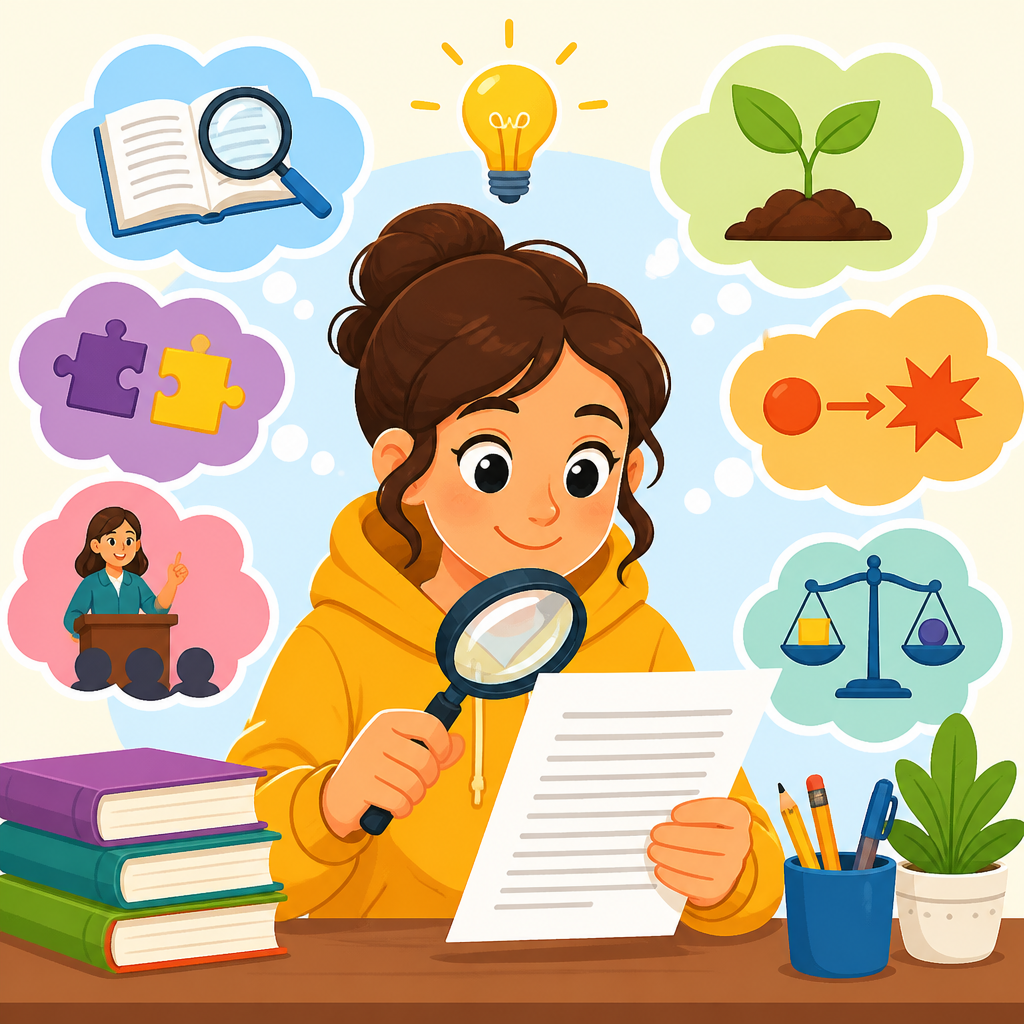
How to identify the purpose of a paragraph fast is a practical reading skill that helps you understand a text before you decode every sentence. A paragraph’s purpose is the job it performs in the passage: introducing a topic, giving evidence, explaining a process, comparing ideas, describing a problem, offering a solution, or concluding a point. When readers spot that job quickly, they read with direction instead of guessing. This matters in school, workplace training, test preparation, and everyday reading because most confusion starts when a reader knows the words but misses why the paragraph is there. I teach this skill early because it saves time, improves accuracy, and makes even simple texts easier to follow.
Fast identification does not mean shallow reading. It means using visible cues to form a correct first judgment, then confirming it with details. Skilled readers do this almost automatically. They notice topic sentences, signal words, repeated nouns, examples, and the relationship between one paragraph and the next. In classroom practice, I have seen learners cut reading time significantly once they stop treating every paragraph as equal. A definition paragraph should be read differently from an argument paragraph. A warning label should be read differently from a set of instructions. The purpose changes the reader’s task. If you know the purpose first, you know what information to look for, what to ignore, and how to remember the main point after one pass.
Readers often ask a simple question: what exactly am I looking for? You are looking for function, not just topic. A paragraph about buses could describe a route, compare ticket prices, explain safety rules, or persuade people to use public transport. The topic is buses; the purpose is the paragraph’s function. That distinction is the key to speed. Once you separate subject from function, your reading becomes much more precise. Instead of saying, “This paragraph is about buses,” you say, “This paragraph warns passengers about standing near the door,” or “This paragraph explains how to pay.” That level of clarity leads to better comprehension and stronger recall.
Start with the paragraph’s job, not its subject
The fastest method is to ask one question after the first sentence: what is this paragraph trying to do? In most well-written texts, especially educational and informational writing, the opening sentence signals the job. It may state a main idea directly, as in “Recycling reduces landfill waste in three ways.” That tells you the paragraph will explain or list supporting reasons. Sometimes the purpose appears through a claim, such as “Many drivers underestimate stopping distance in rain.” That usually leads into evidence, explanation, or warning. If the first sentence names a change, a problem, or a recommendation, the purpose usually follows that pattern.
I train readers to test four common functions immediately: inform, explain, argue, and instruct. Informing gives facts. Explaining shows how or why. Arguing tries to convince you. Instructing tells you what to do. These four categories cover a large share of paragraphs in textbooks, articles, guides, and workplace documents. Once a reader makes a quick provisional choice, the remaining sentences either confirm it or force a correction. This is faster than reading every line without a framework.
Another reliable clue is position. The first paragraph of an article usually introduces the topic or frames the issue. Middle paragraphs often develop one point at a time with examples or evidence. Final paragraphs summarize, broaden the implication, or give a conclusion. Position alone is not enough, but paired with sentence-level clues, it becomes powerful. In timed reading exercises, this is one of the biggest gains because the structure of prose is not random.
Use signal words and sentence patterns to identify function
Signal words are shortcuts to purpose. They reveal the relationship between ideas before you fully process the content. Words like “because,” “therefore,” and “as a result” usually mark explanation or cause and effect. “However,” “in contrast,” and “on the other hand” suggest comparison or qualification. “For example” introduces illustration. “First,” “next,” and “finally” often indicate sequence or instructions. “Should,” “must,” and “need to” frequently appear in recommendation, advice, or rules. These markers are not decoration; they are structural signs.
Sentence patterns help too. A paragraph that begins with a general statement and follows with specific details is usually explaining or supporting that statement. A paragraph that opens with a question and answers it is often clarifying a concept for the reader. A paragraph built around data, quotations, or study results usually provides evidence. In exam passages, I often tell learners to circle transition words and underline repeated key nouns. Repetition is especially useful because writers repeat the exact concept that the paragraph develops.
These cues also matter in basic reading materials. If you are practicing short texts such as signs, labels, and simple instructions, function can often be identified in seconds. A line like “Keep refrigerated after opening” is instruction. “Wet floor” is warning. “Entrance at rear” is direction. For focused practice with this type of text, readers can use the main A1 reading practice guide on signs, labels, and simple instructions, which is ideal for building speed with purpose recognition before moving into longer paragraphs.
Match common paragraph purposes to visible clues
Most paragraphs in practical reading fall into a limited set of purposes. The key is to connect each purpose with concrete clues you can see quickly. The table below summarizes the patterns I use most often when coaching readers to identify paragraph purpose fast.
| Purpose | Typical clues | Fast question to ask |
|---|---|---|
| Definition | “is,” “refers to,” key term named early | Is this paragraph telling me what something means? |
| Explanation | because, how, why, reasons, results | Is it showing how or why something happens? |
| Example | for example, for instance, such as | Is it illustrating a point already introduced? |
| Comparison | however, similarly, unlike, in contrast | Is it comparing two things or viewpoints? |
| Problem-solution | issue, challenge, solve, prevent, improve | Does it present a difficulty and answer it? |
| Instruction | imperative verbs, sequence words, must | Is it telling me what steps to follow? |
This approach works because it reduces a vague task into quick pattern matching. In real reading, you do not need a perfect literary label. You need a useful one. If you can say, “This paragraph compares two methods,” you already know how to read it: look for similarities, differences, and the writer’s preference. If you can say, “This paragraph gives an example,” you know the main point may be stated elsewhere, not inside that paragraph.
Read the first and last sentences first when time is short
When speed matters, the first and last sentences often carry the highest value. In journalistic writing, school texts, and many web articles, the first sentence introduces the main point while the last sentence reinforces it, gives a result, or links to the next paragraph. Reading those two sentences first can reveal the purpose without processing every supporting detail. This is not a gimmick; it reflects common paragraph design taught in composition classes.
For example, imagine a paragraph begins, “Regular sleep improves concentration during morning classes,” and ends, “For that reason, students who sleep less than seven hours often struggle with memory tasks.” Even without the middle sentences, the purpose is clear: the paragraph explains a cause-and-effect relationship and supports a claim about sleep and concentration. The middle likely contains research findings or examples, but you already understand the function.
This technique is especially effective for longer paragraphs where details can slow a reader down. However, it has limits. Some narrative or literary paragraphs hide their purpose until the end. Some academic writing delays the topic sentence. That is why fast readers stay flexible. If the first and last sentences do not align, scan the middle for transition words, examples, or repeated nouns before deciding.
Avoid the three mistakes that cause wrong answers
The first common mistake is confusing topic with purpose. A paragraph about healthy food may actually be persuading, not merely informing. The second mistake is choosing a purpose based on one keyword alone. The word “because” suggests explanation, but context still matters. A persuasive paragraph can use explanation as support. The third mistake is reading every detail with equal weight. Supporting examples are useful, but they are rarely the purpose themselves unless the paragraph is clearly illustrative.
I also see readers overcomplicate labels. You do not need ten categories in your head. Start with a small working set and refine only when needed. Another problem is ignoring surrounding paragraphs. Purpose is often clearer when you ask how the paragraph fits the one before it. If the previous paragraph presents a problem, the next may offer a solution. If the previous one makes a claim, the next may provide evidence. Coherence between paragraphs is one of the strongest clues in expository reading.
Finally, do not mistake tone for purpose. A serious tone does not mean the paragraph is arguing. A friendly tone does not mean it is only introducing. Purpose comes from function and structure, not mood. Readers who focus on function make fewer comprehension errors because they anchor their judgment in observable features.
Build speed with a repeatable two-minute practice method
To improve quickly, use short daily drills. Take one paragraph and do four actions: read the first sentence, mark signal words, name the purpose in five words or fewer, and justify your answer with one clue from the text. This takes about two minutes. After ten days, most readers become noticeably faster because they stop reading passively. The goal is not just getting the right answer; it is seeing why the answer is right.
You can scale the drill by using news briefs, textbook paragraphs, workplace notices, or test-prep passages. I recommend keeping a simple log with three columns: paragraph source, guessed purpose, and confirming clue. Patterns appear quickly. Many readers discover they are slow not because the text is hard, but because they never learned to classify paragraph function efficiently. Once that changes, comprehension becomes more deliberate and less tiring.
Identifying the purpose of a paragraph fast comes down to one habit: read for function before detail. Look first at the opening sentence, transition words, repeated ideas, and paragraph position. Decide whether the writer is defining, explaining, comparing, instructing, arguing, or concluding, then confirm that decision with evidence from the text. This small shift makes reading quicker and more accurate because it gives every sentence a role in a larger pattern.
The benefit is immediate. You waste less time, answer comprehension questions more confidently, and remember what you read with less effort. Start with short paragraphs today, practice the two-minute method, and make purpose the first thing you identify every time you read.
Frequently Asked Questions
What does it mean to identify the purpose of a paragraph fast?
Identifying the purpose of a paragraph fast means recognizing the main job that paragraph is doing before you analyze every line in detail. Instead of reading sentence by sentence with no clear direction, you quickly ask, “Why is this paragraph here?” In most nonfiction and academic writing, paragraphs usually serve a specific function such as introducing a topic, defining a term, giving evidence, explaining steps, comparing two ideas, presenting a problem, offering a solution, or wrapping up a point. When you can label that function early, the paragraph becomes easier to understand because you are reading with a framework already in mind.
This skill is especially useful because many readers get slowed down by details before they understand structure. A fast purpose check helps you focus on what matters most. For example, if a paragraph is mainly giving evidence, you know to look for facts, examples, statistics, or expert opinions. If it is explaining a process, you expect steps, sequence words, and cause-and-effect relationships. If it is introducing a topic, you know the writer is setting the stage rather than proving everything immediately. In short, identifying purpose fast helps you move from passive reading to strategic reading.
What are the most common purposes a paragraph can have?
The most common paragraph purposes are introducing a topic, explaining an idea, giving evidence, describing a process, comparing or contrasting ideas, presenting a problem, offering a solution, and concluding or reinforcing a point. These categories cover a large share of what readers encounter in textbooks, articles, workplace documents, training materials, and test passages. While some paragraphs do more than one thing, most have one dominant purpose that guides the reader through the text.
An introductory paragraph often names the topic and signals what is coming next. An explanatory paragraph breaks down a concept so the reader can understand it clearly. An evidence paragraph supports a claim with examples, data, quotations, or observations. A process paragraph shows how something happens or how to do something step by step. A compare-and-contrast paragraph highlights similarities or differences between two subjects. A problem paragraph identifies an issue, obstacle, or challenge, while a solution paragraph responds with a fix, recommendation, or strategy. A concluding paragraph usually summarizes the key point, reinforces the main message, or shows why the information matters. Learning these common purposes makes it much easier to classify a paragraph quickly and accurately.
How can I tell the purpose of a paragraph without reading every sentence closely?
You can often identify a paragraph’s purpose by scanning for structural clues rather than decoding every detail right away. Start with the first sentence, because it frequently introduces the main function of the paragraph. Then look at the last sentence, which often reinforces the point or reveals the paragraph’s role in the larger passage. Pay attention to repeated words, transition phrases, and the type of information included. These signals usually tell you whether the paragraph is introducing, explaining, proving, comparing, warning, solving, or concluding.
Transition words are especially helpful. Phrases like “for example,” “according to,” or “research shows” often signal evidence. Words like “first,” “next,” “then,” and “finally” usually point to a process or sequence. Terms such as “however,” “similarly,” “in contrast,” and “on the other hand” often indicate comparison or contrast. If the paragraph opens with a challenge or concern, it may be describing a problem. If it shifts toward advice, action, or recommendations, it may be offering a solution. You can also ask one quick question: “Is this paragraph mainly naming something, explaining it, supporting it, comparing it, or wrapping it up?” That simple habit can dramatically speed up comprehension.
Why is this skill important for school, work, and test preparation?
Being able to identify the purpose of a paragraph fast is valuable because it improves comprehension, saves time, and strengthens decision-making while reading. In school, it helps students follow textbook chapters, essays, and assigned readings more efficiently. Instead of feeling overwhelmed by blocks of text, they can break material into meaningful parts and understand how each paragraph contributes to the author’s argument or explanation. This makes note-taking, summarizing, and answering comprehension questions much easier.
In the workplace, this skill matters in training manuals, reports, emails, policy documents, and instructions. Readers often do not have time to study every sentence slowly, so they need to recognize quickly whether a paragraph is giving background, outlining a procedure, presenting evidence, or recommending action. During test preparation, the benefit is even more obvious. Standardized reading sections often reward students who understand structure quickly. When you know the purpose of a paragraph, you can locate answers faster, predict question types more accurately, and avoid getting trapped in minor details. Overall, this skill supports faster reading, better retention, and more confident interpretation across many real-world situations.
What is the fastest method to practice identifying paragraph purpose consistently?
The fastest method is to use a simple repeatable routine every time you read. First, read the first sentence and make a quick prediction about the paragraph’s role. Second, scan for signal words such as “for example,” “because,” “first,” “however,” or “therefore.” Third, glance at the final sentence to confirm how the paragraph ends. Fourth, label the paragraph in a few words, such as “introduces topic,” “gives evidence,” “explains process,” “compares ideas,” “states problem,” “offers solution,” or “concludes point.” This approach takes only a few seconds, but it trains your brain to read for structure instead of getting lost in isolated details.
To build speed, practice with short articles and stop after each paragraph to assign one purpose label. Do not aim for perfection at first; aim for consistency. Over time, you will notice recurring patterns in how writers organize information. You can also underline topic sentences, circle transitions, and write a one-line margin note that captures the paragraph’s job. Another effective exercise is to take a multi-paragraph article and create a purpose map showing what each paragraph does in sequence. This helps you see how individual parts build the whole passage. With repetition, the process becomes automatic, and you will begin identifying paragraph purpose almost instantly while reading naturally.





