
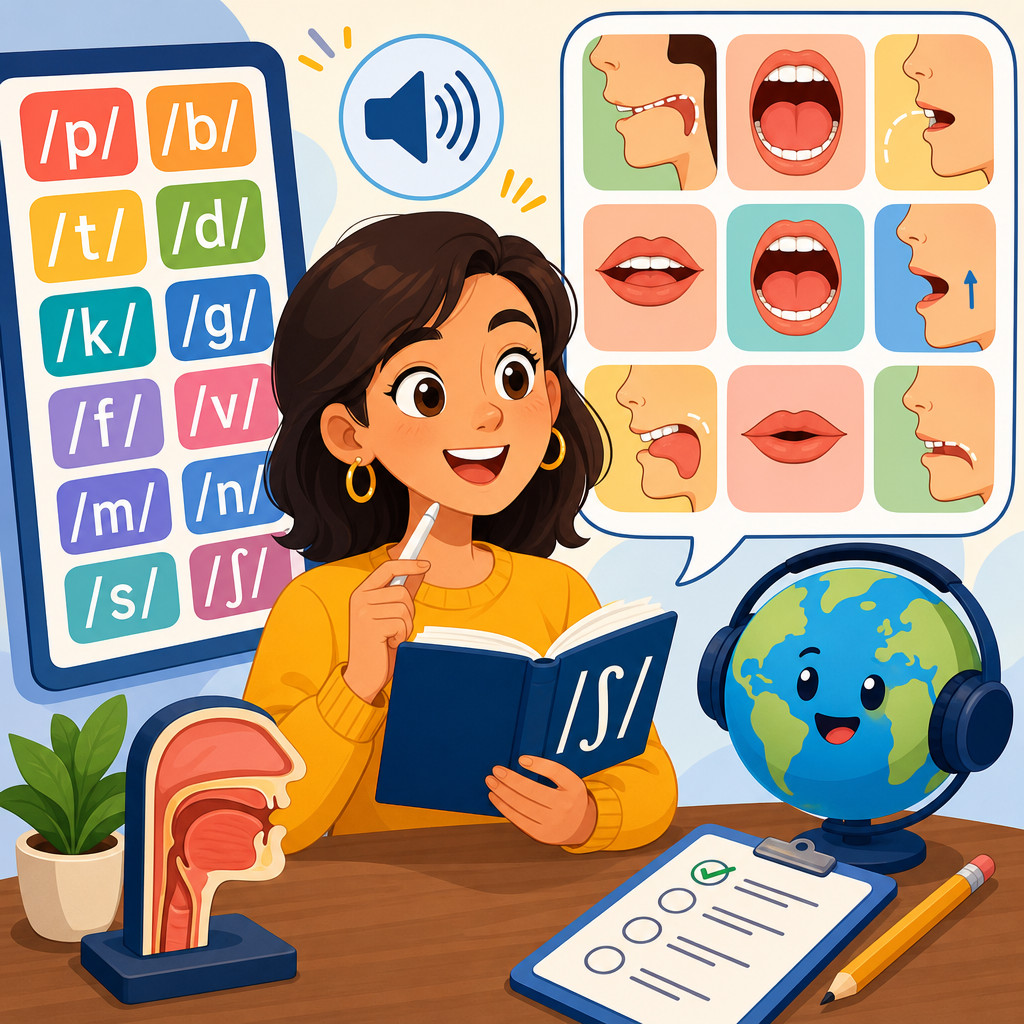
The International Phonetic Alphabet, usually called the IPA, gives ESL learners a reliable way to see how English sounds are produced, not just how words are spelled. If you have ever wondered why phone begins with an f sound, why judge ends differently from church, or why dictionaries show strange symbols beside words, basic IPA symbols for consonants are the key. In my own pronunciation teaching, this is often the turning point: once learners stop trusting spelling alone, their listening and speaking improve faster because they can map sound to mouth movement. That matters across the full speaking skill set, from classroom drills and accent reduction to self-study with dictionaries, subtitles, and voice recording apps.
For ESL learners, consonants are a practical place to start because they are easier to feel and describe than vowels. A consonant is produced with some restriction of airflow by the lips, teeth, tongue, or throat. The IPA gives each consonant sound one symbol, so /p/ means the same sound in any properly transcribed word, whether the spelling is p, pp, or even something less obvious. To read basic IPA symbols for consonants, you need three ideas: place of articulation, meaning where the sound is made; manner of articulation, meaning how airflow is controlled; and voicing, meaning whether the vocal folds vibrate. Once those terms are clear, symbols stop looking abstract and start functioning like a mouth map you can use immediately.
This article serves as a hub for the miscellaneous side of speaking work: dictionary reading, self-correction, sound awareness, audio practice, and simple assessment. You will learn the most useful English consonant symbols, how to position your mouth, how to use audio tools correctly, and how to test yourself with a mini-quiz. Along the way, I will point out patterns, common learner errors, and practical methods I use in lessons with multilingual groups. If you can read basic IPA consonants, you gain a portable skill that supports every other speaking article in this section, because pronunciation becomes something you can observe, check, and improve instead of guess.
How IPA consonant symbols work in plain terms
The fastest way to understand IPA consonants is to sort them by voicing and mouth position. Voiced sounds use vocal fold vibration, such as /b/, /d/, /g/, /v/, /z/, /ʒ/, /dʒ/, /m/, /n/, /ŋ/, /l/, /r/, /j/, and /w/. Voiceless sounds do not, such as /p/, /t/, /k/, /f/, /s/, /ʃ/, /tʃ/, /θ/, and /h/. Put your fingers lightly on your throat and say /s/ then /z/; the mouth shape is similar, but /z/ buzzes. That physical contrast helps learners far more than memorizing labels alone.
Place of articulation tells you where the constriction happens. Bilabial sounds use both lips: /p b m/. Labiodental sounds use the lower lip and upper teeth: /f v/. Dental sounds place the tongue against or between the teeth: /θ ð/, as in think and this. Alveolar sounds use the tongue tip or blade near the ridge behind the upper teeth: /t d s z n l/. Postalveolar sounds are slightly farther back: /ʃ ʒ tʃ dʒ/. Palatal /j/ appears in yes. Velar sounds are made with the back of the tongue against the soft palate: /k g ŋ/. Glottal /h/ comes from the throat.
Manner of articulation explains airflow. Stops completely block then release air: /p b t d k g/. Fricatives force air through a narrow space: /f v s z ʃ ʒ θ ð h/. Affricates combine a stop and fricative release: /tʃ dʒ/. Nasals send air through the nose: /m n ŋ/. Approximants keep airflow relatively open: /l r j w/. When learners know these categories, they can diagnose problems. If /b/ sounds like /v/, the issue is not just “wrong pronunciation”; it is a place-and-manner mismatch.
Basic English consonant symbols every ESL learner should know
In beginner and intermediate speaking courses, I focus first on the symbols that appear constantly in learner dictionaries such as Cambridge, Oxford, and Longman. These core consonants cover most everyday English words and the most common confusion points. For example, /p/ in pen, /b/ in big, /t/ in ten, /d/ in dog, /k/ in cat, and /g/ in go are stops that learners usually hear early. Fricatives become more important later because spelling is less reliable: /f/ in fine, /v/ in very, /s/ in see, /z/ in zoo, /ʃ/ in she, and /ʒ/ in vision.
Two symbols deserve special attention because they are unfamiliar to many learners: /θ/ and /ð/. The first is the voiceless sound in think, bath, and author. The second is the voiced sound in this, mother, and breathe. These are dental fricatives, and they often get replaced by /s z t d/ depending on the learner’s first language. Another pair worth isolating is /tʃ/ and /dʒ/, heard in chair and job. Because they are affricates, learners need to feel both the stop and the friction instead of turning them into a simple /ʃ/ or /ʒ/.
The nasals and approximants also matter because they shape fluency and naturalness. /m/ and /n/ are familiar, but /ŋ/ in sing causes problems because many learners add an extra /g/ and say /sɪŋg/. In standard pronunciation, sing ends with /ŋ/ alone, while finger has /ŋg/. For approximants, /l/ and /r/ are especially important in international communication, and /j/ in yes is not the same as the letter name j. /w/ in we rounds the lips, unlike /v/, which uses the lower lip against the upper teeth. These distinctions are small on paper but large in speech intelligibility.
Mouth position: how to produce the symbols accurately
To read IPA effectively, connect each symbol to a visible or physical action. For /p/ and /b/, close both lips, build slight air pressure, then release; add voicing for /b/. For /f/ and /v/, touch the lower lip to the upper teeth and let air pass continuously; add voicing for /v/. For /t/ and /d/, place the tongue tip at the alveolar ridge, stop the air briefly, and release. Many learners place the tongue too far forward or too far back, which changes clarity. Mirror practice works well here because lips and jaw movement are easy to monitor.
For /θ/ and /ð/, the tongue must come forward enough to contact or lightly protrude between the teeth. Learners often avoid this because it feels unnatural, but if the tongue stays behind the teeth, the sound usually becomes /s/, /z/, /t/, or /d/. For /ʃ/ and /ʒ/, the tongue is farther back than for /s/ and /z/, and the lips are often slightly rounded. For /tʃ/ and /dʒ/, start with the tongue in a stop position, then release into friction. For /ŋ/, raise the back of the tongue to the soft palate and keep the front of the tongue relaxed; air exits through the nose.
Approximants require fine control. For /l/, the tongue tip touches the alveolar ridge while air flows around the sides. For /r/, English varieties differ, but in general the tongue does not touch the roof firmly; it bunches or curls slightly, and the lips may round. For /j/, the tongue moves toward the hard palate, like a quick glide into the following vowel. For /w/, round the lips clearly and raise the back of the tongue. If you are unsure, record minimal pairs such as light/right, vest/west, and sip/ship. The goal is not perfection on day one but repeatable control.
Audio tips, dictionary practice, and a mini-quiz
Audio practice should be deliberate, not passive. First, choose a trustworthy source with IPA and recorded pronunciation, such as Cambridge Dictionary, Oxford Learner’s Dictionaries, Longman, Forvo, or YouGlish for real-world clips. Second, listen for one target consonant only. If you study /v/, do not try to fix stress, intonation, and vowels at the same time. Third, use a simple cycle I apply in class: listen, pause, imitate, record, compare, repeat. Most phones already provide enough quality for this. If possible, slow the audio to 0.75 speed without lowering pitch too much, because consonant transitions become easier to hear.
A useful self-check is to compare what you hear, what you feel, and what the IPA shows. Suppose a dictionary gives ship as /ʃɪp/ and sip as /sɪp/. Listen, then produce both while watching your lips and tongue in a mirror. For /ʃ/, your lips may round slightly and the tongue stays farther back. For /s/, the lips spread more and the tongue is closer to the alveolar ridge. If your recording sounds identical in both words, the IPA has helped you locate the exact contrast to practice. That is why phonemic transcription is so valuable in speaking work.
| IPA symbol | Example word | Mouth clue | Common mistake |
|---|---|---|---|
| /θ/ | think | Tongue at teeth, no voicing | Saying /s/ or /t/ |
| /ð/ | this | Tongue at teeth, with voicing | Saying /z/ or /d/ |
| /ʃ/ | she | Tongue farther back, light lip rounding | Saying /s/ |
| /ŋ/ | sing | Back of tongue up, air through nose | Adding /g/ at the end |
Now test yourself. Which symbol matches the first sound in very? Answer: /v/. Which symbol matches the final sound in watch? Answer: /tʃ/. Which word contains /ð/: thing or this? Answer: this. Which word ends with /ŋ/ alone: sing or finger? Answer: sing. If these feel manageable, expand your practice by checking transcriptions whenever you learn new vocabulary. That single habit builds stronger speaking, sharper listening, and better self-correction. Use this hub as your starting point, then move into focused articles on minimal pairs, stress, connected speech, and pronunciation drills.
Frequently Asked Questions
1. What are basic IPA consonant symbols, and why should ESL learners use them instead of spelling?
Basic IPA consonant symbols are the phonetic signs used to show how consonant sounds are actually pronounced, regardless of how a word is spelled. For ESL learners, this matters because English spelling is not a reliable guide to pronunciation. The same letter can represent different sounds, and different letter combinations can represent the same sound. For example, the sound /f/ appears in fish, but it also appears at the beginning of phone. In contrast, the letter c can sound like /k/ in cat or /s/ in city. The IPA removes that confusion by giving each sound its own symbol.
When learners begin reading consonant symbols such as /p/, /b/, /t/, /d/, /k/, /g/, /f/, /v/, /s/, /z/, /ʃ/, /ʒ/, /tʃ/, /dʒ/, /θ/, and /ð/, they start to notice pronunciation patterns that spelling hides. This improves much more than speaking. It also strengthens listening, dictionary use, word stress awareness, and the ability to imitate native or fluent pronunciation more accurately. Instead of guessing from letters, learners can look at a transcription and know what their mouth should do.
In practical terms, IPA is a shortcut to better pronunciation. It helps learners understand why judge ends with /dʒ/ while church ends with /tʃ/, or why this begins with /ð/ while think begins with /θ/. Once learners stop depending only on spelling, they usually become more confident and more precise. That is why basic IPA consonants are often one of the most useful pronunciation tools in ESL study.
2. How can I read IPA consonant symbols by using mouth position and airflow?
The easiest way to read IPA consonants is to connect each symbol to three physical ideas: where the sound is made in the mouth, how the airflow is controlled, and whether the vocal cords vibrate. This turns IPA from a set of strange symbols into a clear speaking map. For example, /p/ and /b/ are both made with the lips closed and then released. The difference is that /b/ is voiced, meaning your vocal cords vibrate, while /p/ is voiceless, meaning they do not. The same pattern works for many pairs: /t/ and /d/, /k/ and /g/, /f/ and /v/, /s/ and /z/, /ʃ/ and /ʒ/, /tʃ/ and /dʒ/, /θ/ and /ð/.
Start by grouping consonants by mouth position. Bilabial sounds use both lips, like /p/, /b/, and /m/. Labiodental sounds use the top teeth and bottom lip, like /f/ and /v/. Dental sounds place the tongue near or between the teeth, like /θ/ in think and /ð/ in this. Alveolar sounds use the tongue near the ridge behind the upper teeth, such as /t/, /d/, /s/, /z/, /n/, and /l/. Postalveolar sounds, including /ʃ/ in ship, /ʒ/ in measure, /tʃ/ in church, and /dʒ/ in judge, are produced slightly farther back. Velar sounds like /k/, /g/, and /ŋ/ are made at the back of the mouth.
Then notice the airflow. Stops such as /p/, /b/, /t/, /d/, /k/, and /g/ fully block the air and then release it. Fricatives such as /f/, /v/, /s/, /z/, /ʃ/, /ʒ/, /θ/, and /ð/ let air pass through a narrow space, creating friction. Affricates such as /tʃ/ and /dʒ/ begin like stops and release into friction. Nasals like /m/, /n/, and /ŋ/ send air through the nose. Approximants like /w/, /j/, /r/, and /l/ involve less friction and a more open shape.
If you want a fast self-check, put your fingers lightly on your throat. Say /ssss/ and then /zzzz/. You will feel vibration on /z/ but not on /s/. Do the same with /f/ and /v/, or /tʃ/ and /dʒ/. This physical awareness is one of the best ways to learn consonant symbols quickly and accurately.
3. Which English consonant IPA symbols are most confusing for ESL learners, and how can I tell them apart?
Some IPA consonants are especially confusing because the sounds are close to each other, unfamiliar in a learner’s first language, or hidden by English spelling. One common problem pair is /θ/ and /ð/. These are the two “th” sounds in English, but they are not the same. /θ/ is voiceless, as in think, bath, and three. /ð/ is voiced, as in this, mother, and they. The mouth position is similar, but the voicing changes the sound. Many learners replace them with /s/, /z/, /t/, or /d/, so it helps to practice them in minimal pairs and feel whether the throat vibrates.
Another frequent difficulty is /ʃ/ versus /tʃ/, and /ʒ/ versus /dʒ/. The symbol /ʃ/ is the “sh” sound in ship, while /tʃ/ is the “ch” sound in chip. The difference is that /tʃ/ begins with a complete stop before releasing into friction, but /ʃ/ is continuous from the start. The same relationship exists between /ʒ/ and /dʒ/. /ʒ/ appears in words like measure and vision, while /dʒ/ appears in judge, job, and age. Learners often hear these as very similar, so slowing them down and listening for the stop at the beginning is useful.
/n/ and /ŋ/ are also important. /n/ is the sound in no and ten, but /ŋ/ is the final sound in sing, long, and bring. A key point is that /ŋ/ is not just /n/ plus /g/. In many words, especially at the end, it is a single consonant sound. That distinction helps learners avoid pronunciations like “sing-guh.”
Learners also struggle with /r/ and /l/, /v/ and /w/, or /s/ and /z/, depending on their language background. The best way to tell confusing consonants apart is to combine three things: watch mouth position, check voicing, and train with minimal pairs such as sip/zip, ship/chip, thin/then, and right/light. IPA becomes much easier when each symbol is linked to a real movement and a real contrast.
4. What are the best audio tips for practicing basic IPA consonants and improving listening skills?
Audio practice works best when it is active, focused, and repeated in short sessions. The first tip is to listen for one target sound at a time. Do not try to master all consonants at once. Choose a pair such as /s/ and /z/ or /θ/ and /ð/, listen to several example words, and decide which symbol matches what you hear. This is much more effective than passive listening because it trains your ear to notice small sound differences that matter in English.
The second tip is to use a listen-pause-repeat method. Play a word or short phrase, pause immediately, and imitate it exactly. Focus on the first consonant, final consonant, or consonant cluster you are studying. Record yourself and compare your production with the model. This comparison step is important because many learners think they are producing a sound correctly when they are actually substituting a similar sound from their first language. Even a simple phone recording can reveal a lot.
Another strong technique is shadowing. In shadowing, you repeat a word or sentence almost at the same time as the speaker. This helps you connect consonant recognition to real timing and rhythm. It is especially useful for





