
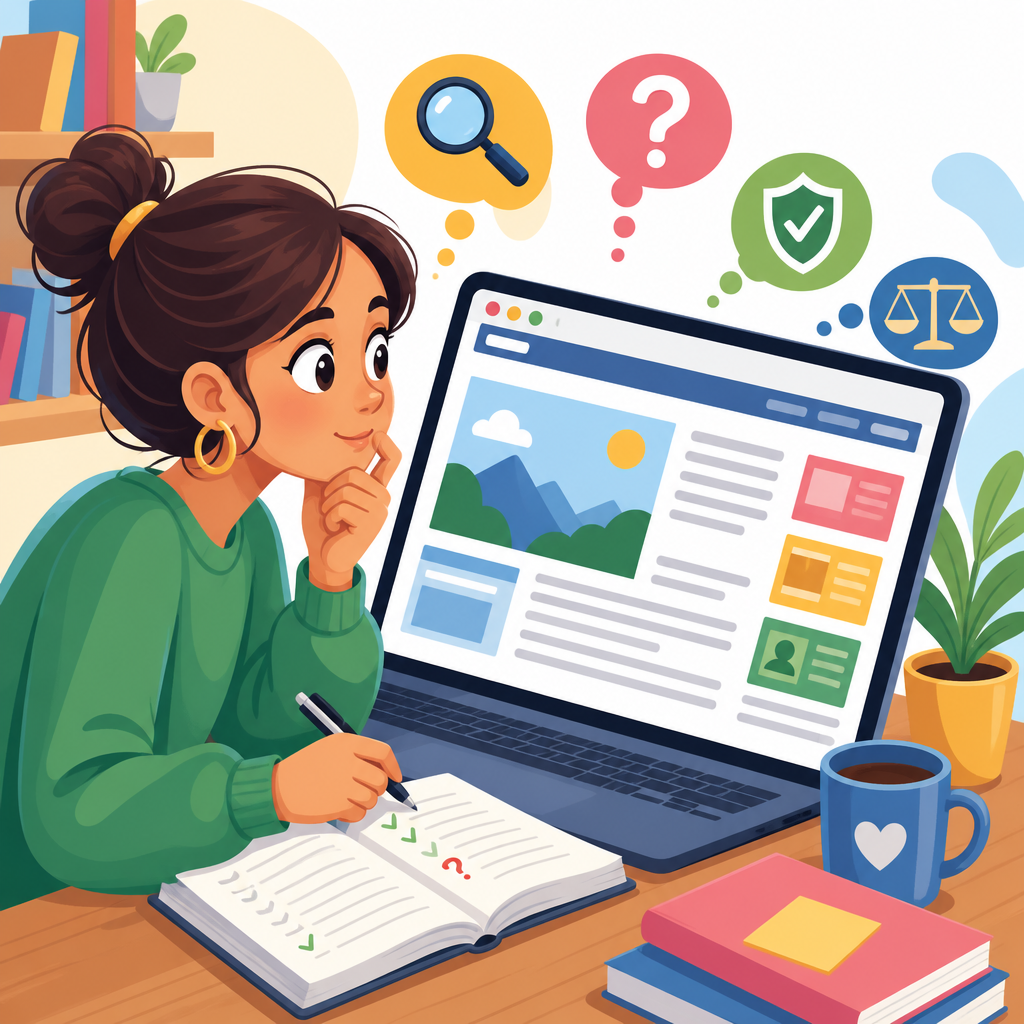
Reading a web page critically in English means going beyond understanding individual words. It means checking who wrote the page, why it was published, what evidence it uses, and how its design influences your judgment. For English learners, this skill matters because online texts mix clear facts, advertising, opinion, and misinformation in the same screen. A page about health, travel, study, or shopping may look trustworthy while quietly pushing a product or a belief. I have taught learners to slow down, inspect headings, links, dates, and sources, and that habit consistently improves both reading accuracy and decision-making. Critical reading is not suspicion for its own sake. It is a practical method for deciding whether a page deserves your attention, trust, or action.
The internet creates special challenges for readers of English. Printed textbooks usually have editors, stable page numbers, and clear authorship. Web pages are different. They are updated, optimized for clicks, crowded with pop-ups, and often written for search traffic rather than for clarity. A beginner may focus only on vocabulary and miss the larger signals that reveal quality. Key terms help here. A claim is a statement presented as true. Evidence is the support for that claim, such as data, quotations, documents, or firsthand reporting. Bias is a tendency that shapes selection and presentation. Credibility is the level of trust a source has earned through expertise, transparency, and accuracy over time. When readers understand these terms, they can ask better questions while reading.
Critical reading in English also supports language development. When you compare a headline with the article, identify emotional wording, or check whether examples really prove the main point, you are practicing inference, tone recognition, and summarizing. Those are core reading skills, not extra academic tasks. In real life, they protect you from scams, bad advice, and shallow content. They also help you study more efficiently because you learn to separate useful material from noise. If you can read signs and basic instructions already, the next step is applying the same attention to full web pages, especially articles, blog posts, product pages, and news reports.
Start with the page before you trust the text
The first step is simple: inspect the page itself before reading every paragraph. I tell learners to pause for fifteen seconds and look for context. What is the site name? Is there an author byline? Does the page show a publication date or update date? Is there an About page, contact information, or editorial policy? Reliable organizations make these details easy to find because they expect scrutiny. Weak sites often hide them. If a page about nutrition has no named writer, no qualifications, and no references, treat it carefully even if the sentences are easy to understand.
URL structure gives useful clues. Government and university domains often indicate stronger oversight, though they are not perfect. A strange domain stuffed with keywords, such as best-fast-cure-now, is a warning sign. So are headlines written like ads: “Doctors Hate This Trick” or “You Won’t Believe What Happened Next.” In my experience, these pages often promise information but deliver affiliate links or vague claims. Also check whether the page is overloaded with banner ads, autoplay video, or buttons that interrupt reading. Aggressive design usually signals that attention, not accuracy, is the main product.
For learners building basic judgment, simple reading practice still matters. A useful foundation is A1 reading practice with signs, labels, and simple instructions, because it trains you to notice exact wording, purpose, and context. Those same habits scale up to longer pages. The difference is that online articles require another layer: evaluating source quality as well as sentence meaning.
Separate fact, opinion, and promotion
Many readers struggle not because the English is too difficult, but because web pages mix different kinds of writing. A fact can usually be checked: “The museum opens at 9 a.m.” An opinion expresses judgment: “This is the city’s most inspiring museum.” Promotion tries to influence action: “Book now before spaces disappear.” A strong page may contain all three, but critical readers label them mentally instead of treating them as equal.
One practical method is to examine verbs, adjectives, and certainty words. Words like prove, guarantee, best, revolutionary, and always often signal overstatement. Balanced writing uses precise language such as may, according to, in this sample, or researchers found. If a technology review says a phone is “the perfect choice for everyone,” that is marketing language, not analysis. If it says the battery lasted eleven hours in PCMark testing and links the method, that is evidence. English learners should underline numbers, names, and attributed statements because these are easier to verify than broad emotional claims.
Sponsored content deserves special attention. Many commercial pages are designed to look like neutral advice. Phrases such as partner content, affiliate disclosure, sponsored, or paid post reveal that money influences the page. That does not automatically make the information false, but it changes how you read it. If a mattress review site earns a commission from sales, compare its recommendations with independent testing from a consumer organization before buying. Critical reading means understanding incentives.
Check evidence, sources, and missing context
A trustworthy web page shows where its information comes from. The strongest sources are primary materials such as official reports, court documents, scientific papers, direct interviews, and original datasets. Secondary sources, including news summaries and blog posts, can still be valuable, but they should accurately represent the primary material. When a page makes a serious claim without links, names, or traceable references, confidence should drop immediately.
Ask four questions. What is the evidence? Who is speaking? How recent is the information? What important context is missing? A health article from 2018 may be outdated if medical guidelines changed in 2023. A chart without sample size is incomplete. A quotation may be accurate but selective. During election coverage, for example, a page might highlight one dramatic poll while ignoring the polling average. That creates a distorted impression through omission, not through an obvious lie.
| Question | What to look for | Example of a strong signal | Example of a weak signal |
|---|---|---|---|
| Who wrote it? | Named author, credentials, organization | Byline with reporter profile and contact page | No author or only a username |
| What supports it? | Links, data, documents, quotations | Study link, official statistics, direct interview | “Experts say” with no names |
| When was it published? | Date and update history | Recent article with correction note | No date on time-sensitive topic |
| Why does it exist? | Inform, sell, persuade, entertain | Clear editorial purpose | Advice page that is mostly affiliate promotion |
This source-checking habit is especially important when statistics appear. Numbers can create false confidence. I have seen pages cite “90 percent of users” without naming the survey, sample, or country. Good statistics are specific. They identify the source, timeframe, and method. If the page says “according to the OECD 2022 report” or “the U.S. Bureau of Labor Statistics found,” you have something concrete to verify.
Read structure, language, and visuals as persuasive tools
Critical reading is not only about facts; it is also about how a page shapes your response. Headings, bullet points, images, charts, and bold text guide attention. Skilled publishers know that many users scan before they read. That means the page’s structure can persuade you before the full argument is tested. A dramatic image above a calm article can make the issue seem more urgent. A selective chart can exaggerate change by cutting off the baseline on the y-axis. Even typography matters: red warning boxes and countdown timers create pressure.
Language choices also reveal the writer’s stance. Compare “protesters filled the square” with “angry mobs took over the square.” Both refer to people in a public place, but the framing changes the implied meaning. Watch for loaded terms, passive voice that hides responsibility, and selective quotations. If a business article says “mistakes were made,” ask who made them. If a page quotes one critic and three supporters, ask whether the balance reflects reality or just editorial preference.
Finally, compare the headline, subheadings, and conclusion. On weak pages, the headline often promises more than the article proves. This gap is common in viral content. A title may ask a dramatic question, but the article only presents anecdotes. When that happens, trust the evidence, not the packaging.
Build a repeatable reading routine
The best way to read web pages critically in English is to use the same short routine every time until it becomes automatic. First, identify the page type: news report, opinion piece, product page, forum post, or official guidance. Second, inspect source signals such as author, date, domain, and contact details. Third, separate claims from evidence. Fourth, cross-check one important point with an independent source. Fifth, summarize the page in one sentence using neutral language. If you cannot summarize it clearly, you may not understand it well enough to trust it.
This routine works for learners because it reduces overload. You do not need perfect vocabulary to judge a page well. You need consistent questions and attention to signals. Over time, your speed improves. You start to notice recycled articles, copied statistics, and manipulative headlines quickly. That saves time and improves comprehension.
Critical reading of web pages in English is a practical skill for daily life, study, and work. The core principles are straightforward: identify the source, recognize the page’s purpose, separate fact from opinion and promotion, and verify evidence before accepting important claims. Strong readers do not assume a polished layout means truth, and they do not reject everything online either. They weigh credibility using visible signals, precise language, and cross-checking. This approach strengthens comprehension because it connects vocabulary with judgment.
The main benefit is confidence. When you know how to inspect authorship, dates, links, statistics, and framing, you stop being an easy target for weak information. You make better choices about what to believe, share, buy, or ignore. Start small: choose one web page today, apply the routine in this article, and write a one-sentence evaluation of its credibility.
Frequently Asked Questions
1. What does it mean to read a web page critically in English?
Reading a web page critically in English means doing more than translating vocabulary or understanding the main idea. It means asking careful questions about the source, purpose, evidence, and presentation of the page. A critical reader does not accept a page as trustworthy just because it looks professional, uses confident language, or appears high in search results. Instead, the reader examines who created the content, what they want the reader to believe or do, and whether the claims are supported by reliable facts.
For English learners, this skill is especially important because online texts often combine information, opinion, promotion, and persuasion in the same place. A page may teach something useful while also trying to sell a product, collect an email address, or influence political or social beliefs. Critical reading helps you notice these mixed purposes. It also helps you separate strong evidence from emotional wording, exaggerated promises, or vague statements.
In practical terms, critical reading includes looking at the headline, checking the author or organization, noticing the date, examining links and sources, and paying attention to loaded language. It also means asking whether the page gives balanced information or only one side. When you read critically, you become less likely to be misled by design, advertising, or persuasive English. You move from being a passive reader to an active evaluator of what you see online.
2. How can I tell who wrote a web page and whether the source is trustworthy?
The first step is to identify the author, publisher, or organization behind the page. Look for an author name, an “About” page, contact information, or a description of the organization. If the page gives no clear author or publisher, that is an important warning sign. Trustworthy pages usually make it easy to see who is responsible for the content and why they are qualified to write about the topic.
Next, check the author’s expertise. If the page is about health, finance, law, or education, does the writer have professional experience, academic training, or recognized credentials in that area? If the page belongs to a company, ask whether the company has a direct commercial interest in the topic. That does not automatically make the page false, but it does mean you should read more carefully and compare the information with independent sources.
You should also examine the website itself. Domain endings such as .gov, .edu, and .org can offer clues, but they do not guarantee quality. A government or university page may be more reliable for certain topics, but the real test is still the quality of the evidence and transparency of the source. Look at whether the page cites reputable studies, official data, expert interviews, or primary documents. See whether other respected sources mention or support the same information.
Finally, consider the overall trust signals. Is the page updated recently? Does it include corrections, references, and clear explanations? Does it avoid sensational claims? A trustworthy source usually values accuracy over drama. If a page seems designed mainly to provoke, scare, or pressure you, that is a reason to slow down and verify what you are reading before accepting it as true.
3. What kinds of language should English learners watch for when evaluating online information?
English learners should pay close attention to persuasive, emotional, and absolute language. Words such as “shocking,” “miracle,” “guaranteed,” “proven,” “best,” “worst,” or “everyone knows” can signal that a page is trying to influence your feelings more than inform your thinking. These words are common in advertising, opinion pieces, and misleading content because they create urgency and certainty even when the evidence is weak.
Another important pattern is vague language. Be careful with claims like “experts say,” “studies show,” or “many people believe” if the page does not name the experts, link to the studies, or explain who those people are. Strong writing on a reliable page usually gives specific details: the name of the study, the institution, the date, or the expert’s qualifications. If the language sounds impressive but remains unclear, the content may be less reliable than it appears.
You should also notice whether the page uses balanced language or one-sided language. Critical readers ask: does the writer admit limits, uncertainty, or alternative views? Reliable pages often include phrases such as “the evidence suggests,” “according to current research,” or “results may vary depending on context.” These phrases may sound less dramatic, but they are often more honest. Overconfident language can be a warning sign, especially in complex subjects.
For learners, it is useful to build a small personal list of common persuasive words and phrases. When you see them, pause and ask what the writer wants you to feel or do. This habit improves both language awareness and critical thinking. Over time, you will become better at noticing the difference between informative English and manipulative English.
4. How does the design of a web page affect my judgment, and what should I look for?
Web design can strongly influence how trustworthy a page feels, even before you read the content closely. Clean layout, attractive images, professional logos, and confident typography can create an impression of authority. However, appearance is not proof of accuracy. Many unreliable pages are carefully designed to look polished because visual credibility makes readers less likely to question the information.
When reading critically, look at how the page directs your attention. Are there pop-ups, flashing banners, countdown timers, or repeated buttons telling you to buy, subscribe, or act immediately? These features often show that persuasion or conversion is a major goal of the page. Also notice whether advertisements are clearly separated from the main content. On some websites, ads are designed to look like normal articles or recommendations, which can confuse readers.
You should also examine the structure of the page. Does it provide evidence with links, data, quotes, or references, or does it mostly rely on bold headings and short claims? A well-designed page can still contain weak reasoning. Ask whether the content remains convincing if you ignore the colors, images, and visual style. This is a useful mental test because it shifts your focus from presentation to substance.
Another important factor is whether the page makes it easy to verify information. Reliable pages often include author details, publication dates, source links, and navigation to related content or policy pages. Unreliable pages may hide these details while making dramatic claims very visible. In short, design matters because it shapes your first impression, but critical reading requires you to move beyond first impressions and judge the actual quality of the information.
5. What is a simple step-by-step method I can use to read web pages more critically in English?
A practical method is to follow a short routine every time you read an important page. First, identify the topic and purpose. Ask yourself: is this page trying to inform, persuade, sell, entertain, or provoke? Many pages do more than one of these things, so it is useful to recognize the main goal before trusting the content.
Second, check the source. Find the author, organization, and publication date. Ask whether the author has expertise and whether the website has a reason to promote a certain view. Third, examine the evidence. Look for statistics, examples, expert names, links, and original sources. If a page makes a strong claim but gives no verifiable support, treat it with caution.
Fourth, study the language and tone. Notice emotional words, absolute statements, vague references, or unfair generalizations. Ask whether the writer sounds careful and transparent or dramatic and pushy. Fifth, compare the information with at least one or two other reliable sources. This is one of the best ways to avoid being misled, especially on topics like health, travel advice, study opportunities, or shopping recommendations.
Finally, reflect before you react. Do not immediately share, buy, believe, or repeat what you have read. Take a moment to ask: what is convincing here, what is missing, and what still needs verification? This step is especially valuable for English learners because it creates space to process both the language and the logic. With regular practice, this routine becomes faster and more natural, and you will grow more confident in reading online English with independence, caution, and clarity.





