
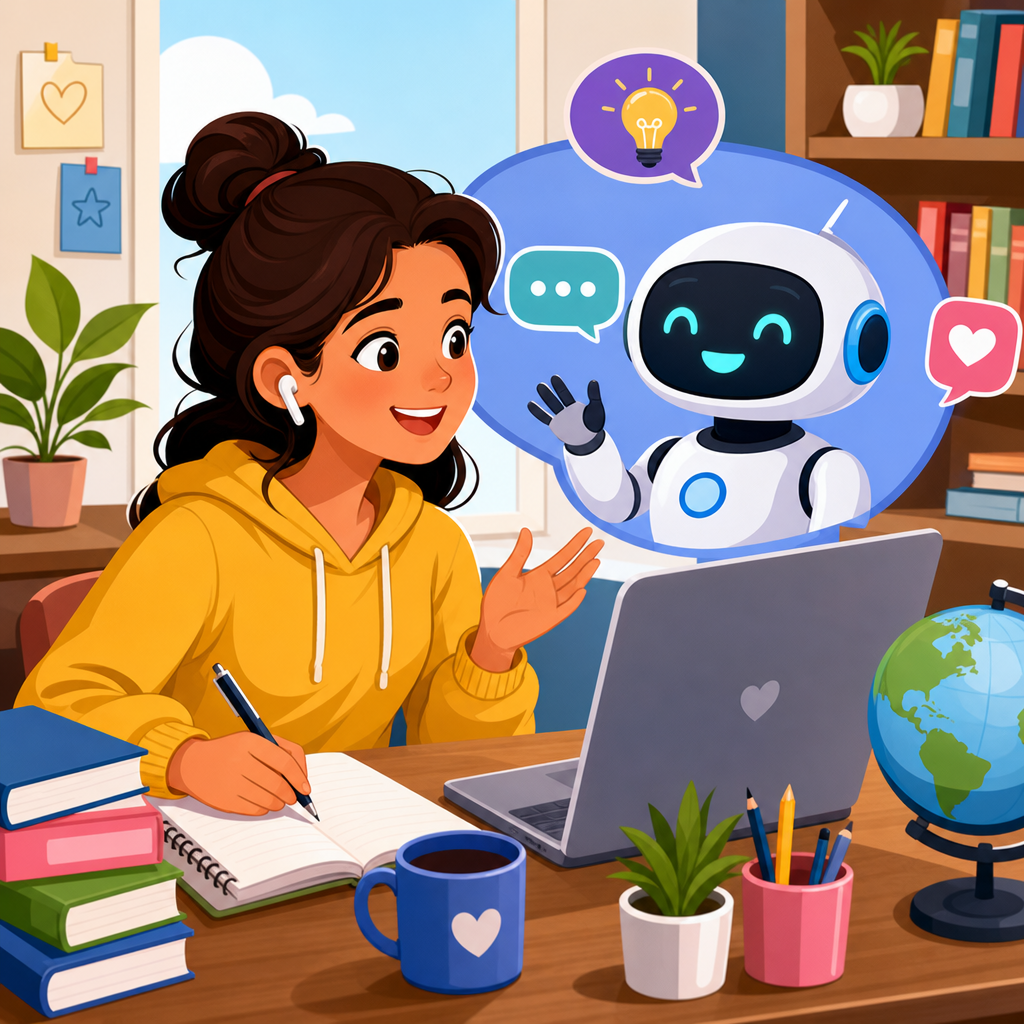
AI chat tools can help adults practice English every day, but responsible use matters as much as convenience. In this context, AI chat tools include conversational systems such as ChatGPT, Gemini, Claude, and language-learning bots built into apps. Responsible practice means using these tools in ways that improve speaking, writing, reading, and listening without creating false confidence, privacy risks, or overdependence. I have tested AI conversations for lesson planning, error correction, and fluency drills, and the pattern is clear: learners improve fastest when they treat AI as a structured practice partner, not as a shortcut that replaces study, feedback, or real communication.
This matters because busy adults need flexible English practice that fits real schedules. A ten-minute exchange with a chatbot can simulate a job interview, rewrite an email, or explain why a sentence sounds unnatural. That speed is valuable, especially for learners who do not have daily access to teachers or native speakers. At the same time, AI systems can produce incorrect grammar explanations, unnatural phrasing, invented facts, or feedback that sounds confident but is wrong. Used carelessly, they can reinforce mistakes. Used well, they can increase repetition, reduce hesitation, and make focused practice easier to sustain over months.
The most effective approach is to define one learning goal per session, give the tool clear instructions, and verify important corrections with reliable references. Responsible use also means protecting personal information, recognizing the limits of machine feedback, and balancing AI practice with human input. If you want better English for work, travel, study, or daily life, AI can support your progress. It should not become your only source of truth. The sections below explain exactly how to use AI chat tools to practice English responsibly, what tasks they handle well, where they often fail, and how to build a repeatable routine that produces measurable improvement.
Choose tasks AI handles well
AI chat tools are strongest at structured language practice with clear boundaries. They can generate conversation prompts, role-play predictable situations, simplify articles, quiz vocabulary, explain grammar patterns, and provide alternative ways to say the same idea. For example, if you need English for customer service, you can ask the tool to act as an angry customer and require you to respond politely. If you are preparing for a meeting, you can practice introducing yourself, summarizing a project, and answering follow-up questions. These are high-value tasks because they involve repetition, recall, and reformulation, which are core drivers of language growth.
They are also useful for controlled writing feedback. A responsible prompt might be: “Correct my email for grammar and tone, but keep my original meaning. Explain each change in simple English.” That instruction matters. Without it, the tool may rewrite everything so heavily that you lose ownership of the language. I have seen learners improve faster when they compare original and corrected versions line by line. They notice recurring issues such as article use, verb tense consistency, prepositions, and overly direct wording. This kind of targeted review creates patterns the brain can reuse in later conversations.
Pronunciation support is more limited in text-only tools, but you can still practice sound awareness. Ask for minimal pairs like ship and sheep, stress patterns in words like photograph and photography, or short scripts marked for sentence stress. If your tool supports voice, use it for short responses, then ask for feedback on clarity, pacing, and word choice. Keep expectations realistic: automated pronunciation feedback can detect some issues, but it is not a substitute for a skilled teacher or careful listening practice with trustworthy audio sources.
Use prompts that create accountable practice
The quality of your English practice depends heavily on the quality of your prompts. Vague requests produce vague results. Clear prompts create lessons, drills, and feedback you can actually use. The best prompts specify your level, goal, task type, topic, and correction style. Instead of saying, “Help me with English,” say, “I am B1 level. Ask me five interview questions for an office job. After each answer, correct only my biggest grammar mistake and suggest one more natural phrase.” That structure reduces overload and makes feedback easier to remember.
Accountable practice also means asking the tool to show its reasoning in practical terms. If it corrects your sentence, ask why. If it suggests a phrase, ask when native speakers actually use it. If it teaches vocabulary, ask for one formal example, one casual example, and one common mistake. These requests force the session beyond passive consumption. They also help you catch weak or generic advice. When an explanation sounds unclear, ask for a simpler rule and two more examples. Good AI-assisted learning is interactive, not one-way.
For busy adults, consistency beats intensity. A short framework works well: warm up with three simple questions, do one main task, then finish with review. For a ready-made habit loop that supports this approach, connect your chatbot sessions to the broader daily system in this practical English routine for busy adults. AI becomes much more effective when it sits inside a repeatable routine instead of random, unplanned use.
| Practice goal | Strong prompt | Why it works |
|---|---|---|
| Speaking fluency | Act as a hotel receptionist. Ask me one question at a time. Wait for my answer. Correct only major errors. | Keeps the exchange realistic and prevents too much feedback at once. |
| Email writing | Check my email for grammar, tone, and clarity. Keep my meaning. Explain each change briefly. | Preserves ownership while turning corrections into learning points. |
| Vocabulary growth | Teach me five phrases for disagreeing politely in meetings, with examples and common mistakes. | Focuses on usable language, not isolated word lists. |
| Grammar review | Quiz me on present perfect versus past simple. Give hints before answers. | Builds recall and self-correction instead of passive reading. |
Know the limits of AI feedback
AI can sound authoritative even when it is mistaken. This is the central risk learners must understand. A chatbot may label a correct sentence awkward, invent a grammar rule, or recommend a phrase that is technically possible but uncommon in real speech. I have seen tools overcorrect perfectly acceptable variations such as different prepositions used in British and American English. They can also miss discourse-level problems, including whether a response is too blunt for a workplace, too long for a meeting, or too vague to answer the actual question.
The safest rule is simple: trust AI most for practice volume and first-pass feedback, and trust human teachers, high-quality dictionaries, corpora, and style guides for final decisions. For grammar and usage, cross-check uncertain points with sources such as the Cambridge Dictionary, Merriam-Webster, the British Council, Purdue OWL, or the Corpus of Contemporary American English. If the AI gives a rule, test it against examples from those sources. If a suggested phrase looks strange, search whether real speakers actually use it in the context you need.
Another limitation is personalization. AI can imitate a tutor, but it does not truly know your full history, habits, or emotional barriers unless you tell it. A human teacher may notice that you avoid past tense when discussing work problems or that you speak less when topics become abstract. AI usually notices only what appears in the current exchange. That means you should keep your own error log. Write down repeated mistakes, target phrases, and questions that keep returning. Then bring that list into future sessions so the practice becomes cumulative rather than scattered.
Protect privacy and avoid dependency
Responsible English practice includes digital safety. Do not paste passports, legal documents, confidential work emails, medical information, customer data, or private messages into a chatbot. Many platforms store conversations for quality review or model improvement unless settings are changed, and policies vary by provider and plan. Before using any tool, read its privacy terms, check whether chat history can be disabled, and understand whether data is used for training. If you need help with a sensitive text, anonymize it first by removing names, company details, addresses, account numbers, and other identifiers.
Dependency is the second major risk. If every sentence is drafted, corrected, and polished by AI, your independent English will stagnate. The goal is supported performance that gradually becomes solo performance. A practical rule I use with learners is attempt first, assistance second, reflection third. First, answer or write without help. Second, ask for targeted correction. Third, rewrite from memory. That final step matters because recognition is easier than production. You only own language you can produce again without the tool in front of you.
Set boundaries for when not to use AI. Do not rely on it during graded assignments if your school forbids it. Do not use it to fake proficiency in job applications. Do not ask it to generate personal experiences you never had for speaking tests. Those choices may produce short-term gains, but they damage trust and leave you unprepared when real communication happens live. Responsible practice means using AI to build competence honestly, not to simulate it.
Build a balanced routine that leads to real progress
The best results come from combining AI practice with human input and authentic English. A balanced weekly plan might include three chatbot sessions, two listening sessions with podcasts or videos, one conversation with a teacher or language partner, and one review session using your notes. This mix develops fluency, comprehension, accuracy, and confidence together. In my experience, learners who rely only on chatbot conversations often become fast typists of English but remain weak at listening under real-world speed and accent variation.
Measure progress with concrete indicators. Track how long you can answer without freezing, how many corrections repeat each week, how accurately you use target phrases, and whether you can complete practical tasks such as writing a clear update email or handling a basic phone call. Save old conversations and compare them monthly. Improvement is often easier to see in reduced hesitation, stronger organization, and fewer recurring grammar errors than in dramatic leaps in level. Responsible use is not about maximizing screen time. It is about creating reliable evidence that your English is becoming more functional in life outside the chat window.
AI chat tools are most useful when they give you more chances to practice, notice mistakes, and try again with purpose. Use them for role-plays, guided corrections, vocabulary building, and short daily drills. Question their feedback, verify important points, protect your data, and keep human and real-world English in the loop. If you treat AI as a smart practice assistant rather than an all-knowing teacher, it can help you build better habits and stronger English. Start with one focused prompt today, save your corrections, and turn your next ten minutes into practice that actually counts.
Frequently Asked Questions
1. How can AI chat tools help adults practice English in a responsible way?
AI chat tools can be very useful for daily English practice when they are treated as a support tool rather than a perfect teacher. Adults can use them to practice conversation, expand vocabulary, review grammar, improve writing clarity, and build confidence speaking or typing in English. A chatbot can simulate common situations such as job interviews, travel conversations, workplace small talk, customer service exchanges, or academic discussions. This makes practice more accessible because learners can get immediate interaction at any time of day without needing to schedule a tutor or class.
Responsible use means setting clear limits and goals. Instead of asking the tool to do everything, use it to strengthen specific skills. For example, you might ask it to role-play a restaurant conversation, correct a short paragraph you wrote, explain why a grammar change was made, or create listening-style comprehension questions from a passage. That kind of guided use supports real learning. It is also important to compare AI feedback with trusted sources such as qualified teachers, dictionaries, grammar references, or well-designed course materials. AI can be helpful, but it can also give awkward phrasing, oversimplified explanations, or incorrect corrections.
The most responsible approach is to combine AI practice with real-world exposure. Speak with people when possible, read authentic English content, listen to podcasts or videos made for native or advanced speakers, and write your own ideas before asking for feedback. Used this way, AI becomes a low-pressure practice partner that helps you practice consistently while still keeping human judgment, independent thinking, and real communication at the center of your learning.
2. What are the risks of relying too much on AI for English learning?
One of the biggest risks is false confidence. AI tools often respond smoothly and supportively, which can make learners feel they are improving faster than they really are. A chatbot may understand unclear English because it is designed to guess meaning from context, but real people may not do that so easily. This can create a gap between successful practice with AI and successful communication in real life. Learners may think their pronunciation, grammar, or word choice is strong enough when it still needs work in natural conversations.
Another risk is overdependence. If a learner always asks AI to rewrite messages, correct every sentence instantly, or generate ideas before they think for themselves, they may become less independent. This weakens the very skills they want to build. English improvement comes from effortful recall, trial and error, and noticing patterns over time. If AI does too much of the thinking, the learner may become efficient at prompting rather than actually improving their speaking or writing ability.
There is also the issue of accuracy. AI can produce incorrect grammar advice, unnatural expressions, culturally odd examples, or explanations that sound convincing but are incomplete. In addition, some tools may not reflect natural spoken English very well, especially for regional accents, informal speech, or highly contextual expressions. Privacy is another serious concern. If users share personal documents, private conversations, workplace information, financial details, or health-related content, they may expose sensitive data unnecessarily. Responsible learners protect themselves by sharing only what is needed, avoiding confidential details, and reviewing privacy settings and platform policies before using a tool regularly.
3. What is the best way to use AI chat tools for speaking, writing, reading, and listening practice?
The best results usually come from using AI differently for each skill instead of treating every interaction the same way. For speaking, learners can ask the tool to create role-plays, discussion prompts, interview questions, or everyday scenarios. Even if the chatbot is text-based, it can still help by generating realistic dialogue, follow-up questions, and useful phrases. If voice features are available, learners can practice speaking aloud and ask for feedback on clarity, grammar, or word choice. It is especially effective to repeat the same scenario several times and try to answer more naturally each round.
For writing, AI can be used to review emails, short essays, journal entries, or social media-style messages. A responsible method is to write first without help, then ask the tool to identify grammar mistakes, awkward phrases, unclear ideas, or overly formal language. It is even better to ask for explanations, not just corrections. For example, you can ask, “Why is this sentence unnatural?” or “Can you show me three more natural alternatives and explain the difference in tone?” That encourages learning instead of passive copying.
For reading, AI can simplify articles, explain difficult vocabulary in context, summarize paragraphs, or create comprehension questions. Learners can paste a short text and ask for key phrases, idioms, or transition words. This helps with understanding structure and meaning, especially at intermediate levels. For listening, AI can support practice by generating transcripts, quizzes, vocabulary previews, or discussion questions based on podcasts, videos, or speeches. Some learners also use voice-enabled bots to listen to spoken prompts and respond in real time. The key across all four skills is balance: use AI to practice, check, and extend your learning, but continue to work with authentic materials and real human communication whenever possible.
4. How can learners check whether AI corrections and explanations are actually accurate?
Learners should assume that AI feedback is useful but not automatically correct. A practical habit is to verify important corrections, especially if they affect work, study, exams, or public communication. Start by asking the AI to explain its changes clearly. If it corrects a sentence, ask why the original was wrong, whether the corrected version is formal or informal, and whether there are alternative ways to say the same thing. Weak or vague explanations can be a sign that the feedback should be checked more carefully.
Cross-checking is essential. Compare AI suggestions with trusted dictionaries, learner corpora, grammar books, style guides, reputable educational websites, or feedback from a qualified teacher. If you are learning collocations or natural phrasing, example databases and corpora can be especially useful because they show how words are actually used together in context. If an AI suggests an expression that feels unusual, search for examples from reliable sources to see whether native speakers really use it that way.
Another smart strategy is to ask the same question in different ways or even compare responses from more than one AI tool. If the answers conflict, do not assume one is right just because it sounds more confident. Instead, investigate further. Over time, learners can also build their own error log. Keep a notebook or digital record of repeated mistakes, verified corrections, and example sentences. This turns AI from a one-time answer machine into part of a structured learning process. The goal is not to distrust every response, but to develop enough critical thinking to know when a correction should be accepted, questioned, or confirmed elsewhere.
5. How can adults protect privacy and avoid sharing too much personal information while practicing English with AI?
Privacy protection should be part of responsible English practice from the beginning. Many learners naturally want to practice with real-life materials such as personal emails, job application drafts, workplace messages, medical forms, or legal documents. While that can feel practical, it may expose sensitive information if names, addresses, account numbers, company details, or private situations are included. A safer approach is to remove or replace identifying details before sharing text with any AI tool. Use placeholders such as “Company A,” “Manager,” or “City X” instead of real names and locations.
It is also wise to avoid entering confidential business information, passwords, financial records, health data, immigration details, or anything that could cause harm if stored, reviewed, or leaked. Even when a platform appears trustworthy, responsible users limit what they share. Review the service’s privacy policy, account settings, and data controls when possible. Some tools may allow users to manage chat history, turn off certain data uses, or delete stored conversations. Those settings matter, especially if you practice regularly and build a long chat history over time.
For safer learning, create practice materials that are realistic but not sensitive. Instead of pasting your actual work email, ask the AI to generate a sample email for your situation and then rewrite it in your own words. Instead of sharing a private life story, summarize it in general terms. Adults should think of AI as a public-facing helper, not a private diary or secure filing cabinet. When learners combine privacy awareness with smart study habits, they can enjoy the convenience of AI-powered English practice without creating unnecessary personal or professional risk.





