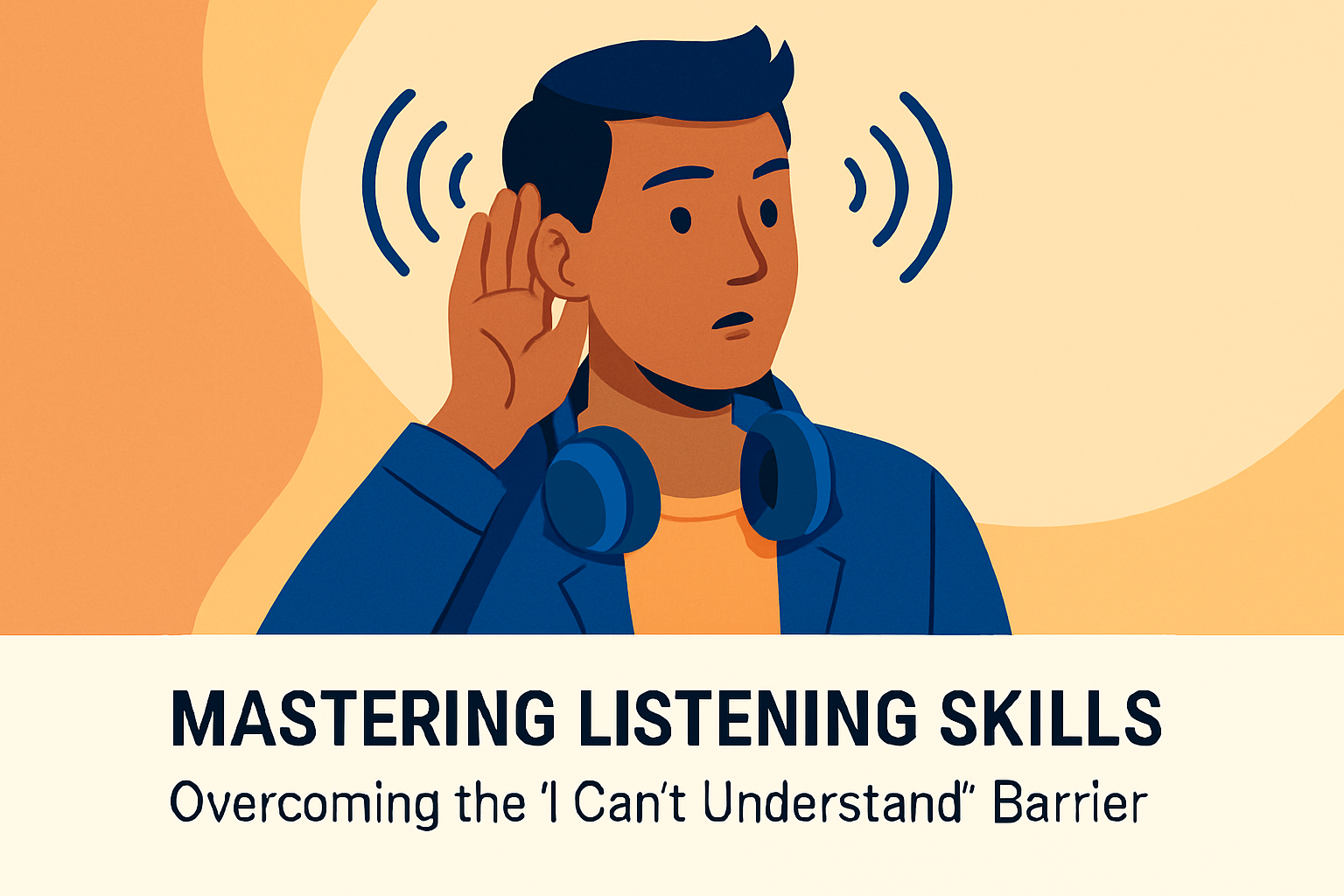
Effective listening is a cornerstone of successful communication, whether in personal, educational, or professional settings. However, many people find themselves frequently uttering the phrase, “I can’t understand,” during conversations, leading to misunderstandings and miscommunications. This article delves into how mastering listening skills can dismantle the comprehension barrier and enhance communicative effectiveness. Key terms we will explore include “active listening,” “empathic listening,” and “critical listening.” Understanding these concepts is essential because improvements in listening abilities can lead to more productive interactions, better relationships, and reduced frustration during conversations.
The Essence of Active Listening
Active listening is the process of fully concentrating, understanding, responding, and then remembering what is being said in a conversation. It’s much more than just hearing the words of the speaker; it’s about engaging with them on a deeper level. For example, in a business meeting, an active listener might take notes, maintain eye contact, and ask clarifying questions like, “Can you please elaborate on that point?” to ensure they grasp the full context of what’s being discussed.
One of the barriers to active listening is the habitual tendency to focus on formulating a response rather than genuinely understanding the speaker. To overcome this, practice mindfulness in conversations, directing your full attention to the speaker without distractions. A helpful technique is to mentally summarize what is being said and repeat it to the speaker: “So, what you’re saying is…” This not only reinforces your understanding but also signals to the speaker that you value their message.
Developing Empathic Listening Skills
Empathic listening goes beyond just understanding words; it involves engaging with the emotions and feelings underlying the speaker’s message. This type of listening is crucial in personal relationships where emotional exchanges are frequent. Imagine a scenario where a friend is discussing a personal challenge. An empathic listener would not only listen to the content but also respond to the feeling by saying, “It sounds like you’re really stressed out about this situation,” thus acknowledging the speaker’s emotional state.
Practicing empathy in listening starts with withholding judgment and avoiding immediate solutions. Instead of offering advice, listen to understand the speaker’s perspective. This approach can lead to more supportive and fulfilling interactions, thereby breaking down the “I Can’t Understand” barrier. An important strategy is to use reflective statements that capture both the substance and the emotional undercurrent of the conversation.
Sharpening Critical Listening
Critical listening involves engaging intellectually with the content of the message, making it essential for evaluating information, especially in learning environments or professional contexts. When participating in a debate, for example, a critical listener would assess the argument’s logic, credibility, and relevance before forming a conclusion or a counterargument. Questions like, “What evidence supports this claim?” are crucial in this process.
To enhance critical listening skills, practice analyzing the information critically and objectively. Pay attention to how arguments are structured and the soundness of the conclusions drawn. Critical listening thrives on the ability to remain impartial and not let personal biases cloud objective assessment. Creating an internal checklist of questions related to the validity, reliability, and impartiality of the information could foster improvement in this area.
| Type of Listening | Goal | Example |
|---|---|---|
| Active Listening | Understand full context | Asking clarifying questions in a meeting |
| Empathic Listening | Connect emotionally | Responding to a friend’s stress concerns |
| Critical Listening | Evaluate arguments | Analyzing debates critically |
Strategies to Foster Better Listening Habits
While understanding listening types is crucial, implementing strategies to improve listening habits is essential. Creating a conducive environment for listening is a foundational strategy. For instance, in a noisy workplace, finding a quiet space can help concentrate better on conversations. Importantly, being consciously aware and present during communication is key. This could mean turning off electronic devices to avoid distractions and focusing entirely on the speaker.
Enhancing listening skills also involves practicing patience. This is crucial in conversations where ideas may not be immediately understandable. Taking the time to pause, process, and, if necessary, review details of the conversation before responding can significantly enhance understanding and retention of information.
Overcoming the “I Can’t Understand” Issue with Practice
Ultimately, overcoming the “I Can’t Understand” barrier requires deliberate practice and patience. Regularly engaging in activities that challenge and assess listening skills can be immensely beneficial. For instance, watching foreign language films, podcasts, or engaging in dialogues with clearly different viewpoints can provide the necessary exposure to improve adaptability and understanding.
Moreover, engaging in active discussions and feedback sessions can foster listening enhancement. After conversations, reflecting on what made the communication effective or difficult can offer insights into personal listening strengths and weaknesses, thus guiding improvements.
Nurturing the Listener’s Mindset
Part of mastering listening involves nurturing the right mindset. Cultivating qualities such as curiosity, openness, and willingness to learn from others can facilitate better listening experiences. Staying curious keeps one actively engaged, while openness allows for broader understanding without immediate biases. An example of this application is participating in diverse social groups where different viewpoints are discussed, requiring adaptability and open-mindedness to truly understand.
Additionally, being willing to learn and keeping the ego in check by acknowledging that one doesn’t know everything can break down barriers in comprehension. Embracing feedback about listening habits from peers can also provide direction on what to improve and how.
Concluding Thoughts and Next Steps
Regularly practicing and refining listening skills can significantly decrease the frequency of saying, “I Can’t Understand.” By actively engaging with various listening techniques, individuals can remove communication barriers, establish deeper connections, and process information more effectively.
The process begins with acknowledging weaknesses and deliberately working on the skills that need enhancement. The next step involves committing to regular practice, constantly seeking feedback, and remaining open to learning new techniques to improve listening.
Every conversation presents an opportunity to practice listening, and embracing each interaction with an open mind can lead to substantial progress. This commitment to mastering listening can transform both personal and professional interactions, leading to more fruitful and satisfactory communication.
Make it a habit to consciously deploy these listening techniques, and over time, the phrase “I Can’t Understand” will become less frequent in your vocabulary. Commit today to strengthening your listening abilities, and unlock the full potential of your communication skills.
Frequently Asked Questions
1. What are the key components of active listening?
Active listening is a critical skill that transforms the way you perceive and engage in conversations. There are several components that come together to truly embody active listening. First, it involves giving your full attention to the speaker. This means setting aside any distractions, such as your phone or other background activities, to ensure you are fully engaged. Non-verbal cues are also crucial; nodding, maintaining eye contact, and leaning slightly forward all show that you are attentive and engaged. Another essential component is reflecting on what the speaker is saying. This could involve paraphrasing or summarizing their points to confirm your understanding. It’s also important to ask open-ended questions that encourage further discussion and demonstrate your genuine interest. Lastly, active listening involves withholding judgment and refraining from interrupting when the other person is speaking. All of these components contribute to more meaningful and effective conversations.
2. Why do people often experience difficulty understanding in conversations?
There are various reasons why people might find themselves struggling to understand others during conversations. One major factor is the presence of background noise, which can distract and hinder one’s ability to focus on the speaker. Similarly, not being in the right mental state, such as feeling stressed or preoccupied, can dilute your ability to absorb information. Additionally, cultural differences can impact understanding; different communication styles, accents, or unfamiliar vocabulary can present significant barriers. Personal biases or preconceived notions can also cloud your judgment and hinder your ability to listen objectively. Additionally, lack of active listening skills, such as poor attention and not paying regard to non-verbal signals, can frequently lead to misinterpretations. Over time, failure to actively engage in conversations or practice empathy can also contribute to a decline in understanding during interactions.
3. How can empathic listening enhance understanding and communication?
Empathic listening goes a step beyond active listening by not only acknowledging the words being spoken but also deeply understanding the emotions and feelings behind them. When you practice empathic listening, you prioritize empathy and strive to genuinely understand the speaker’s perspective, even if it differs from yours. This approach can significantly reduce misunderstandings and build stronger trust in any kind of relationship. Empathic listening fosters a safe and open environment that encourages honest expression without fear of judgment. It helps in recognizing and validating the speaker’s feelings and experiences, thereby enhancing clarity and connection. By incorporating empathy into your listening practices, you’re more likely to address concerns constructively, resolve conflicts more effectively, and enhance collaborative efforts. Overall, empathic listening nurtures a compassionate and understanding dynamic that is beneficial in both personal and professional settings.
4. What are some practical strategies to improve listening skills?
There are several practical strategies you can adopt to sharpen your listening skills. One effective technique is to practice mindfulness, which trains your mind to focus on the present moment, making it easier to block out distractions and fully engage in conversations. Taking notes, either mentally or physically, can also help you retain information and ensure proper understanding. Another strategy is to cultivate curiosity, which naturally prompts you to listen more intently and ask insightful questions. This not only reinforces your knowledge but also shows the speaker that you are interested in their input. It’s also beneficial to regularly practice patience by resisting the urge to interject or finish someone’s sentences. Instead, wait for the speaker to finish their thoughts before responding. Moreover, regularly engaging in active and empathic listening exercises can strengthen these skills over time. You can do this through role-playing scenarios or structured listening exercises with peers or mentors. Lastly, seeking feedback from others about how you can improve and actively working on any critiques received can greatly aid in advancing your listening capabilities.
5. How can mastering listening skills impact professional success?
Effective listening is integral to professional success as it underpins all aspects of workplace communication and collaboration. When you master listening skills, you improve your ability to understand and interpret information accurately, which is essential for making informed decisions. Strong listening skills facilitate better problem-solving by ensuring you fully comprehend challenges and can brainstorm effective solutions with your team. In leadership positions, the ability to listen well fosters trust, respect, and rapport among colleagues, creating a more cohesive and motivated team. Additionally, professionals who listen with care and empathy are more adept at handling conflicts with diplomacy, leading to more harmonious work environments. By actively listening during meetings, presentations, and client interactions, you demonstrate professionalism and reliability, which can enhance your reputation and lead to career advancement opportunities. Ultimately, mastering listening skills can significantly improve your capacity to influence, collaborate, and thrive in a professional setting.