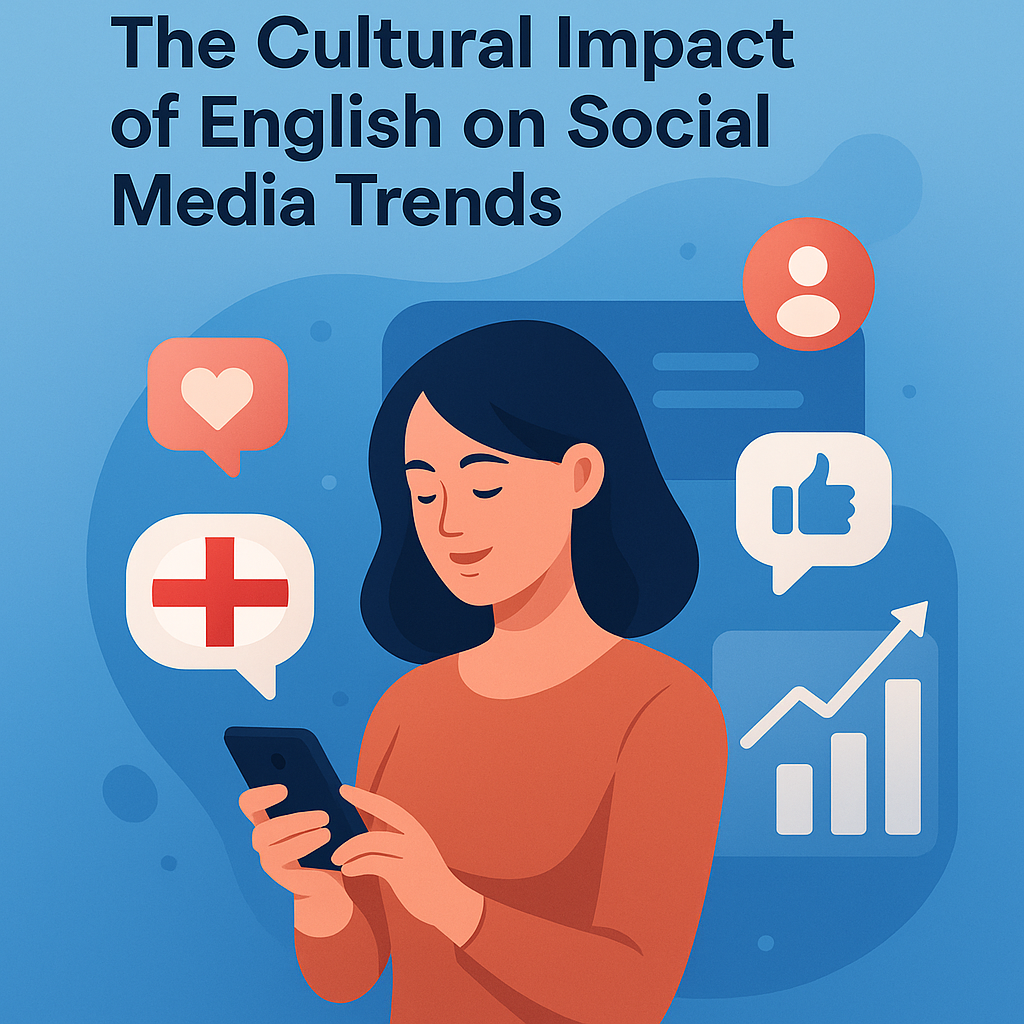
The rise of social media has revolutionized the way we communicate. Among the most significant developments is the pervasive use of English as a dominant language across platforms. Understanding this phenomenon is crucial for grasping how cultures are interacting and evolving in the digital age. Social media, defined as websites and applications that enable users to create and share content or participate in social networking, serves as a vital channel for global communication. English, often regarded as a global lingua franca, has expanded its influence impressively in this sphere.
The convergence of English and social media is reshaping both linguistic landscapes and cultural identities worldwide. This trend matters because it directly affects how people around the world connect, share ideas, and mobilize. As social media’s reach is vast, the interplay between English and global cultures holds profound implications for cultural homogenization, digital inclusion, and identity formation.
The Role of English in Social Media Communication
English’s predominance on social media platforms is a product of historical, economic, and technological forces. Historically, English has been propelled to a global status through colonization, economic influence, and Hollywood’s power. Economically, countries with English as their first language hold significant power in the global market, impacting platform design and focus.
Platforms like Facebook, Twitter, and Instagram initially developed in English-speaking territories, popularizing the language. These platforms embed English in their frameworks, from their user interfaces to their help and support sections. For instance, Twitter’s 280-character limit encourages concise communication, a style well-suited to the English language with its simple structure and high-frequency terms.
Moreover, English serves as a bridge language on platforms with diverse user bases. For instance, professionals on LinkedIn use English to network and collaborate internationally, while bloggers on WordPress or Medium create content in English to maximize audience reach. This demonstrates how English opens doors to global interactions, fostering cross-cultural exchanges and knowledge-sharing.
English as a Catalyst for Cultural Exchange and Understanding
One positive aspect of English’s dominance is its role in facilitating cultural exchanges. When people from different backgrounds use English as a common language, they share their perspectives, traditions, and values with one another, thus promoting mutual understanding.
For example, on platforms like TikTok, users create and share short videos in English or translate their content to reach wider audiences. This creates a melting pot of global trends where local cultures gain international exposure. A viral dance originating in Africa can inspire iterations across Asia, Europe, and the Americas, all through the medium of English. This movement of trends exemplifies the democratization of culture, allowing individuals to participate in and contribute to global dialogues.
Challenges of Cultural Erosion and Identity Loss
While English facilitates global interaction, its dominance can also contribute to cultural erosion and identity loss. When people prioritize English over their native languages, lesser-used languages face the threat of extinction. The pressure to conform to global trends may dilute unique cultural practices, leading to homogenization.
A real-world example includes hashtags on Instagram or Twitter, where users opt for English hashtags, like #love, #goodvibes, or #instatravel, even when posting content related to their local customs or places. This choice extends their content’s reach but may undercut the visibility and preservation of indigenous languages. Moreover, younger generations might gravitate towards global trends, adopting them at the expense of traditional practices.
Table Illustration: English Usage Across Popular Platforms
| Platform | Primary Language | % of Content in English |
|---|---|---|
| English | 67% | |
| English | 61% | |
| English | 62% | |
| YouTube | English | 63% |
English as a Barrier to Digital Inclusion
While English opens many doors, it can also act as a barrier for those who lack proficiency. Social media platforms primarily designed in English may alienate non-English speakers, limiting their access to resources and opportunities. This digital divide is a significant concern for platforms aiming to be inclusive and democratically accessible to everyone.
Consider a small-business owner in South America who struggles to market her products on English-dominated sites like Etsy. She might face challenges due to language restrictions, which can affect her ability to provide customer support or optimize listings. Such barriers hinder many from fully leveraging social media’s potential, particularly in non-English speaking regions.
Strategies for Promoting Multilingualism and Digital Diversity
To address these challenges, there is a growing need for strategies promoting multilingualism and diversity on social media platforms. Encouraging users to post content in multiple languages or integrating translation features are practical steps. Platforms like Facebook have started incorporating artificial intelligence-driven translations, making content more accessible to non-English speakers.
Additionally, encouraging influencers to share content in their native languages or collaborate with local creators can enhance cultural preservation. Social media campaigns, like the UN’s International Mother Language Day, encourage users to celebrate linguistic diversity by sharing posts in various languages and raising awareness of the benefits of multilingual communication on global platforms.
Conclusion: Embracing the Dual Role of English
The cultural impact of English on social media trends is multifaceted, presenting opportunities for global connection as well as challenges for cultural preservation. English acts as a conduit for information and cultural exchange, aptly suited for audiences seeking diverse perspectives. However, it also poses a risk to linguistic diversity and cultural identity, highlighting the need for conscious efforts to balance its use with the preservation of native languages.
Understanding English’s dual role is paramount as individuals, content creators, and platform developers work to navigate the complexities of global communication. To foster a more inclusive digital society, efforts must continue to adapt platforms to accommodate multilingualism and diverse expressions of cultural identities.
For readers intrigued by this topic, the next logical step is to actively engage on social media, utilizing the platforms as arenas for cross-cultural dialogue and learning. Leveraging the advantages of English while advocating for diversity will ensure a robust and culturally rich digital landscape.
Frequently Asked Questions
1. How has the use of English on social media platforms influenced global communication?
The use of English on social media platforms has significantly shaped global communication by creating a more interconnected world where ideas, cultures, and perspectives can easily be exchanged. English is often considered the lingua franca of the internet, making it the default language for many users around the globe. This ubiquity allows individuals from different backgrounds to interact without the barrier of language, fostering understanding and collaboration on an unprecedented scale. Social media amplifies this by providing a space where content can go viral, be shared, and spark discussions that transcend geographical boundaries. As such, English on social media becomes a tool for global dialogue, breaking down cultural silos and promoting multicultural exchanges. The ability of users to engage in a common language encourages not just the sharing of text, but also videos, memes, and other forms of content, all contributing to a vibrant, diverse digital culture.
2. Why is English so dominant on social media?
English’s dominance on social media is driven by a combination of historical, technological, and demographic factors. Historically, English has been a major language of academia, business, and international diplomacy, and this has naturally extended into digital communication. Technologically, many of the major social media platforms were developed in English-speaking countries, so they launch with English as the default language. Demographically, English boasts a vast number of speakers worldwide, including both native and non-native users, which has cemented its status as a global lingua franca. On social media, this dominance is reflected in the algorithms that often prioritize English content, the widespread adoption of English hashtags that help reach larger audiences, and the simplicity of using a shared language to connect with users across the world. As a result, even non-English speakers frequently use English to increase their content’s reach and visibility.
3. What cultural impacts does the prevalence of English have on social media content creation?
The cultural impact of English on social media content creation is profound. It influences both the style and substance of online communication, often leading to a homogenization of content, where local and regional cultures adopt broader, global standards often expressed in English. This can promote certain cultural values, perspectives, and humor that align more with Western norms, potentially overshadowing local traditions and linguistic diversity. On the flip side, the usage of English also provides a platform for lesser-known cultures to gain international visibility. Creators can reach global audiences by crafting content in English, effectively becoming cultural ambassadors who share their unique traditions and stories, albeit through a standardized medium. This dual impact underscores the balancing act between maintaining cultural uniqueness and engaging with a broader global community.
4. How does the use of English on social media affect language learning trends?
English’s prevalence on social media has greatly influenced language learning trends by making English a priority for many learners eager to engage in the global online community. Social media platforms are seen as informal arenas for practicing language skills, where users can learn new vocabulary, slang, and cultural references in real-time communication settings. This form of language learning is interactive and dynamic, often involving direct engagement with native speakers or fellow learners, which can enhance language acquisition. Furthermore, the demand for proficiency in English has sparked an increase in educational content available online, from language learning apps to virtual classes, often promoted and shared through social media channels. This creates a feedback loop, as stronger language skills enable more effective participation in English-dominated discussions, leading to greater integration into global dialogues.
5. Are there any negative consequences of English being the dominant language on social media?
While there are significant advantages to the widespread use of English on social media, there are also potential negative consequences. One concern is the threat to linguistic diversity. As English proliferates, there’s a risk that minority languages may be marginalized, with both cultural narratives and digital content increasingly skewed towards English speakers. This can result in a loss of cultural richness and nuanced expression that different languages offer. Furthermore, it may inhibit the participation of those who are less proficient in English, thereby excluding large segments of populations from global online conversations and reducing the diversity of contributions and perspectives. Additionally, the predominance of English can create a form of digital inequality, where access and understanding of information are significantly easier for English-speaking individuals, fostering a divide between those who can fully leverage social media for personal and professional growth and those who cannot. Therefore, while English serves as a bridge in global communication, it is crucial to foster environments where multiple languages coexist on online platforms, promoting inclusivity and diversity.