
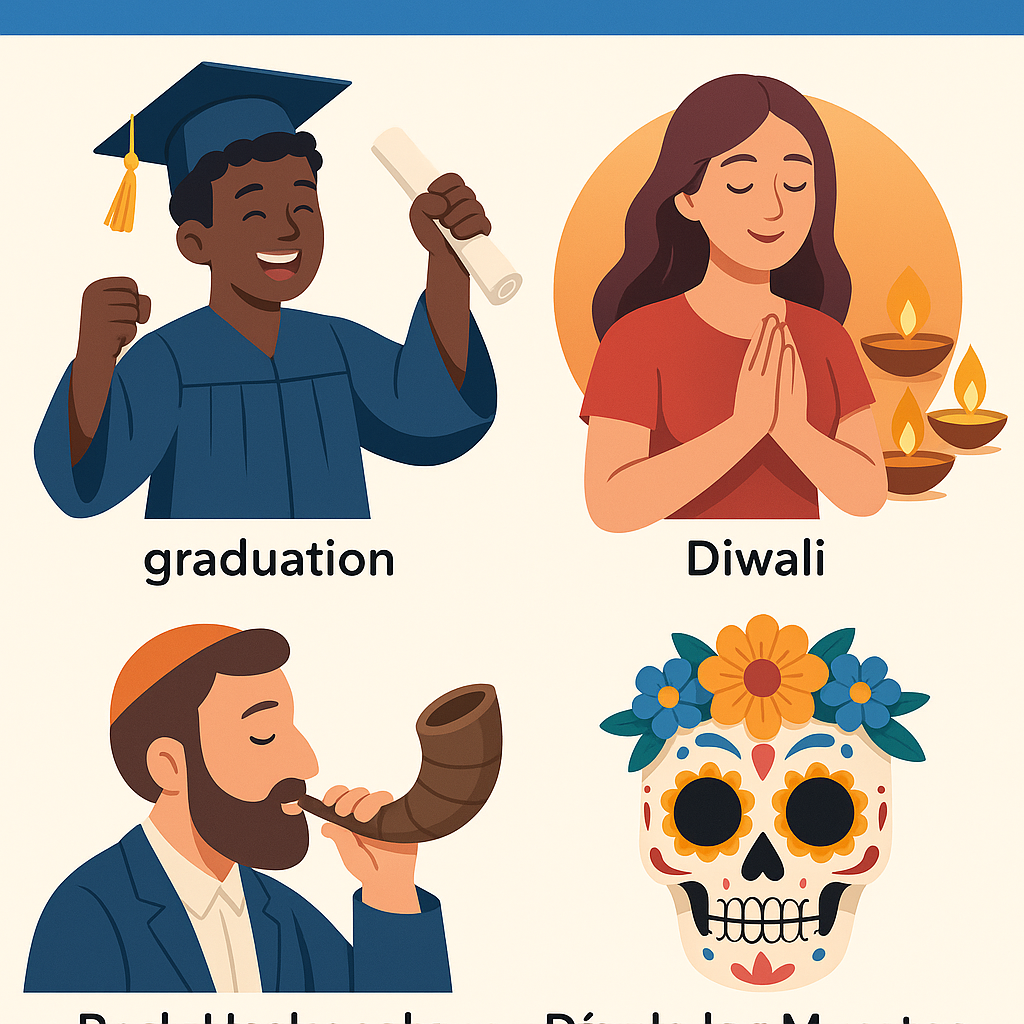
Cultural celebrations encompass a myriad array of events celebrated across the globe that reflects the diverse heritage, traditions, and practices of different communities. These celebrations range from festivals, ceremonies, and rituals to gigantic national events and intimate family gatherings. An integral part of these celebrations is the rich vocabulary that accompanies them, words that encapsulate meanings and significances unique to each culture. Understanding the English vocabulary of cultural celebrations helps in fostering cross-cultural appreciation and communication. This article will explore the varied and vibrant vocabulary associated with cultural celebrations, uncover their meanings, and provide relatable examples. By doing so, readers can gain a deeper understanding of their own and others’ cultural identities, enriching both social interactions and global perspectives.
Festival Terminology: More than Just Merriment
Festivals are often what come to mind when people think of cultural celebrations. The term “festival” itself denotes a period of celebration typically centered around religious or cultural events. A well-known example is Diwali, the Hindu festival of lights, celebrated with lamps, sweets, fireworks, and prayer, symbolizing the triumph of light over darkness. Important vocabulary associated with this celebration includes “rangoli,” which refers to intricate art designs made on the floors using colored powders or flowers, and “puja,” which is a religious ritual performed as an offering to various deities.
Talking about another popular festival, Christmas, its vocabulary includes “carols,” which are songs sung in celebration of the birth of Jesus Christ, and “nativity scene,” a tableau representing the birth of Jesus. The language of Christmas not only enriches the celebration but offers insight into the religious and cultural nuances of the event.
Ceremonies: Words that Mark Milestones
Ceremonies are formal events that mark significant milestones in life, often accompanied by their own specific vocabulary. An example is a “wedding,” a ceremony celebrating the union of two people, encompassing rituals such as the “exchange of vows” and “ring ceremony.” Each term reflects a component of the event that holds substantial cultural importance.
In many cultures, “graduation” ceremonies mark the end of an educational journey. Terms such as “commencement,” denoting the start of a new chapter, and “valedictorian,” the student with the highest academic achievements, illustrate the ceremonial elements associated with educational accomplishments. These words not only hold significance for the purpose of their respective ceremonies but serve as markers for transitions in one’s life.
Rituals: Fixed Acts with Deep Meaning
Rituals are repeated acts that carry significant meanings, often performed during festivals and ceremonies. The Jewish tradition of “Passover” involves the “Seder,” a ritualistic meal that retells the story of the Israelites’ liberation from slavery in Egypt. Terms such as “Haggadah,” the text recited during the Seder, and “matzo,” unleavened bread symbolizing the haste in which the Israelites fled Egypt, are pivotal in understanding the ritual’s depth.
Another example comes from Japanese culture, where the “tea ceremony” is a ritualistic preparation and presentation of matcha. Words like “chasen,” the bamboo whisk used for tea preparation, and “tatami,” the straw mats upon which the ceremony is held, are part of its unique vocabulary, essential for grasping the spiritual and aesthetic sensibilities of the event.
National and Community Celebrations: Unifying Representations
Cultural celebrations also occur on larger scales, encompassing community or nation-wide events. For instance, the American “Thanksgiving” is a holiday that includes a “feast” typically featuring turkey and expressions of gratitude. Vocabulary such as “cornucopia,” symbolizing abundance, and “pilgrims,” referencing the early settlers who celebrated the first Thanksgiving, are integral to its cultural narrative.
In a different context, the Chinese “Lunar New Year” brings together family and community to celebrate with terms such as “red envelopes,” traditionally given to children for good luck, and “dragon dance,” a performance symbolizing prosperity and good fortune. These words not only describe elements of the celebration but are part of the cultural identity and heritage.
Tables and Lists: Organizing Cultural Vocabulary
For a more organized view of cultural vocabulary, consider the table below which categorizes terms associated with various celebrations. This format aids in understanding how each word fits into the broader context of its respective celebration:
| Celebration | Key Vocabulary | Meaning |
|---|---|---|
| Diwali | Rangoli, Puja | Artistic designs, Religious worship |
| Christmas | Carols, Nativity Scene | Songs of joy, Birth tableau |
| Graduation | Commencement, Valedictorian | New beginning, Top graduate |
| Passover | Haggadah, Matzo | Seder text, Unleavened bread |
| Thanksgiving | Cornucopia, Pilgrims | Symbol of plenty, Settlers |
Moreover, a list of prominent words used in traditional celebrations helps in a quick grasp of their significance:
- Millennium – Celebrations marking a thousand-year anniversary
- Carnival – A festive season occurring before Lent, involving parades and masquerades
- Anointing – A religious rite of applying oil during sacred ceremonies
- Yuletide – The archaic term for the Christmas season
- Jubilee – Special anniversaries, often marking fifty-year intervals
Conclusion: Integrating Cultural Vocabulary into Everyday Life
Understanding the vocabulary of cultural celebrations is about more than linguistic enrichment; it is a gateway to appreciating the rich tapestry of human traditions and the dynamic practices that unite and differentiate us globally. This nuanced vocabulary offers insights into the belief systems, historical narratives, and communal identities that shape societies. By learning and using these words, individuals can engage more deeply in cross-cultural dialogues and gain a more profound respect for the traditions and festivities of others.
As you integrate this knowledge into your daily interactions, consider exploring the celebrations of cultures different from your own or immersing yourself in the preparation or celebrations of your local community’s events. This exploration not only enhances your understanding but also your appreciation for the diversity that cultural celebrations bring to social fabric.
Starting small, by embracing a new word or phrase, can be the first step in a larger journey of cultural literacy and empathy. The language of celebrations is vibrant and diverse, waiting to be explored and appreciated, serving as a bridge to a more interconnected world.
Frequently Asked Questions
1. What is the importance of vocabulary in cultural celebrations?
The vocabulary used in cultural celebrations is incredibly important as it represents and maintains the richness and diversity of different cultures. These words are more than just terms; they embody traditions, stories, and the essence of cultural identities. Understanding these words allows people to connect with the culture on a deeper level, appreciating its history and significance. For instance, in Spanish-speaking cultures, the term “fiesta” isn’t just about a party; it captures the spirit of joy, community, and festivity. Similarly, words like “hanami” in Japanese pertain not only to flower viewing but to a historical and cultural appreciation of fleeting beauty. Mastery or at least familiarity with this vocabulary helps in fostering cross-cultural understanding and reduces stereotypes, as language forms one of the most important threads in the fabric of human interaction.
2. Can you give examples of specific vocabulary used in cultural celebrations across different cultures?
Absolutely! Vocabulary specific to cultural celebrations is as diverse as the celebrations themselves. For instance, “Carnival” in Brazil conjures images of colorful parades, music, and dance that are unique to Brazilian culture. “Eid” in Islamic cultures is a term that signifies the breaking of the fast, a main event that includes celebration, feasting, and gifting. “Diwali,” or the Hindu festival of lights, uses terms such as “rangoli,” which refers to the colorful designs drawn to welcome and worship deities. In North America, “Thanksgiving” is a key word that evokes family gatherings and expressions of gratitude. Across the globe, terms like “ho‘oponopono” in Hawaiian tradition refer to a family gathering where problems are addressed and strong family bonds are reaffirmed, showcasing the specific cultural practices through language. These words are not just symbols; they are keys to understanding the physical and emotional activities associated with each celebration.
3. How can learning English vocabulary of cultural celebrations help in global communication?
Learning the English vocabulary of cultural celebrations can significantly enhance global communication. As English is widely used in international settings, knowing how to describe and discuss cultural celebrations in English bridges gaps between diverse people. It allows individuals to share their own traditions and also appreciate others’. For example, when you can explain “hanukkah” in English, not only are you educating someone about a Jewish festival, but you’re also engaging in dialogue that fosters understanding and respect. As cultures intermingle and the world becomes more interconnected, being able to accurately use cultural vocabulary in English promotes mutual respect, prevents misunderstandings, and celebrates diversity. This can be especially crucial in educational settings, multicultural workplaces, and international relations, where comprehension and goodwill are paramount.
4. How can educators incorporate the English vocabulary of cultural celebrations into their teaching?
Educators can effectively incorporate the English vocabulary of cultural celebrations into their teaching by designing lesson plans that include cultural exploration as part of language learning. For instance, a language class could focus on a specific celebration, using its vocabulary to teach both the language and the cultural context. Teachers could create activities where students research a celebration and present it using new vocabulary, perhaps by making posters, giving presentations, or organizing a mock festival. This active use of new words helps students not only to remember them but also to understand their usage in context. Additionally, inviting representatives from various cultural backgrounds to share their experiences can offer firsthand insights and a more personal connection to the material. Storytelling, music, food sampling, and virtual tours can also be employed as methods to engage students, ensuring that the lessons are both educational and experiential.
5. Why is it important for travelers to learn about the vocabulary of cultural celebrations?
For travelers, learning about the vocabulary associated with cultural celebrations equips them with the knowledge to engage more fully and respectfully with the places they visit. When tourists understand and can use the local terms, they are less likely to inadvertently offend and are more likely to be welcomed warmly. For instance, being able to articulate what “Tet Nguyen Dan” is in Vietnam shows a willingness to engage with the local customs of the Vietnamese New Year. Travelers who can exchange and understand terms like “Día de los Muertos” in Mexico or “Mardi Gras” in New Orleans, step beyond being mere spectators, becoming participants in the cultural fabric. This not only enriches their travel experience but also paves the way for creating lasting impressions and connections. Respecting and acknowledging cultural practices through language also demonstrates cultural sensitivity—a critical aspect of responsible and respectful travel.





