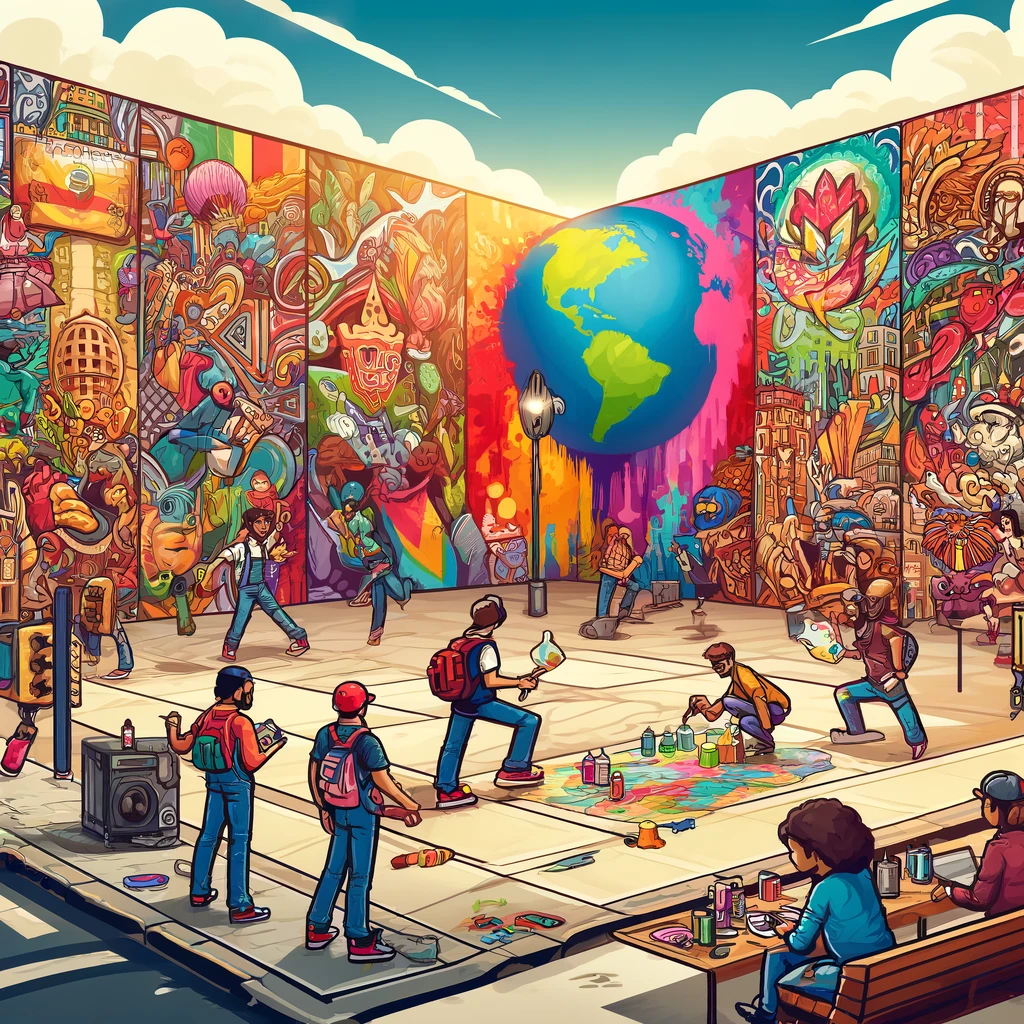
Street art is a vibrant and dynamic form of expression that has evolved from its roots in graffiti to encompass various styles, mediums, and messages. This art form has grown exponentially over the past few decades, emerging from subcultural obscurity to social respectability and recognition. Street art can be seen in urban centers all over the world, where artists use public spaces to showcase their creativity, make social or political statements, and connect with a global audience. One of the most intriguing aspects of modern street art is the influence of the English language. English, being the most widely spoken and studied language on the planet, naturally plays a significant role in shaping the narratives and messages conveyed through street art. As artists use public walls as their canvases, they increasingly employ English to reach a broader audience, bringing a global aspect to their localized expressions. But what exactly drives this intersection? How does English enhance the impact of street art across different cultures and communities around the world? In this article, we will explore the relationship between street art and the English language, examining how it acts as a bridge in a world that is becoming increasingly connected.
Street Art and Its Evolution
To understand the influence of English on global street art, it’s essential first to explore the history and evolution of street art itself. Initially, street art emerged as a rebellious form, most prominently associated with graffiti in the United States during the 1970s. It was considered vandalism, with artists often operating under the cover of night to avoid legal repercussions. These early forms of street art emerged as a way for marginalized communities to express their identities and frustrations, using the urban landscape as their gallery. As street art evolved, it began to incorporate various artistic techniques and styles. By the 1980s and 1990s, it had started to garner academic and artistic interest, transitioning from its underground roots to being recognized as a legitimate and expressive art form. This period saw an influx of new materials and methods in street art, from wheatpasting and stenciling to murals and installations. One notable feature of contemporary street art is its ability to convey powerful messages and narratives that often challenge societal norms, critique political regimes, or inspire social change. English has emerged as a predominant language for these messages, driven by globalization and the spread of English as a lingua franca.
The Role of English in Street Art
The global reach of English plays a significant role in its adoption by street artists. English is the language of international business, entertainment, and, increasingly, social media. This widespread use makes it an effective tool for street artists who want to reach a diverse and extensive audience. English’s adoption in street art also points to the growing cultural exchange facilitated by globalization. Artists from various backgrounds and regions often communicate and collaborate, sharing techniques, ideas, and, importantly, language. By using English, artists are not merely using another language but adopting a global mode of communication that transcends local boundaries. For artists in non-English speaking countries, incorporating English into their work adds an air of cosmopolitanism. It signals to the viewer that the artist is aware of global trends and aims to connect on a larger scale. This can be particularly impactful in urban areas where tourism and international business activities are prevalent. Consequently, street art can influence and be influenced by the global discourse, thereby operating in a unique transnational, cross-cultural space.

Iconic Examples of English in Street Art
Several street artists have become internationally renowned largely due to their use of English in their work. One such artist is Banksy, an anonymous England-based artist known for his evocative, politically charged pieces. Banksy’s works feature short, powerful phrases in English that complement his often provocative imagery. Whether it’s “There is always hope” alongside a girl letting go of a balloon or “Keep your coins, I want change” next to a begging figure, the use of English ensures that his message is understood worldwide. Shepard Fairey, an American artist, is another excellent example. His “OBEY” campaign and the famous “Hope” poster for Barack Obama’s 2008 presidential campaign featured prominently in English. These works resonated globally and showcased how English could be used to amplify the impact of street art. In non-English speaking countries, street art often includes English phrases to enhance its global appeal. For instance, Brazilian artist Eduardo Kobra incorporates English phrases and slogans into his vibrant murals. These phrases often relate to themes of environmentalism, peace, and social justice, which are universally understood and appreciated. These examples underscore the effectiveness of English in conveying messages across different cultures and societies, allowing street art to serve as a medium for global communication and understanding.
Challenges and Criticisms
While the use of English in street art has considerable advantages, it also presents certain challenges and criticisms. One primary concern is the potential erosion of local languages and cultures. As artists prioritize English to reach broader audiences, there’s a risk that indigenous languages and unique cultural expressions might be sidelined. This concern is particularly pertinent in diverse countries where multiple languages coexist. Moreover, the dominance of English can sometimes lead to misinterpretations. Not all audiences may understand the nuances and connotations associated with English phrases, potentially leading to a loss of meaning or cultural context. This raises the question of authenticity and whether the global reach justifies the dilution of local cultural narratives. Another criticism revolves around the commodification of street art. As street art gains international fame and recognition, there’s a tendency for it to become commercialized. This commercialization sometimes reduces it to mere aesthetic objects rather than powerful, community-centric expressions. The use of English, in such cases, can exacerbate this trend, making street art a marketable commodity rather than an authentic form of urban expression.
Learning from Street Art: Educational Perspectives
For ESL learners and educators, studying the role of English in street art presents a unique educational opportunity. Street art can serve as an engaging tool to learn and teach language, providing real-world contexts and contemporary references that traditional textbooks may lack. One practical approach is to analyze street art pieces that incorporate English. Students can be encouraged to interpret the phrases, understand the context, and discuss the broader social or political messages. This not only enhances their language skills but also fosters critical thinking and cultural awareness. Projects can also be designed where students create their own street art-inspired pieces using English. This creative exercise allows them to apply their language skills in innovative ways, encouraging self-expression and reinforcing learning through practice. Furthermore, integrating street art into ESL curriculums can highlight the role of language in activism and social change. By examining how street artists use English to convey powerful messages, students gain insight into the potential of language as a tool for advocacy and global communication. This holistic approach can make language learning more meaningful and impactful.
Conclusion
The influence of English on global street art is a testament to the language’s unparalleled reach and adaptability. As street art continues to evolve and find new avenues for expression, English remains a pivotal tool for artists aiming to connect with a global audience. From the alleys of New York to the walls of São Paulo, English serves as a bridge, enabling diverse voices to come together and share their stories, struggles, and aspirations. However, it’s crucial to recognize the complexities and nuances of this trend. While English amplifies the reach and impact of street art, it’s essential to strike a balance to ensure that local languages and cultural narratives are not overshadowed. By appreciating and critically engaging with this intersection, we can foster a richer, more inclusive approach to both language learning and artistic expression. For ESL learners and educators, the world of street art offers valuable lessons and opportunities. It highlights the dynamic and ever-evolving nature of language, encouraging learners to see English not just as a subject to be mastered, but as a powerful tool for global dialogue and cultural exchange. Through the lens of street art, we can explore the endless possibilities of language, creativity, and communication.