In today’s interconnected world, the English language permeates every corner of the globe, playing a significant role in shaping the thoughts, behaviors, and trends of youth culture worldwide. English, being one of the most influential and commonly spoken languages, exerts considerable influence through various mediums including music, movies, social media, education, and more. Its prevalence is seen not just in countries where English is the first language but also in many nations where it is a second language or even a foreign language. This article delves into how English impacts global youth culture and the various facets shaping this phenomenon.
For many young people around the globe, English symbolizes modernity, progress, and opportunities. Learning English opens up myriad doors, from accessing higher education to embracing career advancements and connecting with a broader community. It is not merely about communication; English is seen as the passport to the globalized world. Social media platforms teeming with English content have created a shared space where young people interact, exchange ideas, and influence each other’s cultural perceptions.
Moreover, English-language media and entertainment, ranging from Hollywood films to chart-topping pop songs, heavily influence the fashion, slang, and lifestyle choices of young people. The lyrics of popular songs, the narratives in blockbuster movies, and even the posts of influential social media personalities contribute to shaping the ideals, dreams, and ambitions of the youth. The power and reach of English in molding youth culture globally are undeniable, and the following sections will explore this influence in more detail.
The Role of English in Education
Education is one of the primary domains where the influence of the English language is profoundly felt. English has become the dominant language of instruction in countless schools and universities, particularly those aspiring to meet global standards. In many non-English-speaking countries, proficiency in English is a critical determinant of academic success, often offering students an edge in gaining admission to prestigious institutions and access to better job prospects.
Furthermore, a significant amount of scientific literature, research papers, and academic content is produced in English. As a result, students and researchers need to attain a high level of English proficiency to engage with these resources fully. This trend also influences the content of curriculums where learning materials in English provide an international perspective and advanced knowledge often not available in native languages.
International exchange programs and collaborative projects, especially popular among youth, are conducted predominately in English. These opportunities not only foster academic growth but also cultural exchange, allowing young individuals to understand and appreciate diverse cultures while honing their English communication skills. Consequently, English acts as a bridge in the realm of education, connecting students from various backgrounds and empowering them with the language of global discourse.
Entertainment and Pop Culture
English-language entertainment is a significant factor molding global youth culture. Hollywood movies, TV shows, and pop music predominantly guide trends and fashion choices. Global blockbusters and Grammy-winning songs often have a far-reaching impact, influencing not just entertainment preferences but also fashion, language, attitudes, and aspirations.
Youth around the world gravitate towards English content because it’s often seen as the pinnacle of cool, trendy, and modern. The narrative styles, storytelling techniques, and cultural nuances presented in these media are frequently imitated and adapted in local contexts. Characters from popular series, like those from the Marvel Cinematic Universe, become role models, and their mannerisms, catchphrases, and style choices are replicated widely by young fans.
Moreover, social media platforms like YouTube, Instagram, and TikTok are filled with content in English. Influencers and content creators who navigate these platforms in English usually have a larger following, which cements the language’s role as a key component in the global youth identity. This symbiotic relationship between the media and youth culture illustrates the enormous impact of English on shaping modern trends and lifestyles among young people.
Social Media and Digital Communication
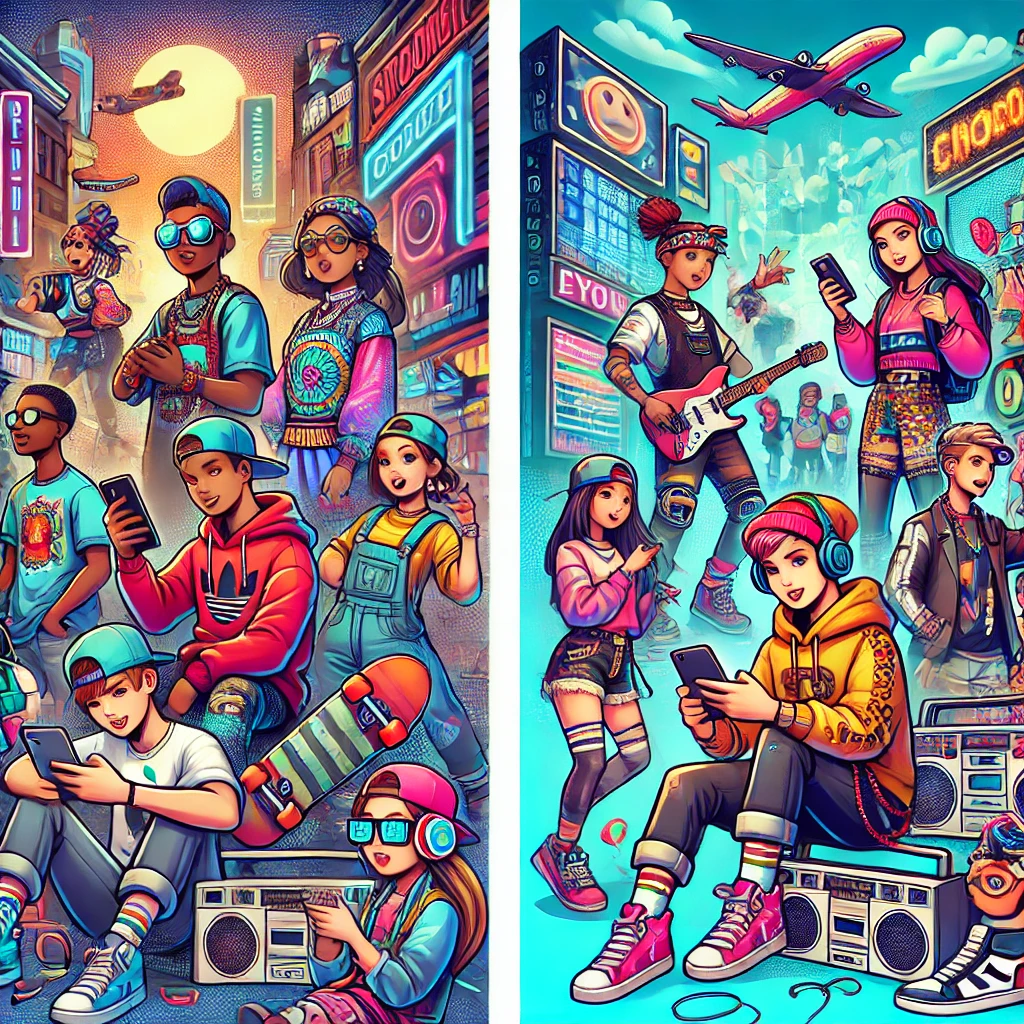
Social media has revolutionized how young people communicate and interact with the world. Platforms such as Facebook, Snapchat, Twitter, and Instagram predominantly operate using English, thus normalizing the language as the basis for digital interaction. The widespread use of memes, shorthand phrases, and internet slang in English makes the language not just a medium of communication but a significant element of the culture itself.
Young individuals are becoming increasingly adept at using English abbreviations and slang derived from the internet, which not only broadens their language skills but also integrates them into a global community. The viral nature of internet content enables trends and phrases to spread rapidly across borders, thus homogenizing aspects of global youth culture under the umbrella of English language and expressions.
Additionally, the entertainment and information young people consume through these platforms are predominantly in English, reinforcing its influence on their lifestyles and worldviews. Whether it’s viral dance challenges, DIY tutorials, or breaking news, the majority of this content is delivered and shared in English. Thus, social media serves as a powerful tool for the proliferation of English, cementing its place as a cornerstone of global youth culture.
Economic Opportunities and Career Aspirations
The connection between English proficiency and economic opportunities cannot be overstated. For many young people worldwide, mastering English is synonymous with better career prospects and economic mobility. English is often the language of business, international trade, and multinational corporations. Consequently, young individuals who excel in English find greater employment opportunities in their home countries and abroad.
Being fluent in English allows access to multinational companies, international markets, and even entrepreneurial ventures that demand a global language. Many job roles, especially in tech, finance, and customer relations, require a solid grasp of English. Hence, young people are motivated to learn English not just as a cultural interest but as a practical skill essential for sustainable careers.
Moreover, the English language facilitates participation in international conferences, workshops, and seminars. These events are critical for networking and staying abreast of global trends and developments in various fields. Young professionals who can engage in such forums stand to gain enormous career and learning benefits, further emphasizing the importance of English in their professional lives.
The Spread of Western Values and Ideologies
The spread of English is accompanied by the dissemination of Western values and ideologies. Through English, concepts such as democracy, human rights, freedom of expression, and individualism are promoted and instilled in young minds around the globe. This cultural exchange often leads to a re-evaluation of traditional beliefs and norms, fostering a more open, global perspective among the youth.
English-language media often portrays and glorifies values prevalent in Western societies, thus influencing the ideological landscape of young people in other parts of the world. For instance, themes of independence and self-reliance commonly found in Western literature and films resonate with young audiences, inspiring movements toward social and cultural reforms in various regions.
As young individuals grapple with these ideologies, they also become more critical and analytical, questioning existing structures and advocating for change. The capacity to understand and engage with these ideas in their original language – English – equips them to participate more actively in global discussions. This ideological shift signifies the role English plays in shaping not just communication but also the fundamental principles that guide the lives of the global youth.
Conclusion
The influence of English on global youth culture is multi-faceted and far-reaching. From education and entertainment to social media and economic opportunities, English permeates every aspect of young people’s lives. Its role extends beyond mere communication; it is a powerful vehicle for cultural exchange, economic advancement, and ideological evolution.
As English continues to grow in prominence, the interconnectedness of global youth culture will only intensify. Understanding the dynamics of this influence is crucial for educators, parents, policymakers, and the youth themselves. This insight can foster more inclusive and globally aware communities where language acts as a bridge rather than a barrier.
Moreover, while the advantages of English proficiency are numerous, it is also essential to balance this with the preservation of local languages and cultures. Embracing English should not equate to neglecting one’s heritage, but rather using the language as a tool to amplify and share diverse voices on the global stage.
In conclusion, mastering English opens up incredible possibilities for young individuals around the world, embedding them firmly in the cultural, educational, and economic fabric of the global community. The collective embrace of English by the youth propels them toward a future defined by shared experiences, knowledge, and aspirations.