
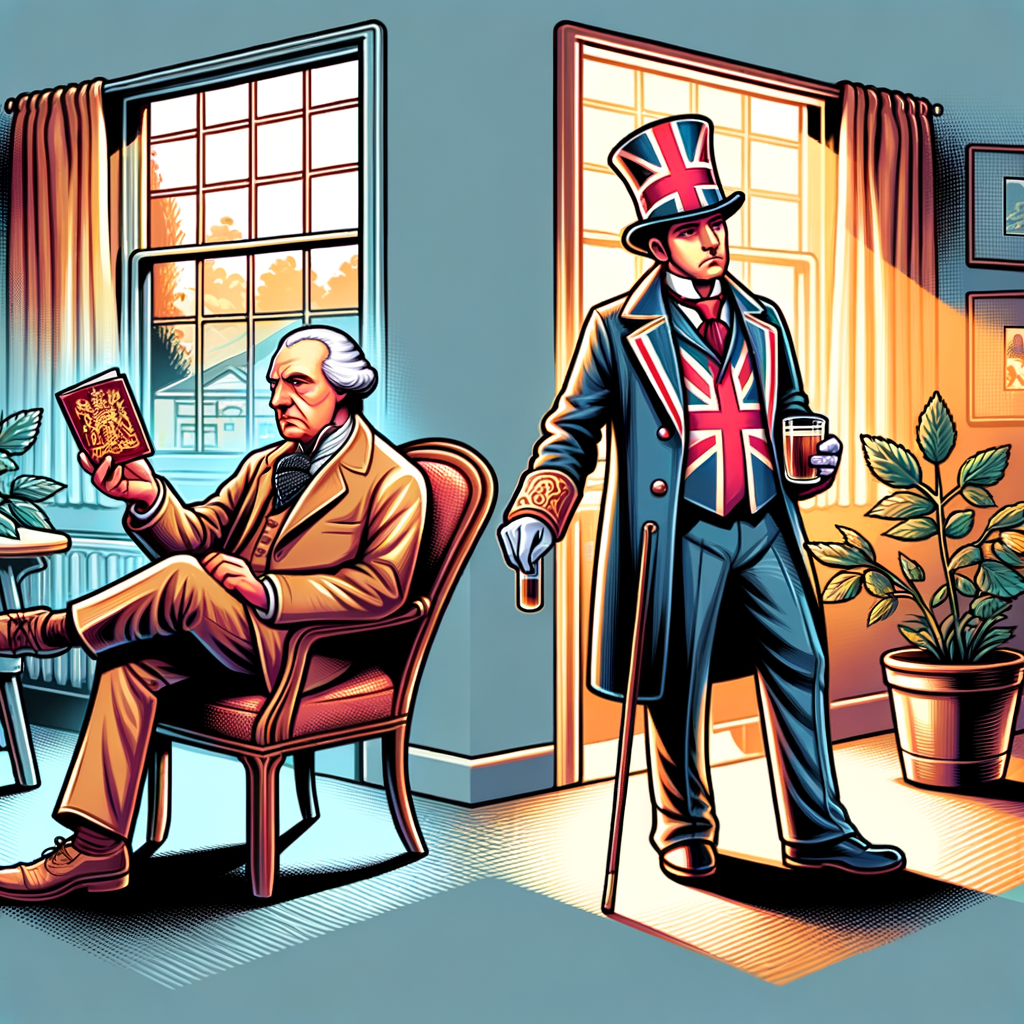
English slang is an intriguing aspect of the language, reflecting the flexibility and adaptability that characterize its use in various contexts. Originating primarily as informal language, slang serves as a social tool and a cultural identifier. It is replete with nuances that highlight the diversity of English-speaking communities across the globe. Exploring its cultural roots entails diving into not only linguistic histories but also the various social, cultural, and technological influences that have shaped its evolution over time. This comprehensive examination of English slang’s cultural roots intends to furnish a deeper appreciation of how historical impacts, cross-cultural exchanges, and evolving social norms influence the words and phrases we casually toss around today. Far from being merely whimsical or rebellious, slang plays a pivotal role in developing and sustaining cultural identity, signaling social affiliations, and expressing individual creativity and wit.
Slang’s appeal and vitality lie in its transcendental ability to communicate nuanced, lively ideas. It often emerges as a reaction to current cultural moments, bubbling up from subcultures that wish to stand out or react against prevailing societal norms. Tracing its origins, English slang showcases an evolution driven by cultural exchanges within multicultural cities, the influence of popular media, and the ever-changing technological landscape that brings diverse communities closer. Each of these aspects contributes uniquely towards forming a lexicon representing not just today’s cultural zeitgeist but also echoing stories from the past and aspirations for the future. This exploration of the roots of English slang provides critical insights into the connection between language and culture, illustrating the perpetual interplay between words, people, and the society they inhabit.
The Cultural Origins of English Slang
Understanding the origins of English slang requires delving into the rich tapestry of cultural interactions that have historically contributed to the development of the English language itself. English, as a language, has never existed in isolation. Its lexicon—formal and informal alike—borrows from and exchanges with numerous languages. This historical cross-pollination is nowhere as evident as in the component of slang, where the line between languages can become beautifully blurred.
The influence of immigration and colonization cannot be overlooked when dissecting the roots of English slang. As people moved and settled in different parts of the world, they naturally infused the language with local terminology and nuances. Immigrants brought their customs, languages, and unique expressions to their new homes, mingling them with the English language to create an eclectic and diverse vocabulary pool. For instance, many American English slang terms find their origin in African, Irish, Italian, Jewish, and Hispanic cultures, reflecting the melting pot nature of American society.
Similarly, British English slang has been enriched by the language’s interactions with numerous cultures, reflecting the diversity brought about by the British Empire. During the colonial period, interactions between colonizers and local populations led to the emergence of new terms and expressions, often borrowed from languages such as Hindi, Urdu, and Arabic in regions like India and the Middle East. Words like “bungalow” (from Hindi) or “khaki” (from Urdu) entered English largely through this kind of cultural and linguistic interchange.
Moreover, the United States’ historical and cultural dynamics, particularly the African American experience, have profoundly shaped American English slang. The African American Vernacular English (AAVE), deeply rooted in the history and culture of African Americans, illustrates a rich source of modern slang. Terms like “cool,” “hip,” and “bling” have transcended subcultural boundaries to become mainstream, reflecting the significant influence this community has on the broader American lexicon.
Slang also evolves with the rise and integration of youth subcultures. Each decade has seen distinct youth movements—be it the beatniks of the 1950s, the hippies of the 1960s, or the punks of the 1970s—each accompanied by its own slang. Music, fashion, and literature from these groups often include distinctive speech patterns that reflect the values and attitudes of the times. The hip-hop culture of the 1980s and 1990s, for example, introduced a host of new slang terms that quickly permeated mainstream culture. Phrases like “chill,” “dope,” and “word” have roots in hip-hop communities but are now staples in global English.
The advent of digital communication and online interactions has supercharged the spread and mutation of slang. The internet enables rapid sharing and uptake of new lingo, blurring geographic and cultural boundaries further. Memes, social media platforms, and streaming services constantly introduce new phrases that reshape the cultural narrative. Internet slang like “lol,” “brb,” “dm,” and countless others have become so entrenched in everyday language that they often slip into formal communication.
Moreover, popular media and entertainment industries are critical incubators and disseminators of slang. Television shows, movies, and music not only create new slang but also help cement existing terms into broader use. Catchphrases from hit sitcoms or slang used by popular musicians can rapidly embed themselves into popular consciousness, illustrating both the media’s role in language dissemination and the audience’s eagerness to adopt new expressions.
Sports and gaming cultures also contribute significantly to the slang lexicon. As sporting events and gaming forums become more international, their unique terminologies gain global traction. Consider the proliferation of sports-related slang, such as “slam dunk” or “home run,” which have been co-opted into everyday vernacular to describe accomplishments outside the sporting arena. Similarly, gamers’ jargon, such as “noob” or “pwned,” has seeped into non-gaming conversations, showcasing how deeply these subcultures influence broader linguistic trends.
The Social Significance of Slang Usage
Slang acts as a vehicle for social identity and communal belonging. The deliberate use of certain slang terms can signify membership within a specific group or demographic, cultivating a sense of unity and common understanding among its members. This social affiliation is particularly evident in youth cultures, where slang forms a vital facet of group identity, often used to distance itself from mainstream culture or older generations.
Slang’s role goes beyond mere identity, serving also as an instrument for resistance and counterculture expression. Throughout history, marginalized and oppressed groups have utilized slang as a form of protest against dominant cultural norms. By speaking in coded language, these communities resist assimilation and reclaim power over their narrative. For example, LGBTQ+ communities have long utilized unique slang, sometimes referred to as “gay slang,” which historically served as a linguistic haven in often hostile environments. Terms like “drag,” “shade,” and “work” have not only defined subcultural identity but have also entered mainstream discourse, reflecting broader societal shifts towards acceptance and inclusion.
Moreover, slang enables linguistic creativity and humor, allowing speakers to play with words and devise inventive ways of expression. This creativity fosters engagement and connects people beyond the constraints of standard grammatical norms. A good instance of this is Cockney rhyming slang, which originated in East London and encapsulates this playful linguistic creativity. Phrases like “apple and pears” (meaning “stairs”) showcase the inventive manipulation of language that keeps slang vibrant and entertaining.
Yet, despite its creative and unifying aspects, slang can also be exclusionary. Its fluid, ever-changing nature means that those not in the know can feel alienated or distanced. Slang’s informal design may lead it to be dismissed as unworthy of serious linguistic consideration, relegating it to the fringes of “proper” language use superficially. Nonetheless, the rapid incorporation of slang into rhetorical, academic, and professional contexts suggests a growing recognition of its utility and relevance in diverse communication settings.
Conclusion
English slang, in its entirety, encapsulates not only linguistic ingenuity but also a crucial element of cultural history and socio-linguistic evolution. Its roots dig deep into historical interactions and exchanges, highlighting persistent themes of diversity, innovation, and resilience across time and cultures. The strength and relevance of slang lie in its dynamic nature, allowing it to adapt words to fit the demands of current social and cultural phenomena effectively.
Additionally, while commonly perceived as transient or trivial, slang holds profound significance in fostering social identity, solidarity, and expression. As it cycles through subcultures into mainstream utilization, it signifies shifts in language that mirror societal changes, trends, and values. Its adoption and adaptation serve as testament to language’s power in handling an ever-changing world, preserving cultural heritage, and providing a fresh lexicon that meets contemporary needs.
Today’s lexicon, infused with eclectic slang expressions, offers a testament to the cross-pollination of linguistic and cultural boundaries, foregrounding the complexity of human interaction. As cultural norms and technological landscapes continue evolving, our vocabulary, including the vital world of slang, must adapt accordingly, ensuring the language remains both timelessly rooted in heritage and salient to future generations. Hence, understanding slang’s multifaceted cultural roots renders it not only a linguistic curiosity but also an essential tool in deciphering the intricacies of human culture and the continual discourse of identity and belonging.
Frequently Asked Questions
1. What are the origins of English slang, and how has it evolved over time?
English slang has fascinating origins that trace back centuries, drawing influences from a myriad of sources. Originally, slang emerged largely from informal speech used by specific groups to establish identity and engender a sense of belonging. For instance, in the 16th and 17th centuries, thieves and vagabonds in England had their own ‘cant’ language, which included much slang that filtered into mainstream speech over time. As English spread globally, it absorbed elements from other languages and cultures, both from its colonial past and in modern multicultural interactions. As societies evolved with technological advancements, urbanization, and shifts in social dynamics, so too did the slang. The counterculture movements of the 1960s, hip-hop’s rise in the 1980s, and the Internet era have each brought waves of new slang that reflects societal changes. Our modern usage of slang continues to adapt and evolve rapidly, as new generations and communities leave their mark on the English language.
2. Why is slang important in understanding cultural context?
Slang is a crucial cultural marker that can provide insights into the values, attitudes, and experiences of different groups. It often encapsulates societal wit and criticism, acting as a linguistic response to prevailing norms and issues. Understanding slang can reveal how different cultures perceive humor, conflict, identity, and power dynamics. For example, African American Vernacular English (AAVE) has given rise to many slang terms used broadly within English today. Not only does this highlight the cultural impact of the African American community, but it also opens discussions about issues of appropriation and cultural exchange. Slang terms often carry connotations and historical baggage that standard language might not, thus learning them provides depth to cultural literacy.
3. How does technology influence the development of new slang terms?
The digital age has revolutionized how slang is created and spread. With the advent of social media, memes, texting, and digital communication, slang evolves at an unprecedented speed. Platforms like Twitter, TikTok, and Instagram serve as incubators for new expressions that can achieve viral status quickly due to their global reach. Moreover, technological jargon has infiltrated everyday language, with terms related to online culture becoming common slang. For example, words like “ghosting,” “trolling,” and “liking” have shifted from specific technological contexts to broader cultural vernacular. These terms often reflect the nuances of digital interaction, such as brevity and anonymity, underscoring how tech shapes linguistic development.
4. How does regional slang vary within English-speaking countries?
English-speaking countries boast vast linguistic diversity, and this is profoundly reflected in their regional slang. Within a single country, differences in slang can be as pronounced as differences across countries. In the United States, words unique to California, like “hella,” contrast with phrases like “wicked” from New England. These regionalisms often reflect historical settlement patterns, local industries, and cultural influences. In the UK, Cockney rhyming slang originated in London is distinct from the Scots dialect in Scotland, which has its slang deeply rooted in Gaelic language influences. In Australia, “arvo” (afternoon) and “barbie” (barbecue) are iconic markers of cultural shorthand. The unique environmental and cultural experiences within each region shape their slang, reflecting not just language but the cultural heritage that language represents.
5. Can slang terms become part of the standard English language?
Absolutely, slang terms often make the transition into standard English, a testament to the dynamic nature of language. Many words that are now considered part of the standard lexicon once began as slang. Words like “cool,” “nerd,” and “funky” have transcended their initial usage confines and enjoy widespread acceptance today. This evolution is facilitated by factors such as increased media consumption, globalization, and changes in societal attitudes towards language. Dictionaries like the Oxford English Dictionary frequently add new slang as part of their effort to document contemporary language use. The process of a slang term becoming standard involves widespread use beyond its original community, often when it gains acceptance in media or formal communication.





