
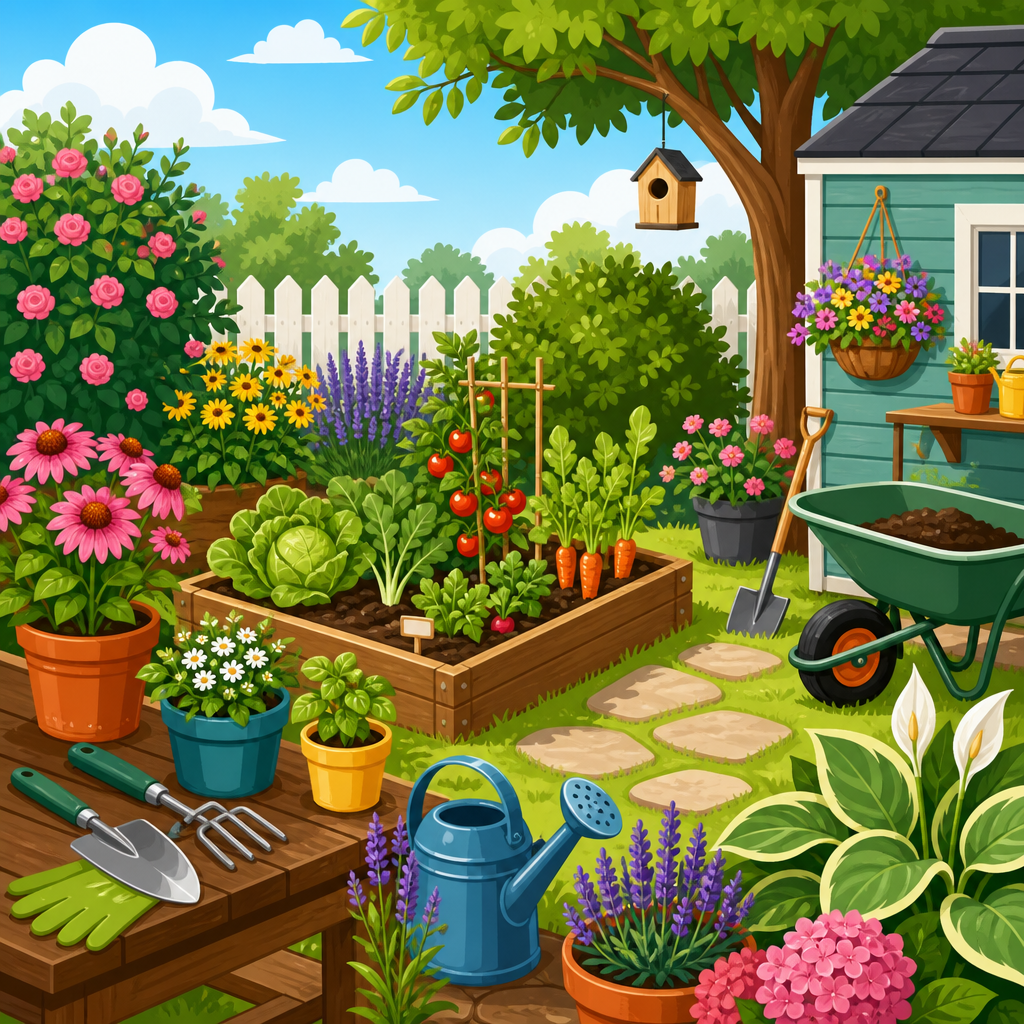
Vocabulary for gardening, plants, and outdoor spaces helps learners describe common tasks, tools, and features with precision. If you have ever tried to ask for potting soil, explain that a plant is wilting, or describe a small balcony garden, you know that general English is not enough. This topic matters because gardening vocabulary appears in daily conversation, home improvement stores, rental listings, neighborhood rules, and casual chats with neighbors. In my work teaching practical English, I have seen learners manage basic shopping well, then struggle when they need words like pruning, mulch, or planter box. A strong set of terms makes those moments easier.
Gardening vocabulary includes words for plant parts, growth stages, tools, maintenance, and landscape features. Plant vocabulary covers terms such as roots, stems, leaves, buds, blossoms, and seedlings. Outdoor space vocabulary includes lawn, patio, fence, pathway, hedge, and flower bed. Action verbs are equally important: water, prune, weed, dig, transplant, sow, and harvest all describe different jobs, and using the wrong one can confuse the listener. For example, sow means put seeds into soil, while transplant means move a growing plant from one place to another.
This vocabulary is especially useful for renters, homeowners, and anyone sharing an outdoor area. Apartment notices may say tenants must maintain the yard, trim overgrown shrubs, or avoid blocking a drainage area with pots. Garden centers label products with specialized language, from all-purpose fertilizer to moisture-retaining compost. Even social situations rely on these terms. A neighbor might ask whether your herbs are thriving in full sun, or a friend may recommend repotting a root-bound plant. The more exact your vocabulary, the more naturally you can ask questions, follow advice, and solve problems outdoors.
Core words for plants and plant growth
Start with the structure of a plant, because these words appear in care instructions and everyday discussion. Roots anchor the plant and absorb water and nutrients. The stem supports the plant and carries water upward. Leaves collect light for photosynthesis, buds are undeveloped growth points, and blossoms or flowers are the reproductive parts. Seeds begin the life cycle, while seedlings are very young plants that have recently sprouted. A mature plant is fully grown, and perennial and annual describe lifespan: annuals complete one season, while perennials return year after year.
Growth and condition words are equally practical. Germination is the process of a seed beginning to grow. Sprout can be both a noun and a verb. If a plant droops from lack of water, it wilts. Yellowing leaves may indicate overwatering, nutrient deficiency, or seasonal change, depending on the species. Lush describes healthy, abundant growth, while leggy means long, weak stems caused by insufficient light. Gardeners also use hardy for plants that tolerate cold or difficult conditions, and tender for plants easily damaged by frost. These terms appear constantly on labels, seed packets, and care guides.
Essential gardening actions and maintenance terms
Verbs carry most garden conversations. Water means give water, but soak suggests watering deeply so moisture reaches the root zone. Mist means spray a fine layer of water, often for delicate plants. Weed is both a noun and a verb; weeds are unwanted plants, and to weed means remove them. Dig means break or move soil with a tool. Loosen the soil means make compacted soil less dense so roots can spread. Sow seeds, transplant seedlings, repot container plants, and prune dead branches are common instructions that each refer to a specific action.
Prune and trim are related but not identical. Prune usually means cut selected stems or branches to improve health, shape, or fruit production. Trim often means cut lightly for neat appearance, such as trimming a hedge. Deadhead means remove spent flowers to encourage more blooming. Mulch can be a noun or verb. As a noun, it is a protective layer of bark, straw, or compost spread over soil. As a verb, it means apply that layer. Fertilize means add nutrients, while compost means either decomposed organic matter or the act of making it. These distinctions matter in real conversations.
When learners need broader housing language along with outdoor vocabulary, the main guide at this practical apartment English resource is a useful companion, especially for understanding maintenance requests, leases, and shared-space rules.
Words for tools, materials, and supplies
Tool vocabulary becomes important the moment you enter a garden store. A trowel is a small handheld shovel used for planting and transplanting. A spade has a flatter blade for edging and digging. A rake gathers leaves or levels soil. Pruners, also called pruning shears or secateurs, cut stems and small branches. A hoe breaks soil and removes weeds. A watering can is for hand watering, while a hose delivers water over a larger area. Nozzle, spray setting, and sprinkler are common related words. Learners often confuse pot, planter, and container, but stores use all three.
Materials also need precise vocabulary. Potting mix is a lightweight growing medium for containers; it is not the same as garden soil. Compost adds organic matter and improves structure. Fertilizer supplies nutrients, commonly nitrogen, phosphorus, and potassium, often shown as N-P-K numbers on packaging. Mulch helps retain moisture and suppress weeds. Gravel, paving stones, and edging materials are used for paths and borders. Drainage refers to how water moves through soil or away from an area. Poor drainage can cause root rot, a common problem in both gardens and potted plants.
| Word | Meaning | Plain example |
|---|---|---|
| Seedling | A very young plant | The tomato seedlings need more sunlight. |
| Prune | Cut parts of a plant for health or shape | Prune the rose bush in late winter. |
| Mulch | A layer that covers soil | Mulch helps the soil stay moist. |
| Drainage | How water leaves soil or ground | This pot needs better drainage. |
| Patio | A paved outdoor sitting area | We keep herbs in containers on the patio. |
Vocabulary for outdoor spaces and layout
Outdoor space vocabulary goes beyond plants. A yard is the general outdoor area around a home, while a garden often means a planted space for flowers, vegetables, or decorative design. A lawn is a grass-covered area that is usually mowed. A flower bed or garden bed is a defined planting area. Border can mean the edge of a garden or a narrow planted strip along a fence or path. A hedge is a line of closely planted shrubs. Shrub and bush are often used similarly, though shrub is slightly more precise.
Built features have their own vocabulary. A patio is a paved outdoor sitting area, while a deck is a raised wooden or composite platform. A porch is attached to the front or entrance of a house and usually has a roof. A walkway or pathway is a route through the space. Fence, gate, trellis, pergola, raised bed, planter box, and retaining wall all appear in listings and conversations about maintenance. On balconies and small terraces, people often use railing planters, hanging baskets, and vertical gardens. These terms help you describe both function and location clearly.
How to use this vocabulary naturally in real situations
The best way to learn gardening vocabulary is by attaching words to realistic situations. In a store, you might say, “I need potting mix for indoor herbs,” “Which fertilizer is safe for tomatoes?” or “Do these containers have drainage holes?” In a conversation with a neighbor, you may ask, “What grows well in partial shade?” or “Should I prune this lavender now or after it blooms?” In a rental context, you might write, “The sprinkler near the back fence is leaking,” or “The shrubs along the walkway are overgrown.” Specific nouns and verbs make these messages efficient.
Pay attention to common word partnerships because fluency depends on them. English speakers say plant seeds, water deeply, pull weeds, mow the lawn, trim the hedge, spread mulch, and repot a plant. We say a plant is in bloom, root-bound, drought-tolerant, or frost-sensitive. We also describe light conditions as full sun, partial shade, or full shade. I encourage learners to build vocabulary in small sets: tools, plant parts, care verbs, and outdoor features. Then practice by describing your own balcony, backyard, or neighborhood park aloud. Personal examples make the words memorable and usable.
Mastering vocabulary for gardening, plants, and outdoor spaces gives you practical language for shopping, maintenance, and daily conversation. The key terms fall into four useful groups: plant parts and growth stages, gardening actions, tools and materials, and outdoor features. Once you can distinguish sow from transplant, prune from trim, and patio from porch, your English becomes more accurate and more natural. These are not obscure words. They appear on product labels, in care instructions, in rental notices, and in ordinary conversations with neighbors, store staff, and friends who enjoy plants.
The biggest benefit is confidence. Instead of pointing and guessing, you can explain exactly what your plant needs, what tool you want, or what problem you see in an outdoor space. That precision saves time and prevents misunderstandings. Keep learning by reading seed packets, plant labels, and garden center signs, and by describing real spaces around you using the terms in this article. Choose ten words today, use them in sentences about your own plants or outdoor area, and review them until they feel automatic. Practical vocabulary grows best when you use it regularly.
Frequently Asked Questions
1. Why is it important to learn specific vocabulary for gardening, plants, and outdoor spaces?
Learning specific gardening vocabulary helps you communicate clearly in real-life situations where general English often falls short. For example, there is a big difference between saying “dirt” and “potting soil,” or between saying a plant looks “bad” and saying it is “wilting,” “root-bound,” or “overwatered.” These more precise words help you ask better questions, understand advice, and avoid mistakes when buying supplies or caring for plants. This is especially useful in garden centers, hardware stores, apartment buildings with shared outdoor rules, and conversations with neighbors or landlords.
It also helps you understand the language used in product labels, plant care instructions, rental listings, and home improvement discussions. Terms like “raised bed,” “drainage,” “mulch,” “perennial,” and “pruning” come up often in practical contexts. If you are learning English for everyday life, this vocabulary gives you confidence in common tasks such as choosing tools, describing problems, planning a balcony garden, or explaining what kind of outdoor space you have. In short, this topic is valuable because it connects language learning directly to daily living.
2. What are the most useful basic gardening words an English learner should know first?
A strong beginner vocabulary should include words for plant parts, growing materials, tools, and common actions. For plant parts, start with words like “root,” “stem,” “leaf,” “flower,” “seed,” and “bud.” These are essential for describing how a plant looks and what stage it is in. For growing materials, useful terms include “soil,” “potting mix,” “compost,” “mulch,” “fertilizer,” and “gravel.” Knowing these words helps when shopping, reading labels, or following simple care instructions.
For tools, beginners should learn “shovel,” “spade,” “rake,” “trowel,” “watering can,” “hose,” “pruners,” and “gloves.” These are common in both home gardens and stores. Action verbs are just as important: “plant,” “water,” “prune,” “dig,” “weed,” “repot,” “harvest,” and “mow” are all high-frequency words. It is also helpful to learn descriptive words such as “dry,” “moist,” “shady,” “sunny,” “overgrown,” and “wilting.” Together, these words let you describe what you have, what you need, and what is happening in your garden or outdoor area with much more accuracy.
3. How can I describe problems with plants clearly in English?
To describe plant problems clearly, it helps to focus on visible symptoms and likely causes. Instead of saying “My plant is not okay,” you can say “The leaves are turning yellow,” “The plant is wilting,” “The soil stays wet too long,” or “The roots are growing out of the bottom of the pot.” These descriptions are much more useful because they give specific information. Common problem vocabulary includes “yellowing leaves,” “brown tips,” “drooping,” “root rot,” “pests,” “fungus,” “mold,” “poor drainage,” and “lack of sunlight.”
You can also describe changes over time. For example: “It was healthy last week, but now the leaves are curling,” or “I think I overwatered it because the soil is soggy.” If insects are the problem, words like “aphids,” “gnats,” “mites,” or simply “bugs on the leaves” may help. In practical English, clear descriptions are often more important than perfect technical terms. If you can explain what the plant looks like, how often you water it, where it is placed, and what changed recently, people in a store, a gardening group, or a conversation with a neighbor will usually understand and offer useful advice.
4. What vocabulary should I know for talking about outdoor spaces like yards, patios, and balconies?
When talking about outdoor spaces, it is important to know words for layout, features, and use. Common terms include “yard,” “front yard,” “backyard,” “garden,” “patio,” “deck,” “balcony,” “terrace,” “fence,” “gate,” “path,” and “driveway.” These words help you describe the space itself. You may also need feature words such as “planter,” “flower bed,” “raised bed,” “lawn,” “hedge,” “shade,” “sun exposure,” and “drainage.” If you live in an apartment or rental property, words like “shared courtyard,” “private balcony,” and “outdoor storage” can also be very useful.
This vocabulary is especially practical in housing and lifestyle conversations. For example, a rental listing might say “small private patio,” “low-maintenance yard,” or “south-facing balcony with full sun.” If you understand these phrases, you can better judge whether the space is suitable for plants. In conversation, this language also helps you explain limitations and possibilities: “My balcony gets morning sun only,” “There is not enough drainage in the yard,” or “I use containers because I do not have a garden bed.” These are natural, everyday ways to speak more confidently about outdoor living spaces.
5. What is the best way to learn and remember gardening vocabulary for everyday use?
The best way to learn gardening vocabulary is to connect the words to real objects, actions, and situations. Start by labeling what you already see around you: pots, soil, leaves, stems, tools, and outdoor areas. If you have plants at home, use them as your study materials. Learn words in small groups, such as tool words, plant problem words, and outdoor space words, instead of trying to memorize a long random list. This makes the vocabulary easier to remember and easier to use in context.
It also helps to practice with realistic phrases rather than single words alone. For example, learn “repot a plant,” “trim the hedge,” “water deeply,” “full sun,” “well-draining soil,” and “the leaves are drooping.” These combinations sound natural and are more useful in conversation. Reading plant labels, seed packets, store signs, and online gardening guides can reinforce the vocabulary. If you are studying practical English, try role-playing common situations such as asking for potting mix in a store, describing a pest problem, or explaining your balcony setup. Repetition, visual association, and context-based practice are the most effective ways to make this vocabulary part of your everyday English.





