
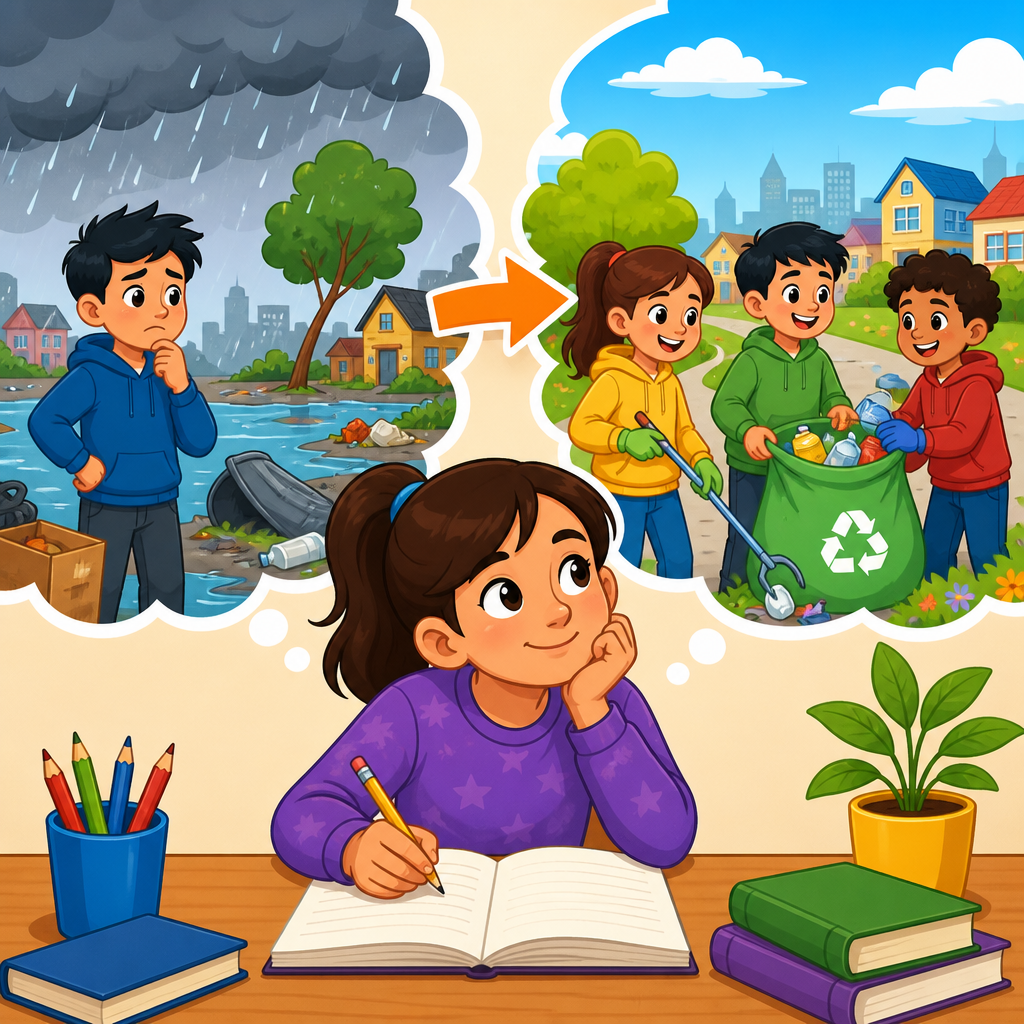
Writing a short narrative about a problem and its solution is one of the most practical skills a writer can build, because it teaches structure, clarity, and emotional payoff in a compact space. A short narrative is a brief story with a clear beginning, middle, and end. In this format, the problem is the obstacle, conflict, or need that drives the action, and the solution is the response that changes the outcome. When I coach new writers, this is often the first narrative pattern I teach because it mirrors how people naturally explain events: something went wrong, someone acted, and something changed.
This form matters in school assignments, language learning, business case studies, personal essays, and even workplace communication. Teachers use it to assess organization and sequencing. Employers use it in interviews when they ask for examples of how you handled a challenge. English learners use it to practice verb tense, transitions, and cause-and-effect language. Readers like it because it creates momentum fast. In a short space, they understand who is involved, what went wrong, why it matters, and how the issue is resolved.
Strong problem-and-solution narratives are not just tiny stories. They are focused accounts built around one central difficulty and one meaningful response. The best ones avoid extra characters, side plots, and unnecessary background. Instead, they use selective detail. A lost wallet, a missed bus, a broken promise, a classroom misunderstanding, or a failed presentation can all support an effective short narrative if the writer explains the stakes and shows the turning point clearly. The goal is not to make the event dramatic at any cost. The goal is to make the sequence understandable and satisfying.
Writers often struggle because they confuse summary with narrative. A summary tells what happened in broad terms. A narrative recreates the experience through scene, sequence, and consequence. If you write, “I had a problem at school, but I fixed it,” the reader gets information but no story. If you write, “When I opened my backpack before class, my completed assignment was gone, and I had ten minutes to decide whether to panic or retrace my steps,” the reader is instantly inside the problem. That difference is what turns plain reporting into effective storytelling.
Start with one specific problem
The foundation of a short narrative about a problem and its solution is a single, well-defined issue. Pick one event, not a cluster of frustrations. In practice, the strongest topics are narrow enough to describe in a few paragraphs: forgetting important notes before a speech, misunderstanding directions during travel, spilling coffee on a printed report, or sending a message to the wrong person. Specificity helps because it naturally limits the story and keeps the reader oriented.
Before drafting, answer four questions in plain language: Who has the problem? What exactly happens? Why does it matter right then? What will happen if the problem is not solved? These questions establish stakes. For example, “My bike tire went flat” is a problem, but “My bike tire went flat on the way to a job interview, fifteen minutes before the start time” is a narrative engine. The second version contains urgency, context, and a reason for the reader to care.
In my editing work, weak drafts usually begin too early. Writers spend half the piece on background and leave only a few lines for the actual conflict. A better approach is to enter the story close to the moment of trouble. Give just enough context to understand the situation, then introduce the problem quickly. This method keeps a short narrative compact and helps every sentence do useful work.
Build a clear narrative structure
A short narrative about a problem and its solution works best when it follows a simple sequence: setup, problem, response, solution, and reflection. This is not a rigid formula; it is a reliable framework. The setup introduces the setting and character. The problem disrupts normal activity. The response shows effort, decision-making, or failed attempts. The solution resolves the central issue. The reflection explains what changed, what was learned, or why the event mattered.
Readers should never have to guess where they are in the sequence. Time markers such as “that morning,” “a few minutes later,” “after I checked my bag again,” and “by the end of the day” are small but powerful tools. They create coherence and support smooth progression. This is especially important for English learners, because chronological order reduces confusion and makes verb choices more consistent.
A useful planning method is to map the story in five sentences before expanding it. Sentence one states the situation. Sentence two introduces the problem. Sentence three shows the main action taken. Sentence four presents the solution. Sentence five gives the outcome or lesson. I use this technique when tightening student drafts because it exposes missing logic immediately. If a writer cannot summarize the chain clearly, the full narrative will usually wander.
| Story Part | Purpose | Example Line |
|---|---|---|
| Setup | Establish context | I arrived at the library early to print my scholarship essay. |
| Problem | Introduce conflict | The printer jammed, and the deadline was one hour away. |
| Response | Show action | I asked the librarian for help and emailed the document to another branch. |
| Solution | Resolve issue | A staff member printed it there, and I collected it ten minutes later. |
| Reflection | Add meaning | Since then, I always save work in two formats and arrive early. |
Show the problem and solution through concrete detail
Concrete detail is what makes a short narrative believable and memorable. Use sensory information, precise actions, and exact consequences. Instead of saying, “I was nervous,” show the physical signs: “My hands shook when I unlocked my phone, and I reread the email three times.” Instead of saying, “I solved it,” explain the steps that created the solution. Readers trust narratives that show process.
The most effective details are functional, not decorative. They should help the reader understand the obstacle or the response. If a student misses a bus, the key details might be the time on the station clock, the distance to school, the dead phone battery, and the decision to ask a shop owner for directions. Those details move the story forward. Random descriptions of the weather or clothing usually do not, unless they directly affect the problem.
Dialogue can help, but only if it adds pressure or reveals a turning point. A single line such as “You still have one option,” from a teacher, supervisor, or friend can sharpen the moment. In very short narratives, indirect dialogue is often more efficient than full conversation. Use whichever form keeps the pace tight while preserving clarity.
Writers who want to improve quickly should study short model texts and notice how little they explain outside the central event. A useful companion resource on concise, purposeful writing is this guide to writing a polite email asking for information. Although the purpose is different, the same discipline applies: focus on the need, give relevant context, and lead the reader toward a clear response.
Use language that highlights cause, effect, and change
A problem-and-solution narrative depends on logical relationships. That means your language must make causes and effects explicit. Words and phrases such as “because,” “so,” “as a result,” “therefore,” “however,” and “instead” act like signals for the reader. They explain why the problem developed, why one response failed, and how the solution emerged. Without these signals, events can feel disconnected even when the basic story is interesting.
Verb tense also matters. Most short narratives use the simple past for the main events: “I missed,” “I called,” “she explained,” “we found.” The past continuous can set a scene or show an interrupted action: “I was walking into class when I realized I had the wrong notebook.” The past perfect is useful for earlier background, but it should be used sparingly in short pieces. Overloading a compact narrative with multiple tense shifts makes it harder to follow.
Another common issue is ending too abruptly. The solution should not appear from nowhere. It needs a believable connection to the character’s action, observation, or help received. If your phone dies and then “everything worked out,” the story feels incomplete. If your phone dies, you borrow a charger from the receptionist, access the confirmation message, and prove your appointment time, the resolution feels earned. Good endings are caused, not simply announced.
Revise for focus, realism, and emotional payoff
Revision is where an average draft becomes a strong short narrative. First, cut anything that does not support the main problem or the path to the solution. If a sentence is interesting but irrelevant, remove it. In short forms, every line competes for space. Second, check realism. Does the solution fit the situation? Coincidences are sometimes true to life, but overreliance on luck weakens the story. A believable solution usually comes from preparation, quick thinking, communication, or assistance that makes sense in context.
Third, strengthen the emotional payoff without exaggeration. Not every narrative needs a dramatic lesson. Sometimes the value is small but genuine: better planning, more confidence, a repaired relationship, or a new habit. These modest conclusions often feel more convincing than oversized moral statements. When I review final drafts, I look for endings that answer one quiet question: Why was this event worth telling?
Finally, read the piece aloud. This simple test reveals repetition, awkward transitions, and missing steps. If you stumble while reading, the reader will probably stumble too. A polished short narrative about a problem and its solution should feel easy to follow, even when the situation itself is tense. Clarity is not a bonus in this form; it is the main measure of success.
Writing a short narrative about a problem and its solution becomes much easier when you treat it as a focused chain of cause and effect rather than a general account of something difficult. Start with one specific problem. Introduce it early. Show why it matters. Then guide the reader through the response step by step until the solution feels earned. Add concrete detail, keep the sequence clear, and finish with a brief reflection that gives the event meaning.
This structure works because it matches how readers process real experiences. They want to know what happened, what was at stake, what action was taken, and what changed in the end. When those elements are present, even a simple event can become a satisfying narrative. A forgotten homework file, a travel mistake, or an awkward misunderstanding can all become effective stories if the writing is selective, precise, and organized.
If you want better results, draft briefly, revise carefully, and ask one final question before you finish: does every sentence help explain the problem or the solution? If the answer is yes, your narrative will be clear, purposeful, and memorable. Use that approach in your next writing assignment, and you will see immediate improvement.
Frequently Asked Questions
What is a short narrative about a problem and its solution?
A short narrative about a problem and its solution is a brief story built around a challenge and the way that challenge is addressed. It usually includes a clear beginning, middle, and end. In the beginning, the writer introduces the setting, the main character, and the problem that needs attention. In the middle, the character responds to the issue, faces obstacles, makes decisions, or tries different approaches. In the end, the story reaches a result, showing either a successful solution, a partial solution, or even a meaningful lesson learned.
This type of writing is especially useful because it teaches how to organize ideas with purpose. Instead of listing events randomly, the writer creates a cause-and-effect sequence that feels natural and satisfying. The problem gives the story direction, and the solution gives it payoff. Even in a very short piece, this structure helps readers stay engaged because they want to know what happens next and how the situation will change.
For new writers, this format is practical because it makes storytelling manageable. Rather than trying to write a long, complex plot, the writer focuses on one central issue and one main resolution. That limitation actually improves clarity. It encourages stronger structure, sharper detail, and more intentional storytelling.
How do I structure a short narrative so the problem and solution feel clear?
The strongest short narratives follow a simple but effective structure: setup, conflict, response, and resolution. Start by quickly establishing who the story is about, where it happens, and what the situation is. Then introduce the problem as early as possible. Readers should understand what is wrong, missing, confusing, or difficult within the first part of the narrative. If the problem appears too late, the story can feel unfocused.
Once the problem is clear, the middle of the narrative should show movement. This is where the character reacts, struggles, thinks, tries something, fails, adjusts, or asks for help. The middle matters because it connects the problem to the solution. A solution feels satisfying when readers can see how it was reached. If the ending appears without effort or logic, it may feel forced. The best short narratives make the solution seem earned, even if the story itself is brief.
In the ending, show what changed. The solution should affect the character, the situation, or both. It does not have to be dramatic. A small personal realization can be just as effective as a big action. What matters is that the ending clearly answers the problem introduced at the start. After reading, the audience should be able to say exactly what the problem was, what was done about it, and what the final outcome meant.
What makes a problem-and-solution narrative engaging instead of predictable?
A problem-and-solution narrative becomes engaging when it feels specific, believable, and emotionally grounded. One of the easiest ways to improve it is to move beyond generic problems. Instead of writing that a character “had a bad day” or “faced a challenge,” show the exact issue. Maybe the character forgot an important speech, lost a family heirloom, misunderstood a friend, or had to solve a mistake under pressure. Specific problems create stronger reader interest because they feel real and immediate.
Another key factor is emotional investment. Readers connect more deeply when they understand why the problem matters. A broken bicycle is more than an object if the character needs it to get to a scholarship interview. A missed phone call matters more if it could change a relationship. Stakes do not need to be huge, but they should be meaningful. When the reader understands what could be lost or gained, the narrative becomes more compelling.
Finally, avoid making the solution too easy or too obvious. A strong short narrative includes some struggle, uncertainty, or discovery. The character might need to rethink a plan, admit a mistake, work with someone else, or learn something important. That process creates tension and makes the ending more rewarding. Predictability often comes from skipping the emotional and practical steps between the problem and the outcome. When those steps are thoughtfully written, even a simple story can feel fresh and memorable.
How much detail should I include in a short narrative?
In a short narrative, detail should be selective rather than excessive. The goal is not to describe everything, but to choose the details that most clearly support the problem, the character’s experience, and the solution. Good details help readers picture the scene, understand the mood, and recognize why the conflict matters. For example, instead of writing a long description of a classroom, it may be more effective to mention the silent room, the ticking clock, and the unfinished paper on the desk if those details intensify the central problem.
Writers often make one of two mistakes: they either include too little detail and make the story feel flat, or they include too much unrelated detail and slow the narrative down. The best approach is to ask whether each detail serves a purpose. Does it reveal character? Does it increase tension? Does it help explain the challenge or the resolution? If not, it may not belong in such a compact format.
Short narratives are strongest when every sentence works hard. A few vivid, relevant details can do more than a full paragraph of general description. Focus especially on details tied to action, emotion, and consequence. That way, the narrative stays concise while still feeling complete and engaging.
What are the most common mistakes to avoid when writing a short narrative about a problem and its solution?
One common mistake is making the problem unclear. If readers cannot identify the main issue early on, the narrative loses focus. Writers sometimes include too many events or ideas, which weakens the central conflict. A short narrative works best when it concentrates on one main problem and develops it fully. Keep the story centered so the reader always understands what is at stake.
Another frequent mistake is offering a solution that feels sudden or unrealistic. If the character solves the problem instantly, without effort, thought, or consequence, the ending may feel unearned. Even in a brief story, readers expect a logical progression. Show the character doing something to respond to the challenge. The action does not need to be dramatic, but it should make sense within the world of the story.
A third mistake is neglecting the emotional side of the narrative. Some writers focus only on what happened and forget to show what the character felt, feared, realized, or learned. A problem-and-solution story is not just about events; it is about change. Readers remember stories that reveal how the experience affected the character. If you make the problem clear, build a believable path to the solution, and include emotional meaning, your short narrative will feel much stronger and more complete.





