
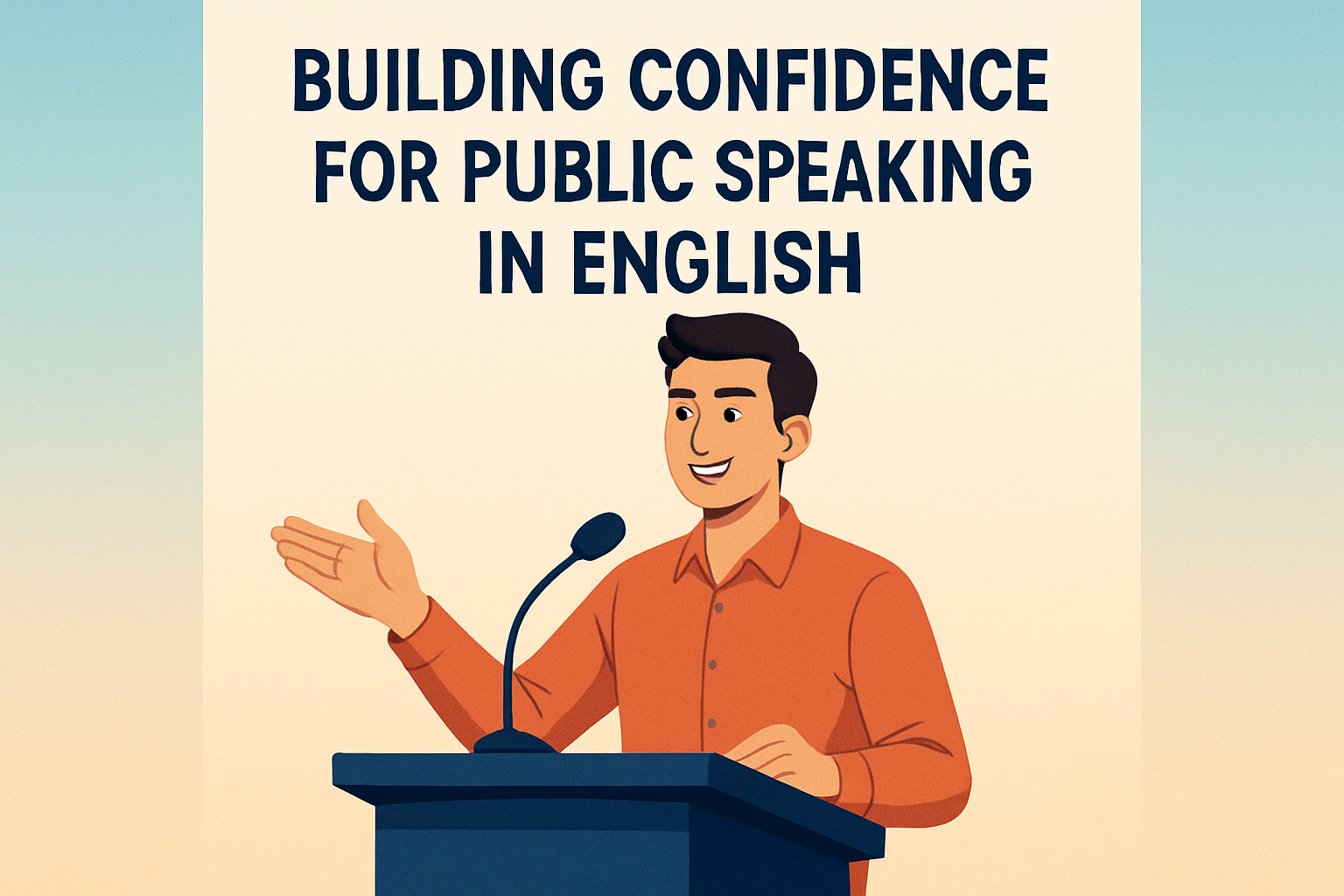
Public speaking can be a daunting task, especially when it’s in a language that is not your first. The fear of mispronouncing words, forgetting lines, or not articulating clearly can overshadow the message you want to convey. However, building confidence in public speaking is a crucial skill that opens numerous opportunities, both professionally and personally. Public speaking is the act of delivering a speech or presentation to an audience. It demands not just the ability to talk but to communicate effectively. Confidence, on the other hand, is the state of being certain and self-assured, free from doubt. When it comes to public speaking in English, a language that is globally dominant and often required in business and academia, having this confidence is immensely beneficial. It impacts your career progression, networking capabilities, and personal growth. In this article, we delve into the methods of fostering confidence for public speaking in English, providing practical examples and strategies to unlock your potential.
Understanding the Fundamentals of Public Speaking
The foundation of any successful public speaking engagement is understanding the fundamentals. Knowing the purpose of your speech, your audience, and the key message you want to convey significantly boosts your confidence. Consider the case of Maria, a non-native English speaker who worked for a multinational company. She was tasked with presenting an annual report to an international board of directors. By researching the cultural background, interests, and roles of her audience, Maria was able to tailor her message to ensure relevance and engagement. Consider your speech as a structure – it should have a clear introduction, body, and conclusion. Practice outlining your speech using these elements. Additionally, rehearse your delivery, focusing on your tone, pace, and volume. Understanding these basic elements helps eliminate ambiguity, making you feel more secure and prepared.
Practicing Effective Communication Techniques
Enhancing your communication techniques is vital. It’s not just about what you say but how you say it. Non-verbal cues like eye contact, gestures, and posture contribute significantly to how your message is received. Take the experience of John, an English instructor, and non-native speaker. By practicing in front of a mirror, John observed his body language, which he adjusted to ensure it matched the intention behind his words. Practicing these techniques, such as pausing effectively to emphasize points, can change the way your audience perceives your message. To improve, record yourself while presenting and review it critically. Notice your articulation, listen for clarity, and adjust accordingly. Effective communication is not only verbal but also involves expressing your enthusiasm, sincerity, and trustworthiness.
Harnessing the Power of English Language Proficiency
Gaining proficiency in English is paramount for boosting confidence in public speaking. Learning nuances, expanding vocabulary, and mastering pronunciation need time and patience. For instance, Rajesh, an IT professional, attended English language workshops to improve his language skills while simultaneously practicing his presentations. These workshops encouraged active participation, enhancing his fluency and building his confidence. One practical approach is to engage in small conversations in English daily, read books or articles aloud, and listen to English podcasts or watch English movies to understand accents and intonations. Additionally, consider language learning applications or classes to build a solid grounding. Proficiency transforms uncertainty into self-assurance, allowing speakers to express themselves succinctly and confidently.
Overcoming Fear and Managing Nervousness
Nervousness is a common issue that many face when speaking in public. However, it’s essential to understand that a bit of anxiety is natural and can be harnessed positively. Peter, a seasoned speaker, shares that he faced stage fright initially. His strategy involved deep breathing exercises before each presentation and practicing meditation to calm his mind. Visualizing success is another technique that empowers your mind to overcome anxiety. Envision yourself delivering a flawless presentation and receiving positive feedback. This mental rehearsal strengthens your belief and confidence. Utilize systematic desensitization by starting with smaller, less intimidating audiences and gradually moving to larger groups. Managing anxiety involves creating a mental space where you can focus on delivering your message rather than being overwhelmed by the fear of judgment.
Real-Life Examples of Building Public Speaking Confidence
An impactful way of learning is through real-world examples. Stories of individuals who have excelled despite initial struggles provide motivation and concrete strategies. Consider Emily, a university student who joined a local Toastmasters club to improve her public speaking skills. Toastmasters clubs are platforms that provide a supportive environment for members to practice and refine their speaking skills. Emily participated in regular speeches, received constructive feedback from experienced members, and engaged in impromptu speaking sessions, known as Table Topics. This exposure and consistent practice honed her skills and built her self-confidence. Below is a table that Emily designed to track her progress:
| Date | Speech Title | Objective | Feedback |
|---|---|---|---|
| Jan 5, 2023 | Introductory Speech | To introduce myself and my goals | Engaging intro, but need to work on conclusion |
| Feb 10, 2023 | Project Presentation | To inform about project updates | Well-structured content, practice eye contact |
| Mar 15, 2023 | Motivational Speech | To inspire the audience | Great passion, moderate speaking speed |
By following Emily’s example, you can create your personalized progress tracking system. Over time, observing your improvement bolsters confidence, turning public speaking fears into triumphs.
Cultivating a Positive Mindset and Confidence Boosting Rituals
Confidence building is deeply rooted in nurturing a positive mindset. This involves self-affirmation and the conscious rejection of negative self-talk. Sarah, a motivational speaker, attributes part of her success to repeating positive affirmations before any speaking engagement. Created her personal mantra which reminded her of her capabilities and previous successes. Another method involves adopting power poses, as suggested by psychologist Amy Cuddy. These are body positions that can create a sense of empowerment, such as standing tall with arms open wide. Performing power poses before your presentation can elevate your confidence levels. Developing a routine or ritual that prepares you mentally, such as listening to upbeat music or visualizing success, primes your mindset for success and reduces anxiety.
The Importance of Continuous Learning and Feedback
Public speaking is not a static skill; it requires continuous refinement. Seeking constructive feedback from peers, mentors, or audience members is invaluable. Trina, a marketing manager, used feedback sessions to gain insights into her speaking skills’ strengths and areas for improvement. By embracing feedback, she was able to improve her delivery, pacing, and connection with her audience. Encourage yourself to welcome feedback with an open mind and use it as a tool for progression. As you incorporate this feedback, set realistic and measurable goals for your public speaking journey. Attend workshops, engage in public speaking courses, and observe skilled orators to learn different techniques and styles. Each learning experience adds a layer to your skills, solidifying your confidence over time.
Conclusion: Embrace the Journey to Confident Public Speaking
Building confidence in public speaking, particularly in English, is a process requiring commitment, patience, and practice. By understanding the principles of public speaking, practicing effective communication techniques, and harnessing language proficiency, you lay a strong foundation. Overcoming fear and managing nervousness are achievable through visualization and incremental exposure. Real-life examples, like Emily and others, inspire and guide your path, demonstrating that confidence is attainable through dedication. Cultivating a positive mindset and integrating confidence-boosting rituals further empower you. Remember, public speaking is a skill developed through continuous learning and feedback incorporation. As you embark on this journey, remember that each step forward is progress. Embrace each opportunity to speak as a chance to grow, develop, and discover your voice. Commit yourself to regular practice and embrace the feedback received to refine your skills continually. Start by setting small, achievable goals—whether it’s speaking in front of a small group or presenting at an open-mic event. Take the leap today and witness the transformation in your confidence in public speaking.
Frequently Asked Questions
1. How can I start building confidence for public speaking in English if it’s not my first language?
Building confidence in public speaking, especially in English, starts with acknowledging your fears and gradually working through them. It’s natural to feel anxious about delivering a speech in a language that isn’t your native one. Start by practicing your speech with a friend or mentor who can give you feedback. The more you practice, the more comfortable you’ll become with the words and phrases, and the less you’ll worry about pronunciation. Joining a speaking club, like Toastmasters, can provide a supportive environment where you can practice speaking in front of others. It’s also helpful to listen to or watch native English speakers to get a feel for how they articulate words and phrases. Remember, confidence grows with experience, so don’t hesitate to grab every opportunity to practice, whether it’s speaking in small group discussions or larger gatherings.
2. What can I do if I forget my lines during a public speech?
It’s common to fear forgetting lines during public speaking, but there are several strategies to manage this situation effectively. First, having a solid understanding of your main message is key. Rather than memorizing lines word-for-word, aim to internalize your message and the key points you want to share. This way, even if you forget a specific line, you can still convey the essence of your message. Using visual aids like slides can also help guide your presentation and keep you on track. Additionally, having notes or cue cards with bullet points rather than full sentences can jog your memory without being a crutch. If you do forget something, pause, take a deep breath, and try not to let it fluster you. The audience typically doesn’t notice small mistakes unless you draw attention to them. Lastly, practicing relaxation techniques like deep breathing or visualization before your speech can help calm nerves and improve recall.
3. How can I improve my English pronunciation for clearer articulation during public speaking?
Improving English pronunciation takes time and dedicated practice, but it can significantly enhance your clarity and confidence during public speaking. Start by listening to native speakers through podcasts, news, or videos, focusing on the way they pronounce words and structure their sentences. Recording yourself speaking and then listening to the playback can highlight areas where you might need improvement. Consider using language apps that focus on pronunciation, where you can practice difficult sounds and receive feedback. Additionally, working with a speech coach or taking English pronunciation classes can provide personalized guidance and exercises tailored to your needs. Mouth exercises, such as practicing tongue twisters, can also enhance your ability to articulate clearly. Remember, clear pronunciation isn’t just about speaking slowly; it’s about being deliberate with word choice and sound production. Like any skill, consistency and patience are key to improvement.
4. What role does language immersion play in building public speaking confidence in English?
Language immersion plays a significant role in building confidence for public speaking in English. Immersing yourself in English-speaking environments helps you to naturally acquire language patterns, slang, and cultural nuances that aren’t always found in textbooks. Immersion can occur in everyday settings, such as social gatherings, work environments, or even online communities focused on English. Engaging in conversations with native speakers can enhance your listening and speaking skills, making spontaneous speaking situations less daunting. Language immersion enables you to better understand tonal variations and emotional expressions, which are crucial in public speaking for keeping your audience engaged. Furthermore, it provides a safe space to make mistakes and learn from them in real-time, fostering a more comfortable and confident approach to using English in formal settings. So, seek out environments where you can be surrounded by English, and take every opportunity to engage actively in conversations.
5. How important is body language in delivering an effective public speech in English?
Body language is a pivotal element in delivering an effective public speech, often serving as the unspoken aspect that can enhance or detract from your verbal communication. It includes gestures, facial expressions, posture, and eye contact, all of which work together to reinforce your spoken words. When speaking in English, especially if it’s not your first language, your body language can help bridge gaps in communication. For instance, maintaining eye contact creates a connection with your audience, showing confidence and sincerity. Your posture can convey assurance and authority; standing tall with shoulders back can help to project your voice more effectively. Hand gestures can emphasize key points and help the audience visualize your message. Facial expressions can express emotions, adding a layer of engagement to your speech. Remember, aligning your body language with your verbal message strengthens your delivery and helps you come across as more convincing and credible. Therefore, practicing your speech with attention to body language is crucial in mastering public speaking in any language.





