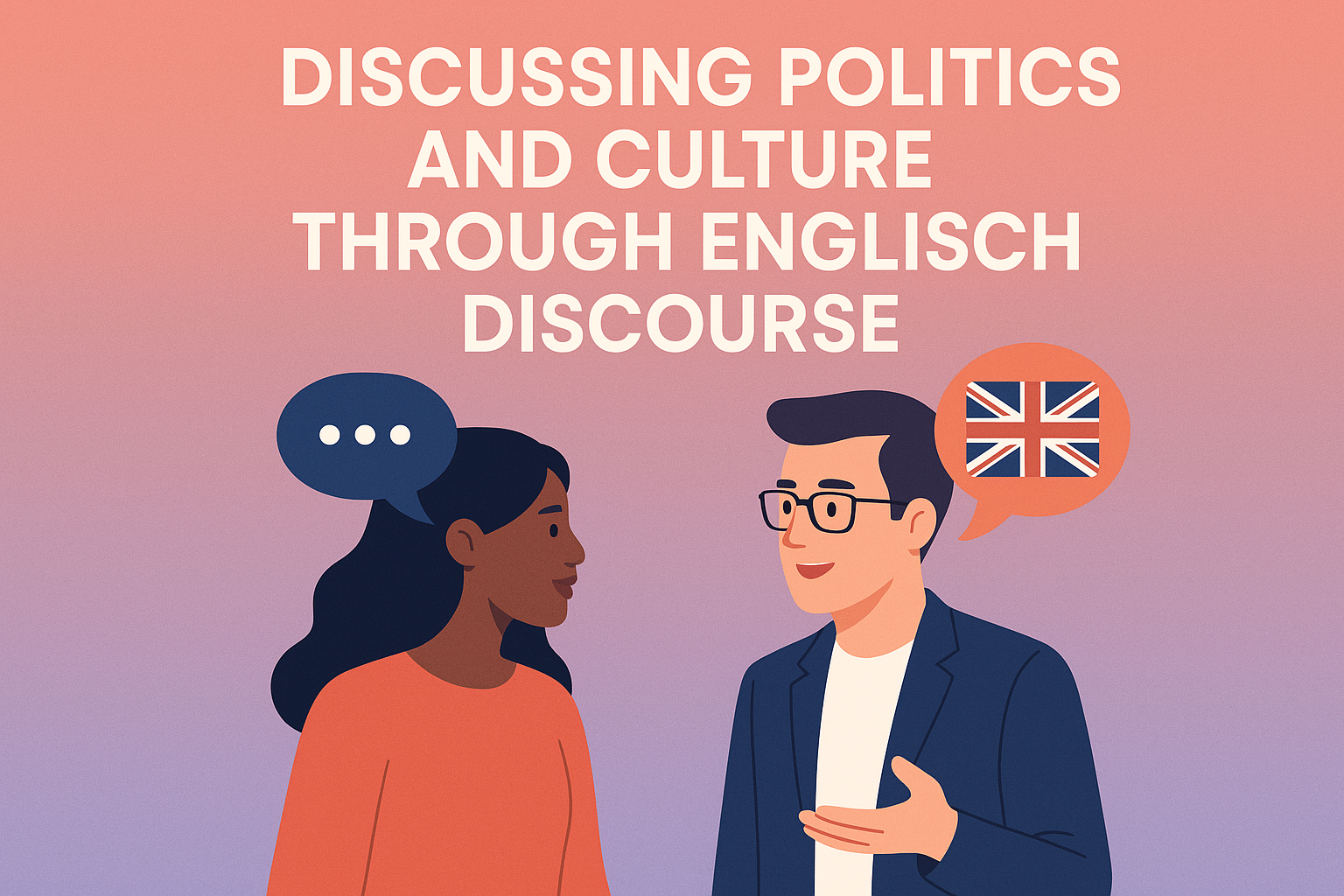
In the complex web of human interaction, language serves as a critical tool for communication and understanding. English, as a global lingua franca, plays a pivotal role in shaping and transmitting political thoughts and cultural narratives across the world. This article will explore the interplay between politics and culture through English discourse, emphasizing how these dynamics influence society and individual perspectives. Understanding the nuances of political and cultural dialogue in English not only enriches one’s comprehension but also enhances their ability to engage effectively in meaningful conversations on a global scale. By delving into this topic, readers gain insight into the significance of language in bridging cultural divides and its profound impact on political discourse.
Politics and culture are two pillars that significantly shape societal structures and individual identities. Politics refers to the set of activities associated with governance, decision-making, and the allocation of resources within a community or nation. It’s a realm where power dynamics, policies, and ideologies play crucial roles. Culture, on the other hand, encompasses the beliefs, customs, arts, and social behaviors shared by a group of people. It represents the collective identity of communities and influences how individuals perceive the world around them. In the realm of English discourse, these two elements frequently intersect, creating a rich tapestry of dialogue that reflects the complexities of human society.
The importance of discussing politics and culture through English lies in its ability to facilitate cross-cultural understanding and promote inclusivity. English serves as a bridge language, allowing people from diverse backgrounds to communicate and share ideas. This is particularly vital in an era of globalization where international interactions are commonplace. By engaging in political and cultural discourse in English, individuals can contribute to a more unified global community, fostering empathy and collaboration among people with different perspectives. Thus, the exploration of these topics through English is not merely an academic exercise but a crucial endeavor for anyone seeking to navigate and influence the contemporary world effectively.
The Intersection of Politics and English Discourse
The intersection of politics and English discourse manifests in various ways, from parliamentary debates to grassroots activism. Political language in English is characterized by its rich vocabulary, rhetorical devices, and persuasive techniques, all aimed at influencing public opinion and policy decisions. In nations where English is the primary or secondary language, political discourse is often shaped by historical contexts and contemporary issues, reflecting the unique challenges and aspirations of those societies.
A notable example is the use of English in the political landscape of post-colonial countries, such as India. Here, English serves not only as a remnant of colonial rule but also as a unifying language in a linguistically diverse nation. Political leaders utilize English to articulate policies and reach broader audiences beyond regional language barriers. The 2014 Indian general election, for instance, witnessed the strategic use of English in campaign speeches and social media to engage with the urban, middle-class electorate who were more proficient in English. This illustrates how English discourse can shape political movements and voter engagement in multilingual societies.
In addition to speeches and campaigns, the language used in political discourse also extends to international diplomacy. English often serves as the default language in global forums such as the United Nations, where leaders negotiate treaties and address international concerns. Mastery of political English is crucial for diplomats and policymakers who must navigate the intricate nuances of international relations. By understanding the interplay between politics and English discourse, individuals can better appreciate the strategic role language plays in shaping political realities and global governance.
Cultural Exchange and Identity Through English
The cultural dimension of English discourse is equally significant, serving as a medium for cultural exchange and identity formation. As people from different backgrounds communicate in English, they share not only words but also cultural expressions and values. This exchange enriches participants’ understanding and appreciation of global diversity, encouraging a more inclusive worldview.
A real-world example of cultural exchange through English is the proliferation of global media and entertainment. Hollywood films, British literature, and American music all contribute to a shared cultural experience accessed primarily through English. These cultural artifacts introduce audiences worldwide to diverse cultural norms and stories, fostering cross-cultural dialogue and empathy.
This cultural exchange is evident in the interaction between Western and non-Western cultures. For instance, the popularity of English-language Bollywood films in Western countries highlights a mutual appreciation and blending of cultural elements. Such exchanges help break down stereotypes and promote a more nuanced understanding of different societies. Additionally, the adoption of English within diverse cultural contexts often leads to the creation of new dialects and expressions, further enriching the language itself.
| Category | English Influence | Impact |
|---|---|---|
| Film | Hollywood | Global storytelling, cultural insights |
| Literature | British and American | Shared themes, literary innovation |
| Music | American music | Cultural fusion, global trends |
| Media | International News | World events, diverse perspectives |
Furthermore, English can play a crucial role in identity formation. As individuals express themselves in English, they often navigate multiple cultural identities. This is particularly true for immigrants and expatriates who use English as a bridge between their native culture and the cultural norms of their new environment. Understanding this dynamic enables individuals to navigate cultural intersections and embrace the multifaceted nature of identity in a globalized world.
Challenges and Opportunities in English Discourse
While the use of English in political and cultural discourse presents numerous opportunities, it also poses challenges. One significant challenge is the risk of linguistic imperialism, where English dominates local languages and cultures, potentially leading to cultural homogenization. This dominance can marginalize indigenous languages and cultural expressions, resulting in a loss of cultural diversity.
An example of this is the educational system in countries like Nigeria, where English is often the preferred medium of instruction. While English proficiency opens up global opportunities, it can also undermine the use of native languages, impacting cultural transmission and heritage preservation. Balancing English proficiency with the preservation of linguistic diversity is thus a crucial task for policymakers and educators.
Despite these challenges, English discourse also offers opportunities for empowerment and agency. For marginalized communities, mastering English can be a powerful tool for advocacy and change. By participating in global conversations, these communities can amplify their voices and address issues of inequality and injustice on an international stage. The success of environmental activist Greta Thunberg demonstrates how English discourse can galvanize social movements and influence global policy.
The Role of Technology in English Discourse
Technology has revolutionized the way political and cultural discourse in English is conducted. The advent of the internet and social media platforms has democratized information dissemination, allowing individuals to share their perspectives widely and instantly. These platforms have also facilitated new forms of communication, such as digital activism and online learning, where English is the predominant language.
Social media, in particular, acts as a powerful tool for political engagement and cultural exchange. Platforms like Twitter and Facebook enable individuals to access diverse viewpoints, participate in heated debates, and organize movements across borders. The Arab Spring of 2010, for example, showcased the role of social media in mobilizing political action, with English hashtags and posts drawing international attention and support.
Online learning platforms like Coursera and MOOCs offer courses in English, making education more accessible to a global audience. These platforms provide learners with the skills and knowledge to engage in global discourse, fostering a more informed and interconnected world.
However, these technological advancements also come with challenges, such as misinformation and digital inequality. Ensuring that digital platforms remain spaces for constructive discourse requires efforts to promote digital literacy and critical thinking skills among users. By navigating these challenges, individuals can leverage technology to enhance their participation in English discourse, contributing to a more equitable and informed global community.
Conclusion: Navigating the Discourse Landscape
In conclusion, the exploration of politics and culture through English discourse reveals the intricate dynamics of language in shaping human societies. English serves as a powerful tool for communication, offering a platform for diverse political and cultural expressions. By engaging in English discourse, individuals can bridge cultural divides, foster understanding, and influence global narratives. However, this endeavor requires thoughtful navigation of the challenges and opportunities posed by linguistic dominance, cultural preservation, and technological advancements.
The key takeaway for readers is the recognition of English as both an opportunity and a responsibility. As participants in global discourse, individuals have the power to shape conversations that impact societal norms and influence policy decisions. By valuing linguistic diversity, promoting inclusive discussions, and utilizing technology responsibly, individuals can contribute to a more equitable and harmonious world.
As a next step, readers are encouraged to actively engage in discussions that matter to them, seek out diverse perspectives, and hone their communication skills in English. By doing so, they not only enrich their own understanding but also contribute to the collective effort of building a more connected and compassionate global community.
Frequently Asked Questions
1. How does English serve as a tool for discussing politics and culture?
English is often referred to as a global language, or lingua franca, meaning it is a common language that enables people from diverse linguistic backgrounds to communicate. In the context of politics and culture, English plays a significant role in facilitating dialogue across different countries and cultural groups. When political leaders, international organizations, scholars, or everyday global citizens wish to share ideas and negotiate meanings, English often acts as the bridge. International institutions such as the United Nations conduct much of their business in English, as do many multinational corporations when addressing global markets.
In cultural exchanges, English can carry the weight of diverse arts, literature, and media, offering a platform where different cultures can meet and interact. It allows individuals to engage with global pop culture, accessing films, music, and literature from other parts of the world that might not be available in their native languages. This exchange encourages understanding and appreciation of diverse perspectives and traditions, ultimately contributing to a more interconnected world.
2. What is English discourse, and how does it impact political thoughts and cultural narratives?
Discourse refers to written and spoken communication, and when we talk about English discourse, we’re discussing how the English language is used to share ideas, opinions, and information. English discourse, especially in the media, academic fields, and political arenas, can shape and transmit political thoughts and cultural narratives worldwide. It’s not just about the content of the discussions, but also how they’re presented through language—what words and metaphors are used, what cultural references are made, and how arguments are constructed.
This form of discourse can influence public perception and individual perspectives significantly. For instance, media coverage in English may frame political events in a particular light, thus swaying opinions and influencing voter behavior. Similarly, English discourse around cultural topics can either reinforce stereotypes or challenge prevailing narratives, depending on how topics are portrayed. Therefore, a keen understanding of English discourse can reveal not just what is communicated but also how power dynamics, ideologies, and cultural subtleties are embedded in communication.
3. Why is it important to understand the nuances of political and cultural dialogue in English?
Understanding the nuances of political and cultural dialogue in English is crucial for several reasons. Firstly, nuanced comprehension allows for deeper engagement with the content. Political discussions are filled with subtleties that require more than just a literal understanding. The tone, context, and historical background of statements can often change their meaning entirely. Without this understanding, one might miss out on critical implications or misinterpret the speaker’s intent.
On a cultural level, language nuance is equally important. Idioms, metaphors, and cultural references add layers of meaning to communication. A phrase that makes perfect sense in one cultural context might be perplexing or even offensive in another. By engaging with these subtleties, individuals can better appreciate the richness of cultural interactions and avoid cross-cultural misunderstandings. Moreover, in a world where English facilitates global communication, being attuned to these nuances can lead to more effective and empathetic interactions, whether in diplomacy, business, or everyday social exchanges.
4. How does the role of English in global communication influence individual perspectives?
The prevalence of English in global communication has a profound impact on individual perspectives. For many people, learning English opens doors to a wealth of information, enabling them to participate more fully in global discourse. Access to English-language media, academic resources, and literature broadens horizons and provides opportunities to encounter new ideas and viewpoints. This exposure can lead to more informed perspectives and a greater understanding of global issues.
However, the dominance of English also has its challenges. It can create linguistic hierarchies, where non-native speakers may feel disadvantaged or marginalized in discussions dominated by native English speakers. Furthermore, the emphasis on English can sometimes lead to the overshadowing of local languages and cultures, leading to a loss of linguistic diversity and cultural identity. Despite these challenges, the ability to engage with English discourse can empower individuals, enabling them to join global conversations, advocate for their beliefs, and connect with people across the world.
5. What are some challenges associated with discussing politics and culture in English for non-native speakers?
Non-native speakers face several challenges when discussing politics and culture in English. One of the primary hurdles is language proficiency. While many non-native speakers have a functional command of English, the subtleties and complexities involved in political and cultural discussions can be daunting. Nuanced expressions, idioms, or cultural references might be difficult to grasp or use effectively, which can lead to misunderstandings or communication barriers.
Moreover, non-native speakers may struggle with confidence, especially in high-stakes environments like international conferences or academic debates, where the fear of making errors or not being understood can hinder participation. Another challenge is the risk of cultural bias; English as a medium can sometimes carry with it specific cultural perspectives, and non-native speakers may feel their own cultural views are underrepresented or misunderstood.
Despite these challenges, many non-native speakers develop strategies to improve their communication skills through practice, cultural immersion, and ongoing learning. Encouraging and inclusive environments can also help bridge the gap, ensuring diverse voices are heard and understood in English discourse surrounding politics and culture.