
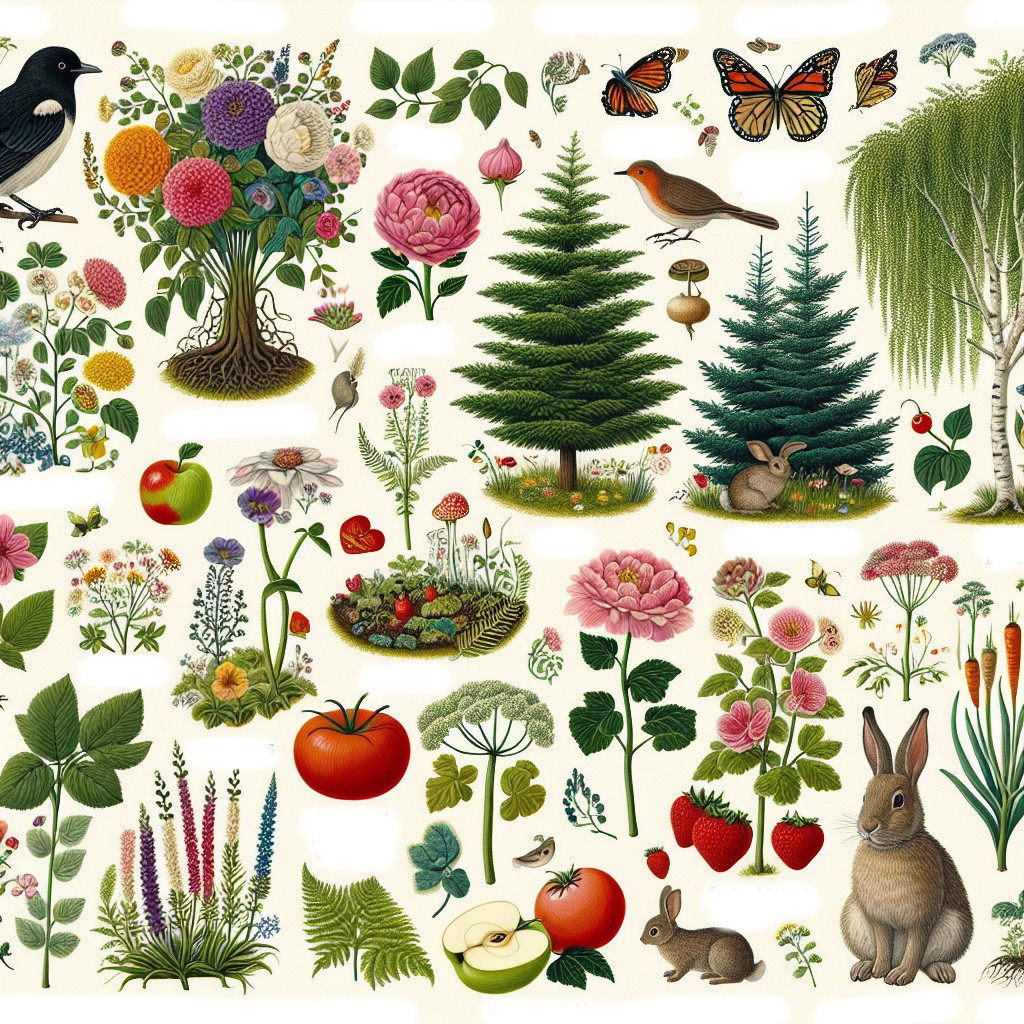
Learning English can be an enriching experience, especially when you get to explore its diverse vocabulary related to flowers, plants, and nature. This particular category of vocabulary not only helps you describe the natural world but also nurtures an appreciation for the environment around us. In this article, you will embark on an enlightening journey to discover the varied and celebratory language of flora and fauna, right from the poetic names of flowers to the everyday terms used in gardening and outdoor activities.
The vocabulary concerning flowers, plants, and nature holds a significant cultural importance, reflecting the diversity of climates, landscapes, and horticultural practices across English-speaking regions. From the classic roses depicted in Shakespeare’s sonnets to the majestic redwoods of California, the language we use to describe them adds depth and color to conversations. Whether you are writing poetry, crafting stories, or simply engaging in small talk at a local garden club, a rich vocabulary on this subject can enhance your communication skills.
As you dive deeper into this theme, you’ll find that this vocabulary extends into various contexts and disciplines. Botany, horticulture, landscaping, and even cultural studies offer endless opportunities to learn new terms and concepts. Furthermore, understanding these terms can significantly benefit you if you are planning to pursue a career in agriculture, environmental science, or related fields. Even those with a casual interest in gardening or nature walks will find great joy in expanding their lexical repertoire on the subject.
By exploring this area of vocabulary, you will develop a keener sense of linguistic awareness and a stronger connection to your surroundings. Let’s begin this enlightening journey through the vivacious and varied lexicon of flowers, plants, and all things nature in the English language.
The Blossoms of Language: Flower Vocabulary
Let us begin our exploration with the enchanting world of flowers. Flowers have captivated humans for centuries, inspiring poets, artists, and everyday people alike. The vocabulary associated with flowers is equally mesmerizing. Each flower name carries its own meaning and symbolism, making them a fascinating subject for language learners.
Common flower names such as rose, tulip, daisy, and lily often serve as familiar starting points. These terms may already be part of your vocabulary due to their widespread popularity. However, the English language has an extensive variety of flower names worth exploring. More exotic names include chrysanthemum, hyacinth, dahlia, and gladiolus. Understanding these names and their respective characteristics can enrich your descriptions and elevate your conversations about plants and floral arrangements.
Beyond individual flower names, there are many terms you will encounter when discussing flowers in a broader sense. For instance, ‘bouquet’ denotes an arrangement of flowers, while ‘florist’ refers to an expert who prepares bouquets and other floral items. A ‘bloom’ is the state of flowering, and ‘petal’ specifies an individual component of a flower. Other terms like ‘bud’, ‘blossom’, and ‘wilt’ convey different stages in a flower’s life cycle, providing you with expressive ways to describe these beautiful botanical beings.
In addition to vocabulary, you can also learn about the cultural and symbolic meanings of different flowers. For example, red roses are universally associated with love and passion, while white lilies often symbolize purity and renewal. These meanings might vary between cultures, providing an intriguing layer of complexity to your understanding of flower vocabulary in English.
Green Language: The Vocabulary of Plants and Trees
Moving from flowers to plants and trees, we dive into an endless sea of lush, green vocabulary that adds immense variety to the English language. The world of plants is incredibly diverse, covering everything from small herbs in kitchen gardens to towering trees that shape city landscapes.
One of the first terms you will encounter when learning about plants is ‘foliage’, which refers to the leaves of trees or plants. Understanding this term lays the groundwork for further vocabulary acquisition in this category. Important terms include ‘deciduous’, describing trees that lose their leaves seasonally, and ‘evergreen’, referring to trees that retain their foliage all year round.
The word ‘botany’ introduces learners to the scientific study of plants, offering terms like ‘photosynthesis’, the process by which plants use sunlight to synthesize nutrients, and ‘chlorophyll’, the green pigment crucial to this process. The term ‘taxonomy’ refers to the classification of plants, a vital aspect of botany where each plant or tree is categorized into a kingdom, division, class, and so forth.
Moreover, you should familiarize yourself with various tree names, such as oak, maple, pine, and birch. Each of these trees has its own characteristics, such as ‘conifer’ for certain evergreen trees that produce cones, and ‘deciduous’ for oaks that shed leaves annually. The terms ‘sapling’ and ‘seedling’ describe young trees and plants, respectively. This vocabulary can be particularly useful if you find yourself discussing landscaping, forestry, or environmental conservation.
Embracing the vocabulary of plants not only enhances your English language skills but also rekindles human curiosity about nature. Embrace the greenery around you with these expressive linguistic tools!
Nature’s Canvas: Describing Landscapes and Ecosystems
Navigating beyond individual flowers, plants, and trees, you’ll find yourself engaging with the vocabulary tied to whole landscapes and ecosystems. This spectrum of words allows you to paint vivid pictures of the natural surroundings, whether it relates to lush valleys or rugged mountain terrains.
Some essential terms include ‘landscape’, which refers to the visible features of an area of land, and ‘ecosystem’, which denotes a community of interacting organisms and their physical environment. Understanding how to describe different landscapes can vastly improve your English descriptive skills. For example, ‘meadow’ refers to a grassy field, often filled with wildflowers. ‘Forest’ describes a large area dominated by trees, while ‘desert’ characterizes regions with sparse vegetation and minimal rainfall.
The term ‘biodiversity’ is critical when discussing ecosystems, as it refers to the variety and variability of life forms within a given area. Similarly, ‘habitat’ denotes the natural home or environment of a plant, animal, or other organism. Engaging with these terms not only bolsters your understanding of the English language but also encourages a deeper connection with the environment.
Furthermore, it is important to recognize terms that indicate topographical features, such as ‘mountain’, ‘valley’, ‘river’, ‘stream’, ‘lake’, and ‘ocean’. This vocabulary helps you describe geographical characteristics, enhancing conversations about travel, geology, and environmental awareness. These terms can act as portals to new cultural insights, as many landscapes and ecosystems have distinct cultural and historical significance across English-speaking regions.
As you become familiar with this vocabulary, you’ll gain the ability to describe your personal experiences in nature more vividly, making them come alive in the minds of others.
The Language of Gardening: Tools and Techniques
For those interested in gardening, or anyone who wishes to converse about it effectively, mastering the relevant vocabulary is crucial. Gardening terminology includes an array of words and phrases that describe tools, techniques, and practices crucial to cultivating plants and flowers.
Begin with basic gardening tools such as ‘shovel’, which is useful for digging, ‘rake’ for gathering leaves or breaking up soil, and ‘pruning shears’ for cutting branches and stems. More advanced tools include ‘cultivator’, essential for tilling soil, and ‘trowel’, a small hand tool perfect for planting and potting.
Beyond tools, an array of techniques exist which require specific vocabulary. The term ‘pruning’ refers to the practice of cutting back branches to allow for healthy new growth. ‘Composting’ involves creating a nutrient-rich mixture from decomposed organic matter, while ‘mulching’ describes covering the surface of the soil to retain moisture and suppress weeds.
The word ‘fertilizer’ describes any material used to provide nutrients to plants, and ‘irrigation’ refers to the artificial application of water to the land. While these terms may appear technical, they form the foundation of efficient gardening practices, enhancing your ability to discuss horticulture or participate in more specialized conversations.
Gardening language also touches upon plant types, with terms like ‘annuals’, which describe plants that complete their life cycle within a year, and ‘perennials’, which return for several growing seasons. Understanding these terms adds depth to your discussions and activities related to home gardening or larger agricultural endeavors.
Immerse yourself in the world of gardening through its unique lexicon, making your interactions more engaging and informed whether in personal gardens or community green spaces.
Environmental Awareness: Conversing About Conservation
In an era of heightened environmental awareness, engaging with the vocabulary of conservation is more relevant than ever. Expressing concern for the planet compels us to understand terms closely linked to ecology, sustainability, and climate change.
Words like ‘conservation’ and ‘sustainability’ serve as starting points. Conservation involves protecting natural environments to ensure the survival of wildlife and ecosystems, while sustainability focuses on maintaining ecological balance by considering long-term environmental impacts.
Familiarize yourself with vocabulary concerning global environmental issues, such as ‘climate change’, a phenomenon describing shifts in global or regional climate patterns over time. ‘Carbon footprint’ refers to the total emissions of greenhouse gases by an entity, an important concept for discussions on reducing individual and corporate environmental impact.
‘Biodiversity loss’ describes the decline of various species within an ecosystem, while ‘deforestation’ is the large-scale removal of forests, an activity with significant ecological repercussions. Similarly, ‘pollution’ encapsulates the contamination of air, water, or soil by harmful substances.
With terms like ‘renewable energy’, referring to energy sources that are continually replenished, and ‘conservation effort’, which includes activities to preserve natural resources, you have the foundation for meaningful discussions on shaping a more sustainable future. Additionally, phrases such as ‘ecological footprint’, ‘green technology’, and ‘climate policy’ expand your understanding, helping you participate actively in dialogues where environmental perspectives take center stage.
Embracing this vocabulary aligns with global campaigns for a healthier planet, encouraging responsible action and informed conversations in English-speaking environments and beyond.
Conclusion
In conclusion, immersing yourself in the vocabulary of flowers, plants, and nature can greatly enhance your English language skills and open up new avenues for communication and understanding. As you have seen, this specialized area of vocabulary spans across various disciplines, offering rich contextual knowledge and cultural insights.
From the delicate beauty of flower names and their symbolic meanings to the intricate world of plants and trees, this vocabulary fosters a deeper appreciation for our planet’s natural wonders. Engaging with this language allows you to describe landscapes with greater precision, empowering you to share your experiences and observations more vividly.
The language of gardening and its associated terms equips you with the tools to discuss horticulture and engage in sustainable practices with proficiency. At the same time, understanding the language of environmental conservation makes you a more responsible global citizen, enabling you to partake in vital conversations about the preservation of our planet.
Ultimately, the vocabulary of flowers, plants, and nature enriches your ability to connect with others and the world around you. As you continue to expand this knowledge, you are not only improving your linguistic abilities but also fostering an enhanced awareness of the environment. Embrace this vocabulary, and use it as a bridge to connect with the natural beauty that surrounds us all.





