
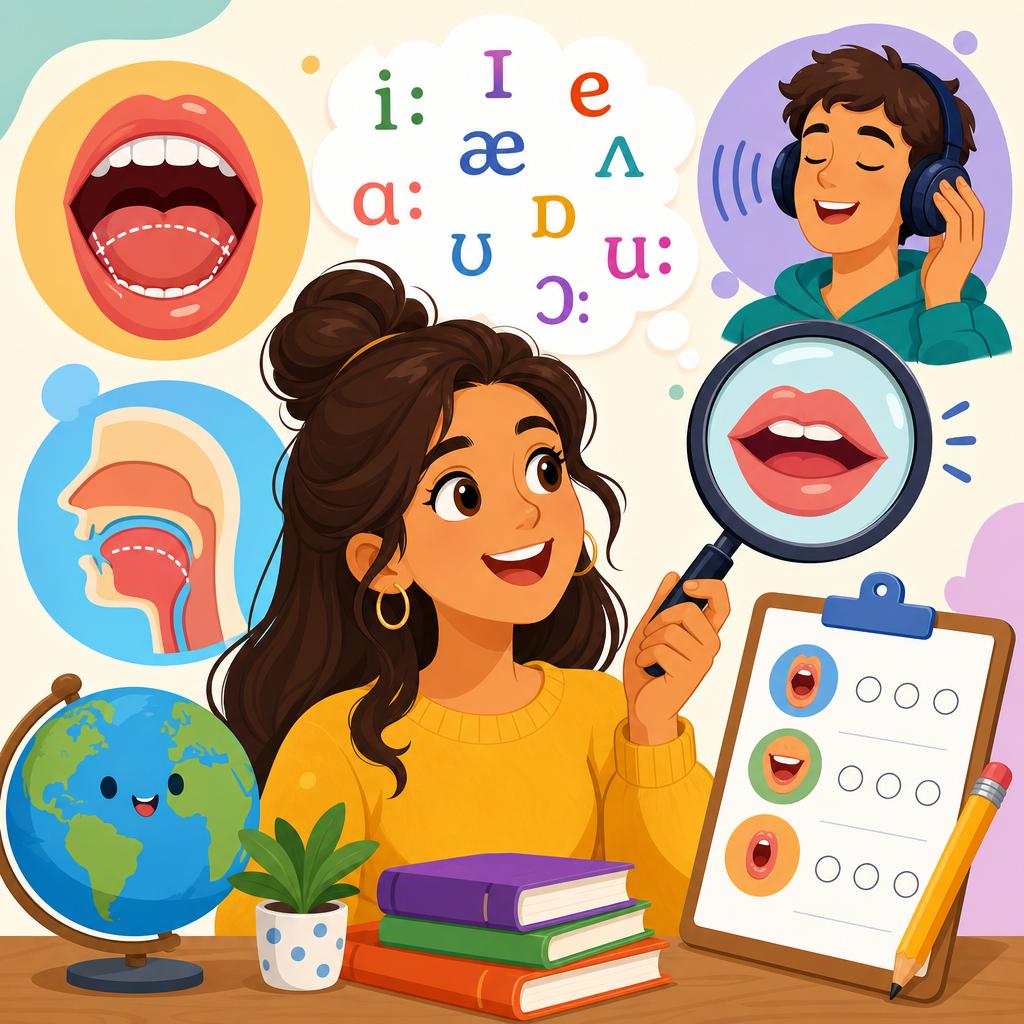
Learning how to read basic IPA symbols for vowels gives ESL learners a practical shortcut to clearer pronunciation, faster dictionary use, and more confident speaking in class, at work, and in daily conversation. The International Phonetic Alphabet, usually called IPA, is a standardized system for writing speech sounds, and vowel symbols are the part most learners meet first because vowels change meaning quickly: ship and sheep, full and fool, cup and cap all depend on small sound differences. In my own pronunciation coaching, I have seen learners improve faster once they stop guessing from English spelling and start checking the IPA line in a reliable learner’s dictionary. That matters because English spelling is inconsistent, accents vary, and many common errors come from vowel confusion rather than grammar. This article is a practical hub for the miscellaneous vowel skills that support speaking: mouth position, common basic symbols, audio practice methods, dictionary habits, self-recording, and a short quiz. If you can identify a symbol, shape your mouth correctly, and compare your sound with a model, you build a repeatable system instead of relying on imitation alone.
What basic IPA vowel symbols mean and why they help ESL speakers
Basic IPA symbols for vowels represent sounds, not letters. That distinction is the first thing most learners need. The letter a can sound different in cat, father, any, and about, but IPA gives each vowel sound its own symbol. In standard learner materials, you will often see short vowels such as /ɪ/ in sit, /e/ in bed, /æ/ in cat, /ʌ/ in cup, /ɒ/ in lot in British dictionaries, and /ʊ/ in book. You will also see long or tense vowels such as /iː/ in see, /ɑː/ in car in British pronunciation, /ɔː/ in law, /uː/ in blue, and /ɜː/ in bird. Many American dictionaries present some of these slightly differently, especially /ɑ/ and /ɔ/, but the practical goal stays the same: connect symbol to sound. Once you know the common symbols, dictionary entries become useful speaking tools instead of mysterious notation. This hub connects naturally to related speaking topics such as word stress, sentence rhythm, connected speech, and minimal pair practice, because vowel accuracy works best when integrated with the rest of pronunciation training.
Mouth position: tongue height, tongue placement, and lip shape
To read IPA vowels well, think in three physical dimensions: how high the tongue is, whether it is forward or back in the mouth, and whether the lips are spread, neutral, or rounded. Front vowels like /iː/, /ɪ/, /e/, and /æ/ are produced with the tongue more forward. Back vowels like /uː/, /ʊ/, /ɔː/, and /ɑː/ place it farther back. High vowels such as /iː/ and /uː/ keep the tongue high; low vowels such as /æ/ and /ɑː/ open the jaw more. Lip rounding matters too: /uː/, /ʊ/, and often /ɔː/ use rounded lips, while /iː/ and /ɪ/ usually have spread lips. In lessons, I tell learners not to chase abstract theory first. Use a mirror. Compare a relaxed short vowel like /ɪ/ in ship with the longer, tenser /iː/ in sheep. For /æ/, drop the jaw more than most learners expect. For /ʌ/, keep the lips neutral and the tongue central. If a sound feels unclear, exaggerate mouth position briefly during practice, then reduce it in natural speech. That physical awareness is often the fastest path to reliable improvement.
The core vowel symbols ESL learners should master first
Start with the symbols that appear constantly in beginner and intermediate vocabulary. /ɪ/ is the vowel in sit: short, front, and fairly relaxed. /iː/ in see is longer and tenser. /e/ in bed is mid-front, while /æ/ in cat is lower with a wider mouth opening. /ʌ/ in cup is central and unrounded; many learners replace it with /a/ or /o/, which changes intelligibility. /ʊ/ in book is short and rounded, while /uː/ in blue is longer and more focused. /ə/, the schwa in about, is the most common unstressed vowel in English and essential for natural rhythm. /ɜː/ in bird appears in stressed syllables in many British-based learner dictionaries, while American pronunciation often uses an r-colored equivalent in words like bird and nurse. Diphthongs, which glide from one vowel quality to another, also appear early: /eɪ/ in say, /aɪ/ in my, /əʊ/ or /oʊ/ in go, /aʊ/ in now, and /ɔɪ/ in boy. Learn them as movements, not static positions. Treat each symbol as a category with small accent differences, not as one mechanical sound used identically everywhere.
Quick-reference table: symbol, keyword, and mouth cue
| IPA symbol | Example word | Simple mouth cue |
|---|---|---|
| /ɪ/ | sit | Lips slightly spread; tongue high-front, relaxed |
| /iː/ | see | Spread lips more; tongue high-front, tense |
| /e/ | bed | Mid-front tongue; jaw moderately open |
| /æ/ | cat | Open jaw wider; tongue low-front |
| /ʌ/ | cup | Neutral lips; central tongue; relaxed jaw |
| /ʊ/ | book | Small lip rounding; high-back, short vowel |
| /uː/ | blue | Rounded lips; high-back, longer vowel |
| /ə/ | about | Very relaxed central vowel in unstressed syllables |
Audio tips that make IPA study actually improve speaking
Many learners memorize symbols but still do not hear the difference in real speech. The missing step is structured listening. Use a learner’s dictionary with high-quality audio, such as Cambridge, Oxford, Longman, or Merriam-Webster, and listen in short loops. First, play one target word five times. Second, repeat immediately, matching length, pitch movement, and mouth shape. Third, record yourself on a phone and compare wave-by-wave if needed in tools like Audacity or even a basic voice memo app. I have found that learners improve more when they alternate minimal pairs: ship/sheep, full/fool, cap/cup, bad/bed. Your ear learns contrast faster than isolated sounds. Also pay attention to unstressed vowels. Many advanced learners overpronounce every syllable and sound unnatural because they ignore schwa reduction. Use slow audio first, then normal speed, then a sentence. For example, compare the vowel in can alone with can in I can go. Finally, do not depend on one accent source only. If you mainly need international intelligibility, compare at least one British and one American model so you can recognize variation without losing your own target.
Common vowel mistakes and how to correct them
The most frequent ESL vowel problems are predictable. Learners whose first language has fewer vowel contrasts often merge /ɪ/ and /iː/, so live and leave sound the same. The fix is not just “make it longer.” /iː/ also has a tenser tongue and usually a more definite lip spread. Another common issue is /æ/ becoming /e/ or /a/. If man sounds like men, open the jaw more and keep the tongue farther forward. If cup sounds like cop, centralize the tongue and relax the lips for /ʌ/. Learners also confuse /ʊ/ and /uː/ because both are rounded; the shorter /ʊ/ in good needs less lip tension and a less extreme tongue position. Schwa is another major obstacle. In multisyllable words such as banana, support, and photographer, weak vowels often reduce toward /ə/. Ignoring that reduction can make speech understandable but heavy and nonnative in rhythm. Correction works best when tied to real vocabulary, not random lists. Build a personal error notebook with problem words from meetings, class presentations, or conversations. Then add IPA, a mouth cue, and one sentence for each word.
How to use dictionaries, transcripts, and self-recording as a speaking hub
This miscellaneous hub matters because vowel reading is not a separate academic skill; it supports every speaking task. When you learn a new word, check four things together: IPA, audio, stress pattern, and one example sentence. That habit creates stronger memory than translation alone. If you use YouTube transcripts, podcast scripts, or presentation notes, mark difficult vowel words before speaking practice. During coaching sessions, I often ask learners to highlight only three symbols for a week, such as /ɪ/, /iː/, and /ə/, because focused repetition creates faster gains than trying to master the full chart at once. For self-recording, use a simple cycle: read a sentence, listen back, compare with a model, then rerecord. Keep the sample short enough that you can notice one target vowel clearly. This page also functions as a hub for related miscellaneous speaking resources: pronunciation apps, shadowing routines, mouth posture drills, accent comparison guides, and classroom warmups. If your study system includes those linked skills, IPA stops being theory and becomes a tool for everyday speaking decisions.
Mini-quiz and next steps
Test yourself with five quick checks. First, which symbol usually matches the vowel in sheep: /ɪ/ or /iː/? Second, which sound is more central and relaxed in the first syllable of about? Third, which pair contrasts /ʊ/ and /uː/: full/fool or bed/bad? Fourth, in cat, should the jaw open more or less than in bed? Fifth, when a dictionary shows IPA beside a word, is it showing spelling or pronunciation? The correct answers are /iː/, /ə/, full/fool, more, and pronunciation. If any answer felt uncertain, return to one section and practice with audio for ten minutes today. The main benefit of reading basic IPA symbols for vowels is simple: you stop depending on unreliable spelling and start using a clear map of spoken English. Master a small set of symbols, connect each one to mouth position, and verify it with recording. Then keep building through regular speaking practice, one word and one sentence at a time.
Frequently Asked Questions
What is the IPA, and why should ESL learners focus on vowel symbols first?
The IPA, or International Phonetic Alphabet, is a standardized system linguists, teachers, and dictionaries use to represent speech sounds clearly and consistently. For ESL learners, it is especially useful because English spelling is often unpredictable. The same letter can sound different in different words, and different spellings can represent the same sound. IPA solves that problem by showing the sound directly instead of relying on spelling patterns alone.
Vowel symbols are usually the best place to start because vowels carry many of the most important pronunciation contrasts in English. Small vowel changes can completely change meaning, as in ship /ɪ/ versus sheep /iː/, full /ʊ/ versus fool /uː/, or cup /ʌ/ versus cap /æ/. If you can recognize and produce these basic vowel differences, your speech becomes easier to understand very quickly.
Learning IPA vowels also makes dictionary use much faster. Instead of guessing pronunciation from spelling, you can look up a word and immediately see how its stressed vowel sounds. This is valuable in class, in meetings, in presentations, and in everyday conversations where clear pronunciation improves confidence. In short, vowel IPA is practical, not just academic: it helps you hear better, pronounce more accurately, and correct yourself more independently.
How do I read basic IPA vowel symbols without feeling overwhelmed?
The easiest approach is to learn vowel symbols in small, meaningful groups instead of trying to memorize the entire chart at once. Start with the most common short and long contrasts that cause communication problems for learners: /ɪ/ and /iː/, /ʊ/ and /uː/, /ɛ/ and /æ/, and /ʌ/ and /ɑː/ if those appear in your target accent. Pair each symbol with a keyword you can remember, such as /ɪ/ in sit, /iː/ in see, /ʊ/ in book, /uː/ in food, /ɛ/ in bed, and /æ/ in cat.
It also helps to stop thinking of IPA symbols as strange letters and start treating them as visual labels for sounds. Some symbols may look familiar, but in IPA they do not always match normal English spelling. For example, /iː/ is not simply the letter “i,” and /æ/ is a distinct vowel sound, not just an unusual spelling. Your goal is not to “read” IPA the same way you read ordinary text. Your goal is to connect each symbol to a mouth shape, a sound, and a sample word.
A practical routine works best: choose two or three symbols, listen to audio examples, repeat them aloud, compare minimal pairs, and then check them in dictionary entries. As you repeat this process, the symbols become familiar very quickly. Most learners do not need every IPA symbol immediately. They need the core vowel symbols that appear often and affect intelligibility the most. Once those are comfortable, the rest of the chart becomes much easier to understand.
How does mouth position help me pronounce IPA vowels correctly?
Mouth position is one of the most important tools for learning vowel sounds because vowels are shaped by the tongue, lips, and jaw. Unlike many consonants, vowels depend on subtle changes inside the mouth. When you learn a symbol, you should also learn what your mouth is doing while you say it. This makes pronunciation more physical, more repeatable, and much easier to self-correct.
There are three simple things to pay attention to. First, notice whether your mouth is more open or more closed. For example, /iː/ as in sheep is made with a relatively closed mouth position, while /æ/ as in cat needs a wider, more open jaw. Second, notice whether your tongue is more forward or farther back in the mouth. Sounds like /iː/ and /ɛ/ are more fronted, while /uː/ and /ʊ/ are farther back. Third, check your lips. Some vowels are produced with relaxed lips, while others, especially /uː/ and /ʊ/, often involve rounding.
If you mix up vowels, mouth position often explains why. A learner who says ship and sheep the same way may be keeping the tongue too high and tense for both sounds. A learner who struggles with cap versus cup may not be opening the jaw enough for /æ/ or may be centralizing both vowels into one sound. Use a mirror, record yourself, and compare your mouth shape to a teacher or reliable pronunciation video. Even a small adjustment in tongue height, jaw opening, or lip rounding can make a major difference in clarity.
What are the best audio tips for hearing and practicing basic IPA vowel differences?
Audio practice is essential because many vowel errors begin as listening problems before they become speaking problems. If your ear does not clearly recognize the difference between two vowels, your mouth will usually not produce the difference consistently either. The best method is to use short, repeated listening with focused contrasts rather than long, passive listening. In other words, do not just hear English in general; listen for one specific vowel difference at a time.
Minimal pairs are especially effective. These are word pairs that differ by only one sound, such as ship and sheep, full and fool, or cup and cap. Listen to each pair several times, pause the audio, and say each word immediately after the speaker. Try shadowing, which means repeating with the same rhythm and timing as closely as possible. This helps you copy not only the vowel quality but also natural stress and length.
Another strong strategy is to combine listening, speaking, and recording. First, listen to a model. Second, repeat it. Third, record yourself. Fourth, compare your version to the original. Many learners notice mistakes immediately when they hear themselves back. It is also helpful to slow audio slightly at the beginning, especially if you are distinguishing tense and lax vowels or long and short patterns. Use trustworthy sources such as learner dictionaries, pronunciation apps, or teacher-made recordings with clear models in either British or American English. Most importantly, be consistent. Five to ten minutes of focused vowel listening every day is usually more effective than one long practice session once a week.
How can I quiz myself on basic IPA vowels and know whether I am improving?
A mini-quiz is one of the best ways to turn recognition into real skill. Start with quick identification tasks. Look at a symbol like /ɪ/, /iː/, /æ/, /ɛ/, /ʊ/, or /uː/ and match it to a keyword. Then reverse the exercise: look at a word and choose the correct vowel symbol. For example, ask yourself which vowel appears in sit, see, bed, cat, book, and food. This checks whether you can connect sound, symbol, and word in both directions.
You can also create listening quizzes. Play a recording of two similar words and decide which one you heard. Then check the IPA transcription in a dictionary. Another effective self-test is reading aloud from a short list of words that contain target vowels, recording yourself, and comparing your pronunciation to a model. If you can consistently hear the difference, choose the correct symbol, and pronounce the words in a way that listeners understand, you are making real progress.
Improvement is not only about sounding perfect. It is about becoming more accurate, faster at decoding dictionary entries, and more confident in real communication. Good signs include recognizing familiar IPA symbols more quickly, making fewer mistakes with common minimal pairs, and noticing when a vowel sound feels wrong in your mouth. Keep your mini-quizzes short and regular. Ten words at a time is enough if you review them often. Over time, these small checks build strong pronunciation habits that carry over into class discussions, work conversations, and everyday speaking.





