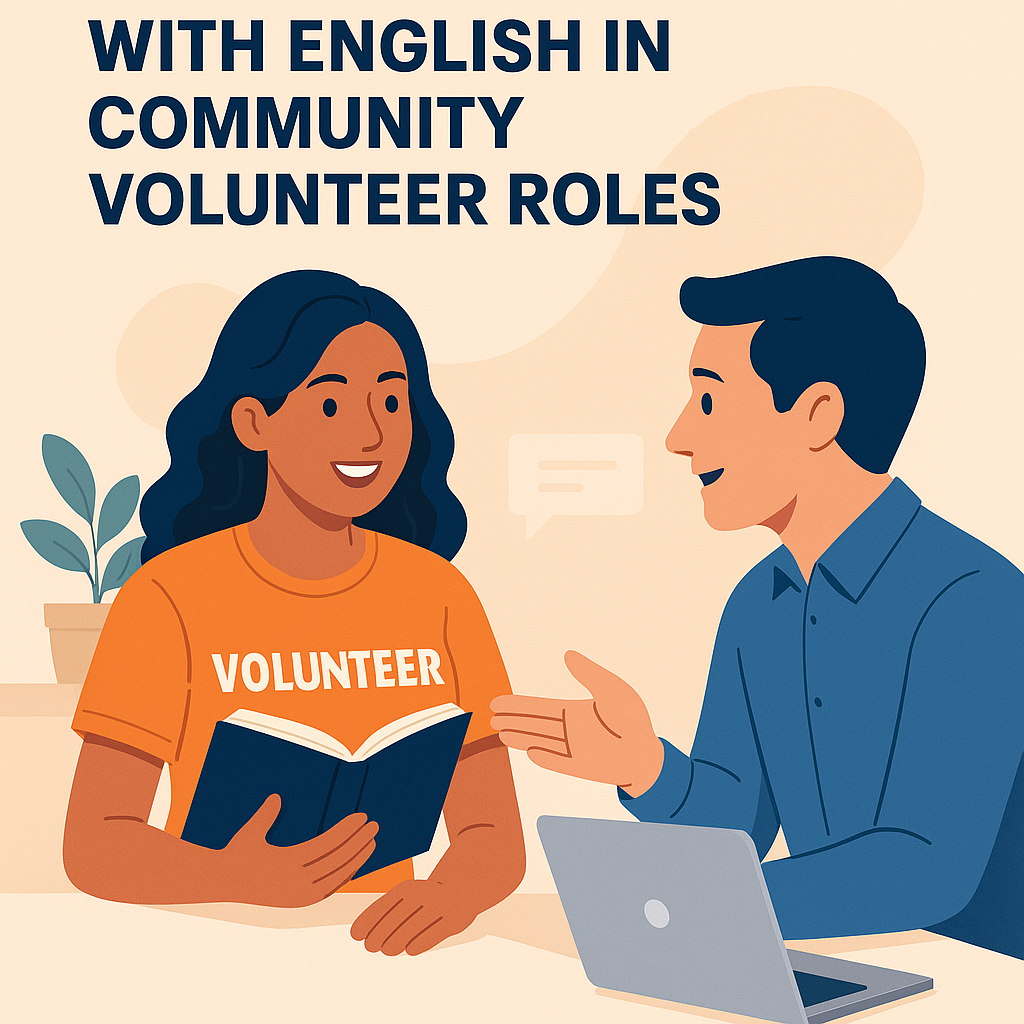
When people think about learning English, it’s often associated with formal classrooms, textbooks, and examinations. However, acquiring language proficiency doesn’t have to remain confined within academic walls. Volunteering in community roles offers an invaluable platform to not only practice English but to build deep-rooted confidence in using it. In this article, we explore how participating in community volunteer roles provides a practical, engaging route to improving one’s English skills and why it’s significant for both personal growth and community development.
First, let’s define what we mean by “confidence with English.” Confidence in language involves more than just knowing vocabulary and grammar. It encompasses the ability to communicate effectively and comfortably in various situations, to comprehend and respond accurately, and to do so with a level of ease that facilitates continual engagement and learning. Confidence is crucial—it empowers individuals to participate in conversations, voice their ideas, and thus integrate more fully into their communities.
Volunteering allows individuals to immerse themselves in real-world English conversations that occur naturally in community settings. It provides diverse opportunities for learning, from chatty interactions at a charity shop to explaining something in a kind and accessible way at a community center. This article delves into the multifaceted aspects of how volunteering fosters confidence with English, discusses the types of roles available, and highlights the benefits observed in real-life scenarios.
Engaging Through Direct Interaction
When volunteering, individuals often find themselves in roles that require a high level of interaction. Such roles might include helping at a local animal shelter, participating as a guide in a museum, or assisting at a food bank. In these settings, volunteers practice speaking in diverse environments with varied audiences, ranging from fellow volunteers to beneficiaries seeking assistance.
Consider the example of volunteering at a local library’s storytime for children. Here, a volunteer might be responsible for reading aloud stories to groups of children, narrating tales with enthusiasm, and engaging the audience with questions. This role necessitates using clear and expressive language and responding to children’s queries—a perfect way to practice English with interactive and dynamic feedback.
Direct engagement is beneficial as it pushes volunteers to adapt their language use according to their audience’s needs, an experience not often encountered in classroom settings. Furthermore, it allows them to practice listening skills, which is a vital component of building language confidence. Through these interactions, volunteers grow more comfortable expressing themselves, thereby boosting their overall confidence with English.
Developing Cultural Competence
Beyond language, cultural competence is a critical component of effective communication. Volunteering exposes individuals to the cultural contexts that shape how English is used in community settings. Different roles require volunteers to understand and navigate cultural nuances, which can significantly enhance language comprehension and usage.
For instance, volunteering at a community kitchen offers exposure to diverse cultural backgrounds and perspectives. Volunteers may work with teammates from different countries, leading to shared stories, cultural practices, and culinary traditions. Understanding idiomatic expressions and cultural references becomes a natural extension of language learning.
Through these experiences, volunteers gain an appreciation for the richness and diversity of English in a culturally sensitive world. They learn not to just speak but how to connect meaningfully with others, thus reinforcing their confidence in any cultural context.
Structured Learning with Real-World Impact
Community service roles often involve specific tasks or projects that offer structured learning while making a tangible difference. Whether organizing events or managing resources, planning and executing projects provide a platform for applying language skills in a structured yet flexible manner.
For example, assisting in organizing a local food drive might include activities such as writing emails to potential sponsors, making phone calls to coordinate logistics, and creating promotional materials to encourage community participation. These tasks involve a blend of different English language skills, providing a comprehensive practice ground.
Here’s an example of a structured plan for a community event:
| Task | Description | Language Skills Used |
|---|---|---|
| Advertising | Create flyers and social media posts | Writing, reading comprehension |
| Communication | Contact vendors and participants | Speaking, listening |
| Coordination | Organize and schedule activities | Reading, writing, speaking |
By contributing to these practical tasks, volunteers gain real-world experience and an understanding of language variation across different contexts—business-like communication, casual conversations, and more. Each new project reinforces the notion that English is not just a subject to be studied but a tool to be utilized effectively, further cementing their confidence.
Building Peer Support Networks
Volunteering is not just about the duties performed; it’s also about the people met along the way. A communal effort in volunteering fosters supportive peer interactions, essential for gaining confidence in language skills. Peers often serve as informal mentors, offering guidance, encouragement, and instant feedback.
An example from a local environmental clean-up program illustrates this well. Volunteers work in teams to clean parks and natural spaces, communicating constantly to coordinate effective strategies. As team members from diverse backgrounds swap stories and offer encouragement, those improving their English have the chance to engage in informal yet meaningful conversations.
These supportive networks are crucial as they create a safe space for making mistakes and learning from them. When volunteers feel encouraged by their peers, it enhances their willingness to try speaking English in new ways, thereby instilling a deeper confidence in everyday communication.
Long-term Personal and Professional Growth
The confidence gained from volunteering does not only remain in these community settings. It translates into broader opportunities for personal and professional growth. Enhanced English skills can improve job prospects, provide access to further education, and open doors to more influential roles within one’s community.
Consider a volunteer involved with a neighborhood educational nonprofit, who gradually assumes more responsibilities, such as leading meetings and developing projects. These experiences nurture not only language skills but leadership and organizational acumen. Over time, the volunteer not only becomes more linguistically adept but also capable of influencing and leading change in their communities.
In this way, volunteering serves as a stepping stone to greater achievements, reinforcing the knowledge that becoming proficient and confident in English can lead to both immediate and long-lasting benefits.
Conclusion
Building confidence with English through community volunteer roles presents a dynamic and enriching pathway far beyond conventional language learning. By embracing roles that require direct interaction, cultural competence, structured engagement, and peer support, volunteers significantly improve their English abilities in practical, impactful contexts.
The advantages are manifold—not only do individuals enhance their language proficiency and confidence, but they also contribute positively to their communities, creating a ripple effect of empowerment. Volunteers experience an increase in self-esteem and value, understanding the effective use of language as a key to connection and influence.
If you’re eager to improve your English while making a difference, consider exploring volunteer opportunities in your community as the next step. Engage with local organizations, inquire about programs, and start applying your English skills in meaningful ways. Amidst these experiences, you’ll find not just a new level of language confidence but a sense of belonging and purpose.
Frequently Asked Questions
1. How can volunteering in the community help improve my English skills?
Volunteering in the community is an ideal way to practice English in real-world settings, which goes beyond what you might learn from textbooks. When you volunteer, you’re not just using English in controlled scenarios—you’re engaging with a diverse range of people, each bringing their own language nuances and styles. This variety is essential in helping you understand different dialects, slang, and informal language, which aren’t always covered in a classroom setting. By communicating regularly, you gain firsthand experience in listening and responding, which increases both your comprehension and speaking capabilities. Additionally, volunteering often involves teamwork, discussions, and problem-solving, all of which require you to use English effectively. This repeated practice can help solidify your understanding of syntax, vocabulary, and grammar rules in a way that feels natural and effortless.
2. What kind of community volunteer roles are best for practicing English?
There are numerous volunteer roles available, each offering unique opportunities to practice English. Some common roles include helping at local libraries, assisting at food banks, participating in community gardening, or working with youth in educational programs. Choose a role that not only piques your interest but also requires you to interact frequently with others. For instance, if you volunteer at a local library, you might be interacting with patrons, organizing events, or leading ESL story hours. In food banks, you might coordinate distributions, requiring communication with both beneficiaries and fellow volunteers. The key is to find a position where verbal communication is a significant aspect of the job. Whatever role you choose, remember that the goal is to engage as actively as possible, pushing beyond comfort zones to embrace speaking, listening, reading, and writing in English.
3. What are the social benefits of volunteering in community roles while improving my English?
Volunteering in community roles not only boosts your English skills but also amplifies your social circle and sense of community. As you engage with various community members, you build new friendships and professional networks, creating a support system that extends beyond the volunteer role itself. It makes you feel part of something larger, increasing self-worth and belonging. In environments where people are working towards a common cause, you experience camaraderie and develop interpersonal skills while practicing English. These social interactions are vital as they foster understanding and empathy, providing common grounds where language barriers can be surmounted. Furthermore, volunteering in diverse groups often introduces cultures other than your own, enriching your experience and providing deeper insights into language through cultural context.
4. Can volunteering boost my confidence in using the English language?
Absolutely, volunteering is an excellent confidence builder for English language use. In a volunteer role, you’re contributing to meaningful causes while practicing language skills in a practical, low-pressure setting. The supportive nature of most volunteer environments means that people are understanding and patient, allowing for mistakes and providing constructive feedback. As you engage more and take on responsibilities, you’ll naturally start to feel more comfortable speaking, writing, and listening in English. Additionally, achieving small successes—like successfully communicating an idea or understanding a complex conversation—enhances your self-esteem and encourages you to push beyond your limits, leading to greater confidence in everyday English usage.
5. What should I expect when starting a community volunteer role to improve my English?
When you start a community volunteer role, expect a gradual learning curve. Initially, the language and cultural aspects can be overwhelming. Recognize that everyone’s language journey is unique and improvement comes with time and practice. Start by observing how things operate, listen actively to how others communicate, and don’t hesitate to ask questions. It’s essential to maintain a curious and open mindset—use each conversation as a learning opportunity. You’ll find that over time, you begin to anticipate language cues, become more adept at understanding different accents and expressions, and reply with greater confidence. Embrace any feedback and be patient with yourself; recognize that progress in language acquisition is a marathon, not a sprint. By engaging fully with your role and taking an active stake in conversations, you contribute meaningfully to the community while enhancing your English skills.