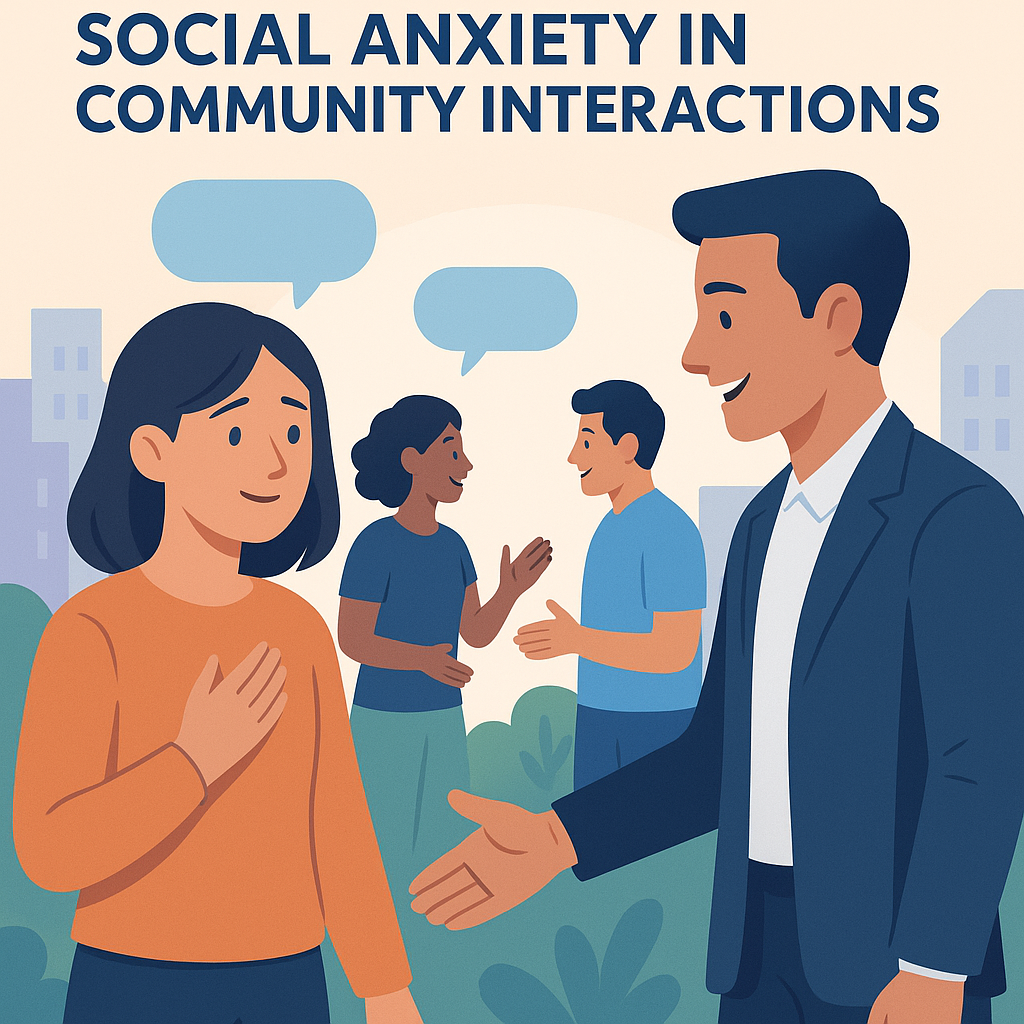
Social anxiety, a term often misunderstood yet affecting many, plays a significant role in hindering our interactions with others in community settings. Defined broadly, social anxiety refers to the fear of negative evaluation or judgment during social or performance situations. This fear triggers a cascade of physical symptoms such as sweating, trembling, or a rapid heart rate, often fostering avoidance behaviors that can severely limit one’s ability to engage effectively with others.
Understanding social anxiety is crucial because it affects one’s ability to partake in everyday social environments. Whether it’s attending community meetings, social gatherings, or participating in group activities, individuals experiencing social anxiety often find themselves crippled by the overwhelming fear of being scrutinized. This can lead to a reduced quality of life, as these interactions contribute to personal growth, career advancement, and the development of meaningful relationships. Therefore, effectively managing and overcoming social anxiety is not merely about alleviating symptoms but about reclaiming one’s capacity to navigate social environments freely and confidently.
Understanding the Roots of Social Anxiety
To effectively tackle social anxiety, it’s essential to understand its roots. Social anxiety often stems from a combination of genetic, environmental, and psychological factors. For instance, individuals with a family history of anxiety disorders may have a predisposed risk. Additionally, environmental aspects such as childhood experiences and societal expectations can play substantial roles. Constant exposure to overly critical environments or high-pressure situations may contribute to the development of social anxiety.
An example to consider is the case of Emily, who grew up in a household where perfection was the norm. Any mistake was met with undue criticism, which led her to develop a fear of judgment from peers, translating into social anxiety. Understanding these origins allows individuals like Emily to start addressing their anxiety by changing their perceptions and reactions to social situations.
Cognitive Behavioral Techniques
Cognitive Behavioral Therapy (CBT) is a proven method for managing social anxiety. CBT involves identifying and challenging negative thought patterns that fuel anxiety. This process requires recognizing distorted perceptions and replacing them with more realistic observations.
For example, when John, an individual with social anxiety, believes that everyone at the community club is judging him negatively, CBT would encourage him to question these assumptions. Is it truly everyone or just a personal perception? By reframing his thoughts, John slowly diminishes the power of anxiety over time. Adopting CBT exercises into daily routines can significantly alter how social interactions are perceived and managed, thereby reducing anxiety levels.
Practicing Social Skills in Safe Environments
Practicing social skills in controlled, low-pressure environments provides an excellent opportunity for individuals to gradually confront their fears. Joining clubs or groups that align with personal interests can offer a supportive backdrop for practice. These settings not only provide common ground for discussion but also allow repetitive exposure, a key element in overcoming anxiety.
Consider Mike, who used to feel anxious speaking in public. By joining a local book club, he gradually became comfortable sharing his thoughts in a small group setting. As he grew confident within this secure circle, his social prowess naturally extended to larger, more intimidating settings. Safe spaces for practice transform fearful predictions into manageable experiences, altering one’s approach to community interactions.
Utilizing Relaxation Techniques
Relaxation techniques, such as deep breathing exercises and mindfulness, contribute significantly to reducing the physical symptoms associated with social anxiety. These techniques help in calming the body’s stress responses and promoting a sense of control during social interactions.
Deep breathing, for instance, can be practiced anywhere, such as before entering a room full of people. By focusing on slow, deep breaths, individuals can flood their brain with more oxygen, inducing a calming effect that counteracts the symptoms of anxiety. Thus, integrating relaxation practices into one’s daily routine serves as an essential tool to manage and overcome social anxiety effectively.
Incorporating Visualization Strategies
Visualization involves mentally rehearsing social situations in advance, picturing oneself succeeding in these scenarios without fear or failure. Psychologists often recommend this strategy to help individuals anticipate social interactions positively rather than with dread.
Take Sarah, who often finds herself anxious about speaking up during community meetings. By visualizing her contribution being well-received and valuable, she prepares her mind to anticipate success, which significantly lowers anxiety levels during the actual event. Visualization empowers individuals to replace fear-driven predictions with confidence-driven expectations.
The Role of Community Support
Building a support network within the community is vital in overcoming social anxiety. Surrounding oneself with understanding and empathetic individuals who encourage rather than criticize can make a world of difference. Support groups specifically for social anxiety sufferers can also provide shared experiences and collective strategies, reducing feelings of isolation.
- Support Groups: Offer a platform to share experiences and coping strategies
- Local Clubs: Foster connections based on mutual interests
- Therapy Groups: Provide a professional yet shared space for discussion
When James joined an anxiety support group, he learned from others who faced similar challenges. Sharing stories fostered a sense of belonging and reduced his isolation, motivating him to face social interactions more openly. Community support fosters resilience, offering a buffer against social anxiety’s limitations.
Tracking Progress with a Journal
Keeping a journal can be incredibly helpful for individuals seeking to overcome social anxiety. This practice not only tracks progress over time but also provides insight into patterns and triggers of anxiety. Writing about experiences allows individuals to reflect on situations that might have triggered anxiety and evaluate the strategies employed to manage it.
For example, to evaluate his progress, Tom documents situations that made him anxious, his feelings at the time, and what coping strategies he used. Over time, Tom notices a decline in anxiety symptoms during community interactions, encouraging continued effort and giving a clear sense of progress and accomplishment. Journaling becomes a tool not only for reflection but also for motivation in overcoming social hurdles.
Seeking Professional Help
When social anxiety becomes extremely disruptive, seeking professional help might be necessary. Therapists can offer structured guidance and employ therapeutic techniques tailored to the individual’s needs. Therapy sessions provide a non-judgmental space to explore underlying issues and work on addressing them comprehensively.
Take the example of Alice, whose social anxiety was impeding her daily life. Opting for therapy allowed Alice to embark on a systematic path towards understanding and coping with her anxiety. Therapists equipped her with coping mechanisms and helped explore unresolved issues that compounded her anxiety, ultimately leading to marked improvement in her ability to interact within the community.
Conclusion and Call-to-Action
In conclusion, overcoming social anxiety in community interactions is about regaining the ability to engage without the weight of overwhelming fear and self-doubt. By understanding the roots of social anxiety, employing coping strategies such as CBT, practicing in safe environments, utilizing relaxation and visualization techniques, leaning on community support, tracking progress, and seeking professional help if needed, individuals can significantly improve their social comfort and quality of life.
Remember, progress in overcoming social anxiety is subjective and differs for each person. What’s crucial is the consistent application of these strategies and the patience to allow gradual change. If you’re someone struggling with social anxiety, take that first step today. Reach out to a support group, start a journal, or explore professional help. Each step is significant, and every effort towards overcoming anxiety contributes to a more fulfilling and connected life within your community.
Frequently Asked Questions
1. What exactly is social anxiety and how does it manifest in community interactions?
Social anxiety is a common mental health issue characterized by an intense fear of being judged, embarrassed, or negatively evaluated by others. It’s more than just shyness or being introverted; it’s a pervasive fear that can significantly impact one’s daily life and ability to interact with others in community settings. This fear often leads to physical symptoms such as sweating, trembling, a racing heart, and difficulty speaking. In social situations like community gatherings, meetings, or casual interactions, these symptoms can become overwhelming, making the person feel as though they are under a spotlight and prompting avoidance behaviors. The constant worry about being scrutinized or judged poorly can make even routine activities feel daunting and exhausting, ultimately leading to isolation and missed opportunities for social engagements.
2. Why do people with social anxiety often avoid community interactions, and what can be done to change this behavior?
People with social anxiety often avoid community interactions because the fear and anxiety they experience in these situations can feel intolerable. The mind becomes preoccupied with thoughts of potential criticism or humiliation, creating a mental script of negativity that they assume will play out if they engage with others. This leads to avoidance as a self-preservation tactic, helping them temporarily escape the discomfort but reinforcing the anxiety long-term. To combat this avoidance behavior, one effective strategy is gradual exposure, where individuals slowly and systematically face their fears in manageable doses. By starting with less intimidating situations and gradually working their way to more challenging ones, they can build resilience and confidence over time. Cognitive-behavioral therapy (CBT) and mindfulness techniques also play crucial roles in helping individuals reframe negative thoughts and reduce anxiety’s hold on their lives, making them less likely to avoid social interactions.
3. How can someone with social anxiety prepare for community events to minimize anxiety?
Preparing for community events when dealing with social anxiety requires a combination of practical strategies and mental preparation. Start by gathering as much information as possible about the event, such as who will be there, the agenda, and any expectations. Create a mental or physical list of potential conversation topics and questions that can keep dialogues flowing smoothly. Practice deep breathing exercises or mindfulness meditation beforehand to help calm the nervous system and reduce immediate anxiety symptoms. Visualization is another powerful tool; imagine a successful encounter, focusing on feeling confident and at ease in the social environment. Also, consider arriving early to acclimate to the setting before it fills up, which can mitigate the initial burst of anxiety when walking into a crowded room. Lastly, set small, achievable goals for interaction, like speaking to one or two people, to help build confidence gradually.
4. What techniques can be employed during a social interaction to manage anxiety as it happens?
During a social interaction, several techniques can help manage anxiety in real-time. First, focus on slow, mindful breathing. Inhale deeply through the nose, hold for a couple of seconds, and exhale slowly through the mouth. This breathing pattern helps regulate the heart rate and calm the nerves. Next, try concentration-based techniques like grounding. This involves redirecting focus from internal anxiety to something external, such as the texture of a chair, ambient sounds, or conversations around you, thus breaking the cycle of anxious thoughts. Using positive affirmations can also help by encouraging oneself internally with statements like, “I am comfortable in this setting,” or “I am as capable and valuable as everyone else here.” Engaging genuinely in conversation by listening actively and expressing honest curiosity can shift attention away from self-conscious thoughts onto the interaction itself. When anxiety levels begin to rise, taking a brief time-out, such as excusing oneself to the restroom or stepping outside for fresh air, can provide a chance to recollect and return more composed.
5. When should someone seek professional help for their social anxiety, and what treatment options are available?
If social anxiety consistently interferes with daily life, emotional health, and relationships, or if avoidance leads to isolation and prevents engagement in community life, it may be time to seek professional help. This is especially true if anxiety prompts a sense of hopelessness or persistent distress. Treatment options for social anxiety are varied and effective. Cognitive-behavioral therapy (CBT) is one of the most successful approaches, helping individuals to recognize and change negative thought patterns and behaviors associated with anxiety. Medication, such as selective serotonin reuptake inhibitors (SSRIs), can also be an option to consider, often used alongside therapy to manage symptoms. Other therapeutic approaches include acceptance and commitment therapy (ACT), which promotes psychological flexibility and helps individuals commit to behavioral changes even in the face of anxiety. Finding support groups or therapy groups tailored to social anxiety can also provide a sense of community and shared understanding, facilitating recovery. Always consult with a mental health professional to tailor a treatment plan that fits personal needs and ensures optimal support through the journey of overcoming social anxiety.