
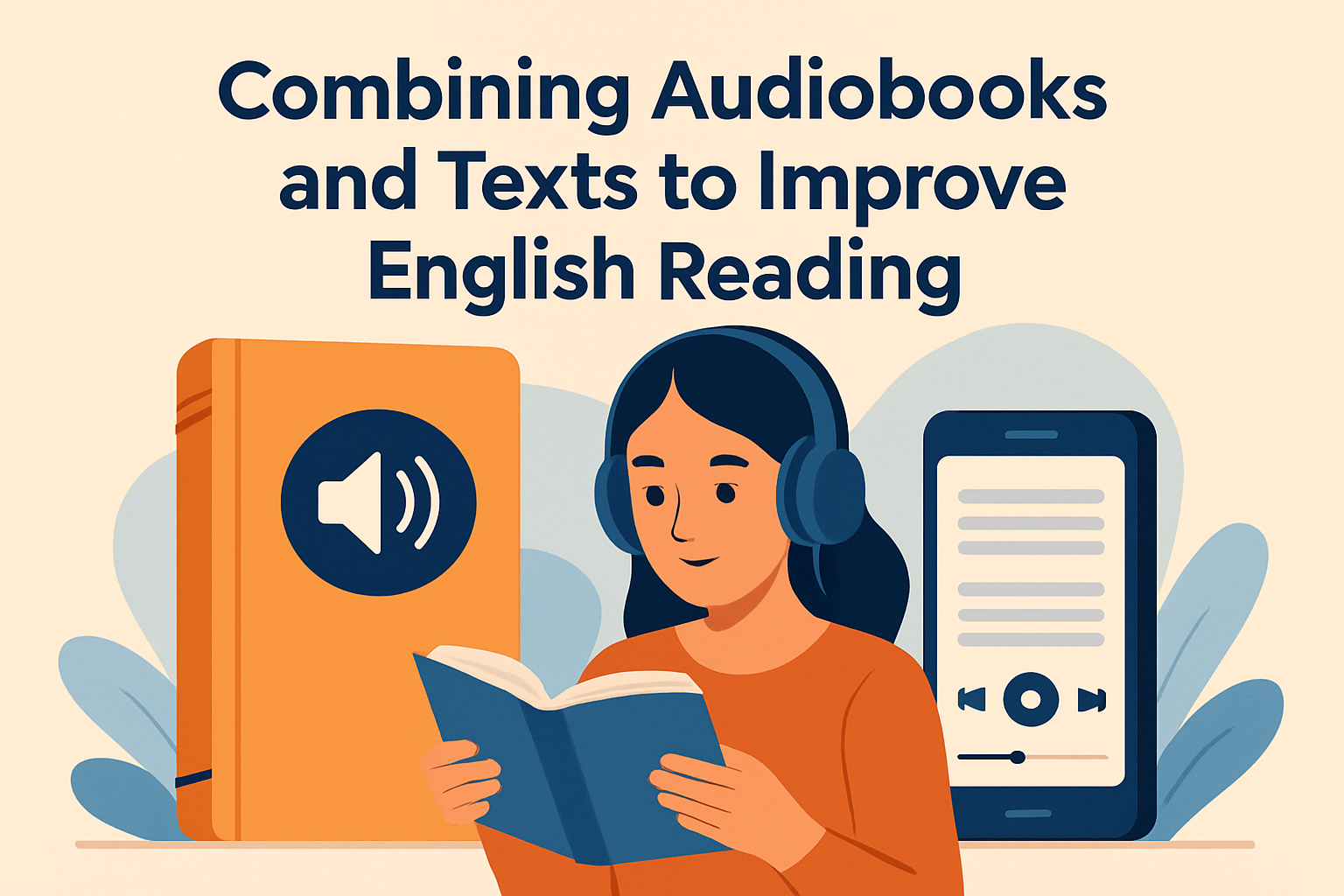
In today’s fast-paced world, communication is key, and English has emerged as a global lingua franca. For many learners around the world, mastering English, particularly reading comprehension, is crucial. Audiobooks, in tandem with traditional text, offers a robust approach to improving English reading skills, capable of transforming learning experiences and opening doors to global opportunities. By combining auditory and visual stimuli, learners can enhance their understanding and retention of the language, effectively bridging gaps in comprehension. This method matters significantly as it not only caters to diverse learning styles but also leverages modern technology to facilitate an interactive and engaging learning environment.
Understanding the Benefits of Dual Modality Learning
Dual modality learning, which involves using both auditory and visual inputs, is a powerful educational strategy. This approach helps to enhance memory and retention by engaging multiple senses, allowing learners to make connections between what they hear and what they see. For instance, while reading a complex literary text, an audiobook can provide correct pronunciation of words and inflection that aids in understanding context. A real-world example is a non-native English speaker who might struggle with the nuances of Shakespeare. Listening to an audiobook while reading the text can illuminate difficult passages and bring the characters to life.
Combining Audiobooks with Texts for Enhanced Vocabulary Acquisition
One of the greatest benefits of using audiobooks with texts is the potential for vocabulary enhancement. When learners encounter new words in text while hearing them pronounced correctly in an audiobook, they are more likely to remember the word. This dual reinforcement strategy is crucial for language learners who need to grasp pronunciation and meaning simultaneously. Consider a student using this method while studying for an English vocabulary test. They might typically spend hours memorizing definitions, whereas listening to an audiobook while reading the corresponding text can dramatically cut down learning time by contextualizing each word.
- Efficient Learning: Reinforces new vocabulary by hearing it in context.
- Correct Pronunciation: Offers immediate feedback on pronunciation.
- Contextual Understanding: Provides context, making new words more relatable.
Improving Pronunciation and Intonation through Audiobooks
Pronunciation and intonation are inherently challenging aspects of language learning. Audiobooks serve as an excellent tool to address this challenge by offering learners the chance to hear native speakers effortlessly navigate their language. When combined with texts, audiobooks help learners by highlighting the nuances of pronunciation and intonation which are often absent in written form. For example, a student reading a transcript of a play can truly appreciate the ebb and flow of dialogues, and character interactions when listening to an audiobook version performed by skilled voice actors.
Enhancing Reading Fluency and Pace
Fluency in reading is not just about speed; it’s about pace, fluidity, and understanding. Audiobooks can guide learners in achieving a natural reading rhythm. Listening to native speakers models fluent reading, and when synchronized with the text, learners can mimic this natural pace. For an English learner who tends to pause frequently over difficult words, audiobooks can act as a guide to maintain a steady reading pace. Their narratives can aid in reducing hesitations, making the reading experience seamless and enjoyable.
Real-World Application of Audiobooks and Texts in Classrooms
Combining audiobooks and texts isn’t limited to individual study; it has practical applications in classroom settings as well. Teachers increasingly recognize the value of using these tools to cater to various learning styles, allowing students to choose the method that aligns best with their personal preferences. In classrooms around the world, particularly those with students who have English as an additional language, audiobooks supplement texts to offer a multisensory learning experience. An example is a literature class reading “Pride and Prejudice”, where students listen to an audiobook during silent reading sessions. This method enriches their comprehension and fosters more dynamic class discussions.
| Benefits | Classroom Application |
|---|---|
| Improved Comprehension | Students understand complex texts with audio guidance. |
| Increased Engagement | Interactive learning keeps students motivated. |
| Diverse Learning Styles | Accommodates auditory, visual, and kinesthetic learners. |
Exploring the Future of Language Learning Techniques
With technological advancements, the integration of audiobooks with texts represents only the beginning of multilingual and language learning innovation. As voice recognition and AI technologies continue to evolve, future language learning resources will likely incorporate interactive speech-based interfaces, further refining pronunciation and allowing for real-time corrective feedback. Such immersive experiences could potentially reshape how new languages are learned and taught. Imagine a world where students have access to an interactive AI tutor that adjusts in real-time to their learning progress, ensuring personalized learning paths tailored to individual needs and capabilities.
Conclusion: Embrace Audiobooks and Texts for Language Mastery
In summary, combining audiobooks with traditional texts offers an enriched pathway for honing English reading skills. It leverages dual modality learning to enhance comprehension, vocabulary acquisition, pronunciation, and fluency. This method caters to diverse learning styles and has tangible applications in educational environments, both at an individual level and in classrooms. Embracing audiobooks and text synergy not only accelerates language learning but also equips students with a comprehensive understanding of English, fostering confidence and proficiency. We encourage learners and educators alike to integrate these tools in their language learning repertoire for more effective outcomes. Take the next step in enhancing your English reading skills by beginning a book today with its corresponding audiobook and observe the transformation in your comprehension and fluency.
Frequently Asked Questions
1. How can combining audiobooks with traditional texts improve my English reading skills?
Combining audiobooks with traditional texts is a highly effective method to reinforce and enhance English reading skills. When you listen to an audiobook while simultaneously reading the text, it engages multiple senses – auditory and visual. This dual engagement helps improve word recognition by hearing the correct pronunciation, pacing, and tone, allowing you to connect the written word to its spoken form. Through this process, you enhance vocabulary acquisition and comprehension. For example, hearing a word pronounced correctly while seeing it in text solidifies understanding, which is particularly advantageous for learners who struggle with phonics or those for whom English is not a first language.
Additionally, audiobooks add another layer to the learning process by conveying emotion and emphasis that might be missed when reading silently. This can deepen comprehension and make the material more relatable or intriguing, potentially boosting motivation to read more often. As listening skills increase—a crucial aspect of language mastery—the added nuance and context provided by audiobooks help learners grasp complex narratives and advanced topics more easily than with text alone.
2. Does listening to audiobooks require a higher level of English proficiency compared to reading texts alone?
Not necessarily. While some may assume audiobooks demand a higher baseline proficiency, they can actually be accessible and beneficial to a wide range of learners. Audiobooks can serve as a gentle entry point for beginners who might find reading large blocks of text daunting. Listening helps familiarize them with the rhythm and flow of the language without the pressure of fully comprehending every single word right away.
For intermediate and advanced learners, audiobooks complement and build upon existing skills, allowing them to tackle more challenging texts than they would feel comfortable reading alone. The auditory experience provides context clues and emotional cues that can aid in parsing more complex material. Some audiobook platforms even allow users to adjust the playback speed, which can further tailor the learning experience to individual proficiency levels, enhancing both comprehension and concentration skills.
3. Are audiobooks a substitute for reading traditional texts, or should they be used together?
While audiobooks are a powerful tool, they are most effective when used in conjunction with traditional texts rather than as a standalone substitute. Reading and listening together creates a synergistic effect that fosters a deeper understanding and retention of material. The combination builds a bridge between written and spoken word, helping learners to internalize the language more naturally.
By engaging both sight and sound, the brain works harder to process information, leading to improved recall and memory retention. Simply put, the two methods complement each other well: audiobooks add levels of expression and intonation that enrich the reading experience, while texts reinforce and cement the spelling and structure of the language in the learner’s mind. This integrative approach enhances overall literacy, offering dual benefits that neither method can fully provide on its own.
4. What types of audiobooks are most effective for learning English?
The type of audiobooks that will be most effective depends on the learner’s individual interests, current proficiency level, and learning goals. Fictional works, especially those with rich dialogue and narrative, help learners grasp conversational language, tone, and pacing. Classics are particularly valuable, as they often include sophisticated language structures and offer cultural insights, though modern novels might feel more relatable and engaging for some learners.
Non-fiction audiobooks, on the other hand, are ideal for learners seeking to expand their vocabulary in specific areas of interest, such as technology, science, or history. They often present factual content with an educational focus, helping learners engage with formal language and complex ideas. Educational audiobooks specifically designed for language learning provide structured content and graduated difficulty levels, making them ideal for those keen on tailoring the learning curve. Ultimately, the best audiobooks are those that pique your curiosity and keep you motivated to continue learning.
5. How can I integrate audiobooks into my daily learning routine to improve my English?
Integrating audiobooks into your daily routine can be both seamless and rewarding, maximizing opportunities to improve your English proficiency. Start by setting dedicated times for listening, such as during your commute, workout, or while doing household chores. This approach allows you to transform previously unproductive periods into valuable language practice time. Choosing a time when you consistently listen to audiobooks creates a habit, which is key to regular engagement and progress.
Incorporate both active and passive listening strategies. Active listening involves following along with the printed text, highlighting unfamiliar words, and taking notes on key plot points or information. Passive listening, which occurs during multi-tasking, is also beneficial as it builds familiarity and comfort with the language’s sounds and rhythms. Combining both methods ensures you maximize the benefits of audiobooks.
Finally, supplement your audiobook experience with additional activities, such as discussing what you’ve learned with others, joining online book clubs, or writing summaries. Engaging with the content beyond listening improves comprehension and memory. Remember, consistency is vital, so integrating audiobooks into a routine that fits your lifestyle will yield the best results in improving your English reading skills.





