
English learners often confuse during and for because both relate to time, yet they answer different questions and follow different grammar patterns. Understanding the difference between during vs for matters because small errors with time expressions can make otherwise clear sentences sound unnatural, especially in writing, exams, and workplace communication. In simple terms, for expresses a length of time, while during shows when something happens within a period, event, or activity. I have taught this distinction in beginner classes, advanced writing workshops, and corporate English sessions, and the same pattern appears every time: learners know the vocabulary, but they mix up function. A student might say, “I slept during three hours,” when the correct form is “I slept for three hours,” because three hours is a duration. Another might say, “I met him for the meeting,” when the intended meaning is “I met him during the meeting,” because the meeting is the time period or event. Once learners see that one word measures time and the other locates action inside time, accuracy improves quickly. This article explains the rule clearly, gives ESL examples, highlights common mistakes, and serves as a hub for broader vocabulary study in miscellaneous usage, where many small grammar choices strongly affect natural English.
What for means in time expressions
For is used to talk about duration: how long something happens, continues, lasts, or is true. It commonly appears before expressions such as two minutes, several days, a long time, six months, and ages. If the question is How long?, the answer often uses for. For example: “She studied for two hours.” “We lived there for a decade.” “He waited for a few minutes.” In each sentence, the phrase after for measures time. That is the core rule. In practical teaching, I tell learners to look at the noun after for. If they can count or estimate the time length, for is usually correct. This is why we say “for 20 minutes,” “for the whole week,” and “for a while.” It also works with present perfect sentences: “I have known her for ten years” and “They have been working here for months.” Standard grammar references such as the Cambridge Grammar of English and major learner dictionaries treat for as the default preposition for duration, and that consistency helps learners build reliable habits.
What during means in time expressions
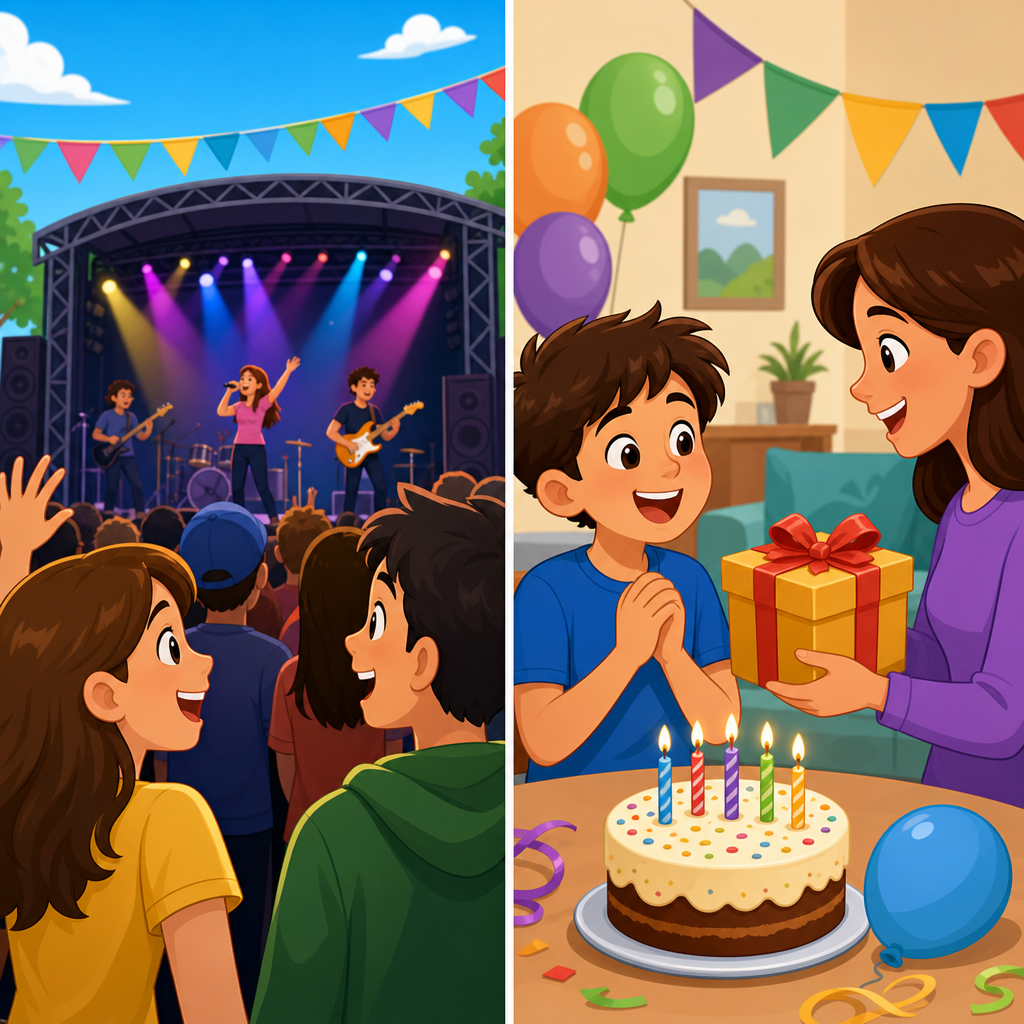
During means at some point in a period, within an event, or throughout a named time frame. It does not measure length; it places an action inside a context of time. If the question is When did it happen? and the answer is inside a larger period, during is often the right choice. Examples include “The phone rang during dinner,” “Nobody spoke during the presentation,” and “Many shops close during the holiday period.” The nouns after during are usually events, established periods, or stretches of time understood as containers: class, winter, the meeting, the film, the war, the night, the weekend. One reason learners struggle is that some of these expressions feel long, so they assume duration matters. But grammar depends on function, not on whether the period is short or long. “During the lecture” is correct because the lecture is an event. “For the lecture” usually suggests purpose, not time, as in “I prepared slides for the lecture.” That distinction is essential in both conversation and academic writing.
During vs for: the clearest way to choose
The simplest decision method is this: use for with a quantity of time and use during with a named period or event. Compare these pairs: “I read for 30 minutes” versus “I read during the flight.” “She felt sick for two days” versus “She felt sick during the exam.” “We stayed silent for a moment” versus “We stayed silent during the ceremony.” In my classes, this side-by-side comparison produces faster improvement than long rule explanations because learners can immediately see the pattern. For answers how long; during answers when within what time frame. A useful test is substitution. If you can replace the phrase with “for five minutes” or “for a year,” you probably need for. If you can replace it with “in the meeting,” “while the movie was on,” or “throughout the trip,” you probably need during. English corpus examples show that native speakers strongly prefer this division, and sticking to it will make your speech sound more natural.
| Meaning | Use | Correct Example | Common Error |
|---|---|---|---|
| Duration | for + length of time | We talked for an hour. | We talked during an hour. |
| Time inside an event | during + noun period/event | We talked during lunch. | We talked for lunch. |
| Present perfect duration | for + time span | I have lived here for six years. | I have lived here during six years. |
| Action within a season or occasion | during + season/event | It rains a lot during summer. | It rains a lot for summer. |
Common learner mistakes and why they happen
The most common mistake is using during before numbers or measured periods: “during three days,” “during two hours,” or “during five minutes.” These are incorrect in standard English because numbers show duration, so for is required. Another frequent mistake is using for before events: “for the meeting,” “for the class,” or “for the movie,” when the meaning is time, not purpose. This happens because for has many other uses in English, including purpose, benefit, destination, and support. For example, “I bought coffee for the meeting” is correct because it means the coffee was intended for that event, not that something happened inside it. Context decides meaning. Learners also confuse during with while. The difference is structural: during is followed by a noun phrase, while while is followed by a clause. We say “during the lesson,” but “while the teacher was speaking.” This point matters because many mistakes come from translating directly from another language instead of checking the pattern that follows the word.
ESL examples in everyday, academic, and work English
Everyday English gives clear examples. “I slept for eight hours” describes duration. “I had a strange dream during the night” places an action inside a period. “We chatted for a while during the bus ride” uses both correctly in the same sentence. In academic English, precision matters even more: “Students may not leave the room during the exam” refers to the event, while “The exam lasted for three hours” gives the length. In professional settings, small preposition choices affect credibility. Compare “Sales increased during the fourth quarter” with “The team worked for six months on the rollout.” In training sessions I often use calendars and meeting schedules because they make the contrast obvious. If the phrase points to a block on the calendar, during often works. If it measures elapsed time on a stopwatch, for usually works. That is not a perfect rule, but it is a highly effective practical shortcut for learners who need fast accuracy in speech and email writing.
Practice patterns you can use immediately
To master during vs for, practice by sorting time expressions into two groups. Put measured lengths such as ten seconds, half an hour, four weeks, and many years under for. Put event or period nouns such as breakfast, the conference, winter, the break, and the ceremony under during. Then build sentence pairs: “I stayed there for three days” and “I met many people during the conference.” Another effective exercise is error correction. Change “She learned a lot during two months” to “She learned a lot for two months” only if you mean the activity continued that long; more naturally, say “She learned a lot during those two months” because those two months becomes a defined period. That nuance shows why context matters. For broader vocabulary study in miscellaneous usage, this topic connects closely with articles on since vs for, during vs while, in time vs on time, and by vs until. Studying these together builds stronger control over time expressions across conversation, test preparation, and formal writing.
The difference between during vs for is straightforward once you focus on function instead of memorizing isolated examples. Use for to express duration and during to place an action inside a named period or event. If you remember one line, make it this: for = how long; during = when within a time frame. That rule fixes most learner mistakes immediately. It also helps with related vocabulary across this miscellaneous hub, where many confusing word pairs depend on the same idea of form, meaning, and context. Strong English is often built through these small decisions. Review your own sentences, notice whether the phrase after the preposition is a measurable length or a time container, and correct it accordingly. Then practice with real examples from your routine: meetings, classes, travel, study sessions, and holidays. The more you connect grammar to lived situations, the faster it becomes automatic. Start by writing five sentences with for and five with during, and use this article as your reference point for the next vocabulary topic you study.
Frequently Asked Questions
1. What is the main difference between during and for?
The main difference is that for expresses duration, while during expresses timing within a period, event, or activity. In other words, for answers the question “How long?” and during answers the question “When?” or “At what time within a larger period?”
For example, in the sentence I studied for three hours, the phrase for three hours tells us the length of time. It measures the activity. By contrast, in I studied during the afternoon, the phrase during the afternoon tells us when the studying happened inside a larger time period. It does not tell us the exact length.
This distinction is especially important for English learners because both words relate to time, but they do not follow the same grammar pattern. After for, we usually use a length of time such as two minutes, a week, several years, or a long time. After during, we usually use a noun phrase referring to a period or event, such as the meeting, class, the summer, the movie, or my vacation.
A quick way to remember it is this: if you can naturally ask How long?, you probably need for. If you can naturally ask When did it happen? within a known period, you probably need during. That simple test helps learners avoid many common mistakes in writing, speaking, exams, and professional communication.
2. How do I know whether to use for or during in a sentence?
A reliable method is to look at the words that come after the preposition. If the next words describe a length of time, use for. If the next words name a time period, event, or activity, use during. This grammar clue is one of the easiest ways to choose correctly.
Use for with expressions like for ten minutes, for two days, for six months, or for a while. These all measure duration. For example: She lived there for six months, We waited for twenty minutes, and He worked for a long time.
Use during with expressions like during the lesson, during the trip, during lunch, during the winter, or during the interview. These do not measure duration directly. Instead, they place an action inside a larger block of time or inside an event. For example: She took notes during the lesson, We slept during the trip, and He felt nervous during the interview.
Another useful check is to see whether the sentence still makes sense if you replace the phrase with how long or when. If the sentence is answering how long, use for. If it is answering when, use during. Compare these: I stayed in Paris for a week answers How long did you stay? Meanwhile, I met many people during my week in Paris answers When did you meet them?
This is why a sentence like I slept during two hours sounds unnatural in standard English. Two hours is a duration, so the correct form is I slept for two hours. On the other hand, I slept during the flight is correct because the flight is an event or time period.
3. Can during and for ever be used in similar situations?
Yes, they can appear in related situations, but they usually do not mean exactly the same thing. The difference is often subtle but important. In many real-life contexts, both words may fit the general topic of time, yet each one highlights a different idea.
Compare these two sentences: I read for an hour and I read during the flight. The first sentence focuses on duration: the reading lasted one hour. The second focuses on timing: the reading happened at some point within the flight. The second sentence does not tell us whether the reading lasted five minutes or the whole trip.
Sometimes you can use both in the same sentence because each serves a different function. For example: I slept for two hours during the flight. Here, for two hours gives the duration, and during the flight gives the larger time period in which the sleeping happened. This structure is very common and very useful because it is precise and natural.
English learners sometimes think one word can replace the other, but that often creates grammar mistakes or changes the meaning. For example, We talked for the meeting is incorrect if you mean the conversation happened inside the meeting. The natural sentence is We talked during the meeting. But if you want to express duration, you could say We talked for thirty minutes.
So yes, the two words can appear in similar time-related contexts, but they are not true substitutes. Strong English writing depends on choosing the one that matches your meaning: duration with for, and occurrence within a period with during.
4. What are the most common mistakes ESL learners make with during and for?
One of the most common mistakes is using during before a duration. Learners may say during three hours, during two weeks, or during a long time. These are incorrect in standard English because those phrases express length of time. The correct preposition is for: for three hours, for two weeks, and for a long time.
Another common mistake is using for before an event or named period when the speaker really means “within that time.” For example, learners may write for the meeting when they mean something happened inside the meeting. In that case, during the meeting is the natural choice. Similarly, during class, during the exam, and during dinner are correct when the idea is that the action happened while those events were taking place.
A third mistake is confusing during with while. Although they are related, they do not have the same grammar pattern. During is followed by a noun or noun phrase, as in during the lesson. While is followed by a clause, as in while I was studying. So during I was studying is incorrect, while during my study session is correct.
Learners also sometimes produce sentences that are understandable but not natural, such as I learned English during five years. Native speakers would normally say I learned English for five years if the focus is duration. If the speaker wants to emphasize a time period in life, the sentence might be I learned English during my years at university. Notice how the choice depends on meaning and grammatical structure.
The best way to avoid these errors is to memorize the pattern, not just the definition. Think: for + duration and during + noun phrase for period/event. That simple formula solves most mistakes immediately.
5. What are some easy practice tips to master during vs. for?
A very effective practice method is to sort time expressions into two groups.





