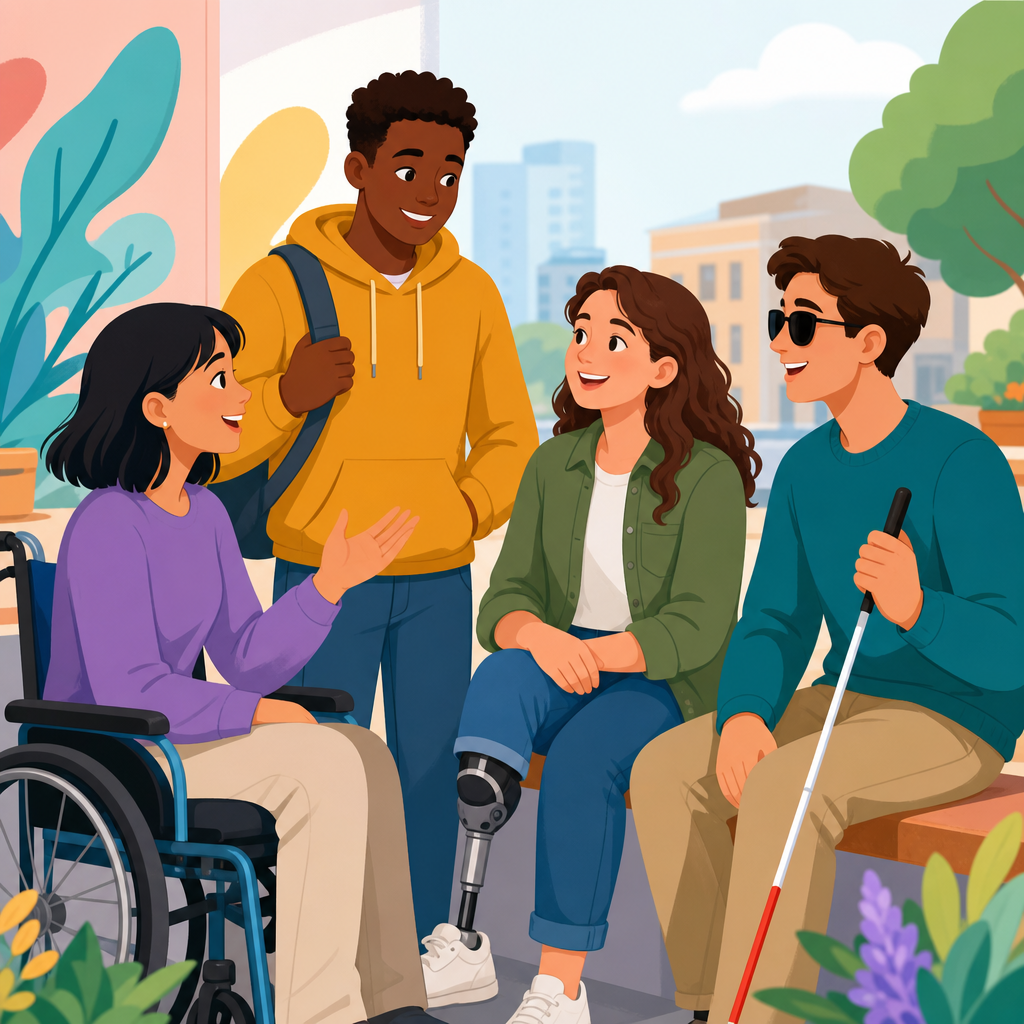
English for talking about disability respectfully and clearly matters because everyday language shapes whether people feel included, dismissed, or misunderstood. In workplaces, classrooms, medical settings, customer service, and casual conversation, the words chosen around disability can either communicate respect or reinforce stigma. For English learners, this topic is especially important because many phrases taught informally are outdated, culture-bound, or unintentionally offensive. Clear, respectful English does not require memorizing a perfect script. It requires understanding key terms, listening to individual preferences, and choosing language that is accurate, human, and context appropriate.
Disability is a broad term covering physical, sensory, intellectual, developmental, mental health, learning, and chronic health conditions that may affect how a person moves, communicates, processes information, or participates in daily life. Respectful language means describing disability without reducing a person to a diagnosis, using terms accepted in current professional and community practice, and avoiding expressions that suggest pity, abnormality, or helplessness. Clear language means saying what you mean directly: wheelchair user, deaf student, blind traveler, autistic adult, employee with a chronic illness. In my work editing training materials for international teams, the biggest problems usually come from euphemisms such as special needs, differently abled, or suffering from, which often sound awkward or patronizing rather than kind.
The goal is not political correctness for its own sake. The goal is effective communication. If your English sounds respectful, people are more likely to trust you, correct you kindly when needed, and focus on the conversation instead of the wording. That matters in interviews, meetings, hospitality, healthcare, and small talk. It also matters because disability language changes over time. Terms that once appeared in schools, charities, or television can become inappropriate as disabled people themselves reject them. A strong rule is simple: prefer current, plain language, and let the person lead when they state a preference. When in doubt, ask briefly and neutrally rather than guessing.
Start with accurate terms, not euphemisms
The clearest respectful language is usually straightforward. Say disabled person or person with a disability depending on the person, organization, or community preference. Both forms are widely used in modern English. Many style guides, including the Associated Press Stylebook and disability advocacy groups, note that no single formula fits every context. Person-first language, such as person with a disability, emphasizes the individual before the condition. Identity-first language, such as disabled person or autistic person, is preferred by many people who see disability as part of identity rather than something separate. In practice, follow the preference stated by the person or by the relevant community.
Avoid vague softening phrases that try too hard to sound nice. Special needs can sound infantilizing, especially for adults. Differently abled is often rejected because it avoids the reality of disability instead of naming it. Challenged, handicapped, normal person, confined to a wheelchair, and victim of are also poor choices in most situations. A wheelchair is a mobility tool, not a prison, so wheelchair user is accurate while confined to a wheelchair is misleading. Likewise, say has cerebral palsy, has low vision, has depression, or is deaf if that is the accepted description, rather than suffers from unless the person uses that phrase personally. Precision is respectful because it describes reality without drama.
Context matters as well. In a legal or workplace setting, you may need terms tied to policy, such as accommodation, accessible entrance, screen reader compatibility, or essential job functions. In conversation, simpler wording often works better. If you are discussing social interaction generally, this broader guide to American small talk rules that surprise ESL learners helps with tone, but disability language requires extra care because assumptions become visible fast. A polite tone cannot fix inaccurate wording. Accurate wording creates the foundation for a polite tone.
Use people’s preferences and ask when necessary
The best respectful English is person-centered and flexible. If someone says, I’m autistic, mirror that wording. If someone says, I have a visual impairment, use that term. If an organization serving deaf people uses Deaf with a capital D to refer to cultural identity and signing communities, respect that distinction. Capitalized Deaf often signals more than hearing level; it can indicate membership in a linguistic and cultural community centered on sign language. By contrast, deaf in lowercase may refer more generally to hearing status. Similar nuance appears with blind, low vision, neurodivergent, and chronically ill. These are not just vocabulary choices; they signal belonging, identity, and lived experience.
Asking about preference is appropriate when the topic is relevant and the setting allows it. Keep the question short and practical: What term do you prefer? or How would you like this described in the report? Avoid turning the question into a discussion of your intentions or guilt. In training sessions I have run, learners often overexplain: I hope this isn’t rude, I’m trying my best, I never know what to say. That shifts emotional work onto the disabled person. A calm, direct question is better. Then use the answer consistently in speech, email, documents, and introductions.
Respect also means knowing when disability does not need to be mentioned at all. If a colleague gives a strong presentation, say it was clear and persuasive. Do not say inspiring despite your condition unless disability is directly relevant and the person has framed it that way. This is a common problem called inspiration language, where ordinary actions by disabled people are treated as extraordinary for nondisabled audiences. Respectful English avoids making disability the center of every interaction.
Choose practical phrases for everyday situations
Many learners want exact sentences they can use immediately. The most useful rule is to focus on access, logistics, and the person’s stated needs rather than on assumptions. If you are offering help, ask first: Would you like any assistance? If the person says yes, ask one follow-up question: What would help most? Never grab a wheelchair, cane, service dog harness, or communication device without permission. Those are extensions of personal space and independence. In customer service, replace general offers like Let me know if you need anything with specific options such as We have step-free access at the side entrance or I can send the form in large print.
| Situation | Say This | Avoid This |
|---|---|---|
| Offering help | Would you like any assistance? | Let me do that for you. |
| Mobility | wheelchair user | confined to a wheelchair |
| Unknown preference | What term do you prefer? | What’s wrong with you? |
| Access needs | Is this space accessible for you? | You can manage, right? |
| Mental health | person with schizophrenia | schizophrenic person, if not preferred |
Some categories need extra care. For mental health, avoid casual slang that turns diagnoses into jokes, such as I’m so OCD, that idea is insane, or he’s bipolar about it. These phrases spread misinformation and trivialize serious conditions. For intellectual and developmental disabilities, use the specific term when relevant, such as person with Down syndrome, and avoid outdated labels that have long been rejected in education, medicine, and law. For autism, both autistic person and person with autism are common, but many autistic self-advocates prefer identity-first language. For chronic illness, remember that symptoms may be variable or invisible, so do not question whether someone looks disabled.
Pronunciation and delivery matter too. A respectful term said with surprise, pity, or exaggerated praise can still sound insulting. Keep your voice natural. Speak to the disabled person directly, not only to a companion, interpreter, aide, or family member. If communication takes longer, stay patient and do not finish sentences unless asked. In meetings, basic inclusive habits help everyone: share agendas in advance, describe visual content aloud, use captions when possible, and avoid saying as you can all see when some people cannot. Respectful English is not just about nouns; it includes the structure of the interaction.
Common mistakes, corrections, and why clarity builds trust
The most common mistake is replacing accuracy with discomfort. People say special, brave, inspirational, or unfortunate because they want to sound kind, but those words often reveal assumptions. Another mistake is treating disabled people as one group with one preference. Communities differ. The National Center on Disability and Journalism recommends asking when possible and defaulting to neutral, current terminology when not. Major accessibility standards such as the ADA in the United States and WCAG for digital content also shape professional language by emphasizing access, barriers, and accommodations rather than personal tragedy. That shift matters because it moves the conversation from defect to environment.
Clarity builds trust because it shows you understand the real issue. If a website is unusable with a screen reader, the problem is not that a blind user is unfortunate; the problem is that the site lacks alt text, form labels, heading structure, or keyboard navigation. If an employee needs flexible scheduling for treatment, the key terms are accommodation and confidentiality, not private suffering. When language identifies the barrier clearly, people can solve the problem. That is why respectful English is practical, not ornamental.
You will still make mistakes sometimes. Correct them quickly, briefly, and without drama. If you use the wrong term, say, Thanks for correcting me, then use the preferred wording. Do not demand reassurance. Do not explain your intentions for five minutes. In my experience, short corrections preserve dignity on both sides and keep the conversation moving. The strongest habit is ongoing attention: read current style guidance, notice how disabled speakers describe themselves, and update your English accordingly. Respectful language is learned the same way strong professional English is learned: through observation, practice, and revision.
Talking about disability respectfully and clearly means choosing accurate terms, avoiding euphemisms, following individual preferences, and keeping the focus on access rather than assumptions. The most reliable vocabulary is plain and current: disabled person, person with a disability, wheelchair user, Deaf community, accessible entrance, accommodation. The most reliable behavior is equally plain: ask before helping, speak directly to the person, mirror stated preferences, and correct mistakes without defensiveness. These habits make your English sound more professional, more natural, and more considerate in real situations.
This matters far beyond grammar. Respectful disability language improves teamwork, customer experience, teaching, healthcare communication, and everyday relationships. It reduces confusion because it names real barriers and real solutions. It also shows cultural competence, which English learners need just as much as vocabulary range or pronunciation accuracy. When your words are precise, people hear your meaning instead of your uncertainty.
Use one simple standard from today forward: say what is accurate, say it calmly, and let the person lead when a preference is known. Review your usual phrases, replace outdated terms, and practice a few respectful questions you can use naturally. Better language leads to better conversations, and better conversations create genuine inclusion.
Frequently Asked Questions
Why is it important to talk about disability respectfully and clearly in English?
Respectful and clear language matters because it affects how people are treated, understood, and included in everyday life. In English, the words used to describe disability can either show dignity and awareness or reinforce stereotypes and discomfort. This is especially important in workplaces, schools, healthcare settings, customer service, and social situations, where communication shapes relationships and decisions. When people use respectful language, they are more likely to create an environment where disabled people feel acknowledged rather than judged or reduced to a condition.
For English learners, this topic is particularly important because informal expressions, older textbook language, and direct translations from other languages may sound unnatural, outdated, or offensive in modern English. Learning respectful vocabulary helps speakers avoid misunderstandings and communicate with more confidence. It also shows cultural awareness. Clear language does not mean using complicated terms. It means choosing words that are accurate, thoughtful, and appropriate to the person, the setting, and the message. In most cases, the goal is simple: speak about disability in a way that recognizes the person first as a human being and avoids language that suggests pity, weakness, or inferiority.
What words or phrases should I avoid when talking about disability?
It is best to avoid words and phrases that sound negative, dramatic, or dehumanizing. For example, many people consider terms such as “handicapped,” “crippled,” “suffering from,” “confined to a wheelchair,” and “normal people” inappropriate or outdated in many contexts. These expressions can imply that disability is only a tragedy, that a person is defined by limitation, or that disabled people are separate from everyone else. Similarly, casual idioms like “blind to the truth,” “deaf to complaints,” or “OCD” used jokingly can be hurtful because they turn disabilities or medical conditions into metaphors or punchlines.
Instead, choose neutral and specific language. Say “disabled person” or “person with a disability,” depending on the person’s preference if you know it. Say “wheelchair user” rather than “confined to a wheelchair,” because a wheelchair is often a tool for mobility and independence, not a prison. Replace “normal people” with “non-disabled people” when a comparison is necessary. If someone has a diagnosis and it is relevant, use accurate terms without adding emotional language. In general, avoid words that suggest pity, heroism, or shock. Respectful communication usually sounds calm, direct, and matter-of-fact rather than dramatic.
Should I use person-first language or identity-first language when talking about disability?
Both person-first and identity-first language are used in English, and neither is correct in every situation. Person-first language puts the individual before the disability, as in “person with a disability.” Identity-first language places the disability term first, as in “disabled person” or “autistic person.” Some people prefer person-first language because it emphasizes that disability is only one part of who they are. Others prefer identity-first language because they see disability as an important part of their identity and reject the idea that it should be linguistically separated from the person.
The most respectful approach is to pay attention to context and, when possible, follow the preference of the individual or community being described. For example, many autistic advocates prefer “autistic person,” while some institutional or medical settings may more often use “person with autism.” In broader writing, it can be acceptable to use one style consistently if it is thoughtful and current, but it is even better to stay informed about how different communities describe themselves. If you do not know what someone prefers, use respectful, widely accepted language and be open to correction. Flexibility is an important part of clear and inclusive communication.
How can I ask about disability or accessibility needs without being rude?
The key is to focus on practical needs rather than curiosity. If disability is relevant to the situation, ask questions that help support communication, participation, or access. For example, in a workplace or classroom, you might say, “Is there anything you need to make this meeting more accessible?” or “What is the best way for us to support your participation?” In customer service, you might ask, “How can I assist you?” These questions are respectful because they center the person’s preferences and avoid making assumptions.
What you should not do is ask for personal medical details unless there is a clear and appropriate reason. Questions such as “What happened to you?” or “What is wrong with you?” can feel intrusive and disrespectful, especially in casual conversation. It is also important not to assume that all disabilities are visible. Some people may need accommodations related to chronic pain, hearing, mental health, learning differences, or other conditions that are not obvious. Good communication means offering support without demanding explanation. If someone shares information about their disability, listen without reacting with pity or surprise, and respond in a calm, respectful way.
What are some respectful ways to talk about disability in everyday conversation, work, and school?
In everyday conversation, respectful language starts with treating disability as a normal part of human diversity rather than as something strange or inspirational by default. Speak directly to the disabled person, not only to a companion, interpreter, or caregiver. Use ordinary tone and vocabulary unless a more specific term is needed. If disability is not relevant, there is usually no need to mention it. If it is relevant, mention it briefly and accurately. For example, “She is a wheelchair user,” “He is Deaf,” or “The event needs step-free access” are clearer and more respectful than vague or emotional descriptions.
At work and in school, respectful communication also includes accessibility awareness. This means using plain language when possible, sharing written information clearly, considering captions or transcripts, and understanding that participation may look different for different people. Avoid making jokes about disability, using diagnostic terms casually, or praising someone in a way that sounds patronizing, such as treating ordinary tasks as extraordinary simply because a disabled person did them. Strong communication combines respect, clarity, and relevance. When in doubt, use current terms, avoid stereotypes, and follow the lead of the person or community you are speaking with. That approach will help you sound both considerate and confident in English.