
Introduction to Mind Mapping
In the ever-expanding universe of linguistics, expanding one’s vocabulary is a crucial element of communication mastery. Among various techniques available, mind mapping stands out as a creative and efficient strategy for organizing and retaining new words. But what exactly is mind mapping, and why does it matter?
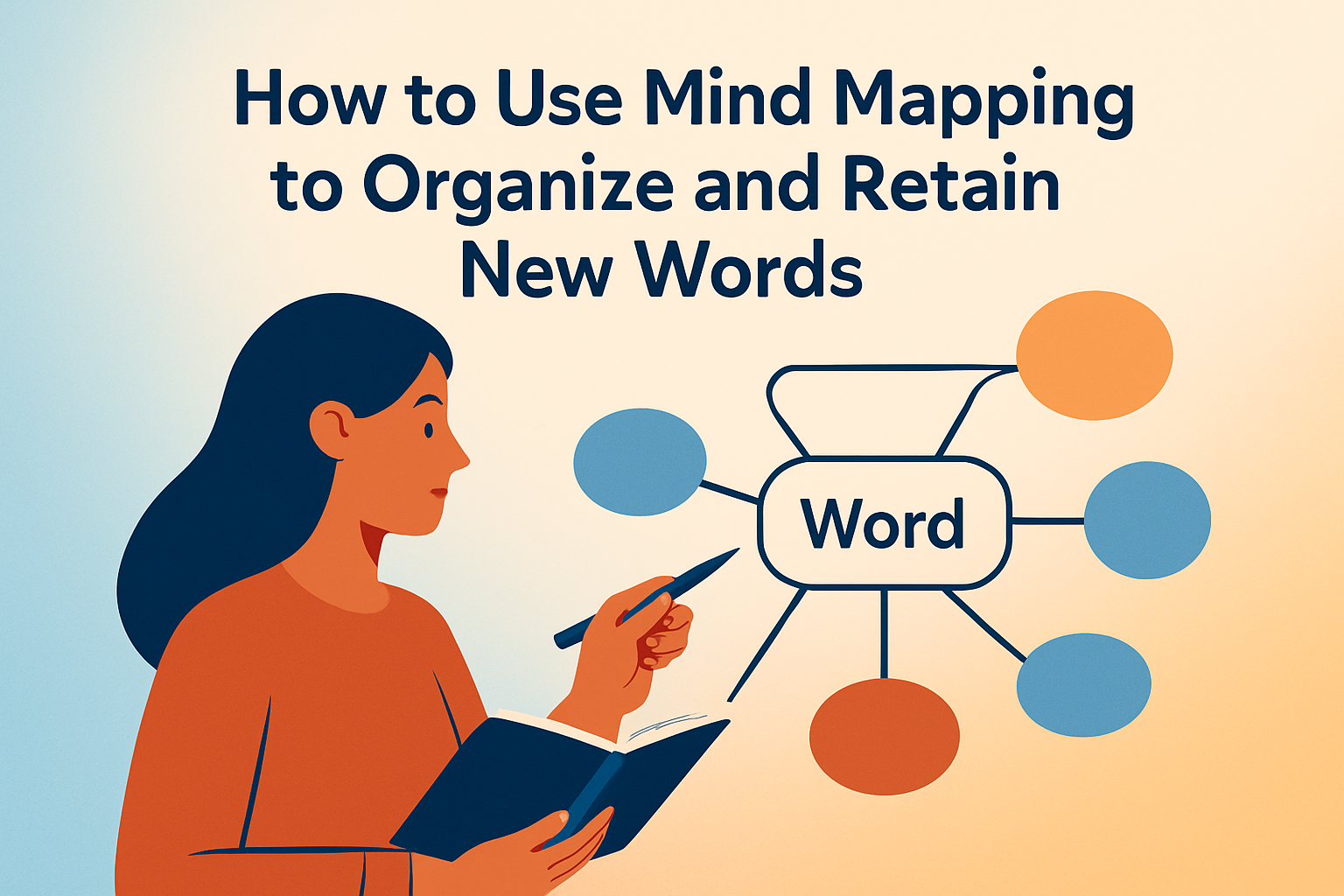
Mind mapping is a visual tool that aids individuals in structuring and organizing information in an easy-to-digest manner. It reflects the way our brains naturally think — in interconnected, branching patterns rather than in linear sequences. This technique can be particularly beneficial when it comes to encoding and recalling new vocabulary as it uses visual association, enhancing memory and comprehension.
As we dive deeper into a globalized world, possessing a rich vocabulary is more than just an asset — it’s a necessity. Whether you’re learning a new language, studying for a test, or simply aiming to improve your linguistic skills, the ability to quickly learn and use new words effectively can set you apart. Mind mapping can transform this daunting task into a more manageable and enjoyable process.
Creating a Basic Mind Map for Vocabulary
To embark on mind mapping for vocabulary retention, start by selecting a central theme or keyword — this serves as the nucleus of your map. For instance, if you’re learning English vocabulary related to nature, the central word could be “Nature.” Once you have your central theme, start brainstorming related words or ideas. These might include “forest,” “wildlife,” “climate,” etc.
Each related term is written on a branch radiating from the central theme, which you can further expand into sub-branches. These could explore definitions, synonyms, antonyms, or even images related to that particular word. For example, the word “forest” might branch into “trees,” “animals,” and “ecosystem.” The visual structure mimics a neuron or a tree, with information cascading outward from the central idea.
By actively engaging in this process, you’re not only categorizing words in a meaningful context, but you’re also crafting a visual representation that helps in strengthening memory retention. The interconnected branches make it easier to recall a word’s association with others, further embedding it into your long-term memory.
Deep Dive into Vocabulary Connections
A major advantage of mind mapping is the ability to explore the semantic connections between words. This means understanding not just what words mean individually, but how they relate to one another. By examining these relationships, you gain a nuanced understanding of language which can drastically improve comprehension and expression.
Consider the example of the word “ocean.” Using a mind map, you might explore connections to “marine life,” “conservation,” “tides,” and “currents.” These relationships help build a web of knowledge around a single term, encouraging a deeper grasp of the subject matter. For learners or native speakers alike, this depth of understanding can lead to more eloquent and precise communication.
Beyond simple vocabulary building, examining connections fosters critical thinking. You begin to question what you’ve learned, draw parallels to existing knowledge, and innovate novel ideas, just like synthesizing various thoughts to arrive at an insightful conclusion. Learning becomes less about memorizing static definitions and more about engaging with content dynamically.
Employing Technology for Enhanced Mind Mapping
In today’s digital age, technology provides an array of tools designed to aid the mind mapping process. Online mind mapping software such as XMind, MindMeister, or even Google’s free tools can supercharge your vocabulary retention efforts. Such platforms offer features like auto-arranging words, color coding, and the inclusion of images, which can further fortify learning.
For example, using a software tool, you can create a complex mind map with layers of information that reveal themselves interactively. As you click on branches, you might unfold definitions, hearing pronunciations in real-time, or see images that contextualize the words. This multisensory engagement is a powerful method for encoding information.
By leveraging digital tools, you’re also afforded the flexibility of access. Study your mind maps on-the-go on your smartphone, collaborate with peers in real-time, or easily update maps as your vocabulary pool swells. The integration of technology makes mind mapping not just a learning task but a continuously evolving journey for language mastery.
Utilizing Mind Mapping in Educational Settings
Mind mapping extends beyond individual use, serving as a valuable educational tool in classroom settings. Teachers can employ mind maps to present vocabulary in a structured and interactive manner. For instance, during lessons on environmental science, students might create collaborative mind maps under themes like “Sustainability” or “Pollution.”
Collaborative mind mapping encourages participation and discussion among students, reinforcing terms through peer explanation and debate. Likewise, students can individually craft mind maps as an assignment, which stimulates independent research and solidifies learning. When tasked with presenting their maps, students must coherently organize their thoughts and demonstrate their vocabulary knowledge.
Using mind mapping in education not only makes vocabulary learning more engaging but also equips students with valuable skills like summarizing complex information and visual problem-solving, nurturing not only vocabulary acquisition but overall academic development.
Visual Learning through Mind Maps
One of the core strengths of mind mapping is its alignment with visual learning. Almost universally, humans process visual data more rapidly than text. The brain’s natural affinity for images means that information presented in a visual format is retained more effectively.
A visual mind map acts as a graphic organizer that provides a vivid mental image. Color-coding and imagery within a mind map make words distinct and memorable. For example, associating the word “arctic” with an image of an iceberg or polar bear creates a lasting imprint in one’s memory.
Furthermore, visual cues help reduce cognitive load, allowing the mind to process information more efficiently. Transforming textual lists into mind maps can alleviate the heavy cognitive demands of memorization, thereby cultivating a less stressful and more productive learning environment.
| Mind Mapping Tool | Platform | Key Features |
|---|---|---|
| XMind | Desktop/Mobile | Templates, Brainstorming |
| MindMeister | Web-based | Collaboration, Integration |
| SimpleMind | All Devices | Customization, Cloud Sharing |
Integrating Mind Maps with Daily Vocabulary Practice
To maximize the benefits of mind mapping, it’s essential to incorporate it into daily language practice. Begin with setting aside a few minutes each day to review and expand your mind maps. Engage with new words actively by creating mini-maps, exploring their usage, and practicing sentences.
Set a goal to introduce a specific number of new words weekly, categorizing them into relevant sections of your map. Use your mind map as a tool to test recall — cover branches and quiz yourself on associations, definitions, and applications. This active recall practice is a proven method for strengthening memory.
Over time, as you consolidate words learned through mind mapping into your everyday vocabulary, you’ll find your language skills and confidence growing significantly. Remember, consistency is key; regularly revisiting and updating your mind maps can lead to an enriched vocabulary reservoir and enhanced communication ability.
Conclusion and Next Steps
In essence, mind mapping provides a dynamic, engaging, and efficient approach to vocabulary learning. Its ability to visually organize complex information, highlight connections, and capitalize on our brain’s natural processing patterns transforms the process of vocabulary acquisition.
As you’ve discovered, whether you are a self-learner, educator, or student, integrating mind mapping into your vocabulary strategy offers invaluable benefits. This technique not only boosts your ability to recall and use new words but also nurtures a deeper understanding of language, promoting cognitive growth.
To begin leveraging the power of mind mapping, start by selecting a mind mapping tool that suits your needs and preferences. Commit to building and revisiting your maps regularly, and watch as your vocabulary prowess expands. Embark on this journey with curiosity and enthusiasm, and soon you’ll find mind mapping to be an indispensable part of your learning arsenal. Ready for the first step? Pick a word, create a map, and let your vocabulary adventure unfold!
Frequently Asked Questions
1. What is mind mapping, and how can it help with learning new words?
Mind mapping is a visual technique used to organize information in a way that aligns with our brain’s natural pattern of thinking. By placing a central idea or topic in the center and branching out with related subtopics, it creates an interconnected ‘map’ of information. For learning new words, this method can be incredibly beneficial. It allows you to see connections between new vocabulary and existing knowledge, meaning you’re not just learning isolated words, but understanding them in context. This visualization aids in memory retention, recall, and makes learning a more engaging process.
2. How do I start creating a mind map to organize new vocabulary?
Beginning a mind map for vocabulary building is straightforward. Start with a central concept related to the vocabulary set you’re aiming to expand—for example, “Travel Vocabulary.” Write this in the center of your paper or digital tool. Next, draw branches from your central concept for categories such as ‘transportation,’ ‘accommodation,’ or ‘common phrases.’ Under each category, branch out further with specific words or phrases. Don’t forget to use images and different colors, which can help in reinforcing memory. This structure encourages you to systematically organize vocabulary into related themes, making recall easier.
3. What are the advantages of using mind mapping over traditional memorization techniques?
Mind mapping offers numerous advantages over traditional rote memorization techniques. Firstly, it transforms learning into a more active and engaging process by encouraging creativity through visual expression. Mind mapping also taps into how our brains naturally store and retrieve information through associations and connections rather than isolated facts. This process not only aids in better retention but also enhances understanding. Moreover, mind maps are highly flexible, allowing for the integration of new information without overhauling existing structure—making them perfect for continuously growing your vocabulary library.
4. Can mind mapping be used for all types of vocabulary learning?
Absolutely, mind mapping can be applied to virtually any type of vocabulary learning. Whether you are learning new words for a specific subject area like science or technology, trying to grasp a second language, or expanding general word usage, mind mapping can be an invaluable tool. By breaking down complex vocabulary into thematic maps, you’re able to customize your learning process according to your needs, making the adoption of new words much more efficient. Additionally, mind maps can integrate multimedia elements such as images and audio, further supporting diverse vocabulary comprehension.
5. Are there digital tools available that can help me create mind maps for vocabulary building?
Yes, there are a plethora of digital tools available that can simplify the process of creating mind maps for vocabulary learning. Apps like MindMeister, XMind, and Coggle offer user-friendly interfaces where you can easily draft, modify, and share your mind maps. These tools even allow you to add images, hyperlinks, and notes, which can further enhance your learning experience. They are also easily accessible across devices, facilitating continuous learning and review on-the-go. Digital mind mapping tools offer a dynamic and interactive way to harness the potential of mind maps for vocabulary development.





