
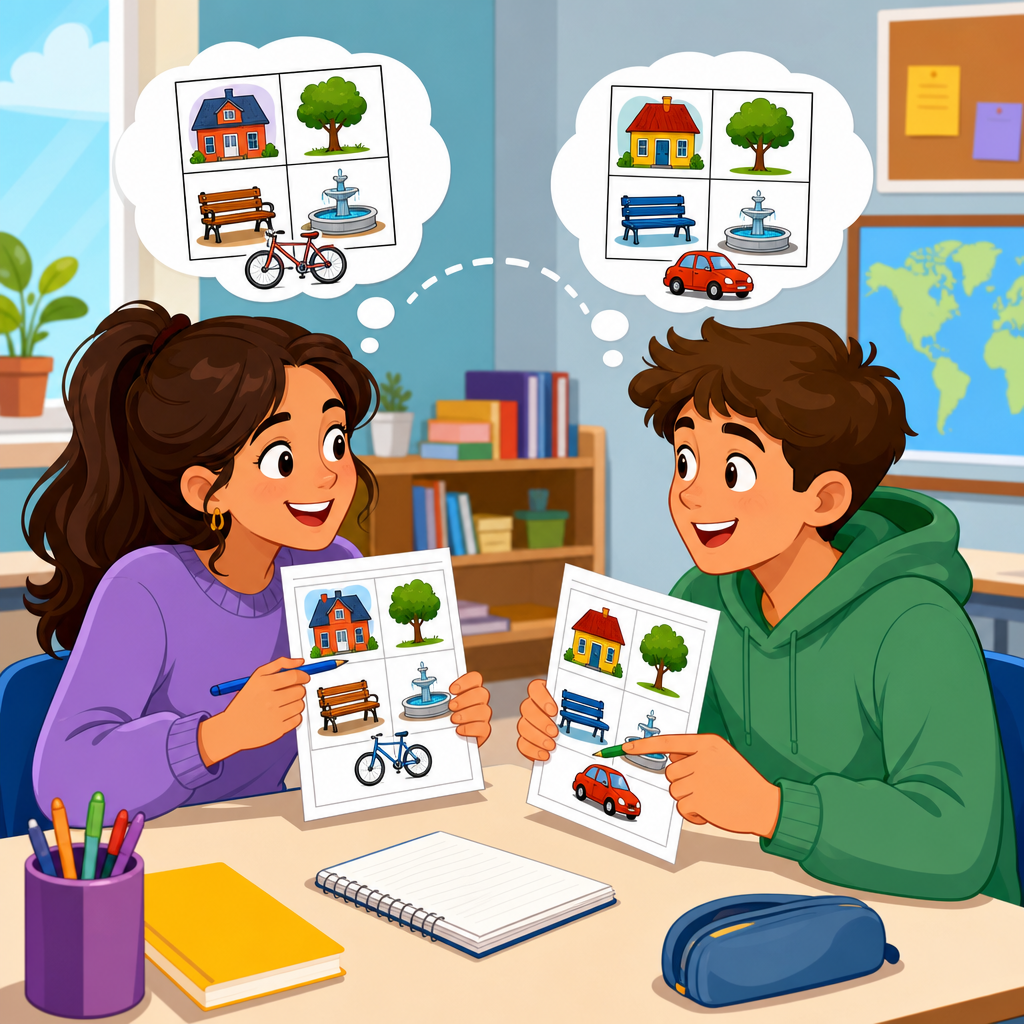
Pairwork information gap activities at A2 level give learners a practical reason to speak, listen, ask follow-up questions, and check meaning because each partner holds different pieces of information needed to complete one shared task. In simple terms, an information gap exists when Student A knows something Student B does not, and communication is the only way to close that gap. I use these tasks regularly because they create genuine interaction without requiring advanced grammar, and they fit almost any classroom context, from general English to exam preparation. For teachers building a broader bank of learning tips and resources, this miscellaneous hub matters because information gap work strengthens fluency, accuracy, confidence, and classroom energy at the same time. At A2, students can usually handle familiar topics, basic past and future forms, daily routines, places, times, prices, preferences, and simple problem solving. That makes this level ideal for structured pairwork with clear outcomes. When designed well, these activities reduce teacher talk, increase student speaking time, and reveal exactly where learners need support with question forms, prepositions, pronunciation, and listening.
Teachers often ask what separates a strong information gap task from ordinary pair discussion. The answer is purpose. In a discussion, students may exchange opinions, but they can still succeed with limited listening. In an information gap, the task fails unless both partners communicate accurately. That built-in need for clarity is why these activities are especially useful for A2 classes, where students benefit from repetition with meaning rather than isolated drills. They also support mixed-ability groups because stronger learners can extend questions while less confident learners rely on prompts, visuals, and model language. In my own classes, attendance and participation improve when pairwork has a visible goal such as finishing a timetable, finding differences between pictures, planning a route, or solving a simple mystery. Students stop asking, “What do we do now?” because the task itself creates momentum. As a miscellaneous hub within learning tips and resources, this article brings together the main task types, setup principles, classroom management tips, and assessment ideas teachers need to use pairwork information gap activities effectively and adapt them for many lesson aims.
What A2 learners can realistically do in information gap pairwork
A2 learners do not need complex language to complete meaningful pair tasks. They can ask and answer questions about everyday topics using frames such as “What time does it start?”, “Where is the bank?”, “How much is the ticket?”, “What did you do on Saturday?”, and “Which one do you prefer?” They can compare information, spell words, clarify misunderstandings, and confirm details with phrases like “Sorry, can you repeat that?” and “Do you mean Tuesday or Thursday?” The practical rule I use is this: if the task requires no more than two or three language moves at once, most A2 groups can manage it. For example, a weekly schedule gap asks learners to identify missing classes, times, and rooms. A town map gap asks for locations and directions. A holiday packing gap asks students to exchange item lists and justify choices with simple reasons. These tasks stay within level while still sounding purposeful.
Success at this level depends on controlled input, not easy content alone. Students need short prompts, familiar vocabulary, and a clearly defined endpoint. If a worksheet contains too much text, pairwork turns into silent reading. If the target language is too open, students fall back on single-word answers. I recommend giving learners question stems, one worked example, and a checking stage before they begin. The Common European Framework of Reference describes A2 users as able to communicate in simple routine tasks requiring direct exchange of information on familiar matters. That descriptor aligns perfectly with information gap design. It also reminds teachers that the aim is not perfect performance. The aim is successful exchange. When students negotiate meaning, self-correct, and persist through minor breakdowns, the task is doing its job.
Core types of pairwork information gap activities
Most effective A2 information gap tasks fall into a handful of reliable formats. Timetable completion is one of the easiest to prepare and one of the most productive because it naturally recycles days, times, and school subjects. Spot-the-difference picture pairs work well for describing people, clothes, positions, and present continuous actions. Map and directions tasks support prepositions, imperatives, and place vocabulary. Split reading or split dialogue tasks help with sequencing and gist because each student holds half the information. Problem-solving gaps, such as choosing the best birthday plan from two incomplete option sheets, add motivation by requiring a decision at the end. Finally, personal information surveys with missing answers can be useful when managed carefully, though they work best when the language is tightly framed and privacy is respected.
| Task type | Best language focus | Typical outcome | Useful support |
|---|---|---|---|
| Timetable gap | Days, times, routines | Completed schedule | Clock visuals and question stems |
| Picture difference | There is/are, positions, clothing | List of differences | Preposition box and model sentence |
| Map gap | Directions, places in town | Marked route or locations | Compass arrows and landmark icons |
| Fact-file gap | Wh- questions, numbers, dates | Completed profile | Pronunciation support for numbers |
| Problem-solving gap | Preferences, reasons, future plans | Shared decision | Choice grid and useful phrases |
Choosing the right type depends on the lesson objective, not just what seems fun. If the goal is question formation, use fact-file or interview gaps where students must repeatedly ask for specific information. If the goal is listening for detail, use route descriptions or picture differences. If the goal is spoken fluency with a controlled structure, use a problem-solving gap with a final recommendation. Good materials do not simply fill time; they force repeated use of one language pattern in slightly varied contexts. That repetition with purpose is what makes pairwork memorable.
How to design materials that produce real communication
The strongest worksheets are asymmetric, precise, and slightly incomplete. Asymmetric means each learner has something the other needs. Precise means instructions define exactly what students must find out. Slightly incomplete means there is enough information to start, but not enough to finish without speaking. When I design an A2 information gap, I begin with the final product: a finished chart, matched pictures, corrected map, or chosen option. Then I work backward and split the required information across two pages. I avoid making one sheet obviously easier than the other because unequal cognitive load often leads to passive participation. I also remove redundant clues. If students can guess the answer without interaction, the information gap is weak.
Language support should sit next to the task, not on a separate page students ignore. A small phrase box can include asking phrases, checking phrases, and repair phrases. For instance: “What’s in box three?”, “Can you say that again?”, “How do you spell it?”, and “I think that’s wrong.” At A2, these functional expressions are as valuable as the target grammar because they keep the conversation moving. Visual design matters too. Large spacing, numbered items, and bold labels reduce processing load. I have found that one-page partner sheets with simple icons outperform crowded photocopies every time. If you use digital worksheets, tools like Google Slides, Canva, and Microsoft PowerPoint allow easy duplication and controlled variation between student versions. The principle remains the same: communication must be necessary, and the output must be visible.
Classroom management, monitoring, and error correction
Even well-designed pairwork can fail if setup is rushed. Before students begin, demonstrate the task with a confident learner or with the whole class. Show how not to reveal the sheet. Model one exchange, then ask concept-checking questions such as “Can you look at your partner’s paper?” and “Do you write or only speak?” Pairing matters. I usually avoid placing two very hesitant learners together for the first round. A stronger-weaker match often produces better momentum, especially if turn-taking is built into the worksheet. Seating should allow low-volume talk without students overhearing every answer from nearby pairs. In larger groups, simple color coding on handouts prevents confusion about who has version A and who has version B.
During the activity, monitor for completion strategies, not only grammar errors. Some pairs try to show papers, point silently, or skip difficult items. Intervene early when that happens, because the value of the task lies in oral exchange. I carry a notepad and record examples of useful language, recurring errors, and communication breakdowns. Delayed feedback is usually more effective than constant interruption. After the task, I write a few anonymous sentences on the board and ask students to correct them together, focusing on patterns such as missing auxiliaries in questions, confusion between “in,” “on,” and “at,” or mispronounced numbers like thirteen and thirty. This preserves fluency during pairwork while still protecting accuracy. If a task is intended as controlled practice for a new structure, brief in-task correction may be appropriate, but only when it helps students continue successfully.
Assessment, adaptation, and building a reusable toolkit
Information gap activities are not just warmers. They can provide useful formative assessment when success criteria are clear. I assess three things: task completion, intelligibility, and interaction. Task completion shows whether students exchanged the required information accurately. Intelligibility covers pronunciation, stress, and grammar only to the extent that meaning stayed clear. Interaction includes turn-taking, clarification, and persistence. A short checklist works better than a detailed rubric for everyday classroom use. Teachers preparing students for speaking tests can adapt the same tasks into timed exchanges, role-based comparisons, or collaborative planning stages that mirror common exam demands without turning every lesson into test practice.
Adaptation is where a miscellaneous hub becomes genuinely useful. One timetable template can become a school schedule, a bus schedule, a TV guide, or a study plan. One map can become a zoo, shopping center, museum, or festival site. One fact-file can cover celebrities, animals, jobs, or travel destinations. To build a reusable toolkit, store activities by language focus and by task outcome, not only by textbook unit. Include answer keys, model questions, extension ideas, and fast-finisher tasks. Over time, this system saves planning hours and produces more consistent lessons. Start with two reliable formats this week, refine them after class, and turn successful pairwork information gap activities into a permanent part of your A2 teaching toolkit.
Frequently Asked Questions
What are pairwork information gap activities, and why are they effective for A2 learners?
Pairwork information gap activities are speaking tasks in which two learners each have different pieces of information, and they must communicate to complete one shared goal. For example, Student A may have part of a timetable, picture, map, or set of personal details, while Student B has the missing parts. Because neither student can finish the task alone, they need to ask questions, listen carefully, repeat key details, and confirm meaning. That is what makes the interaction real rather than artificial.
These activities are especially effective at A2 level because they create a clear reason to speak without demanding complex grammar or abstract language. Learners can work successfully with practical question forms, everyday vocabulary, short answers, and simple follow-up questions such as “What time is it?”, “Where is the bank?”, “Can you repeat that?”, or “Do you mean Monday or Tuesday?” In other words, the task naturally encourages useful classroom language that matches what A2 students are ready to handle.
Another major strength is that information gap tasks develop more than just speaking. Students also practice listening for detail, noticing gaps in their understanding, and using repair strategies when communication breaks down. Instead of simply producing memorized sentences, they interact, negotiate, and check meaning. That combination makes pairwork information gap activities one of the most practical tools for building confidence and communicative ability at lower-intermediate and pre-intermediate stages.
What kinds of information gap tasks work best in an A2 classroom?
The best information gap tasks for A2 learners are simple, structured, and based on familiar contexts. Activities such as spot-the-difference pictures, incomplete schedules, simple maps, personal information charts, classroom surveys, shopping lists, holiday plans, and daily routines tend to work very well. These tasks are successful because they use language students are likely to know already or can learn quickly, while still giving them a meaningful reason to exchange information.
A good A2 task should have a clear outcome. Students might complete a chart, find several differences, choose the correct route, fill in missing times, or identify the right person, place, or object. The clearer the goal, the easier it is for learners to stay focused on communication instead of worrying about making perfect sentences. In practice, this means the teacher should avoid tasks that are too open-ended or require long explanations. A2 students usually do better when the language demands are controlled and the task is visually supported.
It also helps when the activity includes repeated language patterns. If students ask the same types of questions several times during one task, fluency increases quickly. For example, an activity built around “What time…?”, “How much…?”, “Where is…?”, or “Has she got…?” gives learners a chance to recycle the same structures in a natural way. That repetition is valuable because it strengthens accuracy, speed, and confidence without making the activity feel mechanical.
How can teachers set up pairwork information gap activities successfully?
Successful setup is essential. Even a well-designed task can fail if students do not understand the objective, the language they need, or the rules of the interaction. Before starting, teachers should introduce the context clearly, model the task step by step, and check that students understand what they are trying to complete together. It is also important to make sure that each partner has different information and knows not to show the worksheet immediately to the other student, since the communication gap is what drives the task.
Language preparation matters just as much as instructions. At A2 level, students benefit from a short pre-task stage in which the teacher reviews key vocabulary, useful question forms, and repair phrases. Expressions such as “Can you say that again?”, “How do you spell it?”, “I don’t understand,” and “So, is it next to the station?” can make the difference between silence and successful interaction. When learners feel equipped with language they can actually use, they are far more willing to participate.
Teachers should also think about pairing and monitoring. Stronger and weaker students can often work well together if the task is balanced, but sometimes similar-level pairs produce more equal speaking time. During the activity, the teacher should monitor actively, listening for communication problems, encouraging follow-up questions, and noting useful errors for later feedback rather than interrupting constantly. After the task, a quick whole-class check or comparison stage helps confirm answers and reinforces the idea that the speaking had a real purpose.
How do information gap activities help students improve speaking and listening skills at the same time?
Information gap activities improve speaking and listening together because learners must both give and receive information accurately in order to succeed. A student cannot simply talk without listening, and cannot simply listen without responding. To complete the task, each partner needs to ask clear questions, understand answers, notice missing details, and confirm what they heard. This creates a balanced communicative exchange that reflects real-life conversation much more closely than isolated drills do.
For A2 learners, this dual focus is particularly useful because it encourages active listening. Students learn to listen for specific information such as names, numbers, days, times, places, and descriptions. At the same time, they practice speaking in manageable chunks, often using predictable patterns. Because the task has a purpose, students are more likely to concentrate carefully on meaning. They are not speaking just to satisfy the teacher; they are speaking because they need something from their partner.
These tasks also build communication strategies that support long-term fluency. When learners miss information, they naturally ask for repetition, clarification, or confirmation. That means they practice real conversational tools such as checking meaning, correcting misunderstandings, and restating ideas more simply. Over time, this makes students more independent speakers and listeners. They become better at handling small communication breakdowns, which is a key part of real-world language use at every level.
How can teachers adapt information gap activities for mixed-ability A2 classes?
In mixed-ability classes, the goal is to keep the communication gap meaningful while adjusting the support each student receives. One effective approach is to make the core task the same for everyone but vary the amount of scaffolding. Some learners may get a word bank, model questions, sentence starters, or a partially completed example, while more confident students work with fewer prompts. This allows all pairs to participate in the same classroom routine without making the task too easy for some or too difficult for others.
Teachers can also adjust the complexity of the information itself. For weaker students, use shorter texts, fewer missing details, more visual support, and highly familiar vocabulary. For stronger students, add extra differences, slightly more open-ended follow-up questions, or an extension stage where they summarize the completed information orally. This kind of tiered design keeps the activity communicative while respecting different readiness levels within the same room.
Another useful strategy is to build in support during interaction. Posting functional classroom phrases on the board, demonstrating a model exchange, and assigning roles such as “ask first” or “check answers at the end” can help less confident students stay engaged. Mixed-ability teaching works best when the task remains achievable, purposeful, and structured. With thoughtful adaptation, information gap activities can challenge stronger learners, support weaker learners, and still preserve the genuine interaction that makes them so valuable at A2 level.





