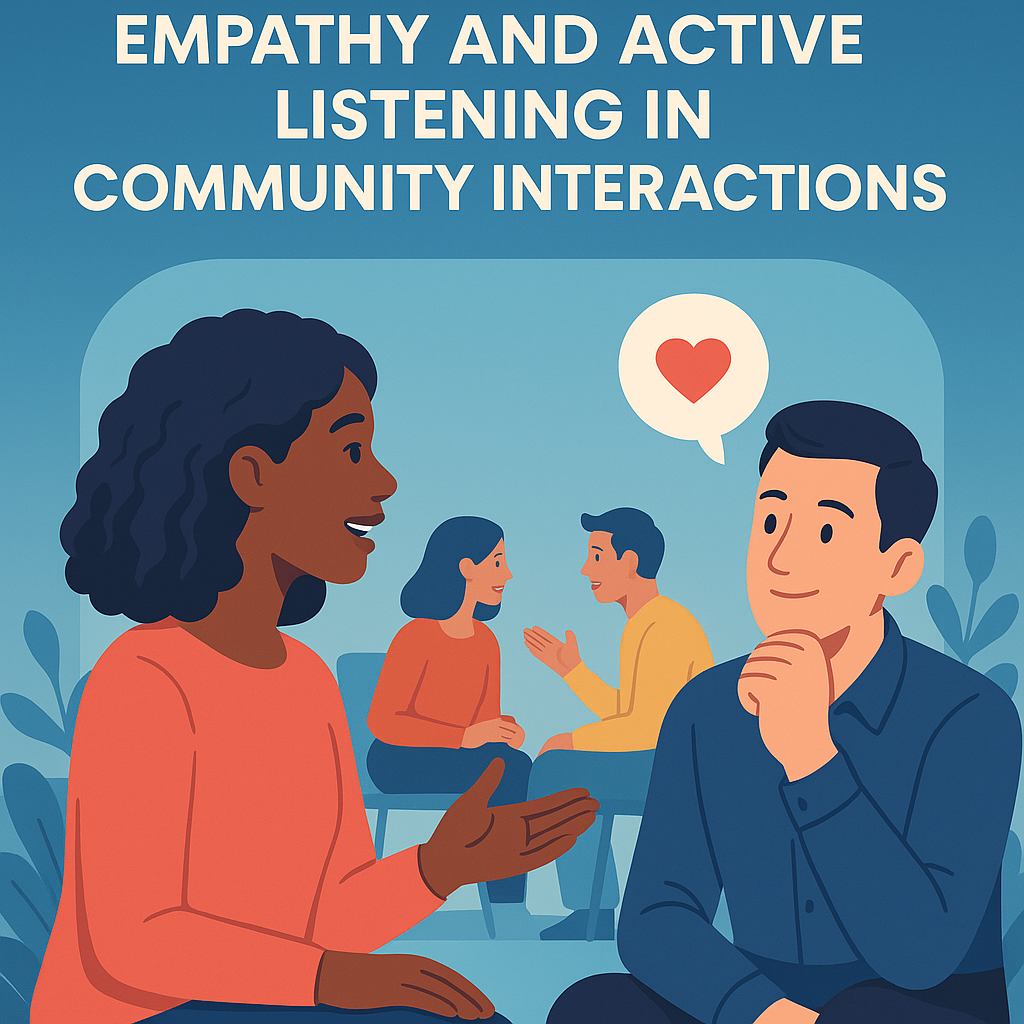
In a world increasingly marked by division, polarization, and misunderstanding, the twin skills of empathy and active listening are more important than ever. These skills allow us to connect with others, genuinely understand their perspectives, and foster a sense of community and collaboration. To introduce the ideas of empathy and active listening, we begin with their definitions. Empathy is the ability to understand and share the feelings of another, effectively putting yourself in someone else’s shoes. Active listening, on the other hand, requires fully concentrating, understanding, and responding thoughtfully to what someone is saying.
While the importance of these skills has been well-documented in personal relationships, their value extends far beyond this. In community interactions, they serve as a bridge to understanding, conflict resolution, and the strengthening of communal ties. This matters because our increasingly interconnected world means we are constantly interacting with people from diverse backgrounds and cultures. Empathy and active listening not only help us to break down barriers but also to build communities grounded in respect, understanding, and shared objectives. They transform mere conversations into meaningful exchanges, fostering environments where individuals feel heard, valued, and motivated to collaborate constructively.
Empathy: Understanding Others to Strengthen Community Bonds
Empathy is the cornerstone of meaningful interaction. Its presence enables us to form deeper connections by intuitively grasping the emotions and experiences of others. This often involves recognizing another person’s perspective without judgment, and deeply engaging with their emotional context.
An inspiring example of empathy can be seen in community-driven mental health initiatives. Many such programs rely on volunteers who have themselves faced similar struggles. Their personal experiences lend authenticity to their empathy, allowing them to connect with those they help on a visceral level. These volunteers are not just service providers; they are empathetic listeners who validate others’ experiences, creating a supportive and understanding environment.
Engaging with others empathetically involves actively asking questions that invite more profound insights into their feelings and experiences. By demonstrating genuine interest and concern, you establish a rapport that often leads people to open up further. This deeper understanding helps dissolve preconceived notions that might otherwise obstruct effective communication. Empathy shifts focus from miscommunication and conflict to mutual understanding and cooperation, a vital pivot in any community setting. When practiced diligently, empathy cultivates a supportive network where open dialogue flourishes, enabling a diverse group of individuals to work towards common goals.
Active Listening: The Art of Engagement in Dialogue
Active listening is essential to fostering effective communication and understanding within a community. It requires an intentional presence, focusing on both the spoken words and non-verbal cues of the speaker, such as body language and tone. This holistic approach ensures that listeners capture the full breadth of the message being conveyed, allowing for more profound comprehension.
A community town hall meeting serves as a pivotal real-world scenario highlighting the impact of active listening. During these gatherings, officials must listen actively to the citizens’ concerns, demonstrating attentiveness not just through verbal assurances but also through actions that reflect their understanding and willingness to address issues raised. The participants’ feedback guides policies and decisions, promoting a sense of involvement and ownership among the community members.
Practicing active listening involves a few key steps. First, make intentional eye contact, which signals to the speaker that they have your full attention. Utilize verbal affirmations, such as nodding or brief interjections like “I see” or “I understand,” to reinforce your engagement. Maintain an open and inviting posture, avoiding crossing arms or other nonverbal signs of disengagement.
Furthermore, active listening demands patience—allowing the speaker to articulate their point without interruption before formulating a response. Reflecting or paraphrasing what the speaker has said also plays a crucial role, as it confirms that you understood their message correctly and encourages further conversation and clarification if necessary. Mastering active listening leads to misunderstandings being minimized, while collaboration and constructive exchanges increase, strengthening the fabric of community interactions.
Building Bridges: Empathy and Active Listening in Action
Integrating empathy and active listening into community interactions can transform otherwise contentious or indifferent gatherings into productive dialogues. A structured approach to including these practices in community settings ensures sustained and meaningful communication improvements.
Consider a neighborhood association meeting tasked with resolving a local issue. Albert, a long-term resident, takes the time to listen attentively to Mia, a new resident with a differing viewpoint on a community project. By empathizing with her perspective and listening actively, Albert facilitates an inclusive discussion where all opinions are considered. This approach not only helps to resolve the issue at hand but also strengthens the community’s bonds by fostering a culture of mutual respect.
The integration of empathy and active listening begins with ground rules that prioritize respect and openness during meetings. Leaders can organize training sessions that simulate scenarios requiring these skills, providing a safe environment for participants to practice and receive feedback. Such initiatives encourage participants to integrate these skills into everyday interactions, gradually shifting the community culture toward more open and empathetic dialogues.
Additionally, maintaining continuity in interactions facilitates a more profound impact. This can be achieved through periodic follow-ups and the establishment of feedback mechanisms like suggestion boxes or online forums where residents can voice their opinions. These platforms not only keep the dialogues open but also enable the community to assess the effectiveness of their communications and make necessary adjustments to improve these skills further.
| Aspect | Empathy | Active Listening |
|---|---|---|
| Purpose | Understanding emotions | Comprehending messages |
| Key Actions | Ask insightful questions | Reflect and paraphrase |
| Nonverbal Cues | Facial expressions congruent with emotion | Maintain eye contact |
| Outcome | Stronger emotional bonds | Clearer communication |
Embodying Empathy and Active Listening Daily
To truly cultivate these skills within a community, they must be embodied in our daily interactions, extending beyond structured meetings to everyday conversations. In an age where digital communication prevails, even online interactions present valuable opportunities to practice empathy and active listening. By choosing words carefully and showing understanding in written communication, we can bridge gaps and build pathways to stronger relationships.
A simple yet effective practice is to dedicate moments in your day to engage in meaningful conversations, whether it’s with a neighbor during a morning walk or with colleagues during coffee breaks. In these exchanges, consciously implement empathetic and active listening techniques, reflecting on their impact and areas for further improvement.
Importantly, this journey requires continuous learning and adaptation. Feedback from peers or fellow community members provides insights into your growth in these areas, highlighting strengths and identifying areas for enhancement. Reading literature or attending workshops on these subjects can offer fresh perspectives and innovative strategies to bolster community interactions further.
Ultimately, embodying empathy and active listening not only enriches our community interactions but also enhances personal relationships and professional collaborations. As these skills become second nature, they create ripple effects that extend far beyond the immediate community, laying the groundwork for more harmonious and connected societies.
Conclusion
Empathy and active listening are transformative skills that, when cultivated individually and collectively, have the power to elevate community interactions to new heights. They foster an environment of respect, understanding, and collaboration, essential for overcoming the challenges of today’s diverse societal landscape. By committing to these practices, we improve not just the quality of our interactions, but also contribute to a world that values every voice and perspective.
The key, then, is to make these skills a fundamental part of your daily practice, actively seeking opportunities to engage empathetically and listen attentively. Start by setting small goals—whether it’s truly listening to a friend today or empathizing with a situation at work, taking that initial step is crucial. Over time, these incremental efforts accumulate, establishing you as a cornerstone of a community characterized by openness, support, and shared success.
Join a workshop, read a book on interpersonal communication, or even form a study group with community members to explore these skills further. Remember that each interaction is a chance to practice and grow, making our communities more cohesive and resilient. Take action today and become an advocate for empathy and active listening in your community.
The journey may begin with a single conversation, but its impact reverberates across entire communities, changing lives and attitudes. Your role in creating a supportive, empathetic culture is invaluable, and the time to begin is now.
Frequently Asked Questions
1. What exactly are empathy and active listening, and why are they important in community interactions?
Empathy is the capacity to not only notice the emotions of another person but also to feel and understand them as if they were your own. This means stepping into someone else’s shoes and seeing the world through their eyes. It’s about being present with another person’s experience without judgment. Active listening, on the other hand, is a communication technique used in counseling, training, and conflict resolution, which requires the listener to fully concentrate, understand, respond, and remember what is being said. Together, these skills are crucial in community interactions because they help bridge gaps caused by different perspectives and backgrounds. By cultivating empathy and practicing active listening, individuals can foster a sense of trust and respect, ultimately leading to stronger and more united communities. When people feel heard and understood, they are more likely to engage constructively, collaborate effectively, and contribute positively to the community’s goals.
2. How can empathy be effectively cultivated within a community?
Cultivating empathy within a community involves intentional efforts to improve understanding and compassion among its members. Start by encouraging open and honest dialogue, where individuals feel safe sharing their experiences and feelings. Community forums, workshops, and discussions focusing on diverse stories and backgrounds can help members see the world from various perspectives. Also, promote activities that require collaboration and teamwork, which naturally foster mutual understanding and appreciation for each other’s strengths and challenges. Additionally, educational programs aimed at enhancing emotional intelligence can be incorporated. These programs teach community members to recognize emotions in themselves and others, and how to respond appropriately. Regularly practicing gratitude, acknowledging others’ efforts, and offering assistance when needed are practical ways individuals can cultivate empathy on a daily basis. Remember, empathy starts with self-awareness. Encourage individuals to reflect on their own biases and prejudices to better understand themselves, paving the way for genuine empathy towards others.
3. What are some practical strategies for improving active listening skills during community interactions?
Active listening can be improved with practice and mindfulness, and implementing these strategies can enhance your ability to listen actively in community interactions. First, ensure that you’re giving the speaker your full attention—this means setting aside distractions like mobile phones and other tasks. Make eye contact and adopt a body language that conveys openness and engagement, such as nodding occasionally to show understanding. Encouragement from the listener, like brief verbal affirmations (“I see,” “Go on,” “I understand”), can signal to the speaker that their message is being received. It’s also beneficial to paraphrase or summarize what the speaker has said to demonstrate that you’re truly hearing them and to clarify any misunderstandings. For instance, you might say, “So what you’re saying is…,” helping to confirm your understanding. Asking open-ended questions further promotes clear communication and shows interest in the speaker’s point of view. Lastly, practice patience; allow the speaker to express their thoughts entirely before responding. These simple but effective practices ensure that discussions in communities are meaningful and productive.
4. What role does empathy play in reducing community conflicts and misunderstandings?
Empathy plays a crucial role in reducing conflicts and misunderstandings by fostering an environment where individuals feel heard and valued. When people practice empathy, they seek to understand the underlying feelings and motivations behind others’ actions and words. This understanding can prevent assumptions, misinterpretations, and judgments that often lead to conflict. By walking in another person’s shoes, members of a community are more likely to approach disagreements with kindness and an open mind. This doesn’t mean conflicts won’t occur, but empathy provides the tools needed to address issues constructively. Empathic interactions can transform confrontational disputes into dialogues characterized by compassion and a mutual desire to find common ground or compromise. Essentially, empathy dissolves the ‘us vs. them’ mentality, replacing it with a collaborative spirit built on human connection and shared experience. Over time, empathy leads to healthier community relations and a more inclusive culture.
5. How can communities ensure that the practice of empathy and active listening becomes a norm and not just an occasional exercise?
For empathy and active listening to become norms within a community, they must be consistently and systematically reinforced through policy, culture, and education. Start by integrating these values into the community’s core principles and mission statements. Leadership can set a precedent by embodying empathetic behavior and active listening in all interactions, setting an example for others to follow. Training sessions and workshops focusing on these skills can be incorporated into community events and curricula for all ages. Promote recognition schemes that highlight and reward individuals or groups demonstrating outstanding empathy and listening skills in their interactions. Encourage feedback and open discussions about how empathetic practices are evolving within the community, and how they can be improved. Engage influencers, educators, and community leaders to act as champions for these values, consistently modeling them in daily interactions. Finally, reinforce the practice of empathy and active listening through storytelling and sharing of success stories that illustrate the positive impact these skills have on community well-being and development. By embedding these principles deeply into the community fabric, they become part of the collective consciousness and culture, practiced reliably and thoughtfully by all.